Yes, you can grow black pepper at home in the U.S., but let's be straight about what that actually means. This is a tropical vine from South and Southeast Asia. It wants heat, humidity, and zero frost. If you live in South Florida, Hawaii, or a similarly warm, humid zone, you can grow it outside year-round. If you live pretty much anywhere else in the country, you're growing it as a container plant that lives indoors most or all of the year. That's not a dealbreaker, plenty of people do it successfully, but you need to go in with the right expectations. can you grow pepper in australia
Can You Grow Black Pepper at Home in the US?
Marcus Petersen
24 Mar 2026
Where in the U.S. can you actually grow black pepper?
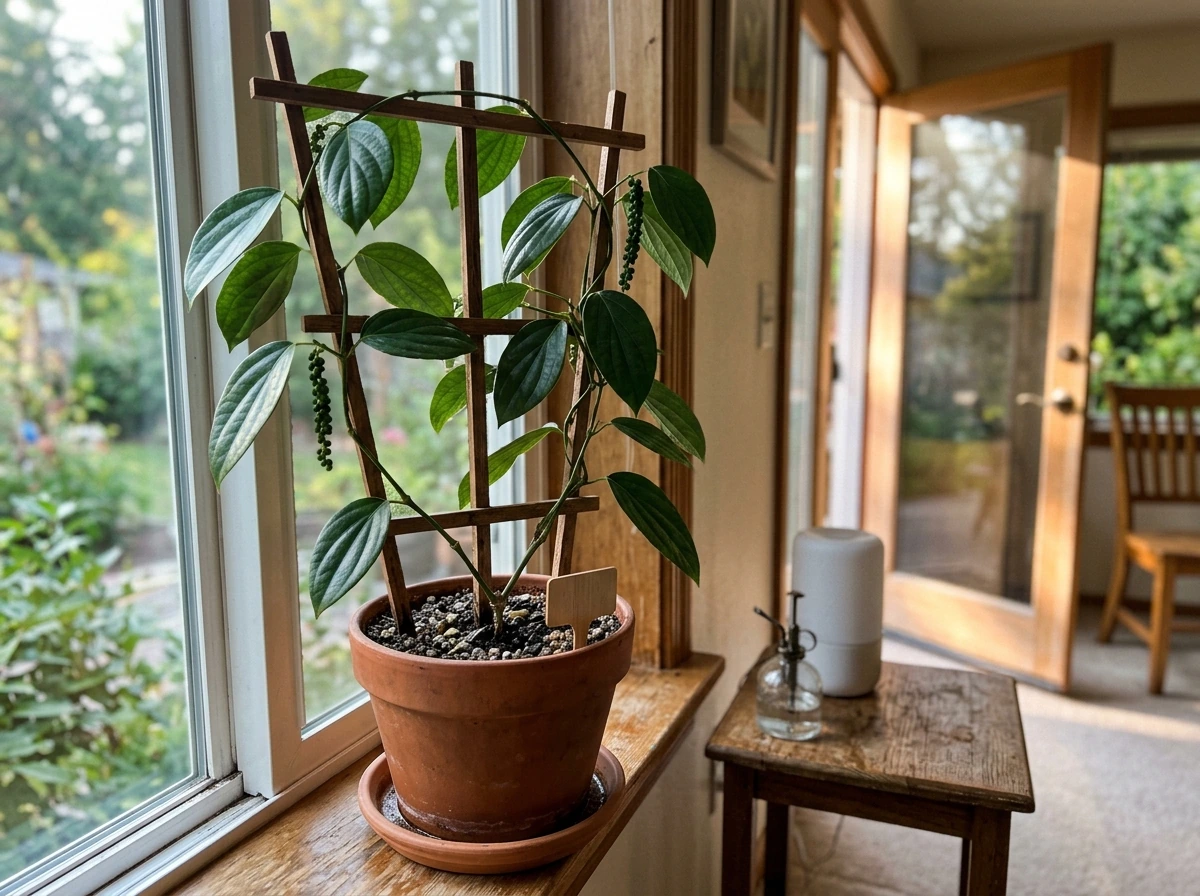
Piper nigrum is only reliably hardy in blank" rel="noopener noreferrer">USDA zones 12 and above for true year-round outdoor growing. That basically means Hawaii and the southernmost tip of Florida. In zones 10b and 11 (think Miami, the Florida Keys, parts of coastal Southern California), you might pull it off outdoors with careful siting and frost protection, but one cold snap below 40°F can set the plant back hard, and a frost will kill it. Anywhere north of that, Texas, Georgia, the Carolinas, California's Central Valley, the Pacific Northwest, you're looking at container growing with seasonal moves indoors. In Texas, that usually means treating black pepper as an indoor container plant and moving it outdoors only during warm months. I've seen people in Houston and San Diego push it outside in summer, and that can work great, but the plant needs to come inside before temperatures drop. If you're in Michigan, Minnesota, or anywhere with a real winter, treat this strictly as a houseplant with outdoor summer vacations.
The good news is that black pepper actually does reasonably well as an indoor container plant if you can meet its humidity and light requirements. The bad news is that most American homes in winter are too dry and too dark to make it thrive without some help. More on that shortly. (If you're specifically wondering about Texas or Michigan, there are region-specific guides on this site that go deeper on those climates.)
Seeds vs. peppercorns: the best way to start
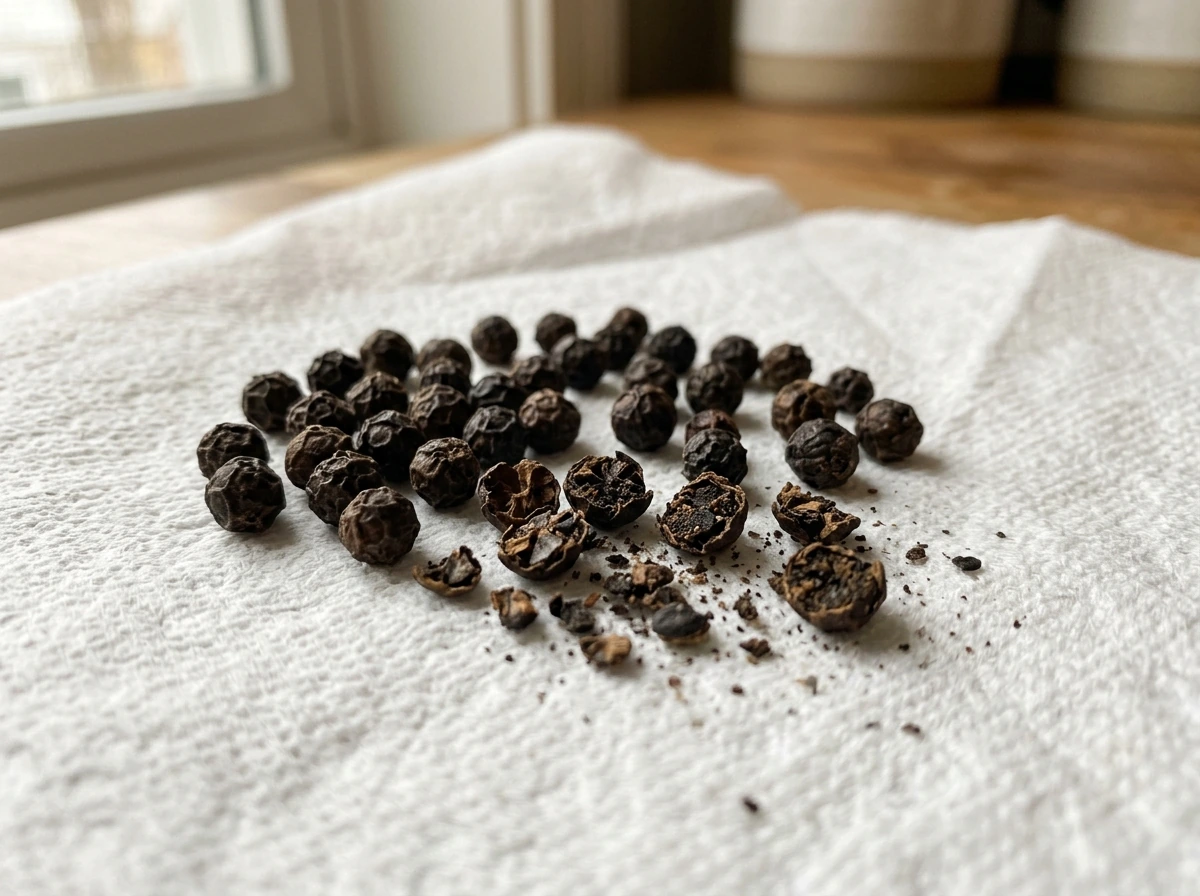
This comes up constantly, so let's settle it: can you use grocery store peppercorns as seeds? Technically, a whole dried peppercorn is the seed of Piper nigrum. But the ones you buy at the grocery store have almost always been dried or processed in a way that kills viability. Cracked pepper, ground pepper, and most commercially packed whole peppercorns will not sprout. I tried with three different brands before giving up on that route.
Your real options are to buy fresh seeds from a reputable seed supplier or to buy a small established plant from a specialty nursery. Logee's is one well-known source that sells black pepper as a potted plant, and buying a rooted cutting or young plant skips the germination headache entirely and puts you several months ahead. If you want to go the seed route, you need seeds that are fresh and haven't been commercially processed, ideally harvested within the last few months and kept moist, not dried out.
| Starting Method | Difficulty | Time to First Growth | Cost | Recommendation |
|---|---|---|---|---|
| Grocery peppercorns | Very hard (low viability) | Usually fails | Low | Not recommended |
| Fresh seeds from seed supplier | Moderate | 3–6 weeks to germinate | Low–Medium | Good option if you source carefully |
| Established plant or rooted cutting | Easy | Already growing | Medium–High | Best option for most home gardeners |
If you're starting from scratch today and want the most reliable outcome, buy a plant. If you enjoy the challenge of seed starting and can source genuinely fresh seeds, go for it, just manage your expectations around germination.
How to germinate black pepper seeds
Black pepper seeds are finicky, and the number one killer is using old or improperly stored seed. Fresh seed germinates in about 3 to 6 weeks under good conditions. Old seed can take much longer or simply rot in the soil. If you've been waiting 8 weeks and nothing has happened, the seeds are almost certainly not viable.
For germination, warmth is the critical factor. You want soil temperature consistently around 75 to 85°F (about 24 to 29°C). A heat mat set to 80°F under your seed tray makes a real difference here. Plant the seeds about a quarter inch deep in a light, well-draining seed-starting mix. Keep the mix evenly moist but not waterlogged, soggy conditions cause rot before germination. Cover the tray with a humidity dome or plastic wrap to hold moisture and warmth.
Light during germination is less critical than heat, but once sprouts appear, move them to bright indirect light immediately. Timing-wise, if you're in the Northern Hemisphere and starting indoors, late winter to early spring (late January through March) is a good window so seedlings are established before you might move them outside in summer. Given that it's late March 2026 right now, you're right at the edge of a good starting window, start seeds immediately if you're going this route.
Planting and growing the vine: containers, soil, and support
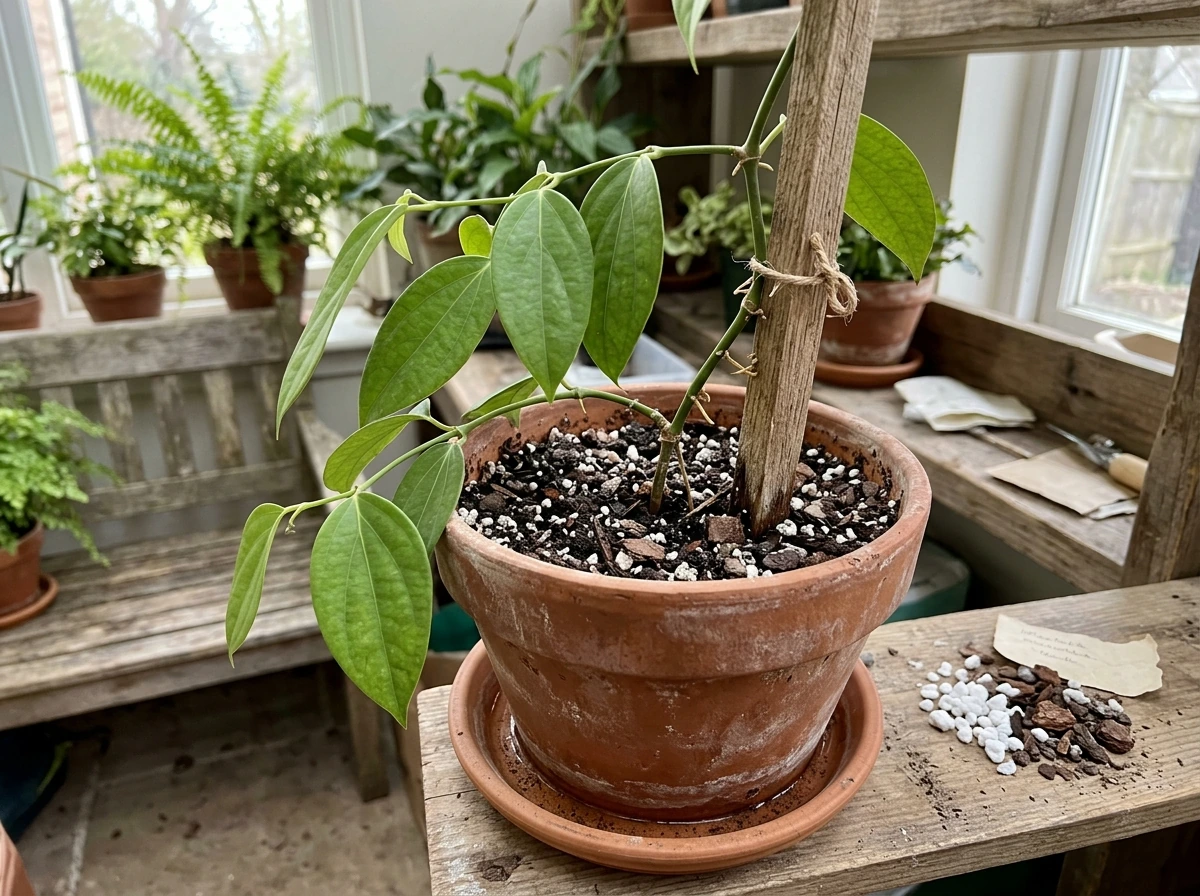
Black pepper is a climbing vine that uses aerial rootlets to attach to surfaces. In the wild it can reach 30 feet or more. In a container, you're looking at a much more manageable 6 to 12 feet, depending on the pot size and how much you let it run. For container growing, start a young plant in a 10 to 12 inch pot and move up to a 14 to 18 inch container as it matures. Terracotta pots work well because they allow airflow to the roots, which helps prevent the root rot that black pepper is prone to in soggy conditions. can you grow belladonna
Soil should be rich, loose, and fast-draining. A mix of good potting soil with added perlite (about 20 to 30 percent by volume) and a small amount of compost works well. Avoid heavy, water-retentive mixes. Black pepper roots don't like sitting in moisture. The soil pH should be slightly acidic, around 5.5 to 7.0.
For support, you'll need a trellis, moss pole, or bamboo stake from early on. The vine climbs readily and will cling to almost anything. A moss pole is particularly good because it holds moisture and the aerial roots love it. As the plant grows, loosely guide it upward and train it to the structure. You don't need to tie it tightly, the plant will grab on its own once it figures out the surface.
Watering is a balance. Black pepper likes consistent moisture but hates standing water. During active growth (spring through summer), water when the top inch of soil feels dry. In winter, back off significantly, the plant slows down and overwatering in winter is one of the most common ways to kill it. Always empty the saucer after watering so roots aren't sitting in pooled water.
Light, temperature, humidity, and feeding
Light
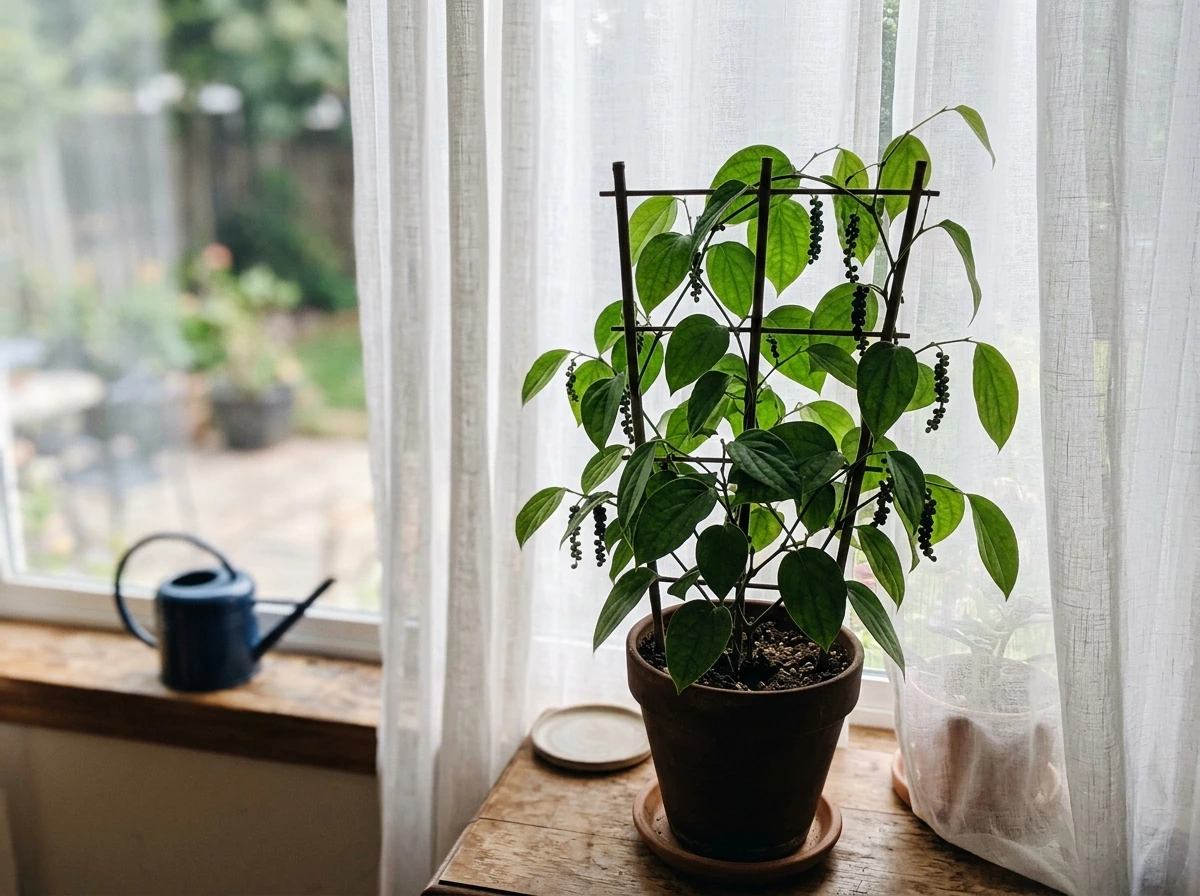
Outdoors, black pepper prefers bright filtered light or partial shade, it naturally grows under the canopy of taller trees in tropical regions. Indoors, it needs the brightest indirect light you can give it, ideally from a south or east-facing window. Direct afternoon sun through glass can scorch the leaves. If your home doesn't have great natural light, a full-spectrum grow light running 12 to 14 hours a day will make a significant difference in growth rate and health.
Temperature
This is where most U.S. home gardeners hit a wall. Black pepper wants temperatures between 65°F and 95°F at all times. The sweet spot is around 77°F (25°C). Logee's lists a minimum indoor temperature of 60°F for the plant to survive, but sustained temperatures below that will cause leaf drop and stress. Frost even briefly will kill it outright, blank" rel="noopener noreferrer">Desert Tropicals notes it's hardy only to about 32°F (0°C), and you should start protecting it well before it gets anywhere near that, keeping it above 40°F to be safe. In practical terms: don't leave it on a cold windowsill in winter where glass temperatures drop at night.
Humidity
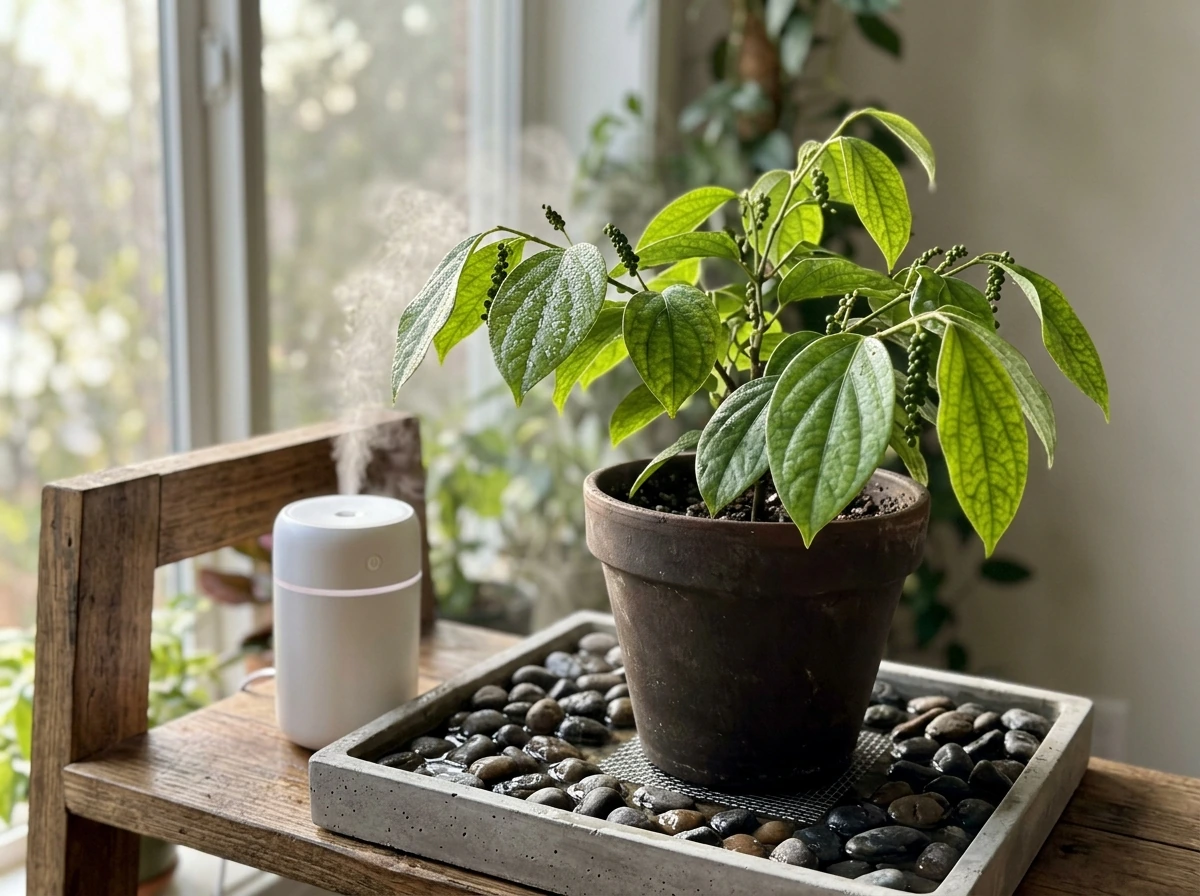
Black pepper wants around 80% relative humidity. The average American home in winter runs 30 to 50%. That gap is real and it matters. Dry air causes leaf edge browning and slows growth noticeably. You have a few options: run a small humidifier near the plant, place the pot on a tray of pebbles filled with water (the evaporation helps), mist the leaves regularly, or group it with other tropical plants that collectively raise the ambient humidity. I've had the best results using a small humidifier on a timer aimed at a cluster of tropicals.
Fertilizing
Feed regularly during the growing season (spring through early fall) with a balanced liquid fertilizer, something like a 10-10-10 or a fertilizer formulated for tropical foliage plants. Every two to three weeks at half the recommended strength works well. Slow down to once a month or stop altogether in winter when the plant isn't actively growing. Overfertilizing in winter when growth is slow can cause salt buildup in the soil, flush the pot with plain water every few months to prevent this.
When things go wrong: common problems and fixes
Seeds won't germinate
The most common cause is old or non-viable seed. If you're past 6 to 8 weeks with no sign of life and your heat mat is running, the seeds are almost certainly dead. Source fresher seeds and try again. The second cause is soil temperature that's too low, if you're not using a heat mat and your home is below 70°F, germination will be very slow or won't happen at all.
Slow or stunted growth
Nine times out of ten this comes down to light or temperature. Black pepper simply does not grow well in low light or cool conditions. If your plant is putting out tiny pale leaves or not growing much at all, add a grow light and check that temperatures are consistently above 65°F. Humidity is the other culprit, a plant stressed by dry air spends its energy trying to manage moisture loss rather than putting on new growth.
Yellowing or dropping leaves
Yellow leaves most often signal overwatering or root rot, especially in winter. Check the roots if you suspect this, healthy roots are white to tan, while rotted roots are brown and mushy. If root rot has set in, you'll need to remove the affected roots, let them dry slightly, and repot into fresh, dry mix. Cold drafts from windows or air conditioning vents can also cause leaf drop quickly.
Pests
Spider mites are the most common pest on indoor black pepper plants, especially in dry conditions. Look for fine webbing and tiny dots on the undersides of leaves. Treat with insecticidal soap or neem oil, and improve humidity to make the environment less hospitable to mites. Mealybugs and scale can also appear, both respond to neem oil applications or wiping with rubbing alcohol on a cotton swab for small infestations. Check new plants carefully before bringing them near your existing collection.
How long until harvest, and what to realistically expect
This is where I want to be genuinely honest with you: black pepper is a long game. A plant grown from seed typically takes 3 to 5 years to produce its first peppercorns. Even a well-established plant you buy from a nursery is likely 1 to 2 years away from flowering and fruiting indoors. The plant needs to reach a certain size and maturity before it will bloom, and indoor conditions (lower light, lower humidity) slow things down compared to outdoor tropical cultivation.
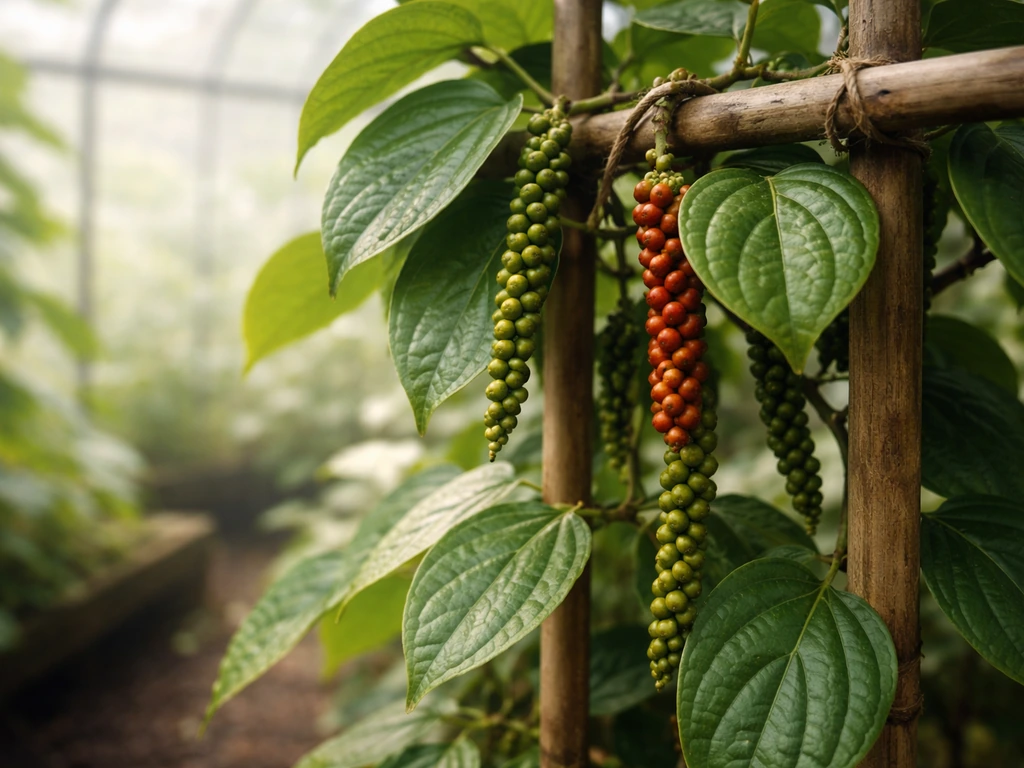
When flowers do appear, they form on long slender spikes called spikes or catkins. Each spike can hold 50 to 60 individual peppercorns. A mature vine in ideal outdoor tropical conditions can produce several pounds of peppercorns per year. Indoors in a container? Expect far less, a few ounces to maybe a pound in a good year from a mature, well-cared-for plant. That's not nothing, and there's real satisfaction in harvesting your own peppercorns, but you're not replacing your spice rack.
For outdoor growers in zones 10b to 12, the timeline accelerates somewhat. Plants get more sun, more consistent warmth, and higher ambient humidity, all of which push growth and fruiting. If you're in South Florida or Hawaii and planting in the ground with good conditions, you might see fruit in 2 to 3 years from a young plant.
Your next steps based on where you are right now
If you're in a warm, humid zone (Hawaii, South Florida, coastal Southern California): source a young plant from a nursery, pick a spot with bright filtered light and protection from frost, and plant it this spring. You're in the best position of any U.S. grower.
If you're in the rest of the U.S.: decide whether you want to start from seed or buy a plant. Given it's late March, buying an established plant now and setting it up indoors with a grow light and humidifier is the fastest path forward. If you're wondering about Canada specifically, the same key issue is that black pepper cannot tolerate frost, so you will need to grow it as an indoor container plant can you grow black pepper in canada. Get your container, potting mix, and trellis sorted first, then bring the plant home. Move it outside once nighttime temperatures are consistently above 60°F, and bring it back in before fall temperatures drop.
Is it worth it? I'd say yes, if you already enjoy growing tropical houseplants and aren't in a rush to harvest. The vine itself is attractive, the growing process is interesting, and there's something genuinely cool about having your own peppercorns. But if you're purely after a practical spice harvest, the years-long timeline and specific care requirements may not be the right fit. Go in knowing what you're signing up for, set it up properly from day one, and you'll have the best shot at actually getting to harvest.
FAQ
Will my indoor black pepper plant produce peppercorns without cross-pollination?
Black pepper does not self-pollinate reliably in indoor container conditions. Even if you get flowers, you may need hand-pollination (use a small brush to transfer pollen between blossoms on different parts of the plant). Also, flowering can be delayed if your plant stays too dry, too cool, or too shaded, so focus on consistent warmth and high humidity before you expect fruit.
When should I start training black pepper onto a trellis or moss pole?
Avoid forcing it to climb before it has enough root mass. If the vine flops early, it can spend energy leafing instead of rooting, and you may end up pruning later. A practical approach is to start training onto a stake or moss pole once the plant is actively putting out new leaves, then only upsize the pot when growth is steady.
How can I tell the difference between overwatering and other causes of yellow leaves?
If you want to prevent fungal or root-rot problems, use a “dry-down” method: water thoroughly until it drains, then wait until the top inch dries before watering again, and never let the pot sit in water in the saucer. If you notice persistent yellowing plus a sour smell or soft stems, repot promptly into a fresh, dry-leaning mix rather than just adjusting watering.
Can I leave my black pepper outside all summer, and how do I acclimate it?
Yes, it can be moved outside during warm months, but the key is acclimation. Bring it out only after nights stay comfortably warm (around 60°F or higher), increase exposure to bright filtered light over 7 to 10 days, and protect it from wind and full afternoon sun through glass.
What’s the most effective way to raise humidity for black pepper in a dry winter home?
For indoor humidity, a humidifier works best when you can keep the plant within a short distance of the output and run it consistently on a timer or humidistat. Pebble trays help only slightly because humidity drops quickly with airflow, so if your home is below 40% in winter, plan on a humidifier rather than relying on misting alone.
How often should I repot black pepper in a container?
Don’t rush a repot. If the plant is healthy, repotting too often can stall growth because it spends time re-establishing roots. Only move up one pot size when roots are visibly circling or you see slow draining and consistent drought stress despite proper watering.
Is it possible to propagate black pepper at home, and what’s the easiest method?
You can propagate black pepper, usually more successfully by cuttings than by seed if you want a faster path. Take a cutting from a healthy vine with at least one node, keep it warm and humid (similar temperature targets as for germination), and use a well-draining rooting mix. Expect roots in weeks, and treat it like a tropical plant immediately, not a temperate vine.
Why does my black pepper plant grow leaves but never flower indoors?
Peppercorns come from the plant’s fruit, which forms after flowering. If your plant stays vegetative for years, it’s often due to insufficient light, low humidity, or temperatures dipping in winter. Use bright indirect light plus a grow light if needed, maintain the warm range, and keep a steady feeding schedule in the growing season to improve your odds of eventually seeing spikes.
Does misting alone work to keep black pepper happy?
Misting is fine as a supporting step, but it rarely replaces humidity control because droplets evaporate quickly and airflow can dry the plant fast. If you mist, do it in the morning so leaves dry before night, and avoid wetting the soil surface more than necessary to prevent rot.
What’s the best way to set up a store-bought black pepper plant so it survives its first U.S. winter?
If you buy a nursery plant, assume it has been conditioned to a specific light and humidity range. Before the first winter, gradually transition it to your indoor setup, and avoid placing it on a cold windowsill where glass chills the plant at night. Make sure it has bright light (or a grow light) and a humidifier running early, not after leaf drop starts.
Next Articles
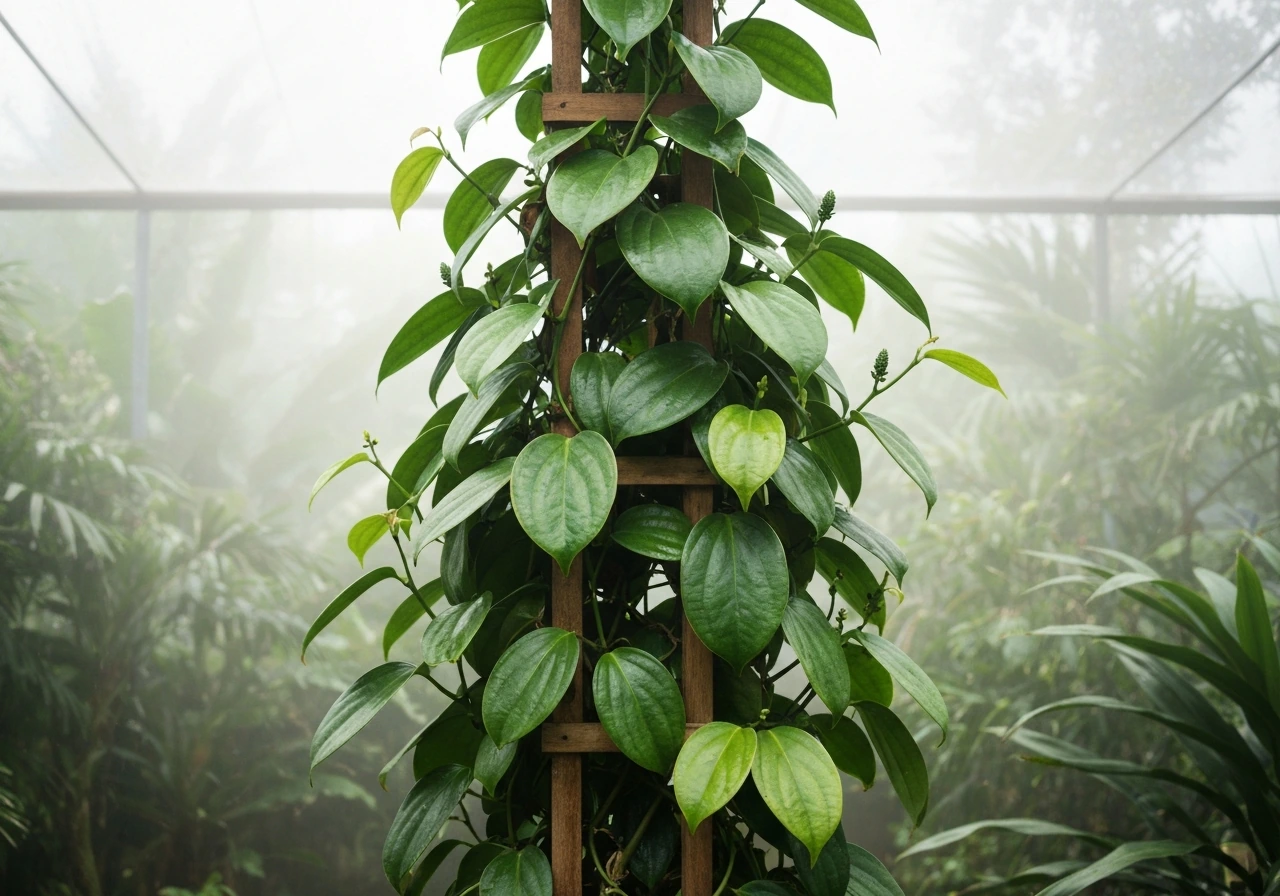
Can You Grow Black Pepper in the US Where and How
Learn where black pepper can be grown in the US and how to grow it indoors or in warm zones for fruit.

Can You Grow Capers in the US? Regional Guide for Home Gardeners
Regional guide to growing caper plants in the US, choosing cultivars, meeting soil and climate needs, and harvesting bud
Can You Grow Peppercorns in the US? A Zone-by-Zone Guide
Zone-by-zone guide to growing black pepper peppercorns in the US, including heat, humidity, indoor options, and timeline