
Yes, you can grow saffron in Georgia (U.S.), but the state's hot, humid summers and variable winters mean you need to pick your site carefully and manage drainage aggressively. In the cooler mountain areas (zones 7A–7B), conditions are close to ideal and in-ground planting works well. In metro Atlanta (zones 7B–8A) and especially in the coastal plain (zones 8B–9B), the challenge ramps up fast: summers are too hot and wet for corms sitting in the ground, and winter chill can be inconsistent. It's doable across most of the state, but your setup matters more than it does somewhere like Pennsylvania or Oregon.
Can You Grow Saffron in Georgia? Steps, Timing, and Tips

Marcus Petersen
18 May 2026
First, which Georgia are we talking about?

This article is about the U.S. state of Georgia, not the country of Georgia in the South Caucasus. That distinction matters because the two regions have very different climates. The country of Georgia sits at higher elevations with cooler, drier summers that are actually closer to saffron's native range. The U.S. state of Georgia is humid, subtropical, and warm. If you're trying to grow saffron in Tbilisi versus Savannah, you're dealing with completely different problems. From here on, everything is aimed at U.S. Georgia gardeners.
What saffron actually is and what it needs
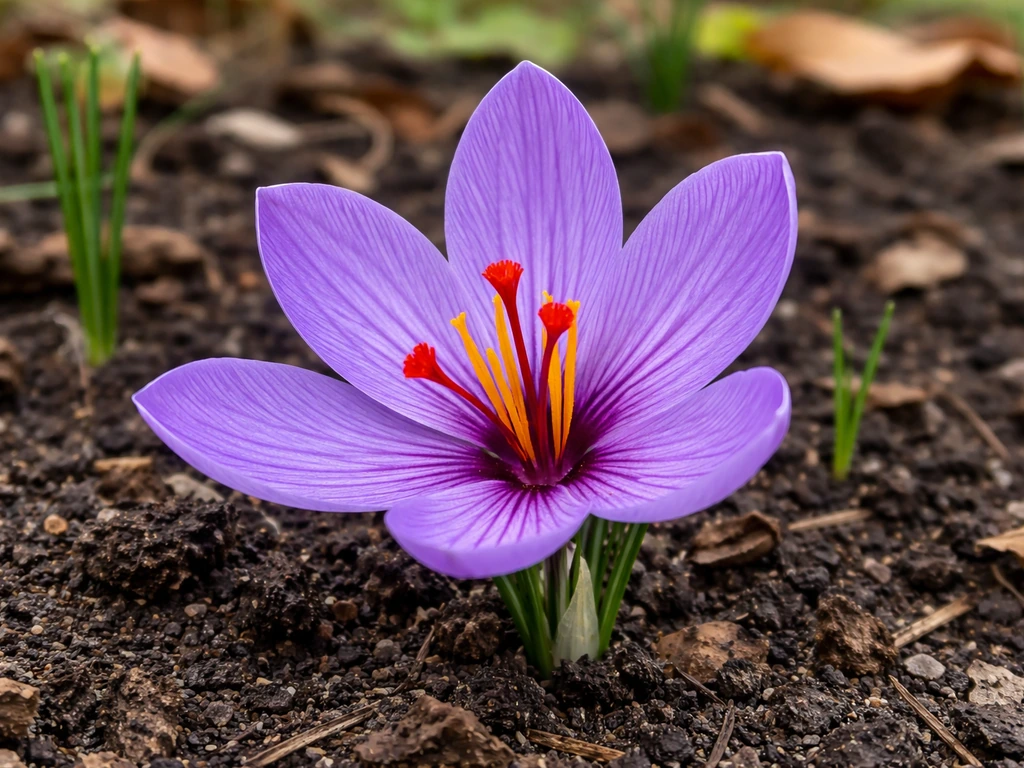
Saffron comes from Crocus sativus, a fall-blooming crocus that grows from a corm (not a true bulb, but think of it like one). The red stigmas inside each flower are the spice. Each flower has three stigmas, and each corm typically produces one to two flowers per season. Do the quick math: you need roughly 150 flowers to get 1 gram of dried saffron. That's not a typo. Saffron is labor-intensive everywhere, not just in Georgia.
The plant's life cycle is the opposite of most garden plants. Corms are dormant through the summer heat, flowers emerge in fall (usually October to November), foliage grows through winter and spring, and then the leaves die back by late spring as the plant goes dormant again until the next fall. That dormancy window in Georgia's hot, wet summer is the main vulnerability. The corms need to stay relatively dry and survive without rotting during summer. In a region that gets 50+ inches of rain annually, that requires some planning.
For basic requirements: full sun (at least 5 to 6 hours per day during bloom time), excellent drainage, a soil pH anywhere from 6.0 to 8.0, and a sandy loam texture if you can manage it. Saffron corms tolerate cold reasonably well but they absolutely cannot tolerate soggy soil. That is the number one killer in Georgia.
Picking the right spot (or container)
In-ground planting
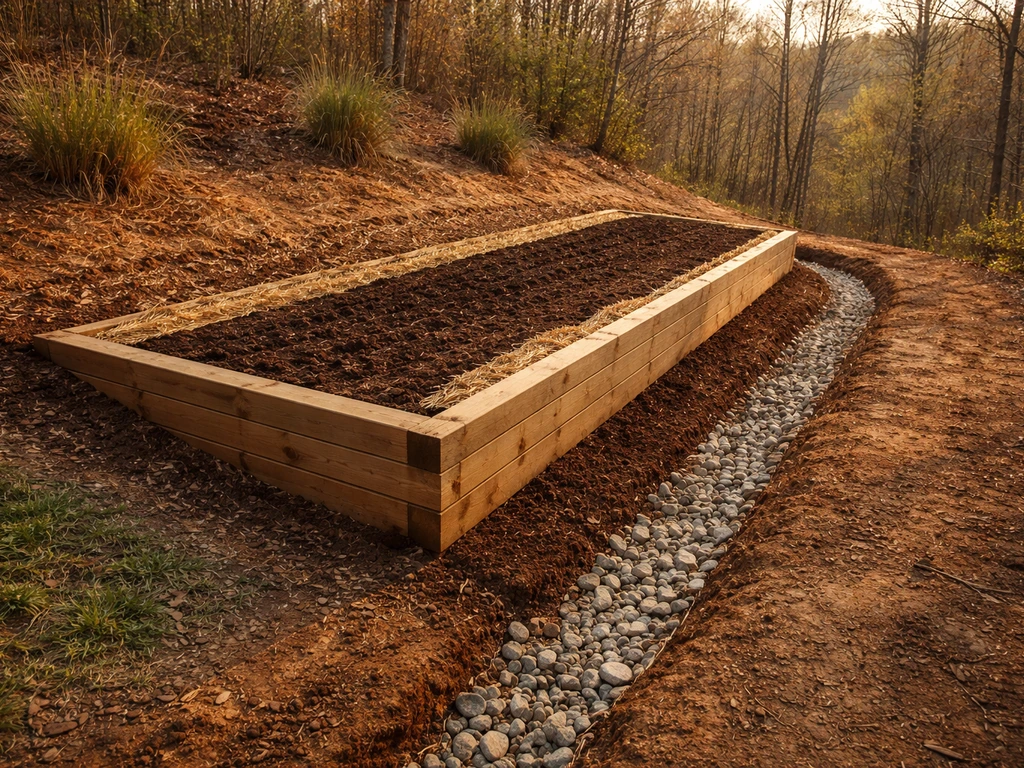
If you're in north Georgia or the mountains, in-ground planting on a well-drained slope or raised bed is your best bet. Look for a south or west-facing spot that gets at least 6 hours of sun and sheds water quickly after rain. Avoid low spots, the base of slopes where water pools, or any area that stays damp for more than a day after heavy rain. If your soil is heavy clay (which describes a lot of Georgia), you need to amend it or create raised beds before planting.
One practical approach for drainage: dig paths between your planting areas about 15 to 20 cm (6 to 8 inches) deep to create slightly elevated rows or mounds. This raises the corm zone above the surrounding soil and lets water drain away instead of pooling at root level. It sounds fussy, but it genuinely makes the difference between corms that rot in August and corms that bloom in October.
Container growing (especially for Atlanta and south Georgia)
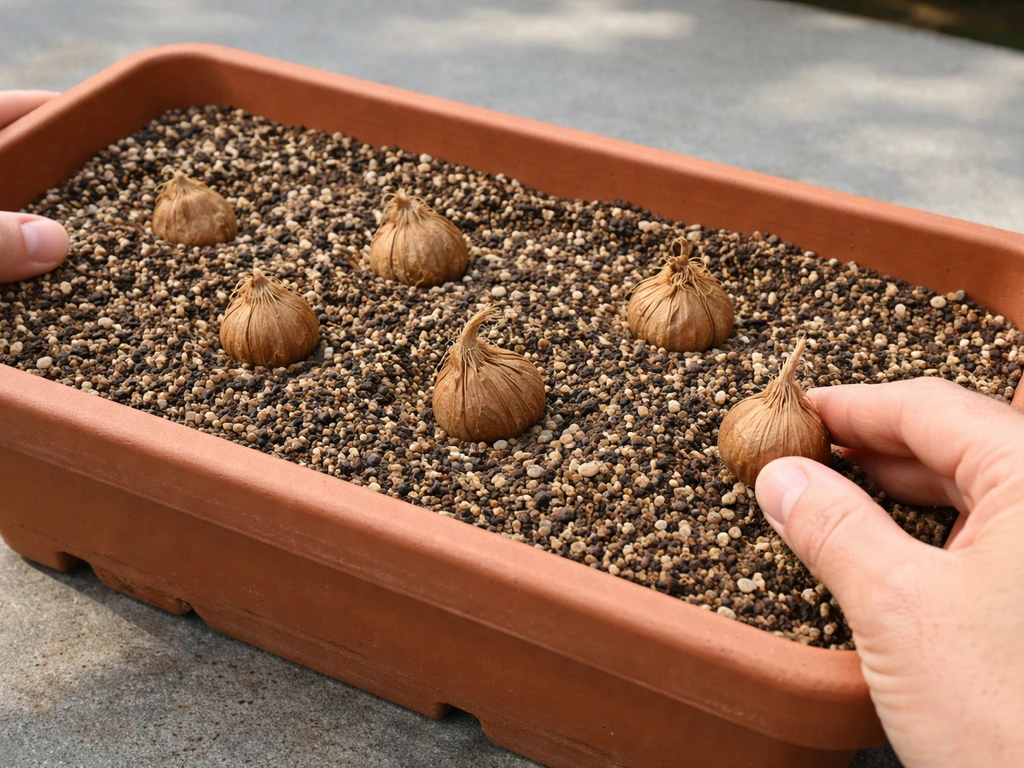
If you're in metro Atlanta or anywhere south of that, I'd seriously consider containers as your primary strategy. Growing in pots gives you total control over drainage and lets you move corms under cover during the wettest parts of summer dormancy. Use clay or plastic pots with multiple drainage holes, a well-draining mix (something like a 50/50 blend of potting mix and coarse sand or perlite), and don't let saucers collect standing water. When the foliage dies back in late spring, you can move the pots somewhere dry and sheltered until August when you start watering again to trigger fall growth.
| Factor | In-Ground (North Georgia) | In-Ground (Metro Atlanta/South) | Container (Any Location) |
|---|---|---|---|
| Drainage control | Good on slopes/raised beds | Risky without major amendment | Excellent |
| Summer moisture risk | Moderate | High | Low (moveable) |
| Winter chill | Reliable in zones 7A–7B | Variable in zones 8A–8B | Can supplement indoors if needed |
| Setup effort | Moderate | High | Low to moderate |
| Best for | Mountain/foothill gardeners | Raised bed only | Anyone in zones 8B–9B |
When and how to plant
Timing your planting
For Georgia, aim to plant corms in late August to mid-September. This is earlier than what some national guides suggest for northern states, because Georgia summers stay hot long enough that you want corms settling in while temps start to drop. If your summer has been brutal with sustained heat above 30°C (86°F), you can wait until mid-September without hurting anything. The corms will bloom in October to November regardless of when exactly you plant in that window. If you're sourcing corms by mail, order in July or early August so they arrive in time.
Step-by-step planting
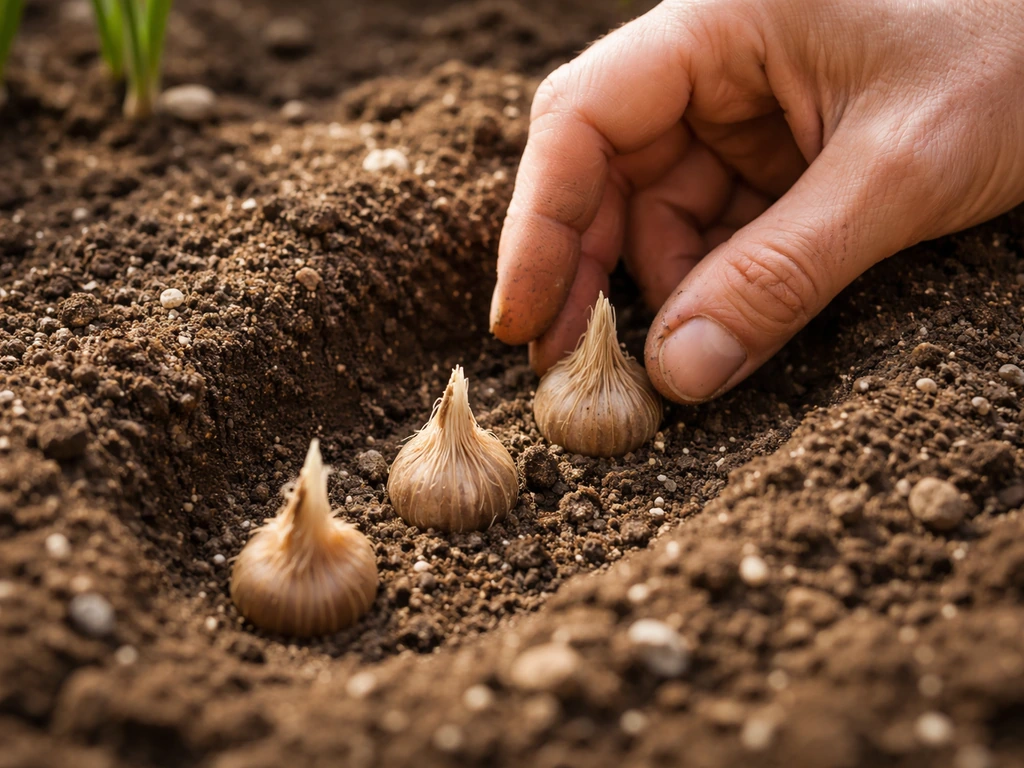
- Prepare the site by loosening soil 8 to 10 inches deep and mixing in compost or coarse sand to improve drainage. Avoid spots where other bulb crops have grown before (this reduces disease pressure).
- Plant corms 3 to 4 inches deep, with the flat base down and the pointed tip facing up.
- Space corms 3 to 4 inches apart in any direction. Closer spacing fills in faster but may need thinning after a few years.
- Water once after planting to settle the soil, then hold back on irrigation unless conditions are very dry. The corms don't need much water at planting time.
- Apply 2 to 3 inches of mulch (straw or leaf mulch) over the bed to moderate soil temperature and retain moisture during establishment. In Georgia's mild winters, this also protects against occasional hard freezes.
- Mark your planting area clearly. Saffron corms look like nothing from above in winter, and it's easy to accidentally disturb them.
Care through the season
Fall (planting through bloom)
Once the corms are in the ground, minimal watering is the rule. Georgia usually gets enough fall rainfall that you won't need to irrigate much, if at all. If October is dry, water sparingly. Flowers typically appear 6 to 8 weeks after planting and the whole bloom period lasts only 2 to 3 weeks, so stay alert and check the bed daily once you see the first leaves emerge.
Winter (foliage period)
After flowering, the foliage continues growing through winter. This is when the plant is rebuilding the corm for next year. Don't cut the leaves back. In most of Georgia, the foliage handles winter fine. In zone 7A mountain areas, a hard freeze below 0°F could be a concern, but that's uncommon. If a polar vortex event brings unusual cold, your mulch layer provides meaningful protection.
Spring (senescence) and summer (dormancy)
By April or May, the leaves yellow and die back. This is completely normal. Let them die on their own. Once foliage is gone, the corms enter summer dormancy. This is Georgia's most challenging season for saffron. The combination of heat and humidity creates ideal conditions for fungal rot. Stop watering entirely, keep the soil as dry as possible, and make sure your drainage setup is doing its job. If you're in a high-rainfall part of the state, a temporary rain cover over the bed during summer is not overkill.
No fertilizing is needed during the dormant period. You can apply a light balanced fertilizer or bone meal in fall when growth resumes, but honestly, many growers skip fertilizing entirely and do fine with decent soil.
Harvesting your saffron
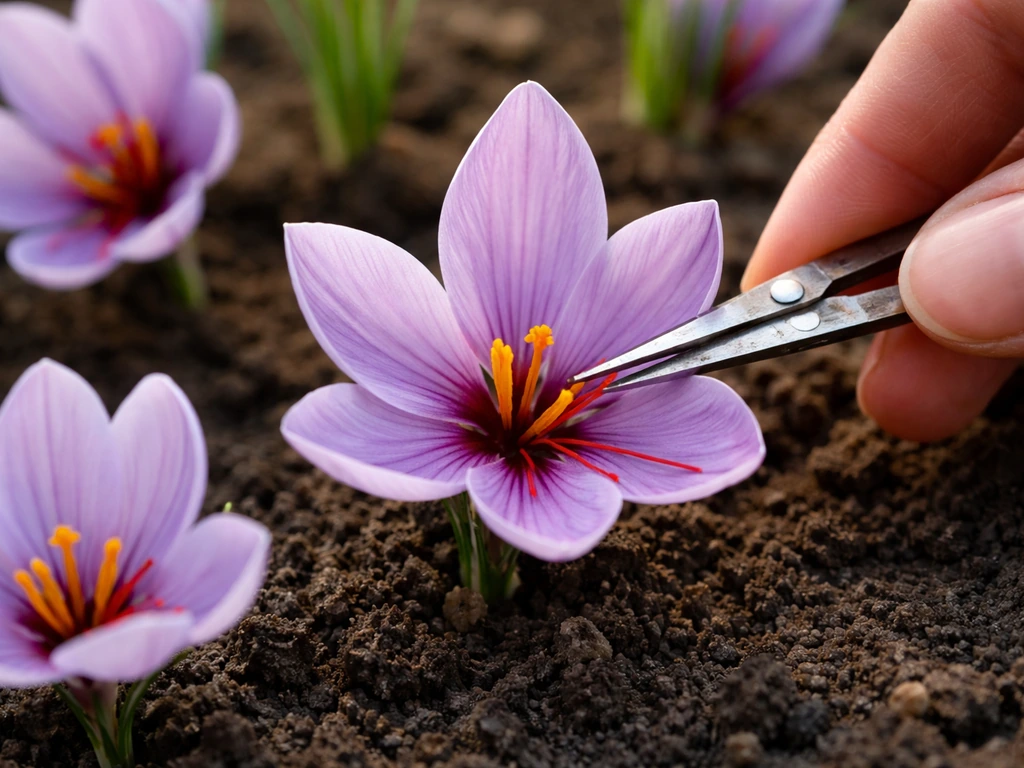
Harvest the same day a flower opens, ideally in the morning before the heat sets in. Pinch or use small scissors to remove the three red stigmas from the center of the flower. The yellow style and petals are not the spice. Don't let harvested stigmas sit in a pile because they'll degrade quickly. Spread them on a paper towel or small mesh screen in a warm, dry spot indoors and let them dry for 2 to 4 days. Once fully dry (they'll be crisp and brittle), store in an airtight container away from light. Dried saffron stays potent for at least a year.
On yield: be realistic. If you plant 50 corms and they all bloom (optimistic for year one), you might get 75 to 100 flowers. That's somewhere around 0.5 to 0.7 grams of dried saffron. It's enough to make a few dishes and genuinely impressive given how much store-bought saffron costs, but you're not replacing your grocery budget. Year two and three tend to improve as corms multiply and the plants establish.
Troubleshooting common problems
Corms rotting
This is the most common Georgia failure, and it's almost always a drainage problem. Fusarium and related fungal rot pathogens love warm, wet soil, which Georgia has plenty of in summer. If you're losing corms, improve drainage before replanting, avoid replanting in the same spot for at least two to three years, and consider starting fresh corms in containers where you control the medium. Pre-plant drying of the soil by avoiding irrigation entirely for 2 to 3 weeks before planting can also help.
No flowers (or very few)
A few possible causes: the corms didn't get enough chill hours over winter (more of an issue in zone 9 coastal Georgia), the planting site doesn't get enough sun, the corms were planted too late and didn't have time to establish before bloom, or you bought the wrong species. Make sure you're buying Crocus sativus specifically, not a fall decorative crocus like Colchicum or a spring crocus. If you're in south Georgia and flowers are sparse, try shifting to containers that you can move to a slightly cooler north-facing spot in late winter to extend the chill period.
Rodents and other pests
Squirrels, voles, and chipmunks love corms. Protect your planting area with hardware cloth buried 2 to 3 inches below the soil surface or use a wire cage around container plantings. This isn't optional in Georgia where wildlife pressure is high. Losing a full planting to a single determined squirrel is genuinely demoralizing.
Weeds smothering the crocuses
Saffron crocus foliage is small and low. Vigorous weeds can easily outcompete it, reducing light and airflow and increasing disease risk. Keep the bed weeded, especially through winter and spring when the plant is actively growing. Mulch helps suppress weeds but don't pile it so deep it buries the emerging foliage.
What to do going into next season
After a few years, corms multiply and can become overcrowded, which reduces bloom production. Dig and divide them every 3 to 4 years, usually in summer when they're dormant. Replant the largest corms in fresh soil (not the same spot) and either discard smaller offsets or grow them on in a separate nursery bed. If you had rot problems, discard any soft or discolored corms rather than trying to salvage them.
Is it worth trying? Here's my honest take
If you're in north or central Georgia, zones 7A through 8A, and you have a well-drained sunny spot or you're willing to build a raised bed, yes, this is genuinely worth trying. USDA hardiness zone maps categorize Georgia as spanning zones 7A through 9B (six distinct zones overall) blank" rel="noopener noreferrer">USDA hardiness zones 7A through 9B. If you're wondering can we grow saffron in Karnataka, look for a similar setup with full sun and excellent drainage, then plan to keep the corms dry during the hottest, most humid season north or central Georgia. The climate is workable, the investment is low (corms are inexpensive), and the payoff of harvesting your own saffron is real. If you're in coastal or south Georgia in zones 8B to 9B, containers are your best path and summer dormancy management is critical. It gets harder but it's not hopeless. Can you grow saffron in Texas? The key is the same: excellent drainage and keeping the corms dry through hot, humid summer months.
- Try it if: you have a sunny, well-drained raised bed in zones 7A–8A, you can source Crocus sativus corms (not other species), and you're patient enough for small first-year yields
- Try containers if: you're in metro Atlanta south to the coast, your soil is heavy clay with poor drainage, or you want flexibility to manage summer dormancy
- Wait or skip if: you're in the far south coastal plain with very mild winters, summers regularly exceed 95°F for weeks on end, and you're not prepared to manage drainage actively
If you've been reading about growing saffron in neighboring states like Alabama or South Carolina, the Georgia situation is broadly similar but with more zone diversity. North Georgia growers actually have a slight advantage over much of Alabama's southern lowlands. Coastal conditions in Georgia and South Carolina are comparably challenging. The main takeaway is the same across all of them: drainage and summer dormancy management matter more than anything else.
To get started, order Crocus sativus corms from a reputable supplier in July or August for fall delivery. Sativus.com and Johnny's Selected Seeds both ship to U.S. customers. Sativus.com ships saffron corms to U.S. customers, which can be useful if you are relying on imported corms for marginal climates like Georgia Sativus.com ships to U.S. customers. The UGA Cooperative Extension office in your county is also a good local resource for soil testing and drainage advice specific to your part of the state. Test your drainage before you plant, build up your bed if needed, and commit to keeping that soil dry through summer. Do those three things and Georgia saffron is genuinely achievable.
FAQ
Can you grow saffron in Georgia if you have clay soil and poor natural drainage?
Yes, but plan to create a true drainage system rather than relying on amendments alone. Use raised beds or mounds for the corm zone, and if you can, test how fast your bed drains by filling it with water and timing how long it takes to drop. If water still sits after a day, containers or a steeper slope are usually safer than in-ground planting.
How do I know whether my site gets enough chill for Crocus sativus in Georgia?
Chill needs vary by corm and year, but in Georgia, coastal areas (zone 9B) are the most likely to have uneven dormancy. If you are not getting reliable cold snaps, prioritize containers you can move into a slightly cooler microclimate (sheltered but not warm) during late winter, instead of committing to one fixed bed.
What should I do if my saffron corms rot even though I stopped watering in summer?
If rot happens, it usually means the bed stays too wet from rainfall or dew, not irrigation. Add a rain cover during the hottest wet weeks, check that your slope or mound is shedding water quickly, and consider lifting and discarding any soft corms. Then replant fresh corms in a different location (or in containers with sterile, coarse media).
Is there a “right” way to cover saffron beds during Georgia summer dormancy?
If you cover, do it to block rain but still keep the corm zone airy and dry. A simple temporary rain cover works, but avoid sealing the bed airtight, since trapped humidity can encourage fungal growth. Keep the cover off during dry weather so the soil can fully dry.
Can I leave saffron corms in the ground year after year in Georgia?
You can, but expect performance to decline as corms multiply and overcrowd. Divide and replant about every 3 to 4 years, and avoid replanting back into the same spot if you had rot issues. Fresh soil and improved drainage are often more effective than trying to “treat” the bed.
Do I need to mulch saffron in Georgia, and when should I remove it?
Mulch can help during unusual cold, but it can also trap moisture if it stays heavy through Georgia’s wet summer. Use mulch primarily to manage winter extremes, then keep the bed as dry as possible during dormancy. If you mulch year-round, remove it before peak summer rains so the corm zone can dry quickly.
How much sun is actually enough for saffron in Georgia?
Aim for at least 5 to 6 hours during bloom, but more is better if it is paired with fast drying. Morning sun is helpful because it warms and dries flower and leaf surfaces quickly after dew. If your yard has bright afternoon sun but the bed stays shaded part of the day, you may get fewer blooms and more disease pressure.
Will squirrels or voles ruin saffron even in containers?
Yes, if the container openings are accessible. Use hardware cloth (not just decorative screening) around container openings and keep gaps covered, since rodents can push through weak mesh. For in-ground beds, bury barriers 2 to 3 inches deep because pests often work from below the surface line.
What mistakes cause the most poor saffron yields in Georgia?
The top issues are planting too late so corms never fully establish, insufficient drainage leading to partial corm loss, and harvesting delays that reduce stigma quality. Also, be sure you are counting flowers in the same season, since corms often multiply gradually and year one yields tend to be modest.
Can I grow saffron from seed instead of buying corms in Georgia?
Practical answer: it is usually not worth it. Saffron is grown from corms because seed takes much longer to reach reliable flowering, and genetic variation can affect bloom timing and vigor. For Georgia conditions, buying Crocus sativus corms is the fastest route to workable fall harvests.
Next Articles
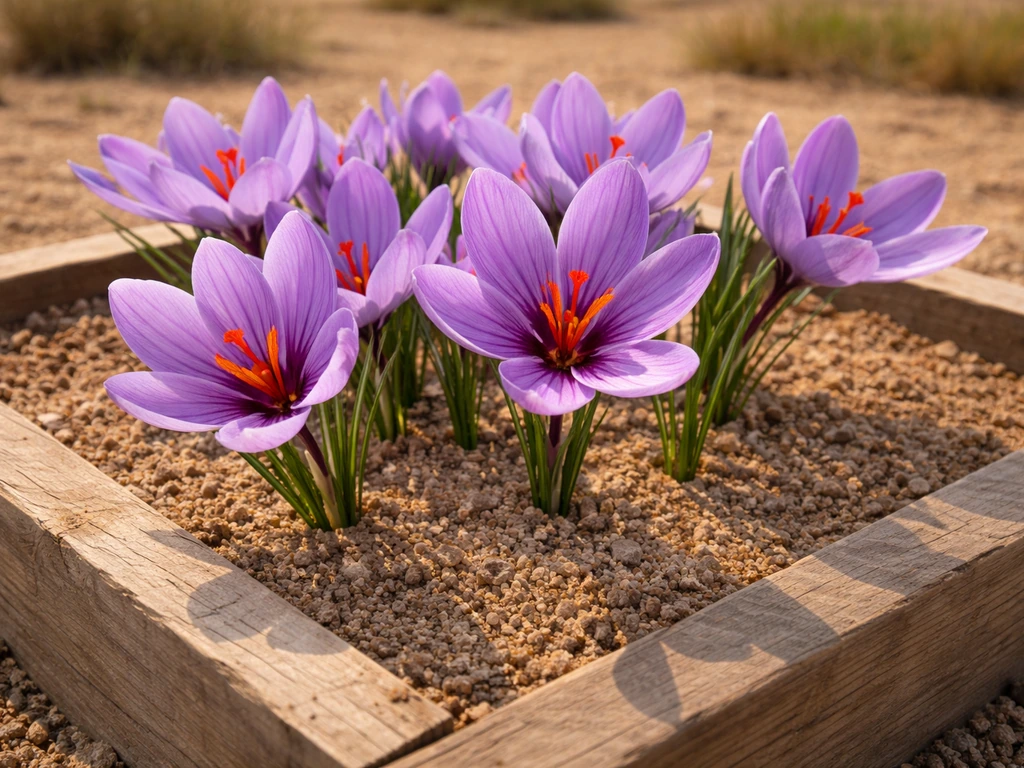
Can You Grow Saffron in Texas? How to Do It
Learn if you can grow saffron in Texas and get step by step planting, climate tips, harvesting, and thread extraction.
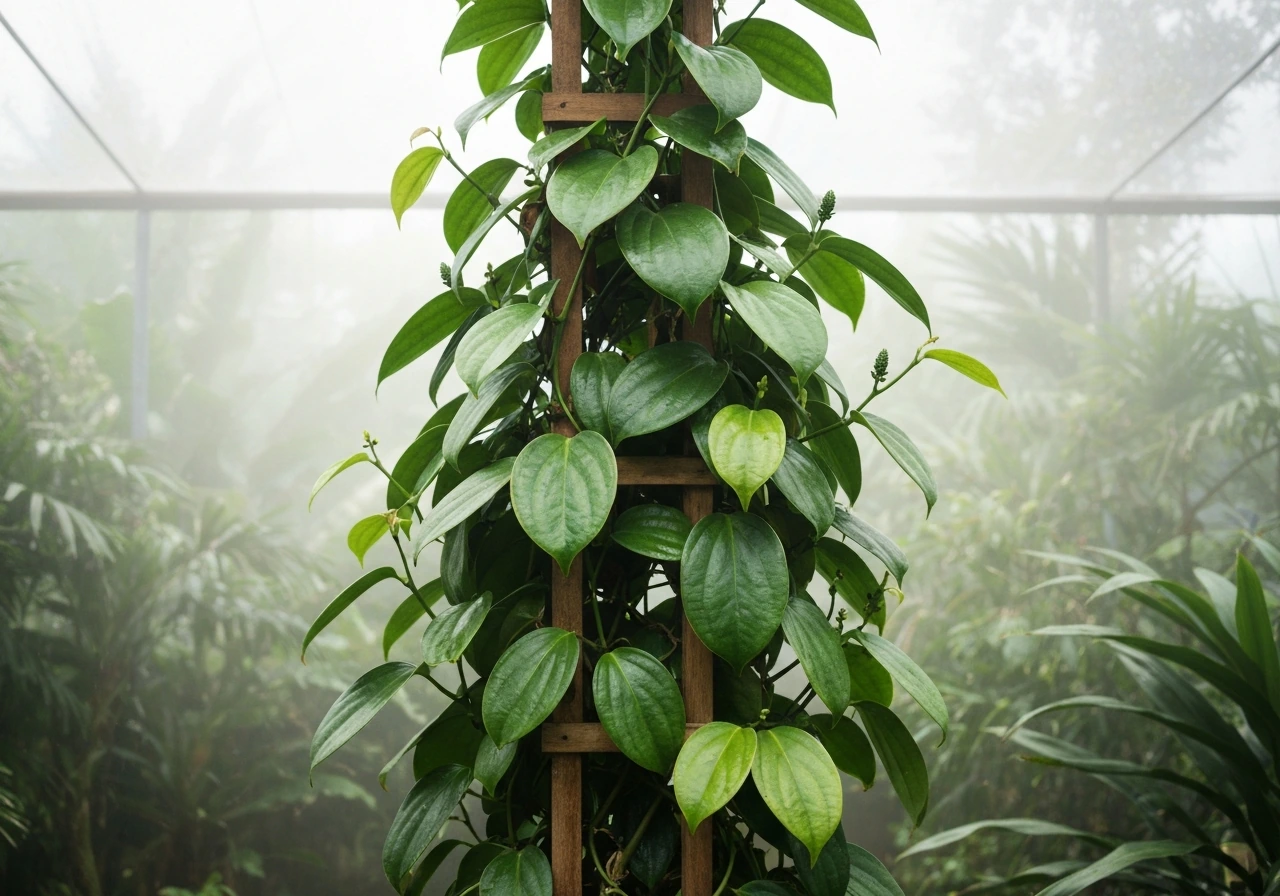
Can You Grow Black Pepper in the US Where and How
Learn where black pepper can be grown in the US and how to grow it indoors or in warm zones for fruit.

Can You Grow Capers in the US? Regional Guide for Home Gardeners
Regional guide to growing caper plants in the US, choosing cultivars, meeting soil and climate needs, and harvesting bud