
You can technically grow lychee in Ohio, but not outdoors with any reliability. Lychee (Litchi chinensis) is a subtropical evergreen that belongs in USDA zones 10a–11. Most of Ohio sits in zones 6a–6b, where winter lows routinely drop well below the threshold that kills young lychee trees outright. Your realistic paths are container culture (bringing the tree indoors each winter), a heated greenhouse, or a very protected indoor setup with a bright south-facing window or grow lights. Fruiting is genuinely difficult and not guaranteed even with a healthy tree, but it is possible with patience, the right cultivar, and a proper cool-induction period.
Can You Grow Lychee in Ohio? Feasibility, Care & Alternatives

Marcus Petersen
16 Jul 2026
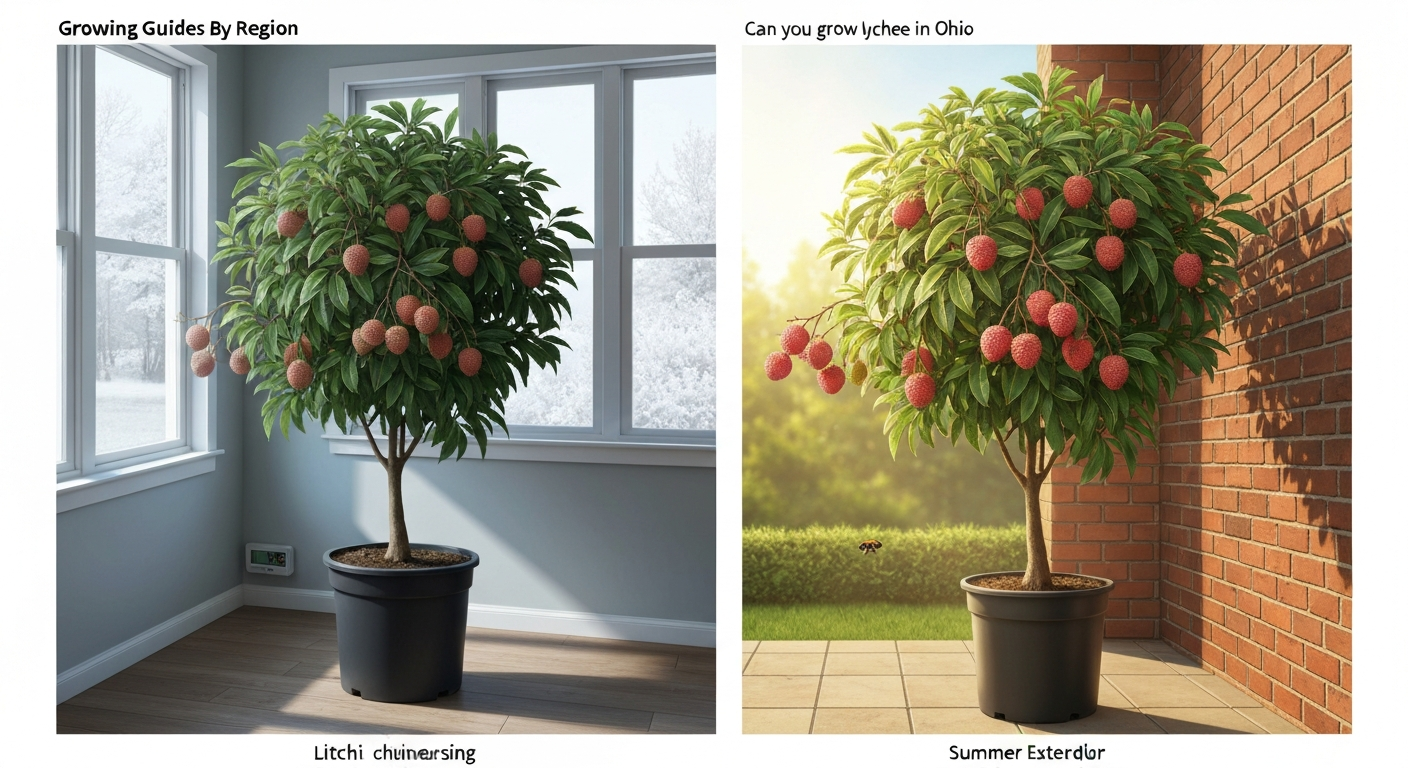
Quick verdict: can you grow lychee in Ohio?
Outdoors: no, not in any sustainable way. In a container that overwinters indoors or in a greenhouse: yes, with significant effort. Expect years before any fruit and no guarantee even then. If your goal is eating fresh lychee you grew yourself, this is a long-haul project. If your goal is simply keeping an interesting subtropical tree alive and leafy, that is far more achievable.
Why lychee is challenging here, Ohio climate vs lychee's needs
Lychee evolved in southern China and thrives in humid subtropical conditions. Its optimum daytime temperature range for growth and fruiting sits around 25–35°C (77–95°F). It wants long, hot, humid summers and a short, dry, modestly cool (but frost-free) winter to trigger flowering. Ohio delivers two of those things reasonably well: humid summers and a cool period. The problem is that Ohio's cool period is far too cold. Heavy frosts kill young lychee trees outright. Even mature trees, which can shrug off a brief light frost, struggle with sustained below-freezing temperatures. Ohio winters regularly serve up weeks of temperatures below 0°C, with extremes in inland areas dipping to -15°C or colder. That is simply incompatible with keeping lychee alive in the ground.
There is also the growing-season length to consider. Ohio State University extension data puts median last-spring-freeze dates at roughly mid-April in the south to late April in the north, with first fall freezes often arriving in October. That gives you a frost-free window of around 150–190 days depending on where you are. Lychee needs a long, warm, frost-free season to put on the growth necessary to eventually flower and fruit. Even in a container that you move outside for summer, you are working against the clock every year.
Ohio hardiness zones, frost risk and temperature thresholds for lychee
Ohio's 2023 USDA Plant Hardiness Zone Map shows most of the state in zones 6a and 6b, with minimum average extreme temperatures ranging from about -23°C to -17°C (-10°F to 0°F). Lake Erie's moderating influence pushes Cleveland, Lakewood, and other shoreline communities into zone 7a, where winter lows average a somewhat milder -17°C to -12°C (0°F to 10°F). Ohio Plant Hardiness Zones, Plantmaps (based on 2023 USDA map) lists city-level zones and shows Cleveland, Lakewood, and other Lake Erie shore communities in zone 7a Ohio Plant Hardiness Zones — Plantmaps (based on 2023 USDA map). Southern Ohio pockets also touch 7a in favored spots. But even zone 7a is three to four full zones colder than where lychee can reliably survive outdoors. For reference, outdoor lychee production in the U.S. happens in Florida, Hawaii, and some sheltered California locations, all zone 10 or warmer.
| Ohio Zone | Typical Cities | Min. Avg. Extreme Temp | Lychee Outdoor Survival? |
|---|---|---|---|
| 6a | Columbus (parts), Mansfield, interior rural areas | -23°C to -20°C (-10°F to -4°F) | No — will kill even mature trees |
| 6b | Columbus (most), Dayton, Akron, Toledo | -20°C to -17°C (-4°F to 0°F) | No — fatal to lychee |
| 7a | Cleveland, Lakewood, Cincinnati (parts), southern Ohio pockets | -17°C to -12°C (0°F to 10°F) | No — still far too cold for outdoor survival |
The frost-date picture reinforces this. Even in zone 7a along Lake Erie, a hard freeze in late April can catch an unprotected subtropical tree right as it is flushing new growth in spring. And the first October freeze can arrive before you have had a chance to harden anything off. For tender tropicals, those bookend frosts are where most outdoor experiments end badly.
Outdoor growing in Ohio: feasibility, site selection and why it's very unlikely
I want to be direct here: planting lychee in the ground in Ohio and expecting it to survive winter is not a realistic plan. I have seen hobbyists try it with heavy mulching, frost cloth, and Christmas lights for heat, and the trees die anyway once temperatures plunge into the teens Fahrenheit. Young lychee trees are especially vulnerable; they offer almost no cold tolerance. Mature trees can handle a brief, light frost (say, a couple of hours just below 0°C), but they still need the surrounding temperature to recover quickly. Ohio winters do not work that way.
If you are determined to try an outdoor experiment, the absolute best-case site in Ohio would be a south-facing wall in a zone 7a microclimate near Lake Erie, with the tree heavily mulched at the roots, wrapped with frost cloth, and situated where the building provides radiant heat. Even then, you would be gambling the tree on every winter. This is not a strategy I would recommend for a plant that takes years to establish and costs $50–$150 as a grafted nursery specimen. The outdoor route in Ohio is essentially a curiosity experiment, not a growing strategy.
Container and indoor culture: advantages, limitations and when it works
Growing lychee in a container is the approach that actually makes sense for Ohio. The logic is straightforward: you keep the tree in a pot, move it outside from late May through September to soak up heat and sunlight, then bring it indoors before the first frost in October. Indoors, it needs a cool-but-frost-free period to trigger flowering, followed by warmth to push out growth and (eventually) fruit. This mirrors what the tree experiences naturally in its native subtropical range.
The limitations are real, though. Lychee trees grow slowly and can eventually reach 9–12 meters outdoors. In a container, growth is restricted, which actually helps manageability, but you still end up with a large, heavy pot within a few years. Moving a 15-gallon container with a lychee tree is not a one-person job. Lychee also does not love being root-bound for too long, so repotting every two to three years is necessary. Indoors during winter, the tree needs very bright light, ideally a sunny south-facing window or supplemental LED grow lights, and careful watering because overwatering in low-light indoor conditions is one of the fastest ways to kill a containerized lychee.
When does container culture work? When you have a space (a sunroom, a bright garage, a spare bedroom with grow lights) that stays above freezing but stays relatively cool (7–15°C / 45–60°F) through winter. That cool period, ideally combined with reduced watering, is actually useful: it provides the low-temperature induction that lychee needs to initiate flowering. Research in controlled chambers has shown near-100% flowering in lychee trees given a low-temperature treatment, versus zero flowering in trees kept warm year-round. So Ohio's cold winters are, paradoxically, one thing that can work in your favor if you manage the transition carefully.
Greenhouse production: setup, heating, humidity and cost considerations
A heated greenhouse gives you the most control and the best realistic shot at eventually fruiting a lychee tree in Ohio. The key requirements are: maintaining temperatures above 4°C (40°F) at all times in winter (ideally 7–15°C / 45–60°F for the cool induction phase), then ramping up to 25–35°C (77–95°F) during the growing and fruiting phase. Humidity matters too, lychee prefers 60–80% relative humidity, which Ohio's dry-heated indoor air in winter does not naturally provide. A small humidifier or regular misting is important.
The cost side of this equation is worth being honest about. Heating a greenhouse in an Ohio winter is not cheap. A propane or electric heater sized for even a modest 8x10-foot greenhouse will add meaningfully to your utility bills from November through April. Double-walled polycarbonate glazing helps significantly with heat retention versus single-pane glass or plastic film. If you already have a greenhouse for other plants, adding a lychee tree to your existing heated space is a very reasonable approach. Building a greenhouse specifically for lychee is a harder financial case to make.
Pollination is another greenhouse-specific challenge. Lychee relies heavily on insect pollinators, particularly bees and flies, and studies using exclusion cages have shown dramatic drops in fruit set when insects are kept away from the flowers. In a greenhouse, you will likely need to hand-pollinate using a small paintbrush to transfer pollen between flowers, or deliberately open the greenhouse during flowering to allow insect access on warm days. Growing at least two different cultivars improves fruit set, since many lychee varieties have low self-fertility.
Microclimate tactics to squeeze success from marginal sites
Whether you are growing in a container outdoors during summer or attempting any kind of protected outdoor situation, microclimate management matters. South-facing walls, masonry or brick surfaces that absorb and re-radiate heat, and sheltered corners that block north and west winds all add meaningful degrees of warmth. Lake Erie's moderating influence in northeast Ohio is real: communities directly on the shoreline often avoid the hardest freezes that hit interior areas. If you are in Cleveland or Lakewood, you have Ohio's best microclimate for pushing subtropical plants.
- Place containers against a south or southwest-facing brick or masonry wall to capture radiated heat
- Use black or dark-colored containers to absorb more solar heat at the root zone
- Cluster multiple containers together to reduce individual exposure on cool nights
- Use a portable heat mat or root-zone heating for container-grown trees during transitional months
- Deploy frost cloth or a temporary cold frame during late-spring frosts when the tree is outside
- Avoid low-lying areas where cold air pools on still, clear nights — even a slight elevation helps
None of these tactics change the fundamental calculus of Ohio winters for in-ground lychee. But they can extend your outdoor season by a few weeks in spring and fall, which adds up to meaningful additional growing time for a tree that grows slowly and needs every warm day it can get.
Picking the right cultivar and plant type for Ohio conditions
Always buy a grafted or air-layered plant, not a seedling grown from seed. Lychee seedlings are genetically variable and do not reliably reproduce the fruit characteristics of the parent. More practically, seedling lychee trees can take 10–25 years to bear fruit, while grafted or air-layered trees from reputable nurseries can fruit in as few as 3–5 years under good conditions. This matters enormously when you are already working against Ohio's climate constraints.
For container and cool-climate growing, look for cultivars known for earlier bearing, relatively compact growth, or demonstrated performance in marginal conditions. Mauritius (also sold as Tai So) is one of the most widely available and reliably grown varieties in the U.S. outside Florida, and it tends to be a bit more adaptable to container culture. Brewster is another commonly available option. Kaimana, developed in Hawaii, is known for relatively consistent bearing. Kwai May Pink and Hak Ip are prized for fruit quality but can be harder to source. Avoid purchasing unnamed seedling plants from general nurseries, pay the premium for a named, grafted cultivar from a specialty tropical-fruit nursery.
| Cultivar | Availability | Notes for Container/Cool-Climate Growing |
|---|---|---|
| Mauritius (Tai So) | Widely available | Most common in U.S. nurseries; reliable bearer; good starting point for Ohio hobbyists |
| Brewster | Common | Large fruit; can be vigorous; manageable in large containers |
| Kaimana | Moderate | Hawaiian origin; consistent bearer; worth seeking out |
| Kwai May Pink | Specialty nurseries | Excellent fruit quality; less commonly sold; worth the search |
| Hak Ip | Specialty nurseries | High quality; moderate vigor; good for containers with pruning |
Step-by-step planting: containers, potting mix, pot size and technique
Start with a 7–10 gallon container for a young grafted tree and plan to step up to a 15–25 gallon container within two to three years. Lychee does not like sitting in soggy soil, so drainage is critical. Choose a container with multiple large drainage holes. A pot with wheels is worth every penny once the tree gets established.
- Choose a named, grafted or air-layered cultivar from a specialty nursery. Inspect the graft union — it should be fully healed with no cracks or discoloration.
- Use a well-draining mix: a blend of roughly 50% quality potting mix, 30% perlite or coarse sand, and 20% orchid bark or pine bark fines works well. Lychee prefers a slightly acidic pH of 5.0–6.5.
- Add a thin layer of coarse gravel or broken pottery over the drainage holes before filling to prevent clogging.
- Plant at the same depth the tree was growing in the nursery container — do not bury the graft union.
- Water thoroughly at planting until water drains freely from the bottom, then allow the top 2–3 cm of the mix to dry before watering again.
- Place the newly potted tree in a warm, bright location — a south-facing window or under grow lights. Avoid cold drafts from windows in winter.
- Hold off on fertilizing for the first 4–6 weeks after planting to avoid stressing the root system while it adjusts.
Year-round care: watering, feeding, pruning and overwintering
During the active growing season (late spring through summer when the tree is outside or in a warm greenhouse), water consistently when the top few centimeters of soil dry out. Lychee is sensitive to both drought and waterlogging. Feed with a balanced slow-release fertilizer formulated for acidic-soil or tropical plants every 6–8 weeks from spring through early fall. Avoid high-nitrogen feeds in late summer, which can push soft late-season growth that is more vulnerable to cold stress when you bring the tree back inside.
Pruning is mostly about size management in a container situation. After the tree has finished any fruiting attempt (or in late winter before spring growth), you can remove crossing branches, trim back excessively long shoots, and open up the canopy for light penetration. Lychee does not require aggressive pruning, and over-pruning can delay flowering. Keep it light and targeted.
Overwintering is the critical phase for Ohio growers. Bring the tree indoors before the first frost, typically by early to mid-October in most of Ohio. Place it in the coolest bright space you have, a cool sunroom, an unheated but frost-free garage with a grow light, or a greenhouse held at 7–15°C (45–60°F). Reduce watering significantly during this period. This cool, slightly dry phase mimics the dry-season floral induction that lychee needs. Keep it there from October through February, then gradually warm it up and resume regular watering and feeding as you push it toward spring growth.
Flowering, pollination and why fruiting is genuinely hard in Ohio
Getting a containerized lychee to flower in Ohio is achievable with the right cool induction. Research has confirmed that low-temperature treatment (combined with water stress) is the primary trigger for floral initiation in most lychee cultivars. An Ohio winter, carefully managed, can actually provide that trigger if you give the tree a cool, relatively dry rest period. The frustrating part is that the timing, duration, and intensity of the cool period needed varies by cultivar, and there is no universal recipe. A rough target is 8–12 weeks at 10–15°C (50–60°F) with reduced watering.
Pollination in a container or greenhouse situation requires active effort. Lychee trees have separate male and female phase flowers on the same panicle (they are andromonoecious), and the timing of pollen release and receptivity can be tricky to catch. Insect visitors, especially bees, are the most effective natural pollinators, but you will not have bees working inside your house or greenhouse in February. Hand pollination using a small soft brush, transferring pollen from staminate flowers to receptive pistillate flowers, is the realistic approach. Growing two different cultivars increases pollen availability and cross-pollination success.
Even if you get pollination, fruit development requires sustained warmth, consistent moisture, and good nutrition over the roughly 70–140 days from fruit set to harvest (depending on cultivar and conditions). A single missed watering during fruit swell, a temperature crash, or a nutrient deficiency can cause fruit drop. Be realistic: your first flowering may not produce fruit. Your second might produce a few. This is a years-long learning curve, not a first-season payoff.
Pests and diseases to watch in Ohio conditions
Container lychee brought indoors faces the usual indoor plant pest suspects. Spider mites are the number-one problem in dry indoor air during winter. Check the undersides of leaves regularly and treat early with neem oil or insecticidal soap. Scale insects can establish on stems and are easier to manage if caught early with a cotton swab and rubbing alcohol. Mealybugs occasionally appear, especially in greenhouse settings.
Root rot from overwatering in low-light indoor conditions is the most common cultural problem, and it kills more containerized lychees than any pest. When the tree is indoors and not actively growing, its water needs drop dramatically. Wet, cold roots in a poorly draining mix invite Phytophthora and Pythium. When in doubt, water less.
Outdoors in summer, watch for aphids on new flush growth and for leaf spot diseases in wet seasons. These are generally manageable and not life-threatening to an established tree. Lychee erinose mite (Aceria litchii) is a serious pest in commercial growing regions but is uncommon in Ohio's climate and does not typically arrive on nursery stock from reputable domestic suppliers.
Realistic timeline and what to actually expect
Here is an honest projection for a container-grown lychee in Ohio, starting from a purchased grafted tree:
| Year | What to Expect |
|---|---|
| Year 1 | Establishment. Focus on keeping the tree alive through its first Ohio winter. Expect some leaf drop or stress during the indoor transition. No flowering. |
| Years 2–3 | Steady growth if managed well. Tree fills out its container. Begin proper cool-induction overwintering protocol. Possibly see first flower panicles by year 3 in ideal conditions. |
| Years 3–5 | First realistic chance at flowering and, with luck and good pollination management, a small fruit set. Do not expect a heavy crop. |
| Years 5+ | A well-managed tree that has been properly overwintered and induced can produce modest crops annually. Yield from a containerized tree is never going to match a mature outdoor tree in Florida. |
Fresh lychee is highly perishable, shelf life at room temperature is only a few days, and even properly cold-stored fruit (at around 1–2°C) degrades quickly without careful humidity management. If you do get fruit, eat it promptly or share it with neighbors before it browns.
Practical alternatives better suited to Ohio
If the lychee project sounds like more work than the payoff justifies, there are alternatives worth considering. For a warm-season vine alternative, see can you grow loofah in Washington for region-specific growing tips. If you’re exploring other warm-climate crops that can be adapted to cooler areas, see our guide on can you grow loofah in Colorado for a practical comparison. Pawpaw (Asimina triloba) is a native Ohio fruit tree that produces tropical-flavored custard fruits in zones 5–9 with zero winter protection needed. Persimmons, both American and Asian varieties, are surprisingly cold-hardy and produce well in Ohio. For a subtropical challenge that is somewhat more forgiving than lychee, a containerized fig or container-grown Meyer lemon offers a more attainable fruit-growing experience in the same effort category.
If you enjoy growing subtropical plants in Ohio just for the challenge of it, you might also look into some of the other unusual crops that share similar growing strategies here. If you're curious about similar cold-climate experiments, see the guide on can I grow luffa in Canada (internal ref: 5d1a192f-2bce-426f-8368-31b2ddf779d9). Loofah (luffa) is another warm-season crop that many Ohio gardeners try in containers or with season-extension tactics, with a much more forgiving margin for error than lychee. Growing soursop in Michigan, a neighboring state with similar climate challenges, follows much of the same logic as lychee in Ohio if you want to compare notes on what other Midwest growers are attempting with tropical fruit trees. For more on similar Midwest trials and specific tips, see can you grow soursop in Michigan. For related regional guidance, see can you grow luffa in Michigan for a practical look at another warm-season crop attempted by Midwest growers. If you're exploring other warm-season crops, see can you grow loofah in Ohio for advice on growing loofah as a summer vine suited to Ohio's season length and frost dates.
Is it worth trying lychee in Ohio?
Worth trying if: you have a heated greenhouse or a very bright, cool indoor space, you genuinely enjoy the challenge of growing difficult subtropical plants, you are patient enough to invest 3–5 years before expecting fruit, and you can handle the possibility of never getting a significant harvest. The tree itself is beautiful, evergreen, and interesting to grow even without fruit.
Not worth the effort if: your primary goal is eating homegrown lychee, you lack a suitable overwintering space, or you are not prepared for the ongoing labor of moving, managing, and carefully watering a container-grown subtropical tree through Ohio winters. In that case, buy fresh lychee from a grocery store or Asian market and put your Ohio garden energy toward crops that actually want to be here.
FAQ
Can you grow lychee (Litchi chinensis) in Ohio for home gardeners and hobbyists?
Short verdict: Yes, but only with significant modifications. Outdoor, in‑ground production is not reliably feasible across most of Ohio because lychee is a subtropical tree (USDA zones ~10a–11) and is frost‑sensitive. The practical options for Ohio gardeners are container culture (move plants indoors for winter), year‑round greenhouse growing with temperature control, or specialized microclimate sites with active frost protection; otherwise treat lychee as an annual novelty or choose better‑suited substitutes.
Why is Ohio’s climate a problem for lychee?
Lychee needs warm, frost‑free conditions, with optimal growth and fruiting at daytime temperatures roughly 25–35°C (77–95°F) and is damaged or killed by hard freezes. Ohio’s USDA zones (mostly 6a–6b, some 7a pockets) have winter lows well below lychee’s tolerance and a frost‑free season (roughly 150–190 days) too short and cool for dependable outdoor survival and fruiting without protection.
Is there any place in Ohio where outdoor lychee could survive?
Survival outdoors is only plausible in the warmest, most protected microclimates—very sheltered urban heat islands, lakeshore sites with strong moderating effects, or with intensive frost protection (heaters, row covers, wind machines). Even then, winter damage or poor flowering/fruiting is likely in most years. For reliable success plan on container/greenhouse strategies.
Can container/indoor culture work in Ohio?
Yes. Many hobbyists in temperate regions successfully grow lychee in containers. Use grafted or air‑layered stock, large pots (see pot size below), a well‑draining, acidic to neutral mix, and move plants to a bright, warm indoor location or heated greenhouse before outdoor temperatures drop below about 10°C (50°F). Containers allow overwintering, controlled watering and forced chill treatments if needed for flowering.
How does greenhouse production change the feasibility?
A heated greenhouse with night temperatures maintained above about 10–15°C (50–59°F) in winter and daytime warmth in summer is the most reliable way to grow and possibly fruit lychee in Ohio. Greenhouses also allow managed low‑temperature induction (see flowering) and the use of pollinators or hand pollination to improve fruit set. However, cost, space and pollination logistics are considerations.
Do lychee need a chill period to flower and fruit?
Many lychee cultivars require or strongly benefit from a cool/low‑temperature induction (not deep freezing) often combined with a dry spell prior to the flower bud initiation. Controlled low‑temperature treatments in studies produced much higher flowering than warm controls. In Ohio, timed temperature management in a greenhouse or manipulating indoor conditions in containers can simulate this induction; uncontrolled winter cold can damage trees instead.
Next Articles
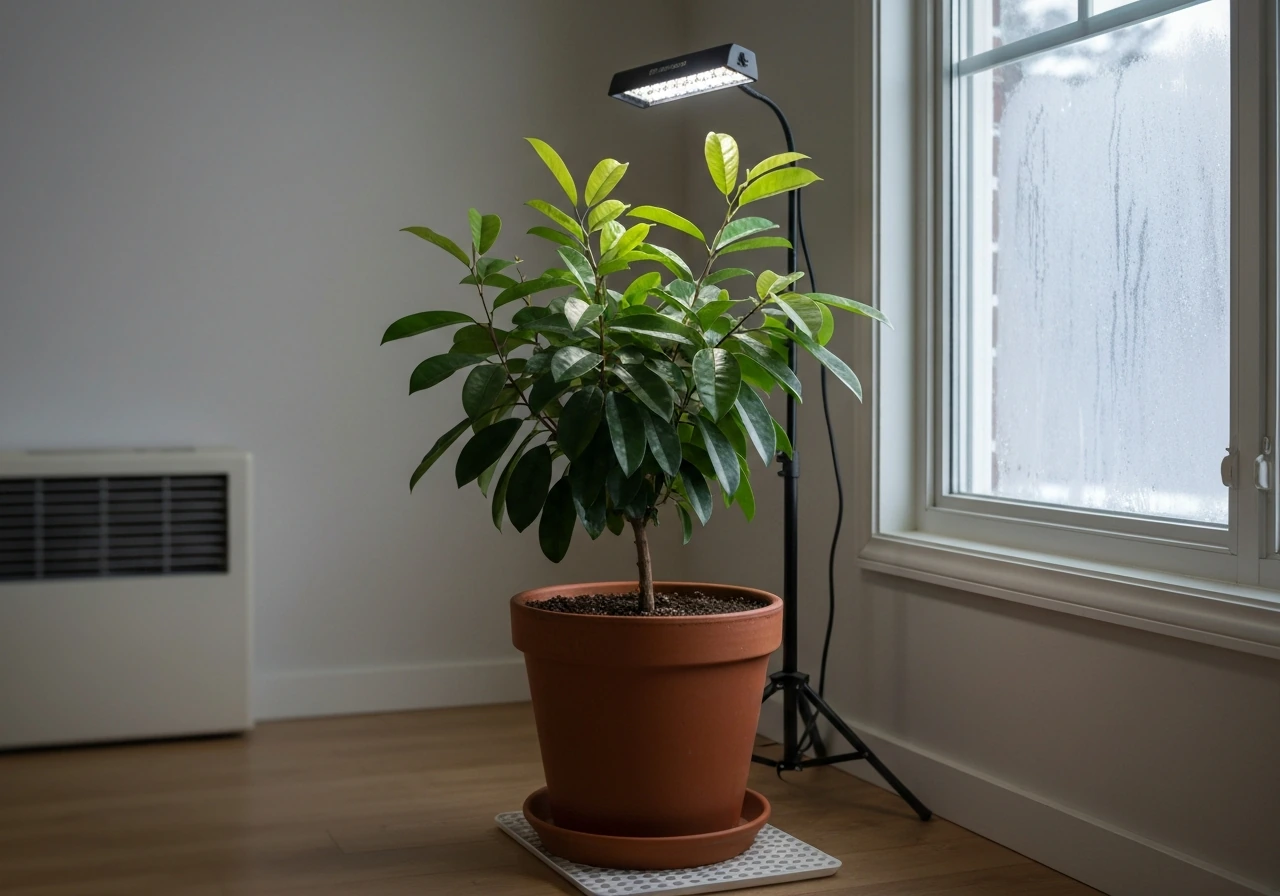
Can You Grow Soursop in Michigan? Indoor and Outdoor Guide
Can you grow soursop in Michigan? Indoor container plan, cold protection, light, soil, and realistic fruiting expectatio
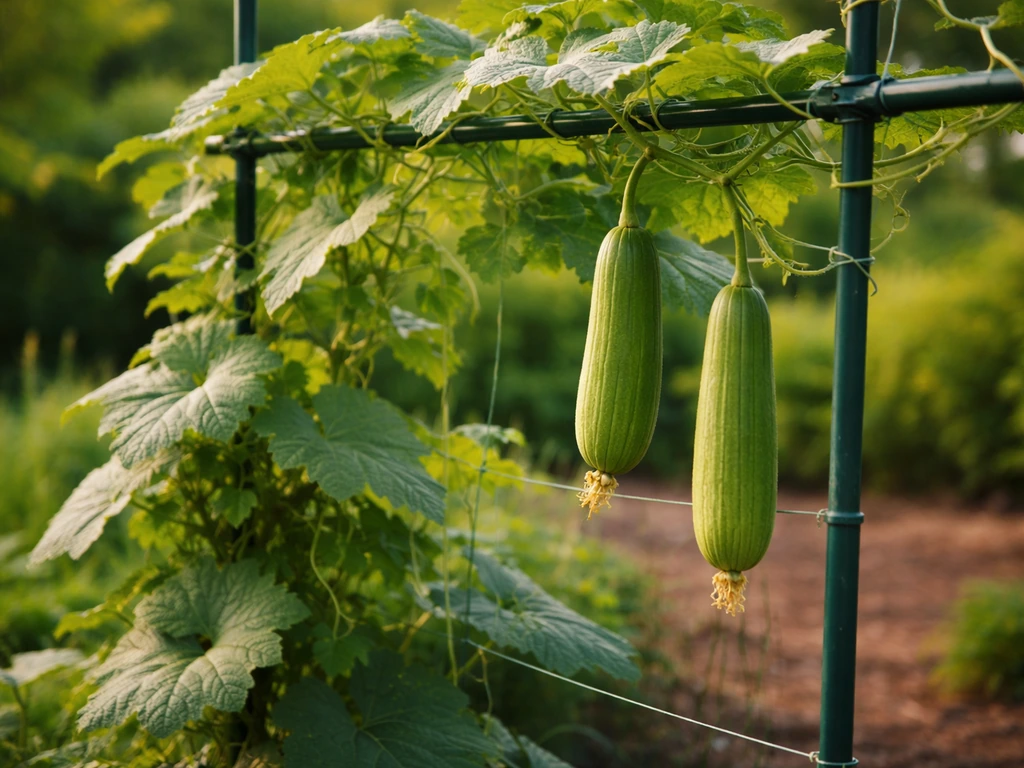
Can You Grow Loofah in Ohio? Step-by-Step Guide
Learn if you can grow loofah in Ohio, with Midwest timing, seed starting, care, trellising, and curing tips.
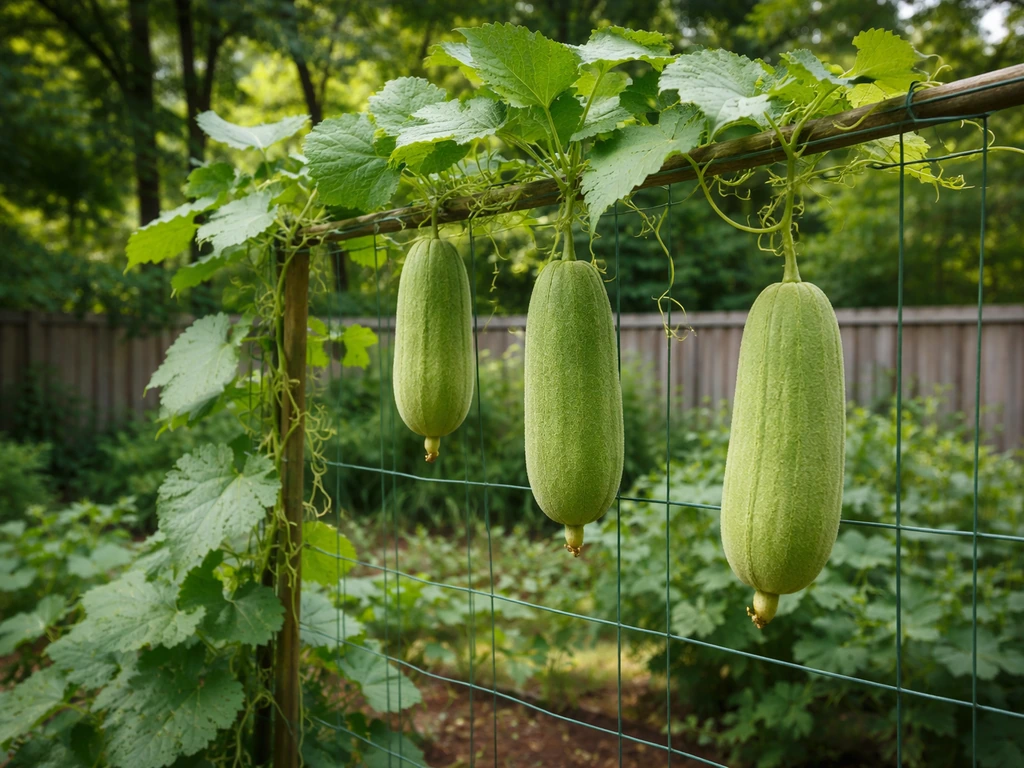
Can You Grow Loofah in Michigan? How to Grow It Successfully
Learn if you can grow loofah in Michigan and get step-by-step timing, care, trellis, harvest, and season extension tips.