
Sassafras can grow in Colorado, but only in specific lower-elevation spots and with deliberate site preparation. It is not a plant you can toss in the ground anywhere in the state and expect it to thrive. The USDA hardiness rating for sassafras (zones 4–9) technically overlaps with parts of Colorado's Front Range (zones 5b–6a) and the Western Slope lowlands around Grand Junction (zones 6b–7a), and there are documented specimens growing at the Denver Botanic Gardens to prove it is not purely theoretical. That said, Colorado's dry air, alkaline soils, high winds, and intense UV light create challenges that have nothing to do with cold hardiness, and those are the real obstacles you will need to plan around.
Does Sassafras Grow in Colorado? Zones, Planting, Care & Where
Marcus Petersen
14 Jul 2026
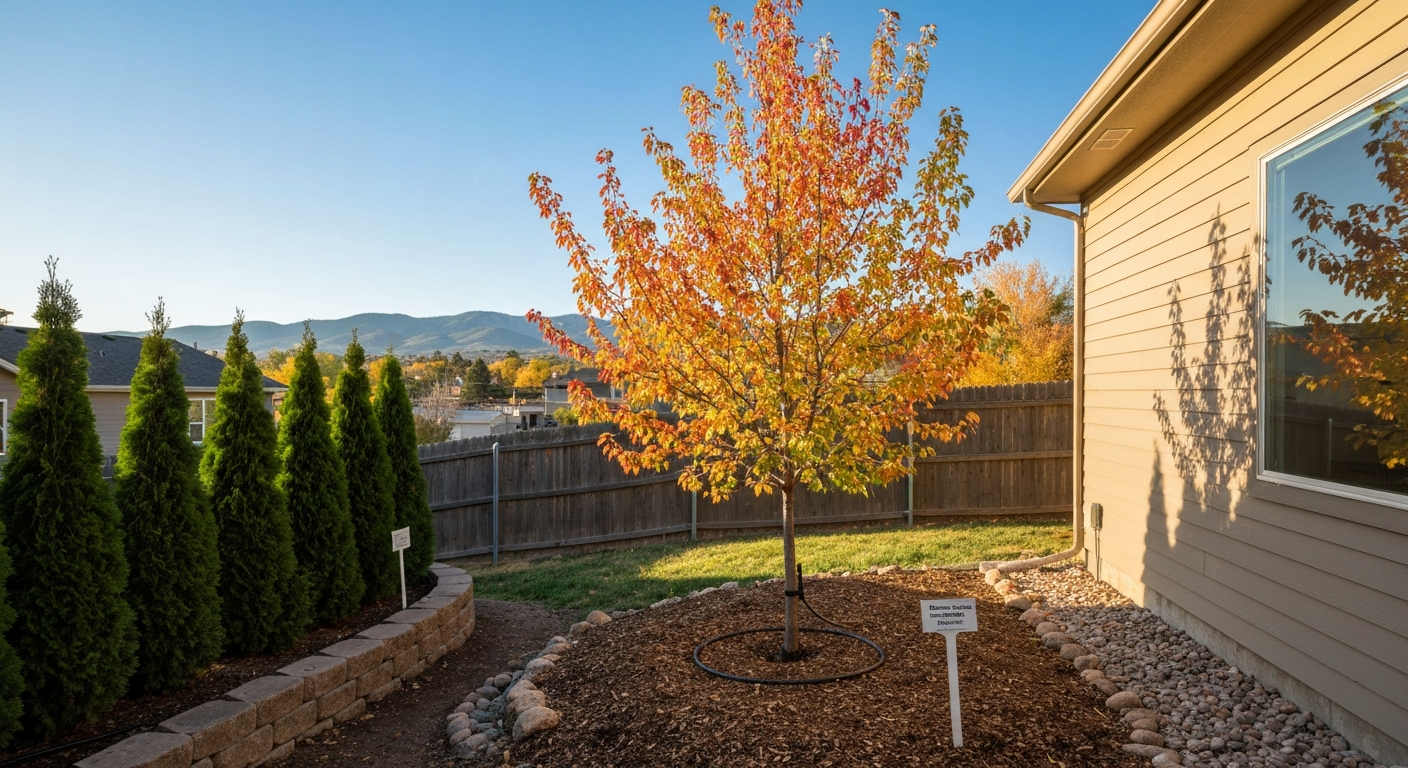
Quick answer: Can sassafras grow in Colorado?
Yes, with significant caveats. Sassafras (Sassafras albidum) is a native eastern U.S. species whose natural range runs from the Atlantic coast west to Kansas and Oklahoma. Colorado sits entirely outside that native range, and the state's climate is fundamentally different from the moist, humid conditions sassafras evolved in. That said, it is not impossible to grow here. For a step-by-step guide and local considerations, see can you grow sassafras. Lower-elevation Front Range locations (Denver, Fort Collins, Pueblo) in zones 5b–6a and warmer Western Slope areas around Grand Junction in zones 6b–7a fall within the species' rated cold-hardiness range. The Denver Botanic Gardens even holds a state champion Sassafras albidum specimen, and the University of Denver's Chester M. Alter Arboretum lists it in their collection. Both examples involve sheltered, irrigated, managed sites, and that is exactly the kind of setup you need. Expect this to be a project that rewards patience and good site selection, not a low-effort planting.
Where in Colorado sassafras is most and least likely to survive
Zone is the starting filter. Sassafras is rated hardy to USDA zone 4, which covers a minimum winter temperature of roughly -30°F to -20°F. Colorado's USDA zones span a wide range, from 3b in the high mountains to 7a on parts of the Western Slope, so cold hardiness alone rules out a big chunk of the state. Consult the USDA Plant Hardiness Zone Map (interactive) for the official zone boundaries that show Colorado ranging roughly from zone 3b in high mountains to zone 7a on parts of the Western Slope.
| Colorado Region | Typical USDA Zone | Sassafras Feasibility |
|---|---|---|
| Denver metro / Front Range (1,600–1,800 m) | 5b–6a | Possible with sheltered microsite and irrigation |
| Fort Collins / Boulder | 5b–6a | Possible with microclimate advantage |
| Pueblo / southeastern plains | 6a–6b | Reasonable attempt on sheltered site |
| Grand Junction / Western Slope lowlands | 6b–7a | Best odds in Colorado, warmer and drier |
| Colorado Springs | 5b–6a | Marginal; wind exposure is a major constraint |
| Mountain towns above 2,400 m (Breckenridge, Aspen) | 3b–5a | Not recommended; too cold and too short a season |
| San Luis Valley | 4a–4b | Cold and very arid; not suitable |
| High plains (northeast Colorado) | 5a–5b | Wind exposure and alkaline soil make success unlikely |
The best bets are lower-elevation Front Range sites and the Western Slope, particularly if you can find a sheltered spot away from prevailing winds. Anything above roughly 2,100 meters (7,000 feet) in elevation is a hard pass. The season is too short, winters too unpredictable, and the soil too variable to make the effort worthwhile.
How Colorado's climate and microclimates affect sassafras
Cold hardiness is actually the least of your problems in most Front Range and Western Slope locations. Sassafras can handle zone 4 winters. What it struggles with in Colorado is the combination of low humidity, high-intensity UV radiation, freeze-thaw cycles, and desiccating Chinook winds. A February warm spell that jumps temps into the 60s followed by a hard freeze two days later does real damage to woody plants trying to leaf out early, and sassafras, which pushes new growth relatively early in spring, is vulnerable to exactly that pattern.
Elevation amplifies every one of these issues. The higher you go, the more intense the solar radiation, the wider the daily temperature swings, and the more frequent the late-season frosts. In the southern Appalachians, sassafras grows naturally up to about 1,220 meters (4,000 feet). Denver already sits at 1,609 meters (5,280 feet), and most of Colorado is higher still. That comparison is a useful reality check: Denver is already at the upper elevation limit of the species' natural range in the East, and conditions here are drier and windier than Appalachian mountains at that elevation.
Colorado's urban heat island effect and microclimates are your allies. South- and east-facing walls, sheltered courtyard plantings, urban canyon lots in Denver, and irrigated riparian corridors along the South Platte or Arkansas rivers can raise effective winter minima by several degrees and reduce desiccating wind exposure enough to tip the scales. The Denver Botanic Gardens champion specimen almost certainly benefits from exactly this kind of managed microclimate. When you are scouting a site for sassafras, you are essentially looking for the most 'un-Colorado' spot you can find on your property.
Soil and water requirements for sassafras in Colorado
This is where Colorado throws the biggest obstacles. Sassafras prefers moist, well-drained sandy loam soils with a pH of around 6.0–7.0. It tolerates gravelly soils and clay loams but consistently performs best on fertile, slightly acid to neutral ground. Colorado's Front Range soils routinely run pH 7.0–8.2, which is the alkaline end of the spectrum. High soil pH limits iron availability, and iron chlorosis (yellowing between leaf veins) is a predictable outcome if you plant sassafras into unamended Colorado soil. I have seen this happen with other acid-preferring eastern species planted in Denver-area clay without amendment, and it is a slow, ugly way to watch a tree decline.
Many Front Range soils also have calcic horizons, caliche layers, or gypsum in the subsoil that restrict drainage and create perched water tables. Sassafras will not tolerate waterlogged roots, so you need to check drainage before planting. Do the percolation test: dig a hole about 30 cm (12 inches) deep, fill it with water, and check how quickly it drains. Ideally the water should drain at a rate of at least 2.5 cm (1 inch) per hour. If it sits for hours, you have a drainage problem that needs to be addressed before planting.
- Target soil pH of 6.0–7.0: amend Colorado alkaline soil with elemental sulfur, incorporated at rates based on a soil test, to lower pH before planting
- Add generous organic matter (3–4 inches of compost worked in to a depth of 30–45 cm) to improve fertility, water retention, and soil biology
- Check subsoil drainage before choosing a site; avoid areas with caliche layers less than 60 cm from the surface unless you are willing to break through them
- Sassafras needs regular moisture, especially through its first two to three Colorado summers; plan for supplemental irrigation in this arid climate
- Drip irrigation at the root zone is preferable to overhead watering; Colorado's dry air and wind mean foliar wetness is rarely an issue, but consistent soil moisture is critical
- Avoid planting in pure heavy clay without substantial amendment; Colorado clay with poor drainage kills sassafras reliably
On the Western Slope around Grand Junction, soils tend to be sandier and more varied, but salinity can be a factor in some valley-floor locations. Check for soil salt issues in that region before planting. Sassafras has moderate sensitivity to saline conditions and will show leaf edge burn and stunted growth if salinity is elevated.
Choosing the right site: microclimates, slopes, and sheltered spots
Site selection is the single most important decision you will make when trying to grow sassafras in Colorado. The goal is to find the most sheltered, humid-adjacent, wind-protected spot on your property and put the tree there. Think about how the site behaves through a full Colorado year, not just in summer.
- South- or southeast-facing walls and fences: provide winter sun warmth and wind protection, effectively pushing the microclimate a zone warmer than the surrounding area
- Courtyard or enclosed garden spaces: reduce wind exposure significantly, which is one of the biggest desiccation stressors for sassafras in Colorado
- Established windbreaks: planting sassafras on the leeward side of an existing windbreak (evergreen hedge, fence, or dense shrubs) cuts wind desiccation dramatically
- Low slopes with cold-air drainage: avoid frost pockets at the bottom of slopes where cold air pools on still spring nights; a gentle mid-slope position in a valley is better than the valley floor
- Riparian or irrigated corridors: areas near streams, irrigation ditches, or consistently irrigated lawns have higher ambient humidity and more consistent soil moisture, which sassafras appreciates
- Urban lots in Denver metro: downtown and established neighborhood lots in Denver often run a full hardiness zone warmer than rural locations just 30 km away, thanks to the urban heat island
One thing to plan for: sassafras spreads aggressively via root suckers once established. It can colonize a fairly wide area over time. That is a feature in an informal woodland garden or wild corner, but it is worth thinking through before you plant it 1.5 meters from your foundation or in a tidy mixed border. Planting a root barrier (a 60 cm deep commercial root barrier liner) around the planting zone will keep suckering in check if you are in a confined space.
Planting step-by-step for Colorado conditions
Colorado State University Extension recommends planting trees primarily in spring (roughly March 15 to June 15) or early fall (September 1 to October 15) for best establishment. Colorado State University Extension’s 'The Science of Planting Trees (CMG GardenNotes #633)' recommends wide, shallow planting holes roughly three times the rootball width, correct rootball placement (not planting too deep), and careful post-plant watering to help woody plants establish The Science of Planting Trees (CMG GardenNotes #633) — Colorado State University Extension. For sassafras in Colorado, I lean toward spring planting, specifically late April to mid-May on the Front Range after the last hard freeze threat has passed. This gives the tree a full growing season to establish roots before its first Colorado winter. Fall planting is riskier because late-season dry winds and an early hard freeze can kill a sassafras that has not had time to harden off properly.
- Test and amend soil first: get a soil test (CSU Extension labs and private labs both offer this service) and amend pH down toward 6.0–6.5 with elemental sulfur at least 4–6 weeks before planting; also incorporate 3–4 inches of compost into the top 30–45 cm of the planting area
- Dig a wide, shallow hole: following CSU planting guidance, make the hole about three times as wide as the root ball but no deeper than the root ball itself; a saucer-shaped hole with sloping sides encourages outward root growth
- Check the depth: the root flare (where the trunk widens at the base) must sit at or very slightly above the surrounding soil grade; planting too deep is a leading cause of tree death in Colorado
- Backfill with native soil plus amendments: use the soil you removed, amended with compost, as backfill; do not create a 'fertility bowl' of pure compost that traps water at the root zone
- Water in thoroughly: soak the planting hole deeply at installation to eliminate air pockets and settle the soil around the roots
- Apply mulch immediately: spread 7–10 cm (3–4 inches) of wood chip or bark mulch in a ring extending at least 60–90 cm from the trunk, keeping mulch 10 cm clear of the trunk itself; mulch is critical for moisture retention and soil temperature moderation in Colorado
- Stake if needed: on windy Front Range or Western Slope sites, stake the tree with two low stakes and flexible ties for the first growing season only; remove stakes after 12 months to avoid girdling
- Establish a deep watering routine immediately: water deeply every 7–10 days through the first summer, allowing the soil to partially dry between waterings but never going bone dry
Propagation methods: seed, root suckers, and transplants
Starting from seed
Sassafras seeds have a physiological dormancy that requires cold, moist stratification before they will germinate. The standard recommendation is approximately 120 days (roughly 3–4 months) of cold moist stratification at about 2–5°C (35–40°F). In practical terms, you can mix seeds with moist peat or sand in a sealed bag and store them in your refrigerator from November through late February, then sow them indoors or into a cold frame in early spring. Surface sow the seeds and just barely cover them with soil, as they need some light for germination. Germination rates with sassafras seed are inconsistent even under ideal conditions, so start with more seeds than you think you need. I would say sow at least two to three times the number of seedlings you actually want. Growing from seed in Colorado also means you are starting with small transplants that will need at least a season in protected nursery conditions before they can face an open Colorado garden.
Root suckers: the easier route
If you have access to an established sassafras plant (or know someone who does), root suckers are the most reliable propagation method. Sassafras spreads naturally through underground root runners and regularly throws up new shoots 0.5–2 meters from the parent plant. In early spring before leaf break, you can carefully dig out a well-rooted sucker with a shovel, severing it from the parent root with a clean cut, and transplant it to a prepared site. This gives you a genetically identical plant that is already acclimatized if it came from a locally established specimen. The trade-off is that access to established Colorado sassafras is limited, since the plant is not common in the state's nursery trade.
Buying nursery transplants
Container-grown nursery transplants are the most practical starting point for most Colorado gardeners. Sassafras is not commonly stocked at general Colorado garden centers, so expect to order online from specialty native-plant nurseries in the Midwest or eastern U.S. Look for 1-gallon or 2-gallon container stock with well-established roots. Avoid bare-root stock from eastern nurseries unless you can get it in the ground very quickly on arrival; sassafras does not handle desiccation of bare roots well. A 1-gallon plant in good shape will establish faster than a larger balled-and-burlapped specimen, because sassafras resents root disturbance and smaller containers generally mean less transplant shock.
| Propagation Method | Difficulty | Time to Plantable Size | Pros | Cons |
|---|---|---|---|---|
| Seed with stratification | Moderate | 2–3 years | Low cost, satisfying process | Low/variable germination, slow start |
| Root suckers | Easy if available | Ready at transplant | Fast, true to parent, already acclimated if local source | Hard to find in Colorado; requires an existing plant |
| Nursery container transplant | Easy | Ready at purchase | Best survival odds, known health | Hard to source locally; shipping cost and stress |
Seasonal care and maintenance in Colorado
Spring
Resume deep watering as soon as the ground thaws and before the tree breaks dormancy, typically late March to April on the Front Range. Check and refresh mulch layer to 7–10 cm. Inspect for winter dieback and prune out any dead or damaged branches in late April once new buds clearly indicate which wood is alive. Fertilize lightly if needed (a balanced slow-release granular fertilizer at moderate rates works fine) but avoid heavy nitrogen applications that force soft growth vulnerable to late frosts.
Summer
Deep watering every 7–10 days is the priority through June, July, and August. Colorado summers are hot and dry, and a young sassafras without reliable moisture will stall or die back. 'Deep' means watering slowly and thoroughly enough to wet the soil to at least 30 cm depth. Drip lines or soaker hoses set to run for 2–3 hours are more effective than brief overhead watering. Watch for iron chlorosis (yellow leaves with green veins), which signals the soil pH is too high or iron is locked up. A chelated iron drench applied to the root zone in early summer can address acute symptoms; longer-term, keep working on lowering soil pH with sulfur.
Fall
Sassafras produces genuinely stunning fall color (orange, red, yellow, and purple can appear on the same tree), which is one of its best landscape arguments. As temperatures cool in September, reduce watering frequency but do not stop entirely. Give the tree a final deep watering in late October or early November after leaf drop, before the ground freezes. This fall moisture charge is critical in Colorado because dry winter soils cause more winter tree death than cold temperatures alone. Replenish mulch after leaf drop for winter insulation.
Winter
Young or newly established sassafras in Colorado benefits from trunk wrapping with tree wrap paper from late October through March, particularly on sun-exposed southwest-facing bark that is prone to sunscald and frost cracks. On very cold, dry, or windy sites, burlap wind screening staked around (not touching) the canopy of small trees helps reduce desiccation. Avoid plastic wraps that trap moisture. On established trees (5 or more years in the ground), winter protection typically becomes unnecessary unless there is an unusual cold event.
Common pests and diseases to watch for
Sassafras is relatively pest- and disease-resistant in its native range. In Colorado, the challenges are more environmental than biological, but there are a few things to watch.
- Sassafras weevil (Odontopus calceatus): a small weevil that chews characteristic circular holes in leaves in eastern states; possible if present locally but not a major concern in Colorado's drier climate
- Japanese beetle: an increasingly present pest in parts of the Front Range; adult beetles can cause significant leaf skeletonizing on sassafras; hand-pick or use targeted neem oil treatments
- Verticillium wilt: a soil-borne fungal disease that can cause sudden branch dieback; avoid planting sassafras in spots where other susceptible plants (tomatoes, maples, strawberries) have died from Verticillium
- Iron chlorosis: not a pest or disease, but the most common 'symptom' Colorado gardeners will encounter on sassafras, caused by high soil pH locking up iron availability; treat with chelated iron and ongoing pH management
- Sunscald and frost cracking: physically split or sunken bark on the southwest side of young trunks, caused by rapid temperature swings in winter; prevented by trunk wrapping and good site selection
- Root rot: possible in Colorado sites with poor drainage or overwatering; ensure drainage is adequate before planting
Realistic growth expectations and timeline
In its native eastern range, sassafras is a moderately fast grower that can reach 20–60 feet at maturity depending on site quality. In Colorado, expect slower growth, at least through the first several years, as the tree adapts to lower humidity, higher UV, and amended but still imperfect soil. A 1-gallon transplant in a well-prepared Denver-area site with consistent irrigation might add 30–60 cm of new growth per year once established, but the first one to two seasons will often look like the plant is barely doing anything while it builds its root system. Do not panic and overwater or over-fertilize in year one. The tree is building roots, not top growth, and that is correct behavior.
Realistic timeline: expect a 1-gallon transplant to reach 2–3 meters in height within 5–7 years on a good Colorado site. Mature heights in Colorado landscapes are likely to be on the shorter end of the species range, perhaps 6–10 meters (20–30 feet), rather than the 15–18 meter (50–60 foot) trees you see in ideal eastern conditions. That is still a very handsome landscape tree with exceptional fall color, interesting leaf shapes (sassafras has three distinct leaf forms on the same plant), and fragrant bark and roots.
Sourcing sassafras in Colorado
Do not expect to walk into a local garden center in Denver or Grand Junction and find sassafras on the bench. This plant is not part of the standard Colorado nursery trade. Your best options are specialty native-plant nurseries in the Midwest (Missouri, Illinois, Iowa, Kansas) that ship containerized stock, or online native plant marketplaces. Search specifically for Sassafras albidum container stock in 1-gallon or 2-gallon sizes. Some larger mail-order nurseries carry it seasonally. Seed can also be sourced from native seed suppliers and specialty botanical seed exchanges, though growing from seed in Colorado is a multi-year commitment. If you are near Denver, it is worth asking the Denver Botanic Gardens' plant sales or contacting their horticulture staff about occasional availability from their propagation program.
Safety and regulatory notes for Colorado gardeners
Sassafras has a long culinary and folk medicine history, especially in the American South and Appalachian regions, where the roots and bark were used to make traditional root beer and teas. However, the primary aromatic compound in sassafras root bark oil, safrole, was banned as a food additive by the U.S. FDA in 1960 after studies showed it to be a liver carcinogen in animal models at high doses. Commercial safrole is also regulated under the DEA as a precursor chemical. For home gardeners in Colorado, this means the following: growing sassafras as a landscape ornamental tree is completely legal and unrestricted. Using small amounts of the leaves (which contain less safrole and are used in file powder in Cajun cooking) is generally considered a low-risk culinary use. Making and regularly consuming sassafras root bark tea or concentrated root extracts is the practice that carries documented health concerns, and most health professionals recommend against it. Enjoy the tree for what it is: a beautiful, fragrant, fall-color standout with an interesting history. The culinary applications are a bonus to research carefully, not the main reason to grow it.
Colorado vs. other states: how does it compare?
If you are curious how Colorado compares to other states for sassafras, the honest answer is that it sits in a middle tier of difficulty. States like Michigan, which sits squarely within sassafras's native range, have the humidity, soil acidity, and forest understory conditions where sassafras grows naturally and abundantly; the question for Michigan gardeners is usually about managing it rather than establishing it. California presents its own challenges: coastal areas have mild temperatures but the wrong soil chemistry and summer-dry Mediterranean climate, while inland California can work in select spots. For more on how sassafras performs in that state, see does sassafras grow in California. Colorado is probably harder than either of those states for sassafras, primarily because of the combination of aridity, alkaline soils, and high elevation that puts extra stress on a moisture-adapted eastern species.
Alternatives if sassafras does not work for your site
If your Colorado site is too exposed, too high, or has soil problems you cannot realistically fix, there are alternatives worth considering for similar ornamental and aromatic purposes. Spicebush (Lindera benzoin), a close relative in the Lauraceae family, is also native to the eastern U.S. and offers similarly aromatic foliage and bright fall color, though it has similar climate preferences. For pure fall color impact, native Colorado shrubs and trees like Gambel oak (Quercus gambelii), native mountain maple (Acer glabrum), or serviceberry (Amelanchier species) deliver spectacular autumn displays without the establishment battle. If the aromatic foliage is the draw, consider anise hyssop (Agastache foeniculum), a native prairie species that grows very well across Colorado's elevation range and offers a different but pleasant aromatic profile. If you want practical guidance on growing hardy aromatic herbs in Colorado, see can you grow sage for tips specific to sage cultivation and site selection.
Worth trying in Colorado? Here is the honest assessment
Sassafras is worth attempting in Colorado if you have a sheltered, well-irrigated, lower-elevation site on the Front Range or Western Slope, you are willing to amend your soil before planting, and you go in with realistic expectations about slow early establishment and ongoing water needs. The Denver Botanic Gardens champion tree is proof it can be done here. If your property is above 2,100 meters, exposed to prevailing winds, has poor drainage, or heavy uncorrectable alkaline clay, put your energy into something better suited to Colorado conditions. The tree is genuinely beautiful, and a well-placed, healthy sassafras in a Denver or Pueblo yard is a conversation piece every fall. Just do not expect eastern woodland performance from a high plains, semi-arid site.
FAQ
Quick answer: Does sassafras grow in Colorado?
Yes — but only in parts of Colorado. Sassafras (Sassafras albidum) is native to the eastern U.S., not Colorado, yet it is winter‑hardy to USDA zones 4–9. Low‑elevation, warmer pockets of Colorado (lower Front Range, some Western Slope locations like Grand Junction, and sheltered urban microclimates in Denver/Boulder) that sit in roughly USDA zones 5b–7a are the most realistic places to grow sassafras successfully. Higher elevations and cold, exposed mountain sites (zones 3–5a) are generally unsuitable.
Which Colorado locations and USDA zones can or cannot be expected to support sassafras?
Can: lower‑elevation Front Range metro areas that are zone 5b–6a (Denver metro in sheltered spots), and Western Slope lowlands (Grand Junction, parts of the lower Arkansas and Gunnison valleys) that reach zone 6b–7a. Cannot/very unlikely: high elevation plains and mountain communities in zones 3–5a (many foothill and alpine sites). Always check the local USDA hardiness zone and your exact site microclimate before planting.
How do Colorado’s climate and microclimates affect sassafras success?
Sassafras tolerates cold but dislikes extreme freeze‑dry winter conditions and late spring freezes that damage new shoots. In Colorado, choose warm microclimates: south‑ or west‑facing sheltered walls, wind‑protected courtyards, irrigated riparian plantings, and urban heat islands. These sites moderate winter minima and reduce desiccating winds and freeze–thaw stress that commonly kill marginally hardy eastern trees here.
What soil and water conditions does sassafras need, and how do Colorado soils affect establishment?
Sassafras prefers moist, well‑drained sandy loams with pH near 6.0–7.0 but tolerates a range of soils. Many Colorado soils are alkaline (pH 7–8.2), low in organic matter and can be coarse or shallow. Amend planting holes with organic matter, consider acidifying amendments if soil is very alkaline (or use iron chelate to prevent chlorosis), and provide consistent irrigation during establishment because native Colorado soils often don’t retain moisture well.
Where should I plant sassafras in Colorado (site selection)?
Pick a sheltered, low‑elevation site with afternoon shade or morning sun/southern exposure near buildings or windbreaks. Avoid exposed ridgelines, high, cold plains, and sites with standing winter winds. Ensure good drainage but access to supplemental water (drip irrigation or soaker hoses). Space trees to allow root suckering if you want thicket formation (or install root barriers if you don’t).
How should I plant and propagate sassafras in Colorado (seed, root suckers, transplants)?
Propagation options: 1) Seed — collect ripe fall fruits, remove pulp, cold‑moist stratify ~90–120 days, then sow in spring; expect irregular germination. 2) Root suckers — transplant from existing plants in very early spring; keep a wide rootball and replant quickly. 3) Nursery transplants — buy containerized trees from reputable nurseries and plant in spring or early fall following CSU planting best practices. For Colorado, nursery transplants are the most reliable route for home gardeners.
Next Articles

Does Sassafras Grow in Michigan? Care and Growing Tips
Yes, sassafras grows in Michigan. Get Michigan-specific site, soil, and propagation tips to establish it.
Can You Grow Sage? How to Grow It at Home in the US
Yes, you can grow sage at home in the US. Get region tips, planting steps, care, and winter overwintering fixes.
Can You Grow Sassafras in the U.S.? Planting Guide
Learn if you can grow sassafras in the US, plus soil, sun, planting timing, care, and safe use expectations.