
Yes, you can grow saffron in Wisconsin. It takes some extra effort compared to milder states, but Crocus sativus is rated hardy down to about -15°F and survives in USDA zones 4 through 8. Most of Wisconsin falls in zones 4b through 5b, which puts you right on the edge of reliable overwintering. With good drainage, the right planting timing, and a little winter protection in the colder northern counties, you can get flowers, harvest stigmas, and build up a productive patch over a few years.
Can You Grow Saffron in Wisconsin? A Practical Guide

Marcus Petersen
28 Apr 2026
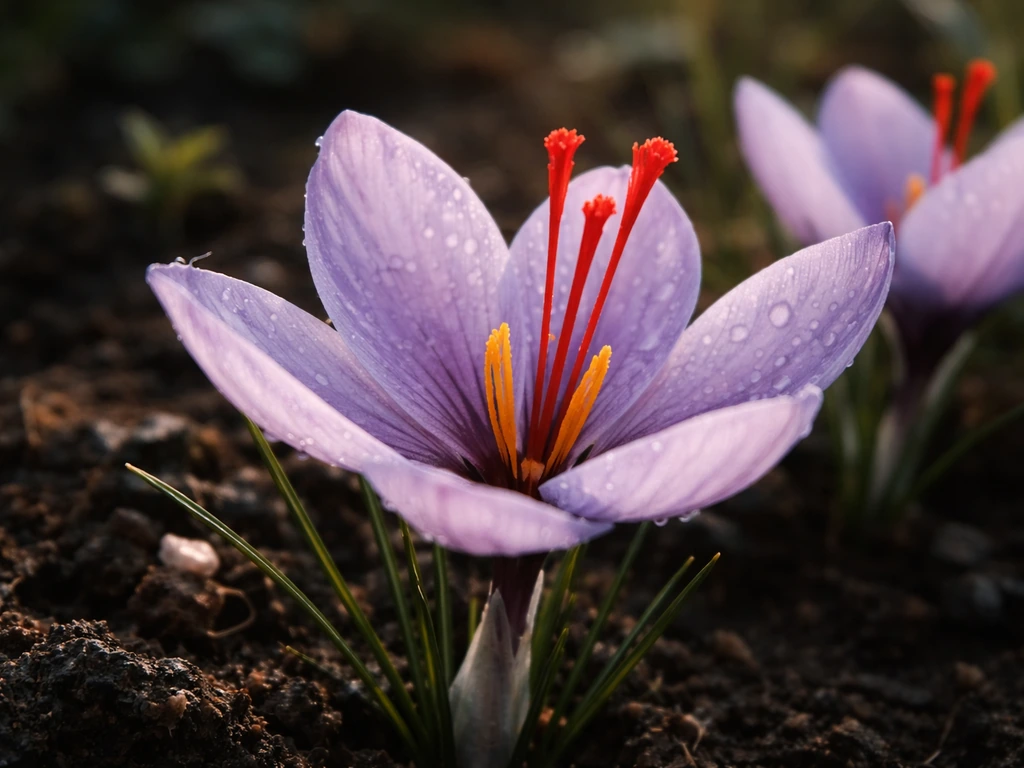
What you're actually growing
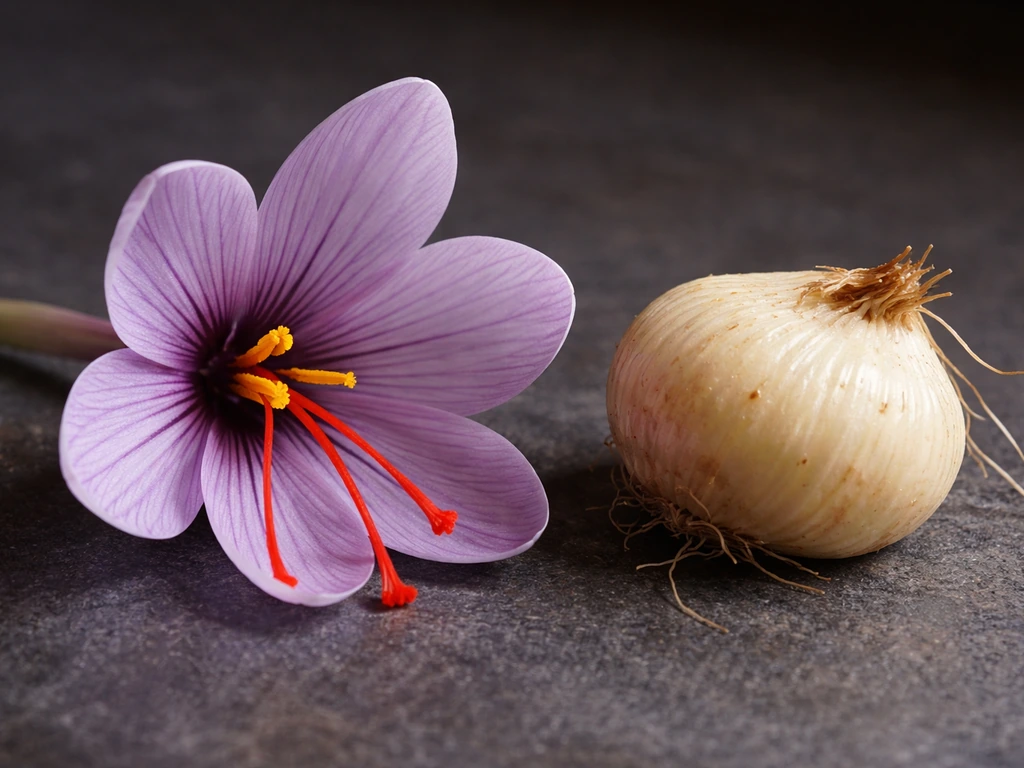
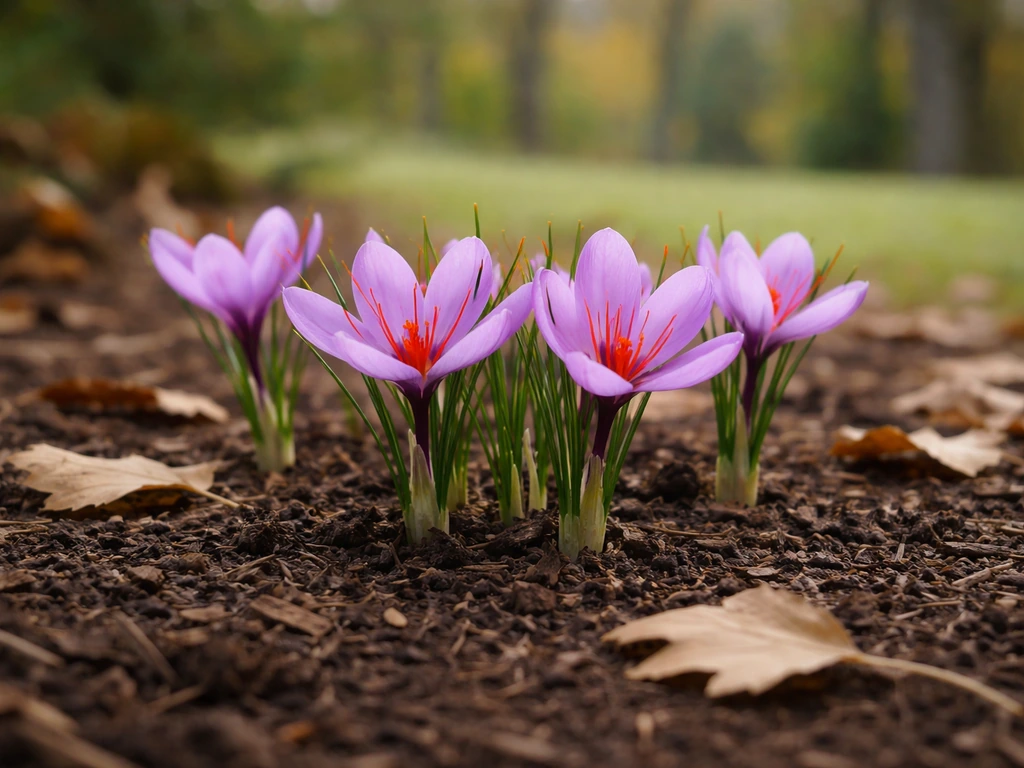
Saffron is the dried stigmas (the threadlike female parts) from the flowers of Crocus sativus. Each flower produces exactly three stigmas, and those stigmas are what you harvest, dry, and use in cooking. The plant itself grows from a corm, which looks like a small flat bulb. You plant the corm, it sprouts and flowers in fall, goes dormant in summer, and multiplies underground so you have more corms the following year. The whole cycle is the opposite of most garden crops: it flowers in late September or early October, pushes up leaves through fall and into early spring, then completely disappears by June or July. That summer disappearance is normal dormancy, not a sign that the plant died.
The corm is the unit you source and plant. Corm size matters: larger corms (size 8/9 or bigger) are much more likely to flower in year one. Smaller corms in the 7/8 range often won't produce flowers their first season, so if you're planning a trial harvest, buy the biggest corms you can find.
How Wisconsin's climate lines up with saffron's needs
Saffron has a few non-negotiable requirements: cold tolerance in winter, a proper temperature sequence to trigger flowering, and dry summers. Wisconsin satisfies most of these, but each comes with an asterisk.
Cold hardiness
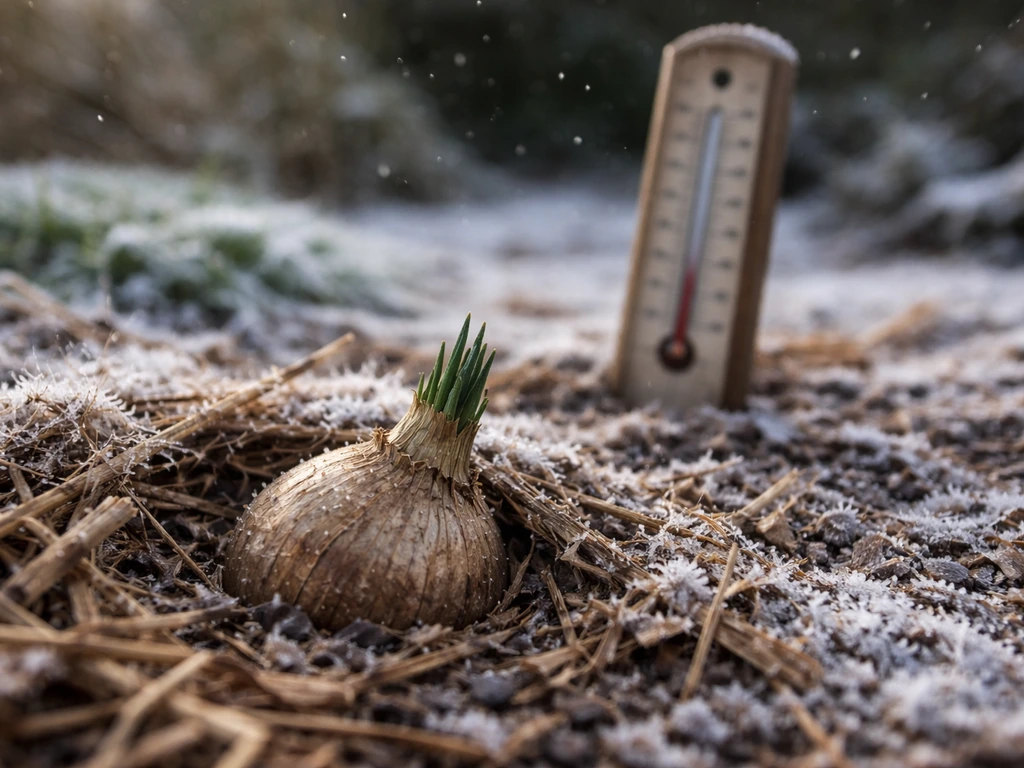
Crocus sativus corms can handle temperatures down to around -15°F, which covers most of Wisconsin most winters. Southern Wisconsin (Madison, Milwaukee, the Lake Michigan shoreline) routinely stays in zone 5a to 5b, where overwintering is generally manageable. Northern Wisconsin, especially inland areas like the Northwoods around Rhinelander or Ironwood, can hit zone 4a, and winters there regularly punch below -20°F. In those colder spots, plan on mulching every year. Along Green Bay or the Door Peninsula, lake effect moderates things a bit and you're likely in a more favorable microclimate.
Temperature sequencing and flower formation
This is the trickiest part of saffron in cold climates. Flowering isn't triggered by a simple cold period followed by warmth. Research shows that after flower initiation, blank" rel="noopener noreferrer">soil temperatures need to stay above roughly 15 to 17°C (59 to 63°F) for a sufficient duration. In shorter Wisconsin summers, the warm soil window can be too brief, and you may see reduced flowering in year two even when year one went fine. If your plants sprouted and flowered the first fall but produced fewer flowers the following season, insufficient warm-soil duration is probably why. Raised beds and dark-colored containers absorb more heat and can extend that window.
Sun and soil

Saffron wants full sun, at least 6 to 8 hours of direct light. Partial shade reduces flowering noticeably. Soil quality matters too: loose, well-draining soil rich in organic matter is the target. Heavy clay soils common in parts of Wisconsin are a real problem because they hold moisture, and wet corms rot. If your garden soil is heavy and slow-draining, you'll need to amend it aggressively or work in a raised bed instead.
Drainage: the most important factor
I can't overstate this. Corm rot is the number one failure mode for saffron in wetter climates, and Wisconsin gets meaningful rainfall in spring and fall right when corms are active. If your site has any standing water after a rain, even briefly, the corms will rot. Full stop. Choose the highest, best-draining spot in your yard, or build up a raised bed with sandy loam or a well-amended mix. During summer dormancy, corms sitting in saturated soil will also rot even though the plant isn't actively growing.
Planting plan for Wisconsin
When to plant
Plant as early in August as you can get corms, and no later than early September. This is non-negotiable. The corms need time to root and establish before the ground freezes, and they need to sprout and flower in fall. If you hold corms too long, they sprout on their own while sitting around, and those weakened, already-sprouting corms perform poorly. UVM's saffron research team is emphatic: don't hold corms until spring planting. They'll sprout and die. Order early, plant within a week of receiving them.
How deep and how far apart
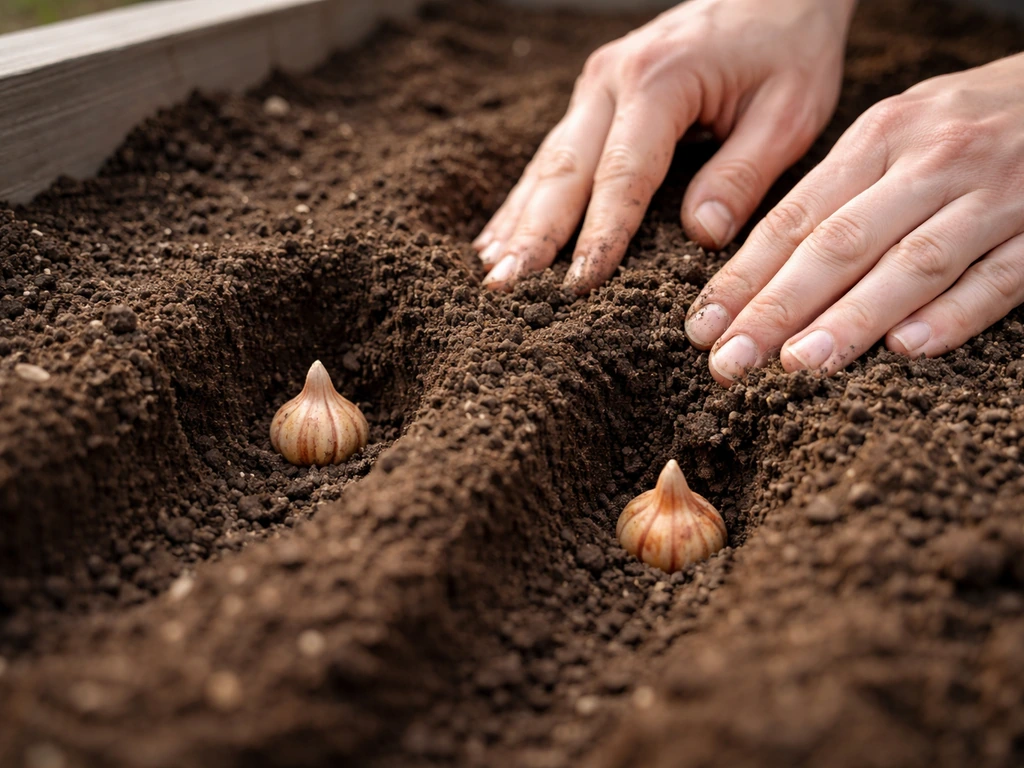
For Wisconsin, I recommend planting at about 5 to 6 inches deep. This is on the deeper end of guidance (some sources suggest as shallow as 2 to 3 inches) but the extra depth provides better insulation from hard freezes. UVM's home-gardener guidance specifically targets 6 inches. Loosen the soil 6 to 8 inches down before planting to help roots establish. Space corms 3 to 4 inches apart, which works out to roughly 6 to 12 corms per square foot depending on your target density. Plant with the flat side down and the pointed growth tip facing up.
In-ground vs. raised bed vs. container
| Option | Pros | Cons | Best for |
|---|---|---|---|
| In-ground bed | Lowest maintenance, natural insulation from deep soil | Requires excellent native drainage; harder to control moisture | Southern WI with well-draining sandy loam or amended soil |
| Raised bed | Full control over soil mix, drainage is almost guaranteed, warms up faster in summer | Can dry out faster in summer; needs winter mulching | Most of Wisconsin; best compromise for reliability |
| Container | Can move or insulate easily; good for Zone 4 areas | Roots and corms are more exposed to cold; must insulate sides | Northern WI or anyone with heavy clay and no good bed site |
If you go with containers, keep them on the ground rather than elevated on a deck or bench. Ground contact provides meaningful insulation. Insulate the sides of the pot with burlap, bubble wrap, or by sinking the container into a protective mulch pile. A terracotta pot on an exposed deck in January in northern Wisconsin will freeze solid and likely kill your corms.
Managing the seasons in Wisconsin
Fall: planting and flowering
After planting in August or early September, expect sprouting within about 30 days. Flowers typically appear in late September through October, right around or just after the foliage pushes up. That first-year flowering window can be short, so check plants daily once you see foliage. Harvest the three red-orange stigmas from each flower in the morning when the flower first opens. Collect them by hand or with small scissors, then dry on a paper towel or in a warm spot before storing.
Winter: protecting corms in the ground
After flowering, the foliage will continue to grow through fall and may persist into early winter. In milder Wisconsin winters (think Milwaukee or Madison), leaves sometimes survive until spring. In harder winters, they die back but the corms underground usually survive. Once temperatures are consistently below freezing, apply 3 to 4 inches of straw or shredded leaf mulch over the bed. This is especially important if you're in zone 4b or if your soil lacks good natural insulation. Remove the mulch in early spring as temperatures moderate so the foliage can push through.
Spring: foliage growth without flowers
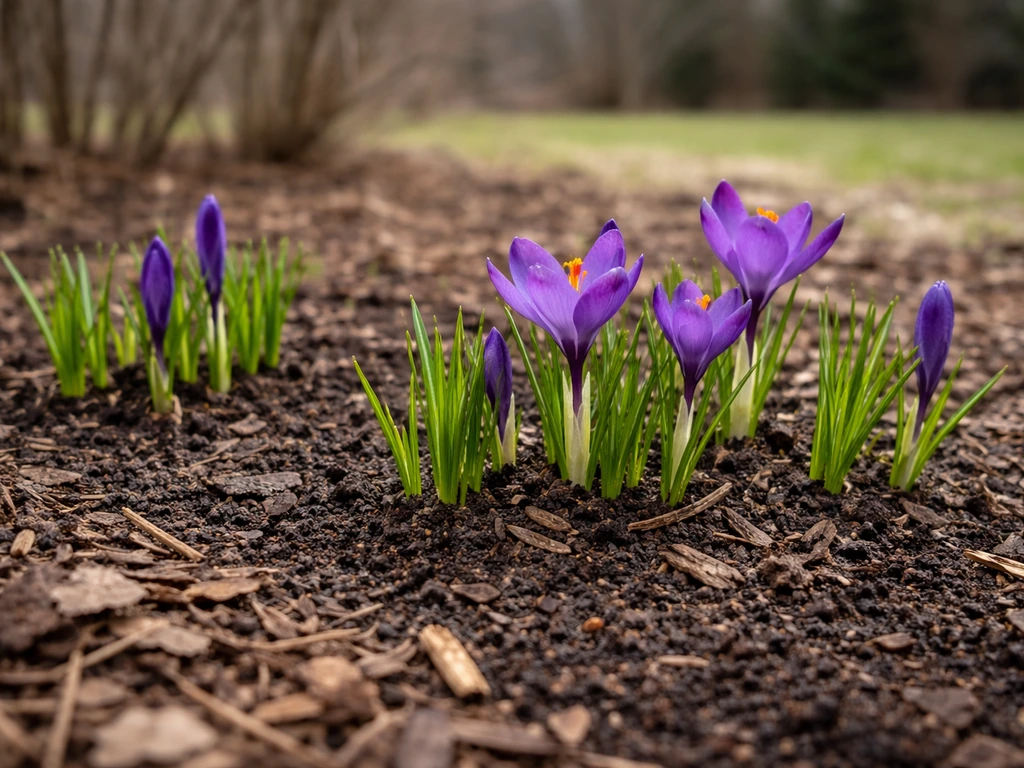
In spring, you'll see leaves growing actively with no flowers. This is completely normal. The plant is photosynthesizing and building energy reserves in the corms for next fall's flowering. Let the leaves grow undisturbed. Don't cut them back early, don't cover them, just let them do their thing.
Summer: dormancy management
By June or early July, the leaves will yellow and disappear. The corms are now dormant underground. This is when rot risk is highest if your soil stays wet. Avoid watering the area. If you're growing in containers, you can move them to a covered spot to keep rain off. If you're in-ground, the key is simply that your drainage was good to begin with. Don't dig the corms up every summer; leave them in place and let them multiply.
What to realistically expect from your harvest
Here's the honest math. Each flower produces 3 stigmas. One large corm can produce 2 to 4 flowers when it's well-established. Dried, those stigmas yield about 0.006 grams per flower. To make a single family-sized batch of paella, you need stigmas from around 12 blooms. So a modest planting of 50 corms, if they all flower well, might produce 100 to 200 flowers and yield roughly 0.6 to 1.2 grams of dried saffron. That's not nothing, but it's a small amount for cooking purposes.
Year one is rarely the best year. Even with large corms, first-year harvests are modest. Years two through four tend to be better as the corms multiply and establish. After about 3 to 6 years in the same spot, yield typically starts to decline and you'd want to dig, divide, and replant. Think of the first season as a proof-of-concept: you're proving your site works and building stock for future years, not filling a spice jar.
When things go wrong: common problems in cold climates
Corm rot
If corms turn to mush before they ever flower, drainage is almost certainly the problem. Dig a test hole in your planting area after a rain and check it 30 minutes later. If water is still pooling, that site won't work. Fix it with raised beds, or relocate entirely. Corm rot can also spread from one damaged corm to neighbors, so handle corms gently to avoid wounds, and never plant any corm that already looks soft or discolored.
No flowers or very few flowers
If your corms sprouted leaves but never flowered, there are a few likely causes. Small corms (size 7/8) often skip flowering in year one entirely. If you planted larger corms and still got no flowers, the temperature sequence during summer may have been too short or too cool to fully trigger flower initiation. Try moving the planting to a spot with more sun exposure and better heat absorption, like a south-facing raised bed with dark soil. Also double-check your planting timing: late September or October planting gives insufficient time to flower that same fall.
Winter kill
If corms don't come back at all in spring, they likely froze. This is most common in northern Wisconsin zone 4 areas without mulch. Add 4 inches of straw mulch before the ground freezes hard. In containers, make sure the pot sides are insulated. Planting at 6 inches depth rather than 2 to 3 inches also makes a real difference in cold climates.
Pests and other issues
Voles and mice are the main pest threat to corms in Wisconsin. They'll dig and eat them over winter. Hardware cloth barriers or wire mesh lining the bottom of a raised bed can stop them. Deer and rabbits occasionally browse the foliage but rarely cause serious damage to the plant overall. Fungal diseases can accompany wet conditions, so again, drainage is your best defense against most problems.
Your next steps if you want to try it this season
Order corms now if it's August, or note this for next summer. Johnny's Selected Seeds and specialty suppliers like Sativus.com both carry Crocus sativus corms. Buy the largest size available, typically labeled 8/9 or larger, and order enough to plant at least a 3 to 4 square foot test patch (that's roughly 20 to 40 corms). Pick your best-draining, sunniest spot, or build a simple raised bed with amended loamy soil. Plant at 5 to 6 inches deep in August, mulch after first frost, and wait for fall flowers.
If you've already tried saffron in Wisconsin and had repeated failures specifically with rot or winter kill, don't give up on the crop entirely. Switch to containers with a quality potting mix, insulate them for winter, and bring them into an unheated garage or shed if temperatures are going below -15°F for extended stretches. That level of control is the container system's biggest advantage in a state like Wisconsin.
Wisconsin is also worth comparing to neighboring states if you're curious how the challenge scales. If you're wondering can you grow saffron in Missouri, the key is matching Missouri's winter cold and dry-summer pattern to saffron's needs for drainage and winter protection. Growing saffron in Minnesota, for example, is a harder proposition given the colder zone 3 and 4 conditions across much of that state, while Illinois gardeners in the south of the state have a noticeably easier time with zones 5b and 6a. Michigan and Ohio present similar zone ranges to southern Wisconsin, with the same core tradeoffs around drainage and winter protection. Michigan and Ohio present similar zone ranges to southern Wisconsin, with the same core tradeoffs around drainage and winter protection can you grow saffron in ohio. Wisconsin sits in the middle of that Midwest feasibility range: harder than Ohio, easier than Minnesota, and absolutely workable with the right setup.
The bottom line: saffron in Wisconsin is worth trying if you have a well-drained site, you plant on time in late summer, and you're realistic about building up a harvest over two to three seasons. It's not a crop for impatient gardeners or poor drainage situations. But if those boxes are checked, you can absolutely grow it here.
FAQ
Can I grow saffron in Wisconsin if my soil is mostly heavy clay?
You can, but only if you solve drainage first. For clay, the safest approach is a raised bed with a sandy-loam mix (aim for fast water movement) rather than just adding compost. Before planting, do a simple 30-minute soak test in your chosen spot after a rain, if water pools or stays wet, saffron corms will likely rot.
What’s the minimum sunlight saffron needs in Wisconsin for reliable flowering?
Plan for at least 6 hours of direct sun, more is better. If you consistently get partial shade (especially from trees), you may still see foliage in spring, but flowering can be reduced or skipped in subsequent years.
If I buy corms now (winter or spring), can I store them and plant later?
Ideally, plant in late summer (as early as August and no later than early September). If you have to hold them, keep them dry, cool, and ventilated, avoid any condition that lets them sprout. Sprouted or pre-warmed corms often produce weak or no flowers, even if they survive winter.
How much winter mulch is enough in northern Wisconsin, and should I remove it in spring?
Use about 3 to 4 inches of straw or shredded leaves after the first hard freeze, especially in zone 4 areas. Yes, remove it in early spring once temperatures start moderating, otherwise the bed can stay too insulated and delay leaf emergence.
Do I need to water saffron in Wisconsin after planting or during dormancy?
After planting, water only if the ground is truly dry and you need to help corms establish, otherwise let rainfall do the work. During summer dormancy, avoid watering entirely because wet soil is when rot risk is highest.
Will I get flowers the first year if I plant large corms?
Large corms improve your odds, but they do not guarantee it. In Wisconsin’s shorter warm-soil window, it’s common for year one to be modest. If you get leaves but no flowers, the problem is often temperature trigger timing, not winter hardiness.
Why did my saffron flower one year and then drop to fewer blooms the next year?
A frequent cause is insufficient warm-soil duration after flower initiation. The soil may not stay warm long enough for normal development before summer ends. Using raised beds, or placing the patch in a south-facing area with darker soil or a well-insulated container, can help extend that warm period.
Is it better to grow saffron in a container or in-ground in Wisconsin?
In-ground is simplest if your drainage is excellent. Containers can be a good fallback when you cannot guarantee winter wet avoidance, but the container must sit on the ground for insulation, and the sides need protection. Also use a potting mix that drains extremely well, and keep it sheltered so rain does not saturate the corm area for long.
How can I tell if my corms are rotting versus just dormant?
Dormancy looks like above-ground disappearance by early summer, followed by return of leaves later in spring. Rot often presents as mushiness, a hollow-soft feel if you inspect a test corm, or total absence of regrowth next spring even though winter temperatures should have allowed survival. If you suspect rot, do a controlled test hole right after a rain to confirm standing water.
What should I do if voles or mice get into my saffron bed?
Use physical barriers, hardware cloth or wire mesh lining a raised bed base works best. Apply it as part of the build, not after problems start, because once tunnels form, animals can quickly reach corm depth.
Can I dig up saffron corms to move them or divide them in Wisconsin?
It’s best to leave them undisturbed for a few years so they multiply. Plan division after about 3 to 6 years when yields start declining, or sooner only if you have repeated rot issues. When handling, minimize wounds, and replant promptly in a better-draining site.
Next Articles
Can You Grow Saffron in Ohio? Step-by-Step Guide
Learn if you can grow saffron in Ohio, plus step-by-step planting, care, harvest, and fixes for common failure points.
Can You Grow Saffron in Michigan? How to Do It
Learn if saffron grows in Michigan and get a step by step plan for planting corms, winter care, and harvesting threads.

Can You Grow Black Pepper in the US Where and How
Learn where black pepper can be grown in the US and how to grow it indoors or in warm zones for fruit.