
You can grow cinnamon in Canada, but not outdoors in most of the country. For detailed guidance, see can you grow cinnamon. Almost all of Canada sits in plant hardiness zones far too cold for Cinnamomum verum (true Ceylon cinnamon), which needs USDA zone 10 or warmer to survive year-round outside. The realistic path for Canadian gardeners is container growing indoors, a heated greenhouse, or, at best, treating a potted plant as a summer patio specimen in the warmest coastal microclimates of British Columbia. It is absolutely worth doing as a hobby, but you should go in with clear expectations: you are growing a tropical tree in a hostile climate, and harvest-ready bark will take at least three to four years even under ideal conditions.
Can You Grow Cinnamon in Canada? Feasibility & Guide for Gardeners

Marcus Petersen
4 Aug 2026
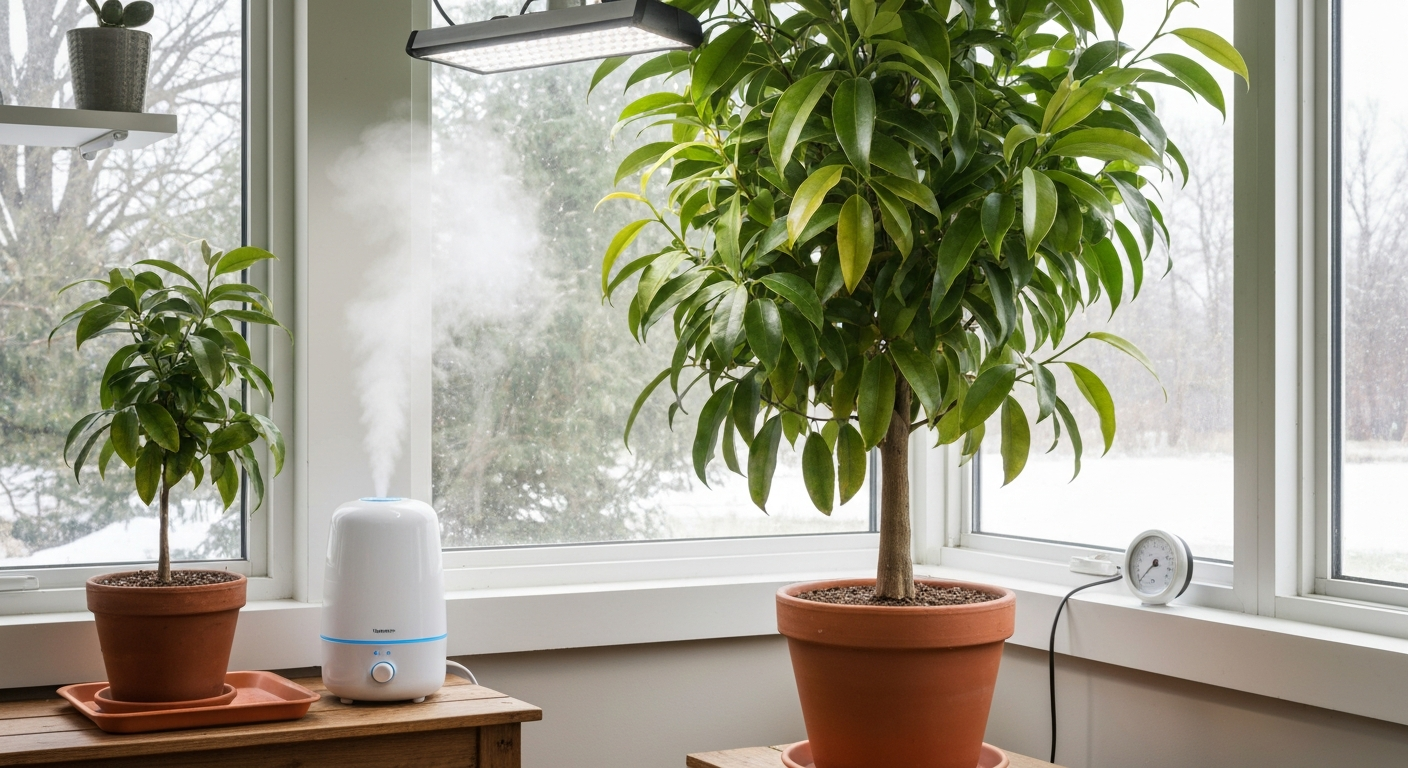
Quick verdict: can you grow cinnamon in Canada?
Technically yes, practically only indoors or under glass for most Canadians. True cinnamon (Cinnamomum verum) is a tropical tree native to Sri Lanka that thrives at mean temperatures around 27°C with 150 to 250 cm of annual rainfall. Canada's warmest outdoor zones, the southern tip of Vancouver Island and a few Gulf Islands, reach zone 9A at best, which is still one full zone below the minimum typically needed to keep C. verum alive through winter outdoors. Every other Canadian province is colder still. So if you are in Ontario, Alberta, Quebec, or anywhere on the Prairies, outdoor growing is off the table entirely. What is absolutely feasible anywhere in Canada, including apartments in Edmonton or Toronto, is growing cinnamon as a container plant, provided you can meet its light, heat, and humidity requirements year-round.
Cinnamon species compared: true vs. cassia
Before you buy a plant or packet of seeds, it helps to know which species you are actually dealing with, because the two most commonly encountered 'cinnamons' are quite different in flavor, bark thickness, and climate needs.
| Feature | Cinnamomum verum (True/Ceylon) | Cinnamomum cassia (Cassia) |
|---|---|---|
| Common name | True cinnamon, Ceylon cinnamon | Cassia, Chinese cinnamon |
| Origin | Sri Lanka, southern India | Southern China, Southeast Asia |
| Bark flavor | Delicate, mildly sweet, complex | Bold, pungent, spicier |
| Quill appearance | Multiple thin, tightly rolled inner layers | Single thick layer, rough outer bark |
| Coumarin content | Very low | Much higher (relevant to health concerns) |
| Preferred climate | Tropical, USDA zone 10–12 | Subtropical/tropical, USDA zone 8–11 |
| Cold tolerance | Damaged below ~4°C | Slightly more tolerant, some survival to ~−5°C |
| Availability in Canada | Specialty nurseries, online | More widely available, sometimes as camphor relatives |
For Canadian hobbyists, the key takeaway is that cassia is marginally more forgiving of cool temperatures, but neither species is truly outdoor-hardy anywhere in Canada. If you want the fine-flavored inner bark that Ceylon cinnamon is prized for, you will need C. verum. If you simply want a fragrant, exotic-looking container tree and do not mind a bolder spice, C. cassia or C. burmannii (Indonesian cinnamon) are slightly easier to source and a little more forgiving of temperature dips. There are also Cinnamomum species like C. japonicum and some provenances of C. camphora that can tolerate temperatures as low as -15 to -18°C, but their bark chemistry is so different that they are not useful as spice sources. Do not let someone sell you a camphor tree as a cinnamon substitute.
What cinnamon actually needs: climate, temperature and hardiness
Understanding the plant's native conditions is the fastest way to figure out what you are up against. C. verum evolved in the lowland tropics of Sri Lanka, where temperatures rarely drop below 20°C at night and humidity stays high year-round. If you’re wondering does cinnamon grow in India: yes, parts of India with tropical climates cultivate Cinnamomum species, including both C. verum and various cassias, for local spice production. In a Canadian context, you are trying to recreate a Sri Lankan coastal plantation inside a prairie bungalow or a West Coast greenhouse, which is genuinely challenging.
- Temperature: daytime optimum 20–30°C, night minimum ideally above 15°C; plants show visible stress and leaf drop below 10°C and are killed by frost
- Humidity: relative humidity of 60% or higher is strongly preferred; indoor Canadian winter air, especially in forced-air heated homes, often drops to 20–30% RH without intervention
- Light: bright, indirect to full tropical sun; in Canada, low winter sun angles and short days are a genuine constraint indoors
- Rainfall equivalent: 150–250 cm annually in the wild; in containers this translates to consistent watering with no extended dry periods but also excellent drainage to prevent root rot
- USDA hardiness: zone 10–12 for reliable outdoor survival; Canada's hardiness zones run 0–9, with zone 9A being the absolute warmest (Victoria, B.C., and a handful of coastal spots)
- Soil: well-draining, slightly acidic to neutral (pH 5.5–7.0), rich in organic matter
Canada's Plant Hardiness system, maintained by Natural Resources Canada, tops out at zone 9, and only a small number of sites in coastal British Columbia actually reach that threshold. The rest of the country ranges from zone 8 down to zone 0 in the far north. That one-zone gap between Canada's warmest spots and C. verum's minimum hardiness requirement may sound small, but in practice it means a hard frost event once every few winters would kill an unprotected outdoor plant outright. Even in Victoria, you would be gambling.
Which parts of Canada are even marginal?
If you are dead set on trying outdoor cinnamon in Canada, you are essentially looking at one narrow strip of the country: the immediate coastal areas of southern Vancouver Island, the Gulf Islands, and select waterfront spots in the Lower Mainland of British Columbia. These are the only places in Canada that approach zone 8–9, with mild, wet winters influenced by the Pacific Ocean. Even there, 'marginal' is the right word. A severe winter event in Victoria can push temperatures to -8°C or lower, well beyond what C. verum will survive unprotected.
If you are in Vancouver, you could realistically move a large potted cinnamon plant outside into a sheltered, south-facing spot in summer, then bring it back inside before first frost, which is the strategy most BC specialty gardeners use with subtropical trees. This is not truly outdoor growing; it is container growing with a warm-weather break. Anywhere else in Canada, Alberta, Saskatchewan, Manitoba, Ontario, Quebec, the Maritimes, you are growing this plant entirely indoors or in a heated structure, full stop.
Choosing your approach: outdoor, greenhouse, or container?
Before you spend money on a plant, work through these decision points. Your answer to each one will direct you to the right method.
- Where in Canada are you? If you are outside coastal BC, skip straight to container or greenhouse. Outdoor growing is not a realistic option.
- Do you have a heated greenhouse or are you willing to build one? Greenhouse growing gives you the best conditions for a genuinely productive plant and real bark harvest potential.
- Is this a hobby/curiosity project or do you want actual spice? For spice, you need a minimum 3–4 year commitment and a stable heated environment. For novelty, a modest indoor container setup works fine.
- What is your budget? A small container setup costs relatively little upfront; a heated greenhouse is a significant capital and energy investment.
- Do you have bright south-facing windows or a grow-light setup? Cinnamon needs a lot of light. If your home is dark, factor in the cost of full-spectrum grow lights.
- Can you maintain 60%+ humidity in your growing space? This is often the hardest challenge indoors in a Canadian winter. If your home runs very dry with forced-air heat, plan for a humidifier.
- Are you in coastal BC with a large sheltered outdoor space? Then a container plant that summers outside and overwinters in a bright, warm indoor spot is a practical middle path.
Growing cinnamon outdoors in Canada: step-by-step (and honest limits)
I will be direct: outdoor planting in the ground is only worth attempting in the mildest coastal BC microclimates, and even there it carries real risk. But here is how to give it the best possible chance.
- Choose your site ruthlessly. You want a south or southwest-facing wall or slope, ideally with a masonry surface nearby to radiate stored heat at night. Good air drainage (no frost pockets) matters more than you think.
- Plant in late spring, after any frost risk has passed, giving the plant a full summer to establish before the cold season.
- Amend soil heavily with compost and coarse sand or perlite to ensure drainage. Cinnamon roots will not tolerate waterlogged soil, especially in BC's wet winters.
- Mulch the root zone with 10–15 cm of bark mulch to moderate soil temperature, but keep mulch away from the trunk to prevent rot.
- Provide a frost cloth or temporary shelter structure for unexpected cold snaps. Even zone 9 sites can dip to -5°C in a bad winter, which will kill C. verum.
- Accept that you are essentially running a long-term experiment. I would not personally plant cinnamon in the ground even in Victoria without a backup plan to dig and pot the plant in autumn.
The realistic limit here is that even a successful outdoor planting in coastal BC will likely need supplemental protection during winter and may die in an unusually cold year. Think of it as a borderline zone-push, the same way gardeners try fig trees or Chusan palms in Vancouver, with the same acceptance that a bad winter ends the experiment.
Growing cinnamon in a greenhouse: step-by-step
A heated greenhouse is the closest you can get to cinnamon's native conditions anywhere in Canada, and it is the method most likely to produce harvestable bark within a realistic timeframe. For detailed practical guidance on greenhouse cultivation, see our guide on growing cinnamon in a greenhouse. This is a genuine investment, though. Heating a greenhouse through a Canadian winter is not cheap. Energy‑economic‑environmental analysis of a net‑zero energy greenhouse, modelling/experimental study reports that continuously heated greenhouse systems can require on the order of 49 kWh per m3·year of heating energy, illustrating why winter greenhouse heating costs can be substantial blank" rel="noopener noreferrer">Energy‑economic‑environmental analysis of a net‑zero energy greenhouse — modelling/experimental study. Energy‑modelling studies report greenhouse heating intensities around ~49 kWh/m3·yr, which for a nominal 3 m crop height converts to roughly 147 kWh/m2·yr, illustrating significant running costs (authors use site‑specific models; conversion is illustrative) blank" rel="noopener noreferrer">greenhouse heating intensity (~147 kWh/m2·yr).
Setting up the greenhouse environment
- Choose a double-glazed or polycarbonate-paneled structure for insulation. Single-glazed glass loses heat rapidly and will drive up energy costs significantly.
- Install a reliable heating system capable of maintaining a night minimum of 15°C when outdoor temperatures are at their Canadian worst, which can mean -20°C to -40°C in many parts of the country. Size your heater generously and include a backup.
- Plan for heating energy costs. Research suggests a continuously heated greenhouse can require roughly 147 kWh per square meter of floor area per year in heating energy alone. For a modest 10 m² hobby greenhouse, that is approximately 1,470 kWh/year just for heating, on top of lighting.
- Install a thermometer and hygrometer at plant height so you know what the plant is actually experiencing, not just what the wall thermostat reads.
- Add a misting system or ultrasonic humidifier to maintain relative humidity at 60–80%. Greenhouses lose humidity through ventilation, which brings us to the next point.
- Ventilate with purpose. You need air movement to prevent fungal diseases (a real risk at high humidity), but ventilation drops temperature and humidity. Roof vents with thermostatic control are ideal for summer; in winter, gentle circulation fans keep air moving without exhausting heat.
- Provide maximum light. A south-facing greenhouse is ideal. Supplement with full-spectrum LED grow lights during Canada's short winter days, aiming for at least 12–14 hours of light per day.
Planting and managing cinnamon in the greenhouse
- Plant in large containers (minimum 30–40 litre for a plant with ambitions of bark harvest) rather than directly in greenhouse soil, so you can move the plant if needed.
- Use a tropical potting mix: a blend of quality peat or coco coir, perlite, and coarse bark in roughly equal proportions, amended with balanced slow-release fertilizer.
- Water consistently to maintain evenly moist (not waterlogged) soil. In a warm greenhouse, a 40-litre container may need watering every two to three days in summer.
- Fertilize monthly during the growing season with a balanced liquid fertilizer (10-10-10 or similar), switching to a lower-nitrogen formulation in winter to slow growth during lower light periods.
- Monitor for pests closely. The warm, humid greenhouse environment that cinnamon loves is also ideal for spider mites, scale insects, and fungal issues. More on this in the pest section below.
Growing cinnamon in containers indoors: step-by-step
This is the most accessible method for the vast majority of Canadians, and it is perfectly viable if you manage light and humidity well. I have kept a C. verum in a large container in a bright sunroom for three winters now. It has not produced harvestable bark yet, but it is healthy, fragrant, and genuinely beautiful as a houseplant.
- Start with the right container. A 20–30 litre pot with excellent drainage holes gives a young plant room to grow without holding excessive moisture. Terracotta breathes well and helps prevent root rot.
- Use a well-draining tropical mix as described in the greenhouse section. Avoid standard potting mixes that retain too much water.
- Position the plant in your brightest spot, ideally a south-facing window. In Canadian winters, even a south window provides less light than cinnamon ideally needs. Supplement with a full-spectrum LED grow light positioned 30–60 cm above the canopy for 14 hours per day.
- Keep the plant away from cold drafts and heating vents. The ideal spot is consistently warm (18–28°C), not fluctuating between hot and cold.
- Run a humidifier nearby or place the pot on a tray of pebbles and water to elevate local humidity. Misting the leaves helps briefly but does not substitute for sustained high ambient humidity.
- Water when the top 2–3 cm of soil feels dry. In a heated Canadian home in winter, this may be every five to seven days for a large container.
- Fertilize monthly during spring and summer with a balanced liquid fertilizer at half strength. Reduce or stop fertilizing in November through February when growth naturally slows.
- In summer, move the container outside to a sheltered, sunny spot if you are in BC or a warm urban microclimate. Bring it back inside before temperatures drop below 10°C.
Soil, potting mixes and fertilizer
Cinnamon is not particularly fussy about soil composition, but it is completely unforgiving of poor drainage. In its native habitat, it often grows on sloping, well-drained laterite and sandy loam soils. The worst thing you can do in a Canadian indoor or greenhouse setting is let roots sit in soggy mix, especially when temperatures are cooler. A good container mix for cinnamon is roughly one part quality coco coir or peat, one part perlite, and one part orchid-grade bark chips or coarse sand. This drains freely while still retaining enough moisture between waterings. Aim for a slightly acidic to neutral pH, around 5.5 to 7.0. For fertilizer, a balanced NPK (10-10-10 or similar) works well during active growth. Some growers switch to a higher-potassium fertilizer in late summer to harden new growth before the lower-light winter period. Avoid heavy nitrogen feeding in winter; it pushes soft new growth that struggles under low light.
Propagation: seeds, cuttings and air-layering
You can propagate cinnamon yourself, but each method has real trade-offs, and sourcing material in Canada adds an extra layer of complexity.
Growing from seed
Cinnamon seeds are recalcitrant, meaning they lose viability very quickly after harvest. Germination under good nursery conditions (warm, moist, humid) happens within two to three weeks, but viability can drop dramatically after just three to seven weeks post-harvest. If you order seeds online and they arrive stressed or old, germination rates will be poor. If you can source genuinely fresh seed, sow immediately in warm (28–30°C), moist seed-starting mix, cover loosely with plastic to retain humidity, and keep in bright indirect light. Do not refrigerate; cold storage kills recalcitrant seeds. Expect 30–60% germination from good fresh seed, much lower from older stock.
Cuttings
Semi-hardwood or greenwood cuttings, taken from actively growing shoot tips in spring or early summer, are the most reliable propagation method used in cinnamon cultivation programs. Take 10–15 cm cuttings with two to three nodes, remove lower leaves, and treat the cut end with an IBA (indole-3-butyric acid) rooting hormone powder or gel. Research on cinnamon propagation confirms that IBA and NAA (naphthaleneacetic acid) treatments significantly improve rooting success rates versus untreated cuttings. Stick cuttings in a perlite/coco coir mix, cover with a humidity dome, and maintain at 25–28°C. Rooting typically takes four to eight weeks. I had about a 50% success rate on my first batch of cuttings before I upgraded my bottom heat setup; bottom heat to 24–26°C is genuinely important.
Air-layering
Air-layering is the easiest way to get a well-rooted, large new plant from an established parent. Select a healthy branch about pencil thickness, girdle the bark in a 3–4 cm ring, apply IBA rooting hormone to the exposed wood, pack moist sphagnum moss around it, and wrap tightly with clear plastic film secured at both ends. Roots typically appear through the moss in six to ten weeks. Once you see a good root system developing, cut the branch below the moss ball and pot it up. Success rates are generally high, and the resulting plant has an established root system from day one.
Potting, repotting and winter care
Container cinnamon plants grow steadily and will need repotting every two to three years into a container one size larger. The best time to repot is spring, just as new growth begins. When repotting, inspect roots: dark, mushy roots indicate rot and should be trimmed back to healthy tissue before replanting in fresh mix. In winter, most Canadian indoor growers will find their cinnamon slows down noticeably even in a warm room, simply due to reduced light. This is not true dormancy the way a temperate tree goes dormant, but it is a low-activity period. Reduce watering frequency slightly (but never let the root ball dry out completely), cut fertilizer to once every six to eight weeks, and do not repot during this period. If you are in a very cold part of Canada and your cinnamon is near a window, check that the glass is not chilling the leaves directly. Even a few degrees of radiant cold from a window pane can stress the plant.
Watering, heating and humidity: hitting the targets
These three variables are where most Canadian cinnamon attempts fail. Getting all three right simultaneously in a Canadian winter takes some effort, but it is manageable.
| Parameter | Target range | How to measure | Practical fix if falling short |
|---|---|---|---|
| Daytime temperature | 22–30°C | Digital thermometer at leaf level | Space heater on thermostat; insulate growing area |
| Night minimum | Above 15°C | Min/max thermometer | Thermal curtains, heat mat under container |
| Relative humidity | 60–80% | Digital hygrometer | Ultrasonic humidifier, pebble tray, grouping plants |
| Watering frequency | Top 2–3 cm dry between waterings | Finger test or moisture meter | Adjust weekly; check drainage holes not blocked |
| Air circulation | Gentle, continuous | Observe for condensation or stagnant air | Small oscillating fan on low setting |
The single biggest mistake I see in Canadian cinnamon attempts is forced-air central heating combined with no humidity compensation. Central heating in a Canadian winter can drop indoor RH to 15–25%, which will cause cinnamon leaves to brown at the edges and drop. A $40–80 ultrasonic humidifier running near your plant makes a visible difference within days. You do not need to turn your whole home into a rainforest; just the immediate air around the plant needs to stay in the 60–70% range.
Light requirements and artificial lighting
In its native Sri Lanka, cinnamon receives intense tropical light year-round. In Canada, even the brightest south-facing window delivers dramatically less light in November through February, and natural photoperiod drops to nine to ten hours in much of the country. This is a real constraint. A cinnamon plant that gets through spring and summer looking great can decline noticeably over a Canadian winter with inadequate light, producing thin, pale new leaves and growing very slowly.
- Natural light: a south-facing window is the minimum; southeast or southwest is acceptable but not ideal
- Supplement from October to March at minimum, targeting 14 hours of light per day total (natural plus artificial)
- Full-spectrum LED grow lights (5,000–6,500 K color temperature) positioned 30–60 cm above the canopy are the most energy-efficient option; avoid old-style high-pressure sodium or fluorescent shop lights, which generate more heat than useful light per watt
- A plant with a 60–90 cm canopy needs a grow light rated at least 50–75 watts true draw (not marketing equivalent watts) to have a meaningful effect
- Use a simple outlet timer to automate the photoperiod; consistency matters as much as total intensity
Pests, diseases and common problems in Canadian conditions
The warm, humid conditions you are trying to maintain for cinnamon are also ideal for a handful of pests and fungal issues. Being proactive is much easier than treating an established infestation.
Most common pests
- Spider mites: the number one indoor cinnamon pest in dry Canadian homes; look for fine webbing and stippled, bronzing leaves; treat with insecticidal soap spray or neem oil, increasing humidity reduces their spread significantly
- Scale insects: appear as brown or tan bumps on stems and leaf undersides; scrape off with a soft toothbrush dipped in rubbing alcohol, then follow with neem oil application
- Fungus gnats: attracted to consistently moist soil; allow the top layer to dry more between waterings and use sticky yellow traps
- Mealybugs: white cottony clusters at leaf axils; treat with isopropyl alcohol on a cotton swab followed by neem oil
Diseases and environmental problems
- Root rot (Phytophthora or Pythium species): almost always caused by overwatering or poor drainage; prevention through appropriate mix and careful watering is the only real solution; affected plants rarely recover once rot is advanced
- Anthracnose (Colletotrichum spp.): dark spots or blotches on leaves and shoots; improve air circulation and avoid overhead watering; remove affected tissue and treat with a copper-based fungicide if spreading
- Grey blight (Pestalotiopsis): grey-brown leaf lesions, common in high humidity with poor air movement; treat as with anthracnose
- Rough bark / dieback (Phomopsis): affects stems in production settings; in home plants, maintain good air circulation and avoid wounding bark
- Leaf browning at tips: usually a humidity issue, not a disease; raise humidity first before assuming a pathogen is involved
- Leaf drop: caused by temperature shock, cold drafts, or drastic changes in light level; avoid moving plants suddenly from dim to bright or from warm to cool
Harvesting cinnamon bark: when, how, and what to expect
This is where hobbyist cinnamon growing gets genuinely exciting, but also where realistic expectations really matter. True cinnamon spice comes from the thin inner bark of Cinnamomum verum shoots. The process requires patience, timing, and some specific technique.
When to harvest
Commercial cinnamon harvesting in Sri Lanka typically happens twice a year, timed to follow or coincide with the rainy seasons when the bark is most pliable and strips cleanly from the wood. In a Canadian container setting, the equivalent cue is harvesting shoots that have completed a full growth cycle and have begun to mature and firm up, usually in late summer or early autumn. Shoots should be pencil-thick to finger-thick, green-brown on the outside, and at least 40–60 cm long for a meaningful strip of bark.
How to strip and process the bark
- Select a mature shoot and cut it cleanly from the plant with sharp, sterile pruning shears.
- Remove leaves. Score the outer surface of the shoot lengthwise with a thin-bladed knife, making two parallel cuts about 1–2 cm apart along the length of the shoot.
- Gently work the scored strip loose using a smooth, rounded stick (a traditional 'peeling stick'); in Sri Lankan practice this step is done carefully to avoid tearing the inner bark.
- Slide the outer cork and green bark away to reveal the thin pale inner bark (phloem layer). This is the cinnamon spice.
- Peel the inner bark in strips. These will curl naturally as they dry into the classic quill shape.
- Layer the strips together (several thin strips nested inside each other create the characteristic cinnamon stick), then dry in a warm, well-ventilated spot out of direct sun for 24–48 hours until fully dry and crisp.
- Store dried quills in an airtight container away from light and moisture.
For a home container plant, your first harvest will be modest. A single pencil-thick shoot might produce a few small, thin quills or a teaspoon of bark scraps. This is not a large yield, but it is genuinely homegrown Ceylon cinnamon, and the aroma is noticeably fresher than anything you have bought in a jar.
Timelines, growth rates and realistic yield
Honesty matters here. Cinnamon is a slow crop by spice-garden standards, even under ideal tropical conditions.
| Stage | Timeline (ideal tropical conditions) | Timeline (Canadian indoor/greenhouse) | Notes |
|---|---|---|---|
| Seed to established seedling | 3–6 months | 4–8 months | Slower due to lower light and temperature |
| First harvestable shoot | 2–3 years | 3–5 years | Depending on growth rate in your conditions |
| Productive multi-shoot plant | 3–4 years | 4–6+ years | Commercial plantations harvest from year 3–4 |
| Meaningful recurring yield | 5+ years | 6–8+ years | Small quills from pruned shoots; not large quantities |
| Commercial scale yield (field) | 150–200 kg dried quills/ha at maturity | Not applicable in Canada | Home container yields measured in grams, not kilograms |
A realistic hobbyist expectation for a well-grown container plant in Canada is a handful of thin quills per harvest cycle, starting perhaps in year four or five under good conditions. This is enough to say you grew your own cinnamon and to enjoy the experience. It is not enough to stock a spice shelf. If you want to actually use cinnamon regularly, buy it from a store; if you want to grow it as a fascinating slow-reward project, a container cinnamon is genuinely satisfying.
Commercial cinnamon production in Canada: not a realistic proposition
For completeness: no, commercial cinnamon production in Canada is not viable in any practical sense. Field production requires tropical outdoor conditions that simply do not exist here. A large-scale heated greenhouse operation could theoretically grow cinnamon, but the economics are brutal. Heating costs alone for a meaningful production area would dwarf the value of any spice yield. Sri Lanka produces around 20,000 tonnes of true cinnamon annually under natural tropical conditions at minimal climate control cost. Canada cannot compete with that, and there is no agronomic reason to try. This is strictly a home hobby crop in a Canadian context.
Cost, time and effort: comparing your three options
| Approach | Setup cost (approx.) | Ongoing annual cost | Effort level | Realistic for bark harvest? |
|---|---|---|---|---|
| Outdoor (coastal BC only) | Low ($20–80 for plant + mulch) | Minimal, but frost protection needed | Low-moderate | Possible but risky; plant may die in a cold winter |
| Container/indoors | $100–300 (plant, pot, grow light, humidifier) | $50–150/yr (electricity, fertilizer) | Moderate; regular monitoring needed | Yes, in 4–6 years with good care |
| Heated greenhouse | $500–5,000+ (structure, heating, controls) | $300–1,500+/yr (heating energy, etc.) | High; requires active climate management | Best chance of meaningful yield in 3–5 years |
For most Canadians, the container/indoors option hits the best balance of cost, feasibility, and reward. The greenhouse option makes sense if you already have one or plan to build one for multiple tropical plants. The outdoor option is only for the most sheltered coastal BC gardeners who are comfortable with the risk of losing the plant in a severe winter.
Practical alternatives and spice substitutes
If the honest realities of growing cinnamon in Canada feel like more commitment than you want, there are easier aromatic projects that might scratch the same itch. Sweet bay (Laurus nobilis) is far hardier and can be grown as a container plant or even outdoors in zone 7–8 in coastal BC, giving you fragrant leaves with far less fuss. Vietnamese coriander, Vietnamese mint, and lemongrass all give aromatic tropical-ish flavors and are much easier container plants for short Canadian summers. If you specifically want a woody spice tree experience, consider growing a small container sweet gum or anise hyssop for fragrance. For the cinnamon flavor itself, high-quality Ceylon cinnamon from a reputable importer is genuinely your most practical option for regular kitchen use, while you maintain a container cinnamon plant more for the joy of growing it. It is also worth noting that growing cinnamon in a greenhouse, as a dedicated growing environment for tropical spices, opens doors to a wider range of companion plants that share similar heat and humidity needs.
Where to buy cinnamon plants, cuttings and seeds in Canada
Sourcing is one of the genuine challenges. Here is what to look for and watch out for.
- Specialty tropical plant nurseries: a handful of Canadian specialty nurseries, particularly in BC and Ontario, occasionally stock Cinnamomum species; check their online stock listings in late winter/early spring
- US specialty nurseries shipping to Canada: US sellers like Logee's and similar specialty growers sometimes ship to Canada, but check phytosanitary import requirements; Canada Border Services Agency (CBSA) requires that plant material entering Canada meet phytosanitary certification requirements
- Seeds online: available from various international seed vendors; confirm the species name carefully (C. verum vs. C. cassia vs. other species), ask about seed freshness or harvest date given the recalcitrant nature of cinnamon seed
- Cuttings from hobbyist groups: Canadian tropical plant collector communities on social media occasionally trade or sell rooted cuttings of confirmed C. verum; this can be the most reliable way to get a correctly identified plant
- Red flags to avoid: plants sold generically as 'cinnamon tree' without a species name (may be a camphor relative or misidentified cassia), seeds that have been in stock for months without refrigeration, and vendors who cannot confirm the species
Troubleshooting checklist
If your cinnamon plant is struggling, work through these decision points before changing multiple things at once. Changing one variable at a time lets you identify what is actually wrong.
- Leaf browning at tips and edges: check humidity first (hygrometer reading); if RH is below 50%, increase humidity before checking anything else
- Leaf drop (large quantities): temperature shock or cold draft; check for cold air from windows, air conditioning vents, or exterior doors nearby
- Yellowing leaves: could be overwatering (check soil moisture and root condition), nutrient deficiency (fertilize if it has been more than eight weeks), or insufficient light
- Stunted growth in winter: most likely inadequate light; add or reposition grow light and confirm you are providing 14 hours of light daily
- Soggy soil, wilting despite moist soil: root rot; repot immediately into fresh dry mix, trim rotted roots, and reduce watering frequency
- White cottony deposits on stems: mealybugs; treat immediately with isopropyl alcohol and neem oil
- Fine webbing and stippled leaves: spider mites; increase humidity, treat with insecticidal soap spray repeatedly every five to seven days
- Bark not stripping cleanly at harvest: shoots may not be mature enough, or timing is off; wait for shoots to reach pencil thickness and try in late summer when the plant has been actively growing
- No new growth after several months: check root health, light levels, and temperature; if all seem correct, try a diluted liquid fertilizer to stimulate response
Where to go from here
Here is the honest bottom line for Canadian gardeners: cinnamon is absolutely worth growing as a container plant if you can provide warmth, humidity, and good light through the winter. It is a beautiful, fragrant tree, the process of eventually harvesting even a small amount of real bark is genuinely satisfying, and it will teach you a lot about managing tropical plants in a temperate climate. It is not worth attempting outdoors except in the very warmest coastal BC spots, and even there, treat it as an experiment rather than a reliable planting. If you're in the United States, see our guide on can you grow cinnamon in the US for region-specific advice. For most Canadians, a well-maintained indoor container setup is the path forward. Start with a confirmed C. verum plant from a reputable source, set up your humidity and light properly before the plant arrives, and commit to the multi-year timeline. If you later want to scale up or improve your growing conditions, a dedicated greenhouse opens up more possibilities, both for cinnamon and for the many other tropical spice plants that share its requirements.
FAQ
Can you grow cinnamon (Cinnamomum spp.) in Canada?
Short answer: Yes — but only as a container/greenhouse/indoor plant for most Canadians. Outdoor, permanent production of true cinnamon (Cinnamomum verum) is impractical except in extremely limited coastal microclimates (very rare sites on southern Vancouver Island and nearby Gulf Islands). True cinnamon is a tropical/subtropical tree requiring warmer, more humid conditions than nearly all of Canada provides.
Which cinnamon species are used for the spice and how do they differ in climate needs?
Cinnamomum verum (Ceylon/true cinnamon) is the preferred spice species and requires tropical/subtropical conditions (commonly cited USDA zones ~10–12). Cassia-type species (C. cassia, C. burmannii, C. loureiroi) are similar but often slightly more tolerant; some non‑spice Cinnamomum relatives (e.g., C. camphora) tolerate colder temperatures but do not produce true cinnamon flavour and are not suitable substitutes if you want authentic bark.
Where in Canada could cinnamon possibly survive outdoors?
Outdoor survival is marginal and limited to the warmest coastal microclimates: pockets of southern Vancouver Island (Victoria and nearby), some Gulf Islands, and immediate sheltered waterfront sites in the Lower Mainland. Even there, winters are usually cooler and drier than ideal for C. verum, so survival and useful bark production are uncertain without extra protection.
Which growing method is most practical for Canadian hobbyists?
Container cultivation with indoor/greenhouse overwintering is the most practical. Move plants outdoors in summer in a sheltered, warm spot and bring them inside (heated room, heated greenhouse, or sunroom) before cold weather. A continuously heated greenhouse can also work year‑round but requires substantial heating/humidity control.
What temperature, humidity, and light conditions does cinnamon need in a greenhouse or indoor setting?
Targets: daytime 20–30 °C, nighttime ideally above 15 °C (decline below ~10 °C causes stress). Relative humidity 60% or higher is beneficial. Bright, filtered light or morning sun; protect from harsh midday sun if leaves scorch. Good air circulation reduces fungal problems.
How do energy needs for a continuously heated greenhouse affect feasibility in Canada?
Heating a greenhouse year‑round to tropical/subtropical temperatures can be energy intensive and costly. Published energy modelling suggests high annual heating demand per area; hobby growers often use insulated greenhouses, localized heating, or temporary indoor overwintering to reduce costs. Expect significant running costs if maintaining 20–25 °C all winter.
Next Articles
Can You Grow Cinnamon in the US? Outdoor and Indoor Guide
Learn if you can grow cinnamon in the US, where it works best, and how to grow indoor or container cinnamon.
Can You Grow Cinnamon at Home in the US? Yes, Here’s How
Grow cinnamon at home in the US: which tree to plant, climate options, step-by-step care, and realistic harvest timeline
Can You Grow Black Pepper in the US Where and How
Learn where black pepper can be grown in the US and how to grow it indoors or in warm zones for fruit.