
Yes, black seed (Nigella sativa) can be grown in Nigeria, but your success rate depends almost entirely on where in the country you are and which season you plant. If you are wondering can you grow saffron in New Zealand, the key is climate control, suitable soil drainage, and choosing the right planting window. The northern regions, particularly the Sudan Savanna and the drier parts of the Guinea Savanna, offer the most naturally suitable conditions. The south is trickier due to high humidity and prolonged rain, though it is not impossible with careful timing and site selection.
Can Black Seed Grow in Nigeria? How to Plant and Harvest Nigella sativa
Marcus Petersen
6 Jul 2026
Nigeria vs. What Nigella sativa Actually Needs
Nigella sativa is a cool-season annual that originates from the Mediterranean and Southwest Asia. It likes temperatures between 15°C and 25°C, well-drained sandy or loamy soil, low to moderate humidity, and a distinct dry period during flowering and seed fill. It handles mild drought reasonably well once established, but it absolutely cannot tolerate waterlogged roots, persistent high humidity during flowering, or temperatures that consistently stay above 35°C.
Now compare that to Nigeria. The country sits between roughly 4°N and 14°N latitude and spans five broad bioclimatic belts running north to south: the Sahelian strip in the far north, the Sudan Savanna, the Guinea Savanna, the derived savanna transition zone, and the humid forest/mangrove belt along the southern coast and Niger Delta. USGS bioclimatic regional mapping across West Africa shows broad north to south belts labeled [Saharan, Sahelian, Sudanian, Guinean, and Guineo-Congolian](https://www. usgs.
gov/centers/eros/science/bioclimatic-regions-map) that align with Nigeria’s agronomy-relevant climate gradients. Annual rainfall ranges from under 500 mm in the far northeast to over 3,000 mm in parts of the southeast. That variation matters enormously for a crop like Nigella. The north is hot and dry, which is closer to Nigella's native range, while the south is equatorial, which is the opposite of what this plant evolved to handle.
Unfortunately, the article is focused on black seed (Nigella sativa), so check local climate and growing conditions before you decide whether saffron farming is realistic in Australia saffron in Australia.
Bottom line: if you are in Kano, Sokoto, Katsina, Maiduguri, Kaduna, or the northern parts of Niger and Kebbi states, you have a genuinely workable setup. If you are in Lagos, Port Harcourt, Benin City, or Calabar, you will be fighting the climate the whole way and harvests will be modest at best. Middle-belt states like Abuja (FCT), Plateau, and parts of Benue fall somewhere in between, and the high altitude of the Jos Plateau is actually one of the better spots in the entire country for growing Nigella.
What Black Seed Actually Is (and What You Should Buy)
The term 'black seed' is used loosely in Nigeria and across West Africa. It can refer to several different plants, and if you buy the wrong one, you will not get Nigella sativa, which is the plant behind black seed oil, nigellone, and thymoquinone. The correct botanical name is Nigella sativa, and the seeds are small, angular, matte black, and faintly aromatic when crushed. They are sometimes called habbatus sauda in Hausa-speaking communities, or black cumin, though black cumin is also a name sometimes applied to Bunium persicum, which is entirely different.
When buying seeds to plant, do not just grab the black seed sold as a spice or supplement in a market. Those seeds have often been heat-treated, fumigated, or stored in conditions that kill viability. You need raw, untreated, agricultural-grade Nigella sativa seed.
The best sources are: seed suppliers in northern Nigeria who deal in herbs and spices for cultivation, online agricultural seed companies that ship to Nigeria, or suppliers in India and Egypt (major Nigella-producing countries) through verified import channels. Before planting a full bed, test germination on a small batch: place 10 seeds between two damp paper towels at room temperature and check after 7 to 14 days. If 7 or more sprout, viability is good enough to plant.
Nigeria's Climate Zones and Where Nigella Fits
The North (Sudan Savanna and Sahel)
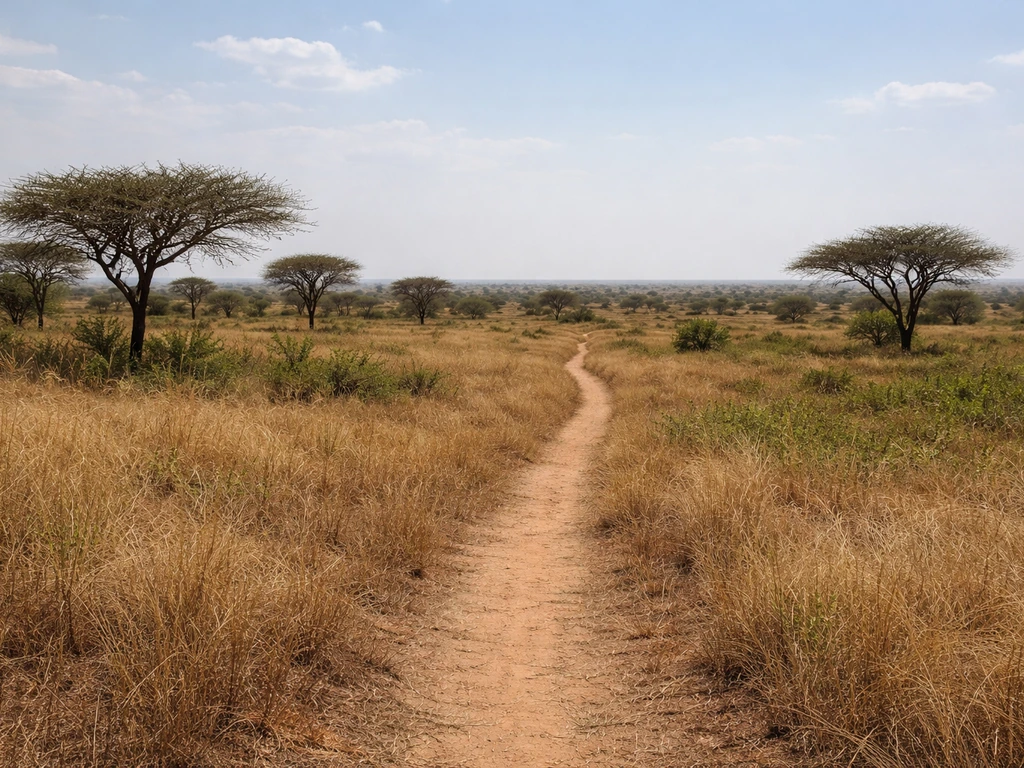
This is your best growing zone. Annual rainfall is 500 to 1,000 mm, concentrated in a single rainy season from roughly June to September, followed by a long dry harmattan period from October through April. Nigella planted in October or November, after the rains end and temperatures cool slightly, will germinate and grow through the harmattan into the dry season. You will water manually during this period, which is actually an advantage because you control moisture. Expect daytime highs of 25°C to 32°C during the cool dry season, which is warm but manageable. The plant will flower in January to February and set seed before the extreme pre-rainy-season heat of March to May.
The Middle Belt and Guinea Savanna
States like Kwara, Kogi, Nassarawa, Plateau, and parts of Benue get 1,200 to 1,600 mm of rain annually, split into two rainy peaks in some areas or a single longer season. Jos Plateau is exceptional: its altitude (around 1,200 metres above sea level) brings cooler temperatures year-round, making it the closest thing Nigeria has to a temperate microclimate. In Jos, Nigella can be grown on a slightly broader seasonal window and will experience less heat stress at flowering. For the rest of the Guinea Savanna, plant at the end of the rainy season (October through November) and aim to have seed set completed before the heavy rains return in April.
The South (Humid Forest Belt and Niger Delta)
Growing Nigella in Lagos, Rivers, Delta, Edo, or Cross River states is genuinely difficult. The humidity rarely drops below 70 to 80%, there is no true dry season in much of this zone, and temperatures hover above 30°C for most of the year. These conditions promote fungal disease, poor seed set, and general crop failure for Nigella.
If you are in the south and determined to try, your only practical window is December to January during the relatively drier harmattan period, and even then you should grow in raised beds with excellent drainage and good air circulation. Yields will be low and effort will be high. I would not recommend it as a staple project unless you have very specific reasons for trying.
Saffron has very specific temperature and soil requirements, so whether it can grow in South Africa depends heavily on finding the right microclimate and ensuring excellent drainage.
| Zone | Annual Rainfall | Best Planting Window | Feasibility |
|---|---|---|---|
| Sahel / Far North | Under 750 mm | October to November | Excellent |
| Sudan Savanna | 750 to 1,000 mm | October to November | Very Good |
| Guinea Savanna / Middle Belt | 1,200 to 1,600 mm | October to November | Good |
| Jos Plateau (altitude) | 1,000 to 1,400 mm (cool) | September to November | Very Good |
| Derived Savanna / Transition | 1,400 to 1,800 mm | November to December | Moderate |
| Humid Forest / Niger Delta / South | Over 1,800 mm | December to January (marginal) | Difficult |
How to Plant and Germinate
Direct Sowing vs. Starting in a Nursery
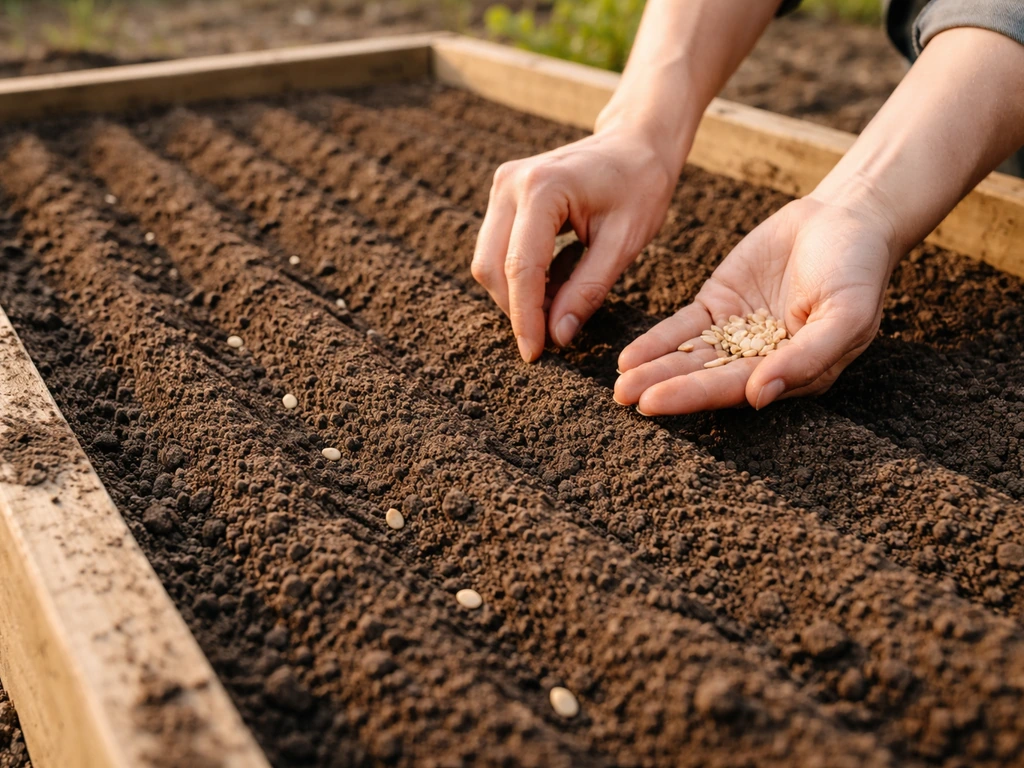
Nigella sativa has a taproot and does not transplant well at all. I have tried starting it in trays and moving it to the garden and the success rate was poor compared to direct sowing. The roots are sensitive and even careful transplanting at the seedling stage causes setback or death. Direct sowing into the prepared bed is strongly preferred. The only exception might be a controlled nursery start in small biodegradable pots that you plant out without disturbing the root system, but even then the risk is higher than direct sowing. Stick with direct sowing.
Step-by-Step Planting Guide
- Prepare your bed two weeks before planting. Loosen the soil to about 20 to 25 cm deep, remove weeds, and mix in well-composted organic matter at roughly a 10 to 15 percent volume ratio.
- Make sure the bed is level with a slight slope for drainage. For the south or any waterlogging-prone area, raise the bed by at least 15 to 20 cm above the surrounding ground.
- Make shallow furrows or scattered shallow impressions about 5 mm deep. Nigella seeds are tiny and do not need deep sowing.
- Sow seeds thinly, aiming for roughly one seed every 5 cm in rows spaced 20 to 25 cm apart, or broadcast thinly and thin out later.
- Cover lightly with fine soil or sand and press down gently. Do not bury seeds deeper than 5 to 8 mm.
- Water gently with a watering can or misting nozzle immediately after sowing. Avoid flooding the bed.
- Keep the seedbed consistently moist but not wet until germination. In northern Nigeria's dry season, you may need to water lightly once or twice per day in the first week.
- Germination typically takes 7 to 14 days at temperatures between 18°C and 24°C. In hotter conditions (above 30°C), germination slows and rates drop. If daytime temperatures are consistently above 32°C at your planting time, hold off by two to three weeks.
- Once seedlings are 5 to 7 cm tall and have their second true leaf pair, thin to a final spacing of about 15 to 20 cm between plants.
Ongoing Care: Soil, Water, Feeding, and Spacing
Soil
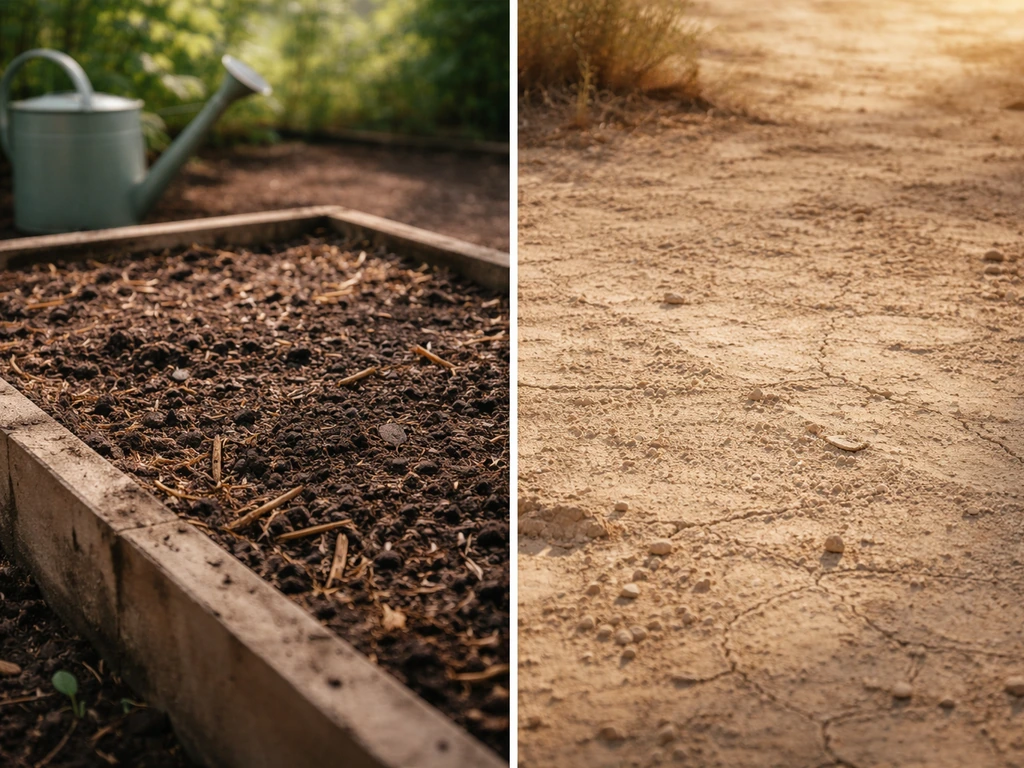
Nigella wants well-drained, sandy loam to loamy soil with a pH of roughly 6.0 to 7.5. Heavy clay soils are a problem because they retain moisture and create the soggy root environment that kills this plant. If your soil is clay-heavy, which is common in many parts of southwestern Nigeria, mix in coarse sand and compost aggressively before planting. You want soil that drains within an hour or two of watering, not soil that holds puddles.
Sunlight
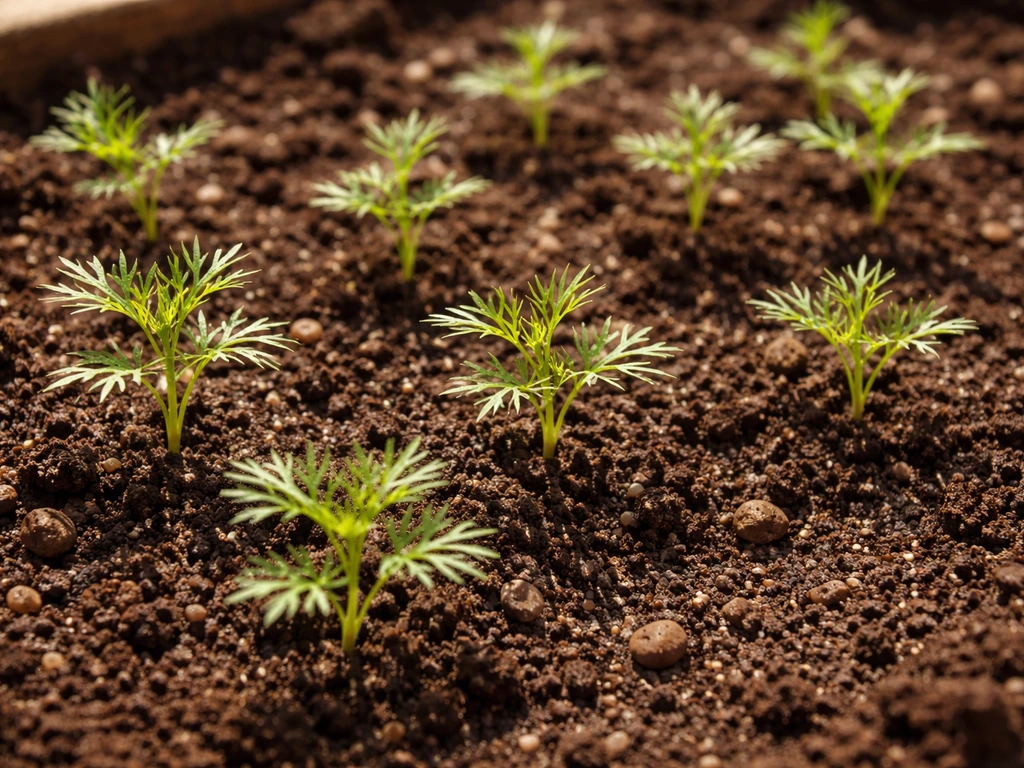
Full sun is non-negotiable. Nigella needs at least 6 hours of direct sunlight daily. In Nigeria you generally get plenty of this, but make sure you are not planting under or near trees or structures that will cast long shadows during the morning or afternoon hours.
Watering
During germination and the first two to three weeks, keep the soil evenly moist. Once plants are established and 10 to 15 cm tall, water deeply but less frequently. The goal is to let the top 2 to 3 cm of soil dry between waterings. In the northern dry season, that might mean watering every two to three days. Overwatering at this stage is a more common failure than underwatering. Once plants begin to flower, reduce watering further. Dry conditions during flowering and seed fill actually improve seed quality and reduce fungal disease.
Fertilizing
Nigella is not a heavy feeder. Too much nitrogen will push leafy growth at the expense of seed production. A light application of balanced organic compost worked into the soil before planting is usually sufficient. If your soil is genuinely poor, a single side-dress of a low-nitrogen fertilizer (something like a 5-10-10 ratio, or bone meal for phosphorus support) when plants are 15 to 20 cm tall will help. Avoid high-nitrogen NPK blends like urea unless your soil test specifically shows nitrogen deficiency.
Spacing and Weed Management
Final spacing of 15 to 20 cm between plants gives good airflow, which is important for disease prevention. Weeds are a serious competitor in Nigeria's conditions, especially at the seedling stage. Hand-weed carefully around the shallow-rooted seedlings or use a thin organic mulch layer (dry grass, wood chips) between rows to suppress weeds without smothering seeds. Avoid thick mulch right around the plant stems, particularly in humid conditions, as this traps moisture and invites rot.
Pests to Watch
- Aphids: common on young growth. Knock off with a water spray or apply neem oil solution (2 to 5 ml per litre of water) every five to seven days.
- Caterpillars and leaf-eating beetles: hand-pick or use neem oil. Rarely devastating if caught early.
- Termites: a real problem in northern Nigeria's dry season. Avoid using fresh uncomposted manure in your bed, which attracts them. Pre-treat beds in high-termite areas with wood ash mixed into the top 5 cm of soil.
- Root rot pathogens: not a pest but behaves like one in wet conditions. Prevention through drainage and not overwatering is more effective than treatment.
When and How to Harvest, Dry, and Store
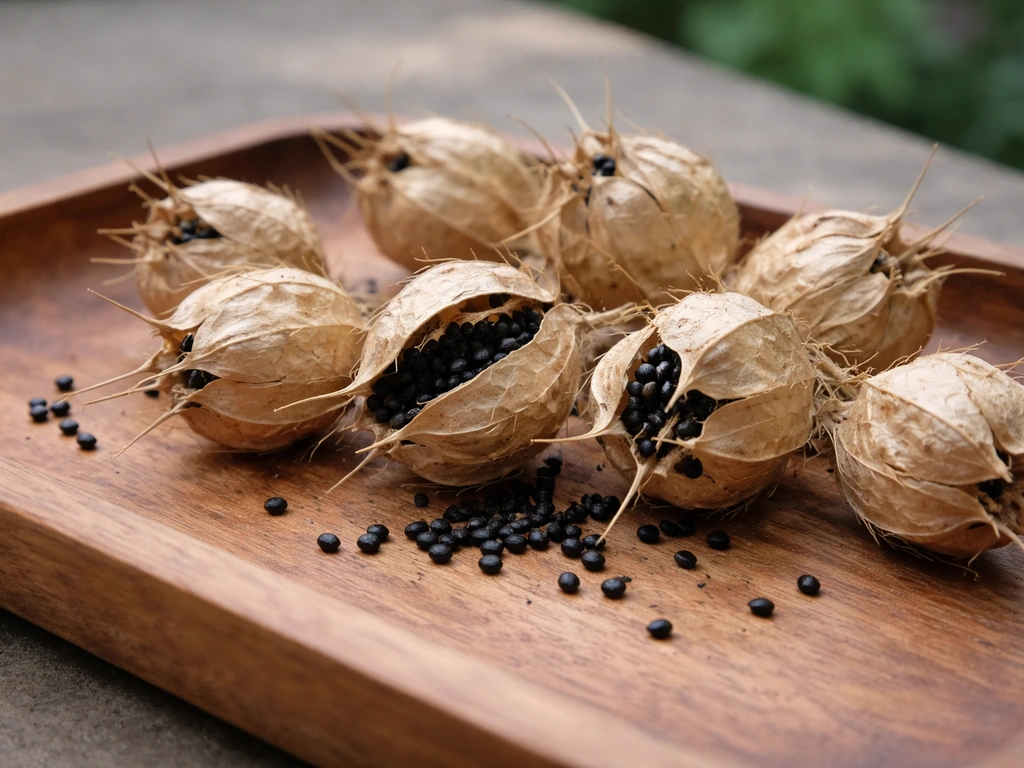
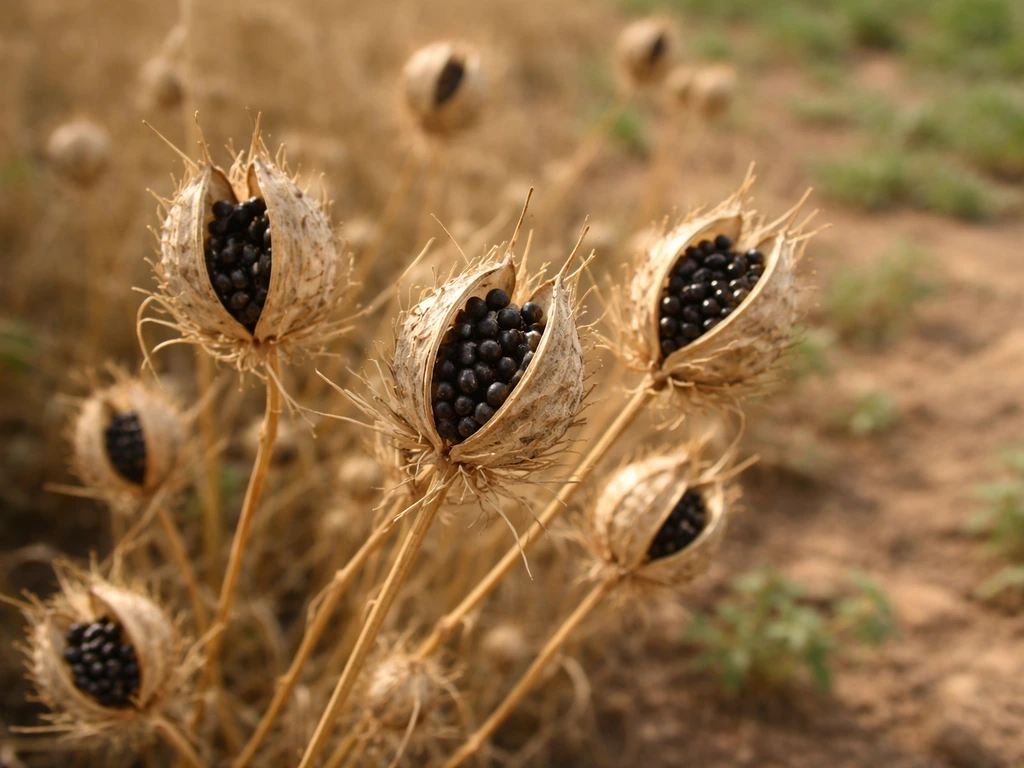
Nigella is ready to harvest when the seedpods (balloon-like capsules) turn from green to tan or light brown and begin to feel papery. The seeds inside will be nearly black at this point. Do not wait until the pods split open on their own, or you will lose seeds to the ground. The typical harvest window in a northern Nigeria dry-season planting is February to March, roughly 120 to 150 days after sowing.
Cut the entire plant at the base or clip individual pods when most pods on the plant are mature. Bundle several plants together upside down and hang them inside a paper bag or over a clean sheet in a dry, well-ventilated spot, away from direct strong sunlight. As the pods dry further, they release seeds into the bag or onto the sheet. Allow two to three weeks of drying time.
Once the seeds are fully dry, thresh them gently by rubbing the pods between your palms, then winnow to remove pod debris. The final seeds should be completely dry: bite one and it should be firm and not pliable at all. Store in an airtight glass jar away from light and heat. Properly dried Nigella seeds stored this way will remain viable for culinary use for two to three years and for replanting for at least one season, though germination rates drop noticeably after 12 to 18 months.
Common Problems and Realistic Expectations
Why Seeds Don't Germinate
The most common cause is seed viability. Spice-grade seeds from the market are usually dead. Always source agricultural planting seed and do the paper towel test before committing to a full bed. The second most common cause is soil temperature: if you plant during the hot season (March to May in the north) when soil surface temperatures are exceeding 35°C, germination will be very poor. Wait for the temperature window. Third is over-watering right after sowing, which causes seeds to rot before they can sprout. Water gently and let the surface approach dryness between light waterings.
Damping-Off and Fungal Problems
Damping-off is where your seedlings emerge and then suddenly collapse at the stem base and die, often in clusters. It is caused by soil-borne fungi and oomycetes and is heavily promoted by waterlogged, poorly aerated, humid soil conditions. This is a particular risk in southern Nigeria and during any wet weather anywhere in the country.
Wikipedia’s “Climate of Nigeria” describes higher rainfall and humidity in Nigeria’s southern humid areas, while the far north is much drier with a shorter rainy season and long dry harmattan periods particular risk in southern Nigeria. Prevention is the only real fix: use well-drained soil, do not overwater, maintain spacing for airflow, and avoid replanting Nigella in a bed that had the problem the previous season.
If you see it starting, stop watering immediately and improve drainage. Applying wood ash around the base of surviving seedlings can help as a mild antifungal measure.
Poor Seed Set and Thin Yields
If your plants flower but pods are sparse or mostly empty, the usual culprits are high humidity during flowering, heat stress above 35°C during pod fill, or insufficient pollinators. Nigella is partly self-pollinating but benefits from bees and other small insects. In very urban environments with few pollinators, you can hand-pollinate by dabbing a soft brush between open flowers. Grow in as open and sunny a location as possible to encourage pollinators to visit.
Realistic Yield and Effort Expectations
A well-managed 1 square metre bed in a suitable northern Nigerian location can realistically produce 50 to 100 grams of dried black seed. That is genuinely useful for home use and replanting but is not a commercial quantity from a small patch. For context, Nigella-producing farms in Ethiopia and India operate at scale with optimal conditions and still achieve relatively modest per-hectare yields compared to staple crops. For a home gardener in Nigeria, the point is personal supply, seed saving, and the satisfaction of growing a plant with deep cultural and medicinal significance across the Muslim north especially.
If you are in the south and really want to try: do it in a raised bed during December and January, choose the best-drained sunny spot you have, and accept that you may get a partial crop or fail entirely the first season. It is worth one attempt to find out how your specific microsite behaves. If it fails due to fungal disease or persistent rain, that is informative and not a reflection of your gardening skills.
The same honesty applies to other specialty crops in challenging climates: growing Nigella in humid southern Nigeria has similar feasibility challenges to growing saffron in tropical or subtropical regions, where the climate mismatch with the plant's origins makes success conditional rather than guaranteed. The same logic applies when asking can saffron grow in Canada, because success depends on matching the right cool, dry conditions growing saffron in tropical or subtropical regions.
Worth trying if: you are in the northern two-thirds of Nigeria, have access to good planting-grade seed, and can plant in October or November. Approach with caution if: you are in the humid south, your soil drains poorly, or you are relying on market spice seeds that have likely been heat-treated. One more piece of practical advice: start small. Plant a 1 to 2 square metre test bed your first season before committing larger garden space. You will learn more from that single real-world attempt than from any amount of reading.
FAQ
How can I confirm the seed I’m buying is actually Nigella sativa (not another “black seed”)?
Check for botanical labeling like “Nigella sativa” and compare the seed shape (small, angular, matte black) and aroma (faintly aromatic when crushed). Avoid generic “black seed oil” sellers for planting, because some are only supplying culinary or supplement-grade product, which is often heat-treated or stored in ways that reduce germination.
Is there a “best” time to sow black seed in Nigeria if I’m not sure about my local rainfall pattern?
Use a timing rule instead of the calendar: sow when the soil is cooling after the rains and you can realistically avoid heavy wet weather during flowering and seed fill. In practical terms, that means aiming for sowing at the end of the rainy season (often October to November in the north) so seed set completes before the next major rains return.
My area is in the north, but my soil is heavy clay. Can I still grow Nigella successfully?
Yes, but you must engineer drainage. Build raised beds and mix in coarse sand plus compost thoroughly before sowing, then test drainage by watering and observing how fast water disappears. If water stays pooled for long periods, Nigella is likely to suffer root rot even if you follow all other steps.
How do I prevent damping-off when the weather is humid or rainy?
Treat drainage and airflow as non-negotiable. If you see seedlings collapsing, stop watering immediately, improve surface drainage, and avoid crowding. If you have a repeat problem in one spot, do not replant Nigella there next season, rotate away to a different crop, and consider creating a more aerated bed.
Can I soak Nigella seeds before planting to improve germination?
Usually it is better to avoid long soaking because it can increase rot risk. If you want to do a viability-focused step, do the paper towel test first, then sow into evenly moist but not wet soil. If you soak, keep it brief and ensure sowing happens right away into well-drained ground.
What spacing should I use if I want fewer weeds and better airflow?
Keep the 15 to 20 cm spacing, and do not overcrowd to “maximize yield.” Wider spacing improves air movement, which reduces fungal pressure. Combine spacing with light, row-level mulching only between plants, since mulch packed near stems in humid conditions traps moisture.
Should I fertilize Nigella, and what happens if I add too much nitrogen?
A modest pre-plant organic compost is usually enough. If you apply heavy nitrogen, you may get lush leaf growth but reduced pods and poor seed set. If you must fertilize due to poor soil, use a low-nitrogen approach and apply only once plants are established (around the 15 to 20 cm stage).
How much watering is “enough” after germination, especially in the Harmattan period?
Aim for the top 2 to 3 cm of soil to dry between waterings. In dry northern months, this can mean watering every two to three days, but the deciding factor is how quickly your bed dries, not the number of days. Overwatering after sowing is a major reason seeds rot before sprouting.
What should I do if my plants flower but don’t form many pods?
First check for heat stress above about 35°C during pod fill and for persistent humidity during flowering. If humidity is high or pollinator activity seems low, try to increase pollinator visits by keeping the bed fully sunny and open, or hand-pollinate with a soft brush during open flower times in urban areas.
How do I harvest without losing seeds to the ground?
Harvest when pods turn tan or light brown and feel papery, before the capsules split fully on their own. Clip pods individually once most are at that stage, or cut the whole plant and dry it upside down so seeds fall into a bag or sheet instead of scattering.
How should I store Nigella seeds for planting versus eating?
For both uses, store in an airtight glass jar, away from light and heat. For replanting, expect germination to decline after roughly 12 to 18 months, so for best planting results, label packages with harvest date and replenish seed stocks regularly.
Is it worth trying black seed in the southern states if I only have a small garden?
It can be worth one small test, but manage expectations. Use a raised, well-drained sunny bed and sow during the relatively drier window (often December to January). Plan for lower yield and potential disease pressure, and treat the first season as a microsite trial rather than committing acreage.
Next Articles
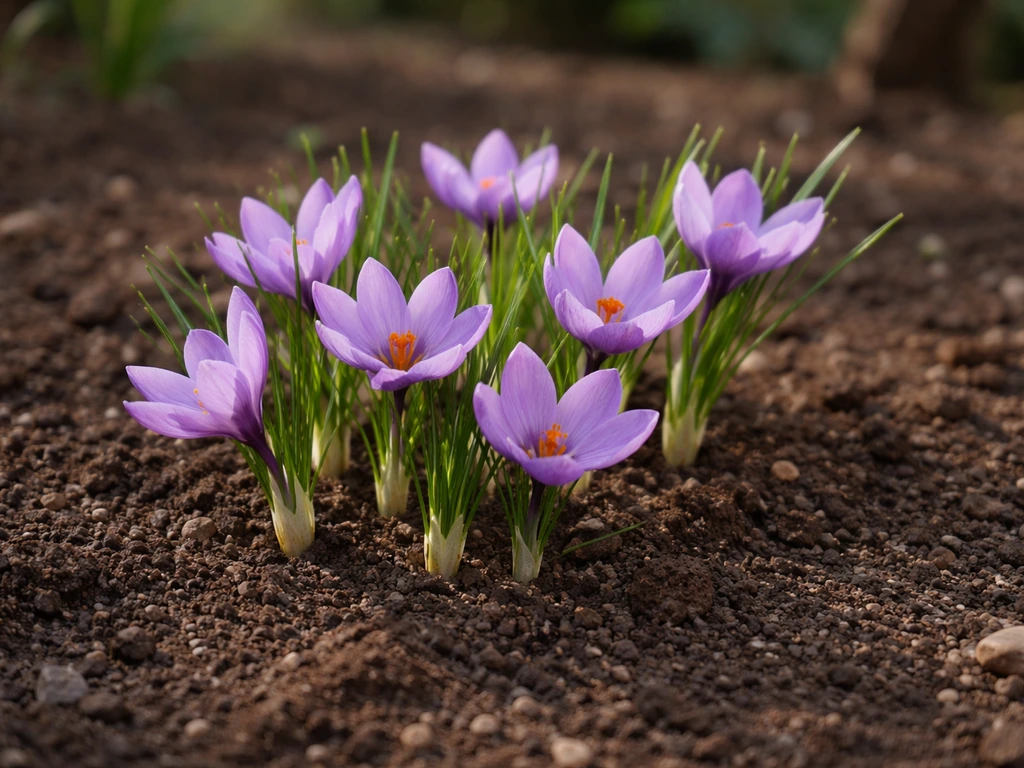
Can Saffron Grow in South Africa? How to Plant It
Find if saffron can grow in South Africa, plus planting time, soil, drainage, irrigation, and troubleshooting for succes
Can You Grow Black Pepper in the US Where and How
Learn where black pepper can be grown in the US and how to grow it indoors or in warm zones for fruit.

Can You Grow Capers in the US? Regional Guide for Home Gardeners
Regional guide to growing caper plants in the US, choosing cultivars, meeting soil and climate needs, and harvesting bud