
Yes, you can grow luffa in Michigan, but it takes deliberate planning. For more detailed, step-by-step guidance, see the full guide titled “Can You Grow Loofah in Michigan.”. Luffa needs 90 to 150 or more frost-free days of warm weather to produce sponge-ready gourds, and much of Michigan gives you only 120 to 150 of those days. That margin is tight enough that starting seeds indoors 6 to 8 weeks early, choosing the fastest-maturing variety you can find, and using every season-extension trick available is not optional, it is the whole strategy.
Can You Grow Luffa in Michigan? Guide for Home Gardeners

Marcus Petersen
21 Jul 2026
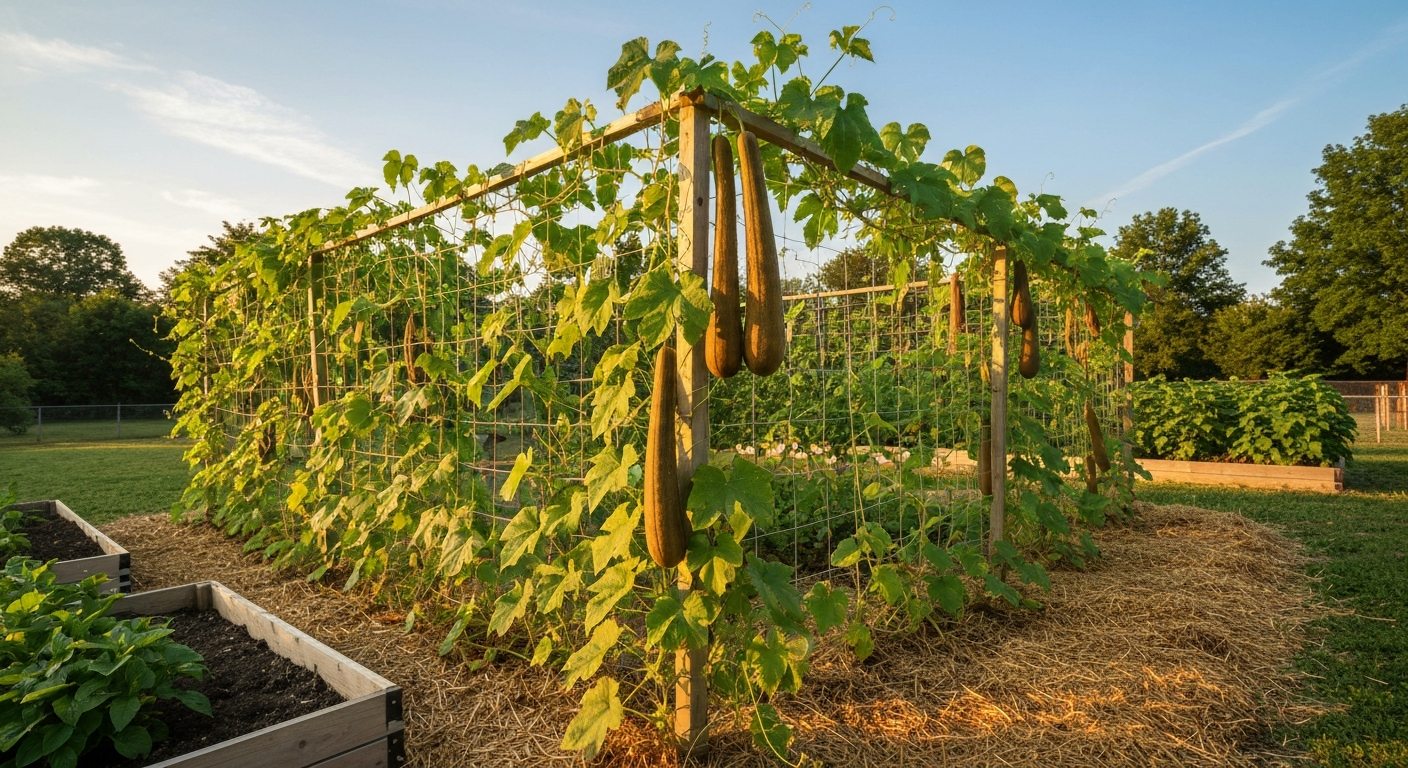
Michigan's climate zones and where luffa has a realistic shot
Michigan spans USDA hardiness zones roughly 4a through 6b under the 2023 updated map, with the Upper Peninsula running coldest (zones 4a to 5b) and the Lower Peninsula's west coast running warmest (zones 6a to 6b). Hardiness zones describe winter cold, not summer heat or growing-season length, so they are only part of the picture for a heat-hungry crop like luffa. What really matters here is the frost-free window.
The statewide average last spring frost lands around May 10 to 11, and the first fall frost arrives in early to mid-October, producing a mean frost-free season of roughly 150 days across the Lower Peninsula. But that average hides a lot of variation. Inland northern Lower Michigan and the Upper Peninsula can see as few as 120 frost-free days. Meanwhile, counties along the Lake Michigan shoreline, think Berrien, Van Buren, Allegan, and Ottawa, benefit from the lake's moderating effect and can push 170 to 190 or more frost-free days in favorable years. If you are in one of those southwestern shoreline counties, luffa is genuinely manageable outdoors. If you are in Houghton or Alpena, you need a greenhouse or high tunnel.
| Michigan Region | Approx. USDA Zone | Frost-Free Days (avg.) | Luffa Feasibility |
|---|---|---|---|
| Upper Peninsula (inland) | 4a–5a | 100–130 | Greenhouse/high tunnel only |
| Northern Lower Peninsula (inland) | 5a–5b | 120–140 | Challenging; season extension required |
| Central Lower Peninsula | 5b–6a | 140–155 | Possible with indoor start and row cover |
| Southern Lower Peninsula (inland) | 6a–6b | 150–165 | Good with indoor start |
| Lake Michigan Shoreline Counties | 6a–6b | 170–190+ | Best outdoor chance in Michigan |
What luffa actually needs to reach maturity
Luffa (Luffa aegyptiaca and Luffa acutangula) is a tropical cucurbit. It germinates reliably only when soil temperatures are at or above 70 to 75 degrees Fahrenheit, I have seen the 73°F figure cited specifically in cultivation guides, and in my own experience anything below 70°F just stalls. Daytime air temperatures in the 75 to 90°F range drive the fastest vine growth and fruit development. Luffa slows down noticeably when temperatures drop below 60°F and stops cold at frost.
For sponge-grade maturity, meaning the interior fiber network is fully developed and the skin has turned brown and papery, plan on 110 to 150 days of genuinely warm growing conditions. The NC State Plants for Human Health Institute crop guide notes luffa commonly requires about 90–150+ days of warm weather to reach sponge-grade maturity. You can harvest young luffa for eating at around 50 to 70 days when fruits are small and tender, but if a bath sponge is your goal, the longer end of that range is what you are working toward. Some specialty varieties push 200 days to full fiber maturity in cooler summers, which is simply not compatible with most of Michigan outdoors.
Picking the right variety for a short Michigan season
Variety selection is arguably the single most important decision a Michigan luffa grower makes. Luffa aegyptiaca (smooth luffa, also called sponge gourd) tends to mature faster than Luffa acutangula (ridge or angled luffa), so that is where to start. Look for varieties with packet-listed days-to-maturity in the 90 to 120 day range and favor those bred for shorter seasons or cooler climates.
Baker Creek (RareSeeds) sells varieties like 'Cluster Ridge' with reported maturity around 110 to 130 days, which is workable if you start early. Seed Savers Exchange, Southern Exposure Seed Exchange, and Botanical Interests all carry luffa, and some retail listings show ranges of 150 to 200 days, avoid those for outdoor Michigan growing. See Best Luffa Seed Varieties 2026, loofahgrow.com (grower/variety compilation) for vendor listings and reported maturity ranges to compare packets before buying blank" rel="noopener noreferrer">Best Luffa Seed Varieties 2026 — loofahgrow.com (grower/variety compilation). Packet prices are reasonable, typically $3 to $10 for standard packets and $4 to $12 or more for specialty heirloom selections. For example, RareSeeds lists 'Cluster Ridge' luffa seed packets (Cluster Ridge Luffa, RareSeeds / Baker Creek (price example)) at roughly US$4.50, a representative specialty‑seed packet price blank" rel="noopener noreferrer">Cluster Ridge Luffa — RareSeeds / Baker Creek (price example). Always read the specific packet maturity number before buying, because it varies considerably even within a single vendor's catalog.
When to start seeds and transplant in Michigan
The timing math here is unforgiving, so let me walk through it directly. Using a last-frost date of May 10 to 15 for the southern Lower Peninsula and May 20 to 31 for northern areas, count back 6 to 8 weeks. That puts your indoor seed-starting window at late March to mid-April for the south and early to mid-April for central areas. I start mine around April 1 for my zone 6a location. Earlier than 8 weeks risks root-bound transplants that stall after planting; later than 4 weeks does not give the seedlings enough of a head start.
- Start seeds indoors in 4-inch pots or larger (luffa dislikes root disturbance, so avoid small cell trays)
- Sow 1 to 2 seeds per pot at a depth of about 1 inch in warm, moist seed-starting mix
- Keep soil temperature at 73°F or above using a heat mat — this is not negotiable in April in Michigan
- Expect germination in 7 to 14 days at 73–80°F; cooler temps can stretch this to 3 weeks or more
- Thin to one seedling per pot once the first true leaves appear
- Harden off transplants outdoors for 7 to 10 days before moving them to the garden
- Transplant outside only after your last frost date has passed and soil has warmed to at least 65°F
- For extra insurance in northern Michigan, wait until June 1 and use row cover or a low tunnel for the first few weeks
If your last frost date is around May 15, you are transplanting approximately June 1 after hardening off. That still leaves 130 to 150 frost-free days before a typical October frost, enough for a 120-day variety with a small buffer, but not much room for a cool, cloudy summer. In northern Michigan (last frost June 1 or later), that buffer shrinks to 90 to 110 days, which is why greenhouse or high tunnel growing becomes nearly mandatory north of roughly US-10.
Setting up your bed: soil, spacing, fertilizer, and water
Soil preparation
Luffa wants loose, well-drained, fertile loamy soil with plenty of organic matter. Compacted, waterlogged, or nutritionally poor soil produces slow vines and small fruits. Before planting, work in 2 to 4 inches of finished compost to a depth of 12 inches. If your native soil is heavy clay (common in parts of mid-Michigan), consider building a raised bed 8 to 12 inches deep and filling it with a blended mix of topsoil, compost, and coarse perlite. Aim for a soil pH between 6.0 and 6.8.
Spacing
Space transplants 3 to 6 feet apart in the row. Luffa is a vigorous grower, a single well-fed vine in a Michigan summer can easily run 15 to 20 feet along a trellis, and vines in hot years can push 30 feet. Crowding two plants into 3 feet of trellis space works early in the season but leads to disease and shading problems by August. I plant two vines per 8-foot trellis panel and that feels about right.
Fertilizing
Feed with a balanced vegetable fertilizer (something like 10-10-10) at planting, working it into the top few inches of soil according to label rates. Once vines are actively running and before flowering begins, side-dress with a nitrogen-forward fertilizer to push vegetative growth. When fruits begin setting, back off on nitrogen and switch to a fertilizer with more phosphorus and potassium to support fruit development. Avoid over-fertilizing with nitrogen late in the season, it grows more vine when you need more fruit.
Watering
Luffa needs consistent, deep moisture during vine establishment and especially during fruit fill. Inconsistent watering, dry spells followed by soaking, can cause fruit drop or poor fiber development. Water deeply once or twice a week rather than shallowly every day, and mulch the base of each plant with 3 to 4 inches of straw or wood chips to retain soil moisture and reduce the temperature swing Michigan's variable summers can bring. Drip irrigation is ideal if you can manage it; overhead watering late in the day increases the risk of fungal disease.
Building a trellis that can handle luffa vines
Do not underestimate how heavy a mature luffa plant gets. A single vine loaded with several mature gourds, each of which can weigh a pound or more, exerts serious downward force on whatever you have built. A flimsy tomato cage or a few bamboo poles tied together will fail by midsummer. I learned this the hard way the first year I grew luffa, a mid-July wind event brought down my improvised trellis and snapped two fruit stems. Build something solid before you plant.
Trellis options
- Vertical panel trellis: two 4x4 wooden posts or 1.5-inch galvanized conduit set 8 to 10 feet apart, driven or set at least 2 feet into the ground, with 6-inch wire livestock fencing or cattle panel stretched between them. Height should be at least 6 feet, ideally 8 feet or more.
- A-frame trellis: two angled panels meeting at a ridge pole, useful for straddling a bed and creating shade-tolerant planting space underneath. Requires the same sturdy post and wire-fencing construction.
- Pergola or overhead arbor: for gardeners who want a shaded walkway, luffa can be trained overhead — but fruiting height makes harvesting trickier.
- Cattle panel arch: a single 16-foot cattle panel bent into an arch over a 4-foot-wide bed, anchored at each end with rebar or T-posts. Very sturdy, quick to install, and works well for 2 to 4 plants.
Step-by-step trellis installation
- Mark your post locations at least 8 feet apart along the planting row
- Drive or dig posts at least 24 inches into the ground — in Michigan's freeze-thaw soil, shallow posts heave out over time
- If using wood, choose pressure-treated lumber or naturally rot-resistant cedar; for metal, use galvanized conduit (1.5-inch EMT is plenty strong)
- Attach wire fencing or mesh to the posts using fencing staples, zip ties, or wire clips — stretch it tight to minimize sag under load
- Add horizontal wire or twine lines every 12 to 18 inches up the panel as extra attachment points for vines
- Once vines reach the trellis (usually 2 to 4 weeks after transplant), guide the main growing tip upward and loosely tie it every foot or so with soft plant ties or strips of fabric
- As fruits develop and grow heavier, support each one with a small sling made from pantyhose, mesh produce bags, or strips of stretchy fabric tied to the trellis above — this prevents stem breakage
- Check guy-wire tension and post stability after any wind event of 20+ mph
Season extension: what to do when Michigan's summer is not quite long enough
For gardeners in central or northern Lower Michigan who are running close to the margin, a few practical tools can add 2 to 4 weeks of effective growing season. Row cover (floating fabric, 1.5 oz weight) laid over hoops immediately after transplanting traps warmth and protects against surprise late frosts. Remove it once nighttime temperatures reliably stay above 55°F and flowers start appearing, since luffa needs pollinators to reach the flowers. Black plastic mulch laid before transplanting warms the soil significantly faster than bare ground in May and June, which matters when you are trying to hit a tight maturity window.
For gardeners in the Upper Peninsula or the colder inland areas of the northern Lower Peninsula, an unheated high tunnel or hobby greenhouse is essentially required. Luffa grows well in containers in these structures, a 15 to 20 gallon pot with a soil-less growing mix, consistent fertilizing, and a vertical trellis inside the structure will produce harvestable sponges in places where outdoor growing simply cannot work. If you are curious how these strategies compare to what growers in neighboring states face, the calculus is somewhat similar in Ohio and more challenging in cooler growing regions like parts of Canada, where indoor growing becomes the primary approach. For specific guidance on northern and Canadian conditions, see can i grow luffa in canada. For a quick comparison of season length and practicality in a neighboring state, see can you grow loofah in ohio.
Pollination, pests, and diseases to watch for
Luffa produces separate male and female flowers on the same vine. Male flowers appear first, usually 4 to 6 weeks after transplant, and the females follow with a tiny proto-fruit at the base of the bloom. Pollination is mostly handled by bees, but if your garden is low on pollinators or you are growing indoors, hand-pollinate by picking a fully open male flower and rubbing it directly against the center of an open female flower in the morning when both are fresh.
Cucumber beetles are the most common pest problem in Michigan luffa beds, both striped and spotted varieties attack leaves and can vector bacterial wilt. Cover young plants with row fabric until they are large and established, and hand-pick beetles when you see them. Squash vine borers are less common on luffa than on summer squash but do occur. Powdery mildew is nearly universal on luffa vines in Michigan by late August, especially when nights cool and humidity is high. It rarely kills the plant but does reduce leaf function, so apply a preventive sulfur or potassium bicarbonate spray in late July before symptoms appear.
Harvesting and processing your luffa sponges
Harvest timing is critical. A luffa harvested too early will have underdeveloped fiber and a green skin that is difficult to peel. Wait until the gourd has turned from green to yellowish-tan to brown and feels noticeably light for its size, the internal water content drops dramatically when fiber is mature. If your fall frost is approaching and fruits are still green but large (at least 12 to 18 inches on smooth luffa), cut them from the vine and bring them inside to cure in a warm, dry spot. They will continue drying down and become usable sponges in many cases.
- Cut the mature gourd from the vine with a sharp knife, leaving a short stem
- Soak the gourd in a bucket of water for 20 to 30 minutes to loosen the outer skin
- Peel or crack the skin off — it often comes away in sections after soaking; a firm squeeze helps
- Shake out the seeds and save them in a dry envelope for next year (they store well for 2 to 3 years)
- Rinse the fiber sponge under running water several times to remove any remaining pulp or skin bits
- Bleach optionally: soak in a diluted bleach solution (1 tablespoon per gallon of water) for 5 to 10 minutes if you want a lighter color
- Rinse thoroughly and hang to dry completely in a well-ventilated spot before storing or using
How Michigan compares to nearby states and regions
Ohio has a slight edge over most of Michigan for outdoor luffa growing, particularly in southern Ohio where the growing season regularly hits 160 to 180 days and summer heat accumulation is higher. For a comparison of regional suitability for other warm‑climate fruit crops, see the guide "Can you grow lychee in Ohio". Colorado presents a different problem entirely: the days are often long enough in lower-elevation parts of the state, but intense UV, temperature swings between day and night, and hail risk create separate challenges that Michigan gardeners do not face the same way. Washington state (western side) tends to run cool and overcast through summer, which holds luffa back more than Michigan's occasional hot stretches do. If you want more detail on how Washington's summer conditions affect luffa, see can you grow loofah in Washington for a focused comparison. Canadian gardeners face constraints similar to northern Michigan, and in most parts of Canada outdoor luffa production without a greenhouse is even more of a gamble than it is in the Upper Peninsula.
Is it worth trying in Michigan?
If you are in the southwestern Lower Peninsula, especially anywhere with lake-effect warming from Lake Michigan, luffa is absolutely worth trying outdoors. Pick a 90 to 120 day variety, start seeds indoors by April 1, and give the plants a sturdy trellis and consistent moisture. Expect to get 2 to 5 usable sponges per vine in a decent year. If you are in the central Lower Peninsula, you can still do it, but count on using row cover, black plastic mulch, and starting seeds as early as late March. North of roughly US-10 outdoors, I would be honest with yourself: unless you have a microclimate or a south-facing wall that holds heat, a small high tunnel or unheated greenhouse is the more reliable path. The vine itself is rewarding to grow, and the sponges are genuinely useful. The effort is real, but it is not unreasonable for a motivated Michigan gardener. For more on growing other tropical fruits in Michigan, see can you grow soursop in Michigan.
FAQ
Quick answer: Can you grow luffa (loofah) in Michigan?
Yes — but with caveats. Michigan gardeners can grow luffa successfully if they plan for its long, warm growing season. In many Michigan locations you’ll need to start seed indoors, choose faster‑maturing varieties, use season‑extension (greenhouse, high tunnel, or rowcover) or a very long, sunny trellis, and protect plants from early fall frosts to reliably reach sponge maturity.
Which Michigan hardiness zones and regions have a realistic chance of producing sponge‑grade luffa?
Best chances: southern Lower Peninsula and Lake Michigan shoreline counties (USDA zones ~5a–6b) where growing seasons commonly reach ~150–190+ frost‑free days. Possible with extra measures: inland zone 4–5 areas and much of the central Lower Peninsula (zones ~4b–5b) if you start seeds early, use containers/greenhouse, and extend the season. Difficult without protection: much of the Upper Peninsula (zone 4a and colder pockets) unless grown in a greenhouse or indoors-to-outdoors container system.
How many frost‑free days and ideal temperatures does luffa need?
- Frost‑free days: plan for about 120–150+ frost‑free days to have a realistic chance; many gardeners aim for 150+ days for reliable sponge maturity. - Ideal temperatures: day temperatures 75–95°F and nighttime temperatures above ~60°F are best. Soil/seed-start temps: germination and seedlings prefer soil temps around 70–75°F (≥73°F recommended for best results).
Which luffa varieties mature fastest and where can I buy seed in the U.S.?
Faster‑maturing varieties: look for varieties with days‑to‑maturity on the packet near 110–130 days (examples often listed by vendors include 'Cluster Ridge' selections and other named selections marketed as 110–130 days). Slower types may list 150–200 days. Where to buy: specialty and heirloom seed suppliers such as Baker Creek (RareSeeds), Seed Savers Exchange, Botanical Interests, Southern Exposure, and other online seed retailers. Always check the vendor's days‑to‑maturity and customer notes for your climate.
Step‑by‑step planting timeline for Michigan (indoor start to harvest)
Approximate timeline (adjust to your local frost dates): - 6–8 weeks before average last frost: start seeds indoors in warm soil (70–75°F) in 3" pots. - 2 weeks before transplant (optional): harden off gradually. - After all danger of frost and soil temps >65–70°F: transplant to garden or large container near a sturdy trellis. - During summer: maintain even moisture, fertilize as vines establish and set fruit. - 90–150+ days after transplant (variety dependent): monitor fruits for sponge maturity; harvest after brown/dry rind and rattle when shaken. See the table below for a quick zone/timeline checklist.
Can you provide a zone/timeline checklist table for Michigan growers?
Zone/Timeline Checklist: Zone | Typical frost‑free days | Practical approach 6a–6b | ~160–190+ days | Direct‑sow (late) or transplant; many varieties can mature; still start indoors for best yields. 5a–5b | ~140–160 days | Start indoors 6–8 weeks early; use black plastic or mulch to warm soil; consider season extension. 4a–4b | ~120–140 days | Grow in greenhouse/hoophouse or large containers started early indoors; select fastest varieties and use rowcover/high tunnel. Upper Peninsula (~4a) | ~120 days or less | Best in heated greenhouse or long-season indoor/outdoor container system; outdoors unlikely without protection.
Next Articles
Can You Grow Lychee in Ohio? Feasibility, Care & Alternatives
Can you grow lychee in Ohio? Realistic verdict, container & greenhouse options, year‑round care, overwintering tips.
Can You Grow Soursop in Michigan? Indoor and Outdoor Guide
Can you grow soursop in Michigan? Indoor container plan, cold protection, light, soil, and realistic fruiting expectatio
Can You Grow Loofah in Ohio? Step-by-Step Guide
Learn if you can grow loofah in Ohio, with Midwest timing, seed starting, care, trellising, and curing tips.