
Yes, lemongrass can grow in Utah, but whether it survives your winter depends almost entirely on where in the state you live. In the warmest low-elevation pockets of southern Utah, particularly around St. George and Hurricane in Washington County (USDA zones 8b–9a), you have a realistic shot at overwintering it in the ground with some protection. Everywhere else, the Wasatch Front, central Utah, and anything above roughly 3,000 feet, treat it as a warm-season annual or a container plant you bring indoors before frost. That's the honest answer before we get into the details.
Does Lemongrass Grow in Utah? Practical Growing Guide

Marcus Petersen
28 Jul 2026
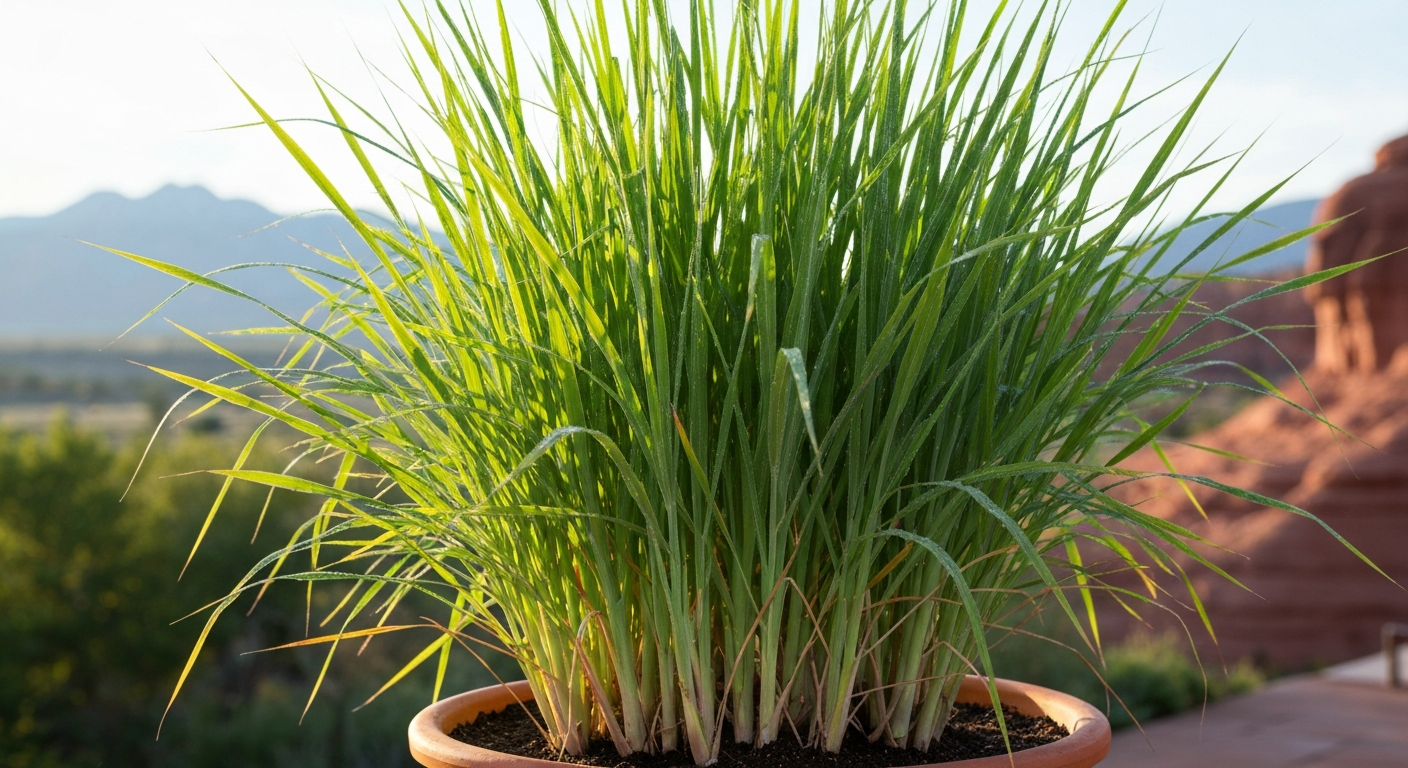
Utah's Climate, Elevation, and USDA Zones: Why They Shape Everything
Utah is one of the most climatically varied states in the country, and that variation is almost entirely driven by elevation. The 2023 USDA Plant Hardiness Zone Map assigns Utah zones ranging from about 4a in the high-elevation mountain counties all the way up to 9a in the lowest corners of Washington County in the southwest. That's a five-zone spread within one state, which is enormous. Salt Lake City sits around zone 7a–7b, with a 30-year mean annual temperature of roughly 54.7°F according to NOAA climate normals. The Wasatch Front gets real winters with hard freezes, late spring frosts, and early fall frosts. Cedar City, at about 5,800 feet, sits in zone 6a. St. George, at roughly 2,800 feet, is comfortably in zone 8b and gets a frost-free season of around 224 days, median last frost near March 25 and first fall frost near November 5. Frost Dates for Saint George, UT (The Old Farmer’s Almanac, uses NOAA 1991–2020 normals) lists a median last spring frost near March 25 and a median first fall frost near November 5, about 224 frost‑free days Frost Dates for Saint George, UT (The Old Farmer’s Almanac — uses NOAA 1991–2020 normals).
Why does all that matter for lemongrass? Because lemongrass is a tropical grass that has no cold hardiness to speak of. Its roots die when soil temperatures drop to roughly 15–20°F (−9 to −6°C), and even light frost kills the foliage. In most of Utah, winter soil temperatures at root depth fall well below that threshold. Even in Salt Lake City, winter nights routinely drop into the single digits Fahrenheit. That's not a question of coaxing a plant through, that's a fundamentally incompatible climate for overwintering lemongrass in the ground. St. George is the exception, not the rule, and even there a cold snap can still surprise you.
| Region | Example Cities | USDA Zone | Avg Last Spring Frost | Avg First Fall Frost | Lemongrass Viability |
|---|---|---|---|---|---|
| Southern Utah (low elevation) | St. George, Hurricane | 8b–9a | ~March 25 | ~November 5 | In-ground possible with protection |
| Central Utah (mid elevation) | Cedar City, Richfield | 6a–6b | ~May 1–10 | ~October 1–10 | Annual/container only |
| Wasatch Front | Salt Lake City, Provo, Ogden | 7a–7b | ~April 15–20 | ~October 15–20 | Annual/container only |
| Northern Utah / Cache Valley | Logan | 6b–7a | ~April 25–May 1 | ~October 10 | Annual/container only |
| High-elevation mountain areas | Park City, Moab highlands | 4a–5b | ~May 20–June 1 | ~September 1–15 | Container only, very short season |
What Lemongrass Actually Is and What It Needs to Thrive
Lemongrass (Cymbopogon citratus) is a clumping tropical grass native to Southeast Asia and South Asia. Left to its own devices in a warm climate, it forms dense, upright clumps that can reach 3 to 6 feet tall and 2 to 3 feet wide. It grows as a true perennial only where winters are genuinely mild, think USDA zones 9 and warmer under normal conditions, or 8b with good microclimate protection. In cooler climates, including most of Utah, the plant behaves as a warm-season annual because frost kills it back to the ground, and if the soil freezes hard, it won't come back at all.
Active growth is best when daytime temperatures sit between roughly 75 and 86°F (24–30°C). Growth slows noticeably once temperatures drop below 50°F (10°C), and anything below freezing damages foliage quickly. In a typical Utah summer, especially in the southern half of the state, you'll have plenty of warm growing days. The problem is the shoulder seasons. A late spring frost on the Wasatch Front in mid-April can kill a plant you put out too early, and an early October cold snap cuts the season shorter than you'd like. Realistic expectations matter here: in northern and central Utah, you're likely looking at a 3 to 4 month growing window outdoors, which will produce usable plants but not the massive, mature clumps you'd see in California or Florida.
What Lemongrass Needs: Light, Soil, Water, and Humidity
Sun and Heat
Lemongrass wants full sun, and it's not negotiable. Plan for a minimum of 6 hours of direct sunlight daily, more is better. In Utah, this usually isn't the limiting factor since the state gets abundant sunny days. South-facing beds, south sides of fences or walls, and spots that reflect and retain heat from masonry will give your plant the warmest possible microclimate. In southern Utah especially, that reflected heat from a block wall or stucco wall can push microclimate temperatures several degrees warmer than the surrounding garden and meaningfully extend the growing season on both ends.
Soil and Drainage
Lemongrass tolerates a fairly wide soil pH, roughly 4.3 to 7.3, but it insists on good drainage. Waterlogged roots invite rot fast, particularly in cooler soil temperatures. Utah soils tend to be alkaline, pH around 7.5 to 8.2 is common in the Wasatch Front and southern Utah valleys, which is slightly outside the optimal range but generally workable. Amending your bed with a few inches of compost before planting helps on two fronts: it lowers pH slightly and improves drainage in heavier clay soils. Sandy desert soils in southern Utah drain plenty well but may need more frequent irrigation and organic matter to hold nutrients.
Water and Humidity
This is where Utah's climate creates the most friction for lemongrass. The plant is native to humid tropical environments and prefers consistent moisture, not wet-dry cycles. Utah is arid to semi-arid across most of the state, with low relative humidity and hot, desiccating summers. You can compensate with consistent irrigation, drip irrigation works well here, and mulching around the base to retain soil moisture. Don't let the soil dry out completely between waterings; agronomic research suggests yields and growth drop noticeably when soil moisture depletes beyond about 60% of available water capacity. At the same time, don't overwater into soggy conditions. Consistent, moderate moisture is the goal.
Fertilization
Lemongrass is a heavy feeder for a grass. A balanced slow-release fertilizer worked in at planting, followed by a nitrogen-focused fertilizer (something like a 10-5-5 or similar) every 4 to 6 weeks through the growing season, keeps growth vigorous. In the short Utah growing window, consistent feeding matters because you're trying to maximize growth before the cold shuts things down. Back off fertilizing about 6 weeks before you plan to bring container plants indoors for the winter, you want growth to slow, not push tender new shoots just before a cold transition.
Which Lemongrass Variety Should You Grow in Utah?
Most home gardeners in the U.S. grow Cymbopogon citratus, the West Indian or Thai lemongrass. It's the one you find at grocery stores, it's what most nurseries stock, and it's the best choice for culinary use (soups, curries, teas). The stalks are thick, fragrant, and usable from a fairly young plant. This is what I'd recommend for most Utah gardeners.
East Indian lemongrass (Cymbopogon flexuosus) is more commonly grown for essential oil production commercially. It's slightly more cold-tolerant by some accounts and tends to grow a bit taller, but the culinary stalks are thinner and less meaty. If you're interested in distilling essential oils or want a slightly more heat-and-drought-tolerant option, it's worth trying. Dwarf lemongrass varieties occasionally appear in specialty nurseries, these tend to top out around 2 to 3 feet, which makes them easier to manage in containers and easier to bring indoors. If you're planning a container-only setup in a Salt Lake City apartment with a sunny balcony, a dwarf type is a genuinely practical choice.
| Variety | Size | Best Use | Cold Tolerance | Best for Utah Gardeners |
|---|---|---|---|---|
| West Indian / Thai (C. citratus) | 3–6 ft tall, 2–3 ft wide | Culinary (stalks, leaves, tea) | Tender, zones 9+ in ground | Best all-around choice |
| East Indian (C. flexuosus) | 4–6+ ft tall | Essential oil, fragrance, some culinary | Slightly more adaptable | Good for oil enthusiasts, southern UT |
| Dwarf lemongrass | 2–3 ft tall | Culinary, container/patio growing | Same frost sensitivity | Best for container/indoor overwintering |
How to Propagate Lemongrass: Stalks, Divisions, and Seeds
Lemongrass is almost never grown from seed in home gardens, and for good reason. Cymbopogon citratus (lemongrass), CABI compendium (propagation and cultivation notes) notes that lemongrass is most reliably propagated by division (clump division/rootstock slips) rather than by seed, which is uncommon and can produce variable offspring blank" rel="noopener noreferrer">Cymbopogon citratus (lemongrass) — CABI compendium (propagation and cultivation notes). Cymbopogon citratus rarely produces viable seed in cultivation, and seed-grown plants can show genetic variability. The two reliable methods are rooting grocery store stalks in water and dividing established clumps, with the grocery store method being the easiest entry point for first-time growers.
Rooting Stalks from the Grocery Store
- Buy fresh lemongrass stalks from a grocery store or Asian market. Look for stalks with intact root ends (not trimmed flat) and some green at the top.
- Trim the top of each stalk to about 6–8 inches, leaving the bulb end intact.
- Place the stalks root-end down in a glass with an inch or two of water. Set them in a warm, bright spot — a sunny windowsill works well.
- Change the water every 2–3 days. Within 2–3 weeks, you should see small roots emerging from the base.
- Once roots are roughly 1–2 inches long, pot the stalks into a well-draining potting mix, burying just the root end. Keep the soil consistently moist for the first two weeks.
Dividing an Established Clump
- Wait until late spring when the soil has warmed and the plant is actively growing.
- Dig up the entire clump with a garden fork, being careful to get as much of the root mass as possible.
- Use a sharp spade or large knife to divide the clump into sections, each with several stems and a healthy root mass attached.
- Replant divisions immediately at the same depth they were growing, water thoroughly, and keep moist for the first week.
I've had the best success with the grocery store stalk method for starting new plants in spring. It's cheap, it works reliably, and you can start it indoors in March so you have a transplant-ready plant by mid-May. Division is the better choice if you already have an established plant and want to multiply it or refresh a congested clump.
Step-by-Step Planting Guide for Utah Gardens
Soil Preparation
Two to three weeks before planting, work 3 to 4 inches of compost into your bed to a depth of about 12 inches. If your soil is heavy clay (common in parts of the Wasatch Front), add coarse sand or fine gravel as well to improve drainage. Lemongrass does not tolerate standing water. Slightly raised beds work particularly well in Utah because they drain faster, warm up earlier in spring, and are easier to protect with row cover or cloches at the season edges.
Timing Your Transplant
Do not put lemongrass in the ground until all frost risk has passed and nighttime temperatures are reliably above 50°F. In northern and central Utah, that means late May to early June. On the Wasatch Front, mid to late May is usually safe. In St. George, you can often plant as early as April. Starting your stalks or seeds indoors 6 to 8 weeks before your target transplant date gives you a head start that matters in Utah's short season.
Spacing and Planting Depth
Space clumps about 3 to 4 feet apart. Mature plants can spread to 2 to 3 feet wide and grow 4 to 6 feet tall, so crowding them reduces airflow and limits growth. Plant at the same depth as the root mass was growing, don't bury the stalk base too deep. Firm the soil gently around the roots and water in thoroughly with a diluted liquid fertilizer to reduce transplant shock.
Container Planting
For most of Utah, containers are the smarter play because they let you bring the plant indoors before frost. Use a pot at least 12 inches (30 cm) in diameter with drainage holes. Larger is better: a 15- to 30-liter container will give stronger root development, reduce how often you need to water, and produce a bigger plant by season's end. Use a well-draining potting mix and consider adding 10–15% perlite. In Utah's dry summer heat, containers dry out fast, checking soil moisture every 1 to 2 days in July and August is not unusual.
Seasonal Calendar: When to Plant, Care, and Harvest by Utah Region
Utah's elevation gradient means gardening timelines can shift by three to six weeks depending on where you live. Here's a month-by-month breakdown that accounts for the main growing regions in the state.
Southern Utah (St. George, Hurricane, Washington County, Zones 8b–9a)
| Month | Task |
|---|---|
| January–February | Start stalks in water indoors if planning early transplants. Plan bed amendments. |
| March | Begin hardening off rooted cuttings. Amend beds with compost. Transplant outdoors in a warm, sheltered spot by late March if nighttime temps are consistently above 45–50°F. |
| April | Transplant outdoors with confidence. Begin regular watering and first fertilizer application. Mulch heavily to retain moisture. |
| May–June | Rapid growth phase begins. Establish drip irrigation schedule. Fertilize every 4–6 weeks. |
| July–August | Peak growth. Monitor soil moisture closely — heat and low humidity dry containers quickly. Harvest outer stalks as needed. |
| September–October | Continue harvesting. Growth slows as nights cool. In-ground plants can often stay out through October and into early November. |
| November | First frost risk arrives (~November 5 median). Protect in-ground plants with heavy mulch or row cover. Bring containers indoors before first frost. |
| December | Overwinter indoors in bright light at 55–65°F. Water sparingly — just enough to prevent complete drying. |
Wasatch Front (Salt Lake City, Provo, Ogden, Zones 7a–7b)
| Month | Task |
|---|---|
| February–March | Start stalks in water on a sunny windowsill. Pot rooted cuttings into small containers once roots are 1–2 inches. |
| April | Grow indoors in the sunniest window available. Do not put outdoors yet — frost is still possible through mid-April. |
| May | Harden off by mid-May. Transplant outdoors (ground or containers) after May 15–20, once nighttime temps stay above 50°F. |
| June–August | Main growing season. Full sun required. Water consistently; SLC's low humidity means frequent irrigation. Fertilize monthly. |
| September | Growth slows as nights approach 50°F. Begin final harvests of outer stalks. Prepare to bring containers indoors. |
| October | Bring containers indoors by mid-October. Cut in-ground plants back hard if attempting to overwinter (not recommended north of zone 8b — success rate is low). |
| November–April | Overwinter as houseplant in bright, indirect light. Minimal watering. Repot and resume fertilizing in late March. |
Central Utah (Cedar City, Richfield, Zones 6a–6b)
| Month | Task |
|---|---|
| March | Start stalks indoors. These areas have late last frosts (May 1–10 range) so a long indoor head start is important. |
| April–May | Continue growing indoors. Harden off in late May when frost risk is truly past. |
| Late May–early June | Transplant outdoors. The season here is noticeably shorter than the Wasatch Front — maximize it. |
| June–August | Peak season. Consistent moisture and full sun are critical. Fertilize every 4–6 weeks. |
| September | First frost risk arrives earlier here (around October 1–10). Harvest aggressively in September. Bring containers indoors by late September. |
| October–April | Overwinter as houseplant. Plan for next season's starts in late February/March. |
High-Elevation Pockets (Park City, mountain valleys, Zones 4a–5b)
At high elevations, lemongrass is essentially a novelty rather than a practical crop. Your frost-free window can be as short as 90 to 110 days, and lemongrass needs warm nights and hot days to put on real growth. You can try a container on a south-facing deck, start it indoors in late March, get it outside in early June, bring it back in by mid-September, but your harvest will be modest. It's a fun experiment, not a reliable food crop. Prioritize container culture, the smallest-footprint variety you can find, and keep heat-trapping micro-spots in mind.
Container Culture and Overwintering: The Practical Strategy for Most of Utah
If you're anywhere in Utah except the St. George area, containers are simply the most sensible approach. You plant in late spring, grow through the summer, and bring the pot indoors before the first frost in fall. Indoors, lemongrass will not thrive, it will just survive. Keep it in your sunniest window (a south-facing window is ideal), water it just enough to prevent the soil from going completely dry, and skip fertilizer from November through February. The plant may look rough and browning in December; that's normal. In late February or early March, move it back to a bright spot, resume watering, and start fertilizing lightly. New growth should emerge within a few weeks. By the time outdoor temperatures allow, you'll have a plant that's several weeks ahead of a fresh cutting, an advantage worth having in Utah's short season.
I've kept lemongrass alive indoors through two Utah winters by treating it almost like a drought-tolerant houseplant in a large south-facing window. It looked miserable by February but rebounded fast once I moved it back outside in May. The key mistake I see from other gardeners is overwatering the dormant winter plant, which rots the roots. Less is more from November through February.
Pests, Diseases, and Common Problems in Utah
Lemongrass is relatively pest-resistant outdoors in Utah, its strong citral oils deter many insects. The main problems you'll encounter in this state are environmental rather than biological.
- Rust (Puccinia nakanishikii): An orange-brown fungal rust that appears on leaves during humid conditions. Remove affected leaves and improve airflow between plants. Utah's dry climate makes this less common outdoors than in humid states.
- Root rot: The most common killer of Utah lemongrass, usually caused by overwatering or poorly draining soil. Symptoms are yellowing, mushy base, and collapse. Prevention is better than treatment — start with well-draining soil and don't overwater.
- Spider mites: These thrive in hot, dry conditions — exactly what Utah summers provide. You may see fine webbing and stippled yellowing on leaves, especially on container plants overwintered indoors. Spray affected plants with a strong stream of water or diluted insecticidal soap.
- Cold shock: Leaves turn yellow or brown rapidly after a temperature drop below 50°F. Not a disease — just a signal you waited too long to bring containers in. Cut off browned leaves and move the plant somewhere warmer.
- Tip burn: Common in very low-humidity environments. The leaf tips dry and brown even on healthy plants. Not harmful but unsightly; increase humidity around container plants indoors with a pebble tray of water or a humidifier nearby.
- Salt buildup in containers: Utah's water is often moderately hard and alkaline. Salts can accumulate in container soil over time, causing leaf tip burn and slowing growth. Flush containers thoroughly with water once a month to leach excess salts.
Harvesting Lemongrass and What to Do with It
You can start harvesting once individual stalks are at least 1/2 inch in diameter at the base and the plant has at least 10–12 stalks total. Always harvest from the outside of the clump, leaving the inner stalks to continue growing. Grip the stalk close to the base and twist-pull, or cut with a sharp knife at ground level. The lower 4–6 inches of the stalk, including the bulb base, are the most flavorful and most commonly used in cooking. The upper leafy portion is more fibrous and better suited for teas, infusions, and flavoring broths.
In Utah's short growing season, you'll typically get your best harvest in late July through September. Don't be shy about harvesting in September before a frost, better to use the stalks than lose them. Fresh lemongrass keeps in the refrigerator for 2 to 3 weeks and freezes well for months. Peel off the outer dried leaves, slice, and freeze in small portions for use in cooking throughout the winter.
Where to Find Lemongrass Plants and Stalks in Utah
Live plants appear at local nurseries and garden centers starting in late April or May, particularly in the Salt Lake Valley and St. George. Specialty plant nurseries and farmers markets are your best bets for finding named varieties. If you can't find plants locally, many online nurseries ship rooted divisions or potted starts with good success rates. The easiest and cheapest option, though, is the grocery store route: Asian grocery stores in Salt Lake City (and many standard grocery stores) sell fresh lemongrass stalks year-round. Buy a bunch, root them in water on a windowsill in late February or March, and you'll have transplant-ready plants by May at minimal cost.
How Utah Compares to Other Cold-Climate States
Utah's situation is actually more favorable than many other northern or interior states where gardeners ask the same question. For gardeners further north, see our guide on growing lemongrass in Canada for region-specific advice. The Wasatch Front's zone 7 climate is warmer than what gardeners face in Minnesota (mostly zones 4–5) or Wisconsin (zones 4–6), where the growing window for lemongrass outdoors is even shorter and overwintering in-ground is essentially impossible. For region-specific guidance on that state’s growing zones and season length, see can you grow lemongrass in Wisconsin. For more on that comparison, see Can you grow lemongrass in Minnesota Can you grow lemongrass in Minnesota?. Michigan and Massachusetts (often zones 5–7 depending on proximity to large water bodies) are comparable to northern Utah in terms of feasibility. If you're wondering about a state with similar climates, see our guide on can you grow lemongrass in Pennsylvania for region-specific advice. For a focused guide on growing lemongrass in cooler climates like Massachusetts, see can you grow lemongrass in Massachusetts. For a detailed comparison focused on Michigan and region-specific tips, see can lemongrass grow in michigan. Colorado is an interesting comparison because, like Utah, elevation varies wildly, low-elevation spots in the eastern plains or southwestern Colorado share a similar story to southern Utah, while mountain towns face the same constraints as Utah's high country. For a similar, state-by-state breakdown and advice, see the guide on will lemongrass grow in Colorado (comparison for elevation and microclimates). New York and Pennsylvania offer longer coastal-influenced seasons in their warmer zones, but the practical strategy (container culture, overwinter indoors) is the same.
The common thread across all these colder states is that container culture and indoor overwintering is the reliable path, with in-ground growing reserved only for the warmest low-elevation corners of each state. Utah gardeners in St. George are among the best-positioned of any cold-climate state for eventual in-ground perennial lemongrass, which is saying something, given how far north St. George still sits geographically.
Is Growing Lemongrass in Utah Worth It?
If you're in St. George or the warm low-elevation corners of southern Utah: yes, absolutely. Try it in-ground in a south-facing, heat-retaining spot, mulch it heavily before winter, and see if it comes back. You might establish a true perennial clump with a few seasons of patience. If you're on the Wasatch Front or anywhere in central and northern Utah: it's worth growing as a summer container plant if you enjoy lemongrass in cooking or want it on a patio. The effort is moderate (mainly remembering to bring it in before frost), and the reward is fresh stalks through summer. I wouldn't grow it in the ground in Salt Lake City expecting it to overwinter, I've tried that, and it doesn't come back. But a container plant started from a grocery store stalk in March, grown through a Utah summer, harvested through September, and overwintered on a sunny windowsill? That's a straightforward, satisfying project worth doing every year.
FAQ
Does lemongrass grow in Utah?
Short answer: Yes — but only as an outdoor perennial in the warmest, low‑elevation pockets (southern Utah, pockets of zone 8b–9a). Across most of the state (Wasatch Front, high valleys, and mountains) it must be treated as a summer annual or grown in containers and moved indoors for winter.
Why is lemongrass marginal in much of Utah?
Lemongrass (Cymbopogon citratus) is frost‑tender and prefers warm, humid conditions. Utah spans USDA zones roughly 4a through 9a; only the hottest low elevations (southern Washington County around St. George/Hurricane) consistently reach zone 8b–9a where roots and crowns can survive winter. In cooler zones, freezing soil or repeated frosts will kill plants unless protected or moved indoors.
What USDA hardiness zones are in Utah and where is in‑ground perennial culture realistic?
Utah contains zones from about 4a (high mountains) up to 9a (small areas of southern Utah). Outdoor perennial culture is realistic mainly in zone 8b–9a microclimates: low‑elevation southern Utah (St. George/Hurricane and immediate surroundings) and very sheltered, heat‑retentive urban microclimates. Elsewhere use containers, treat as annual, or overwinter indoors.
What light, heat, soil, water and humidity does lemongrass need?
Light: full sun (≥5–6 hours direct sun daily). Heat: thrives at daytime 75–86°F (24–30°C); growth slows under ~50°F (10°C) and frost is usually lethal. Soil: fertile, well‑drained loam with good organic matter; tolerates a wide pH range but hates waterlogging. Water: consistent moisture for vigorous growth—avoid letting soil completely dry out; in dry Utah climates drip irrigation or frequent watering is best. Humidity: prefers moderate to high humidity; in dry inland Utah provide mulching, regular irrigation and wind protection to reduce stress.
Which lemongrass varieties are best for Utah gardeners?
Common culinary Cymbopogon citratus (true lemongrass) is recommended for flavor. Cymbopogon flexuosus (East Indian) is also used and can be slightly more vigorous. For Utah, prioritize vigorous cultivars or nursery‑grown clumps rather than seeds. Look for labeled 'C. citratus' or 'East Indian lemongrass' and choose healthy, large clumps for division or container planting.
How do I propagate lemongrass at home in Utah?
Best methods: (1) Division — split established clumps in spring/early summer and replant. (2) Supermarket stalk rooting — cut the bottom 1–2 inches of a fresh stalk with the base intact, stand in water for 2–3 weeks until roots form, then pot up. Seed is uncommon and variable; for predictable results use division or rooted stalks.
Next Articles
Can Lemongrass Grow in Michigan? Easy Growing Guide
Yes, lemongrass can grow in Michigan with container or indoor overwintering; learn timing, light, care, and frost protec
Does Lemongrass Grow in Canada? How to Succeed
Yes, lemongrass can grow in Canada with indoor or protected containers, using warmth, light, timing, and overwintering.
Can You Grow Lemongrass in Wisconsin? How to Succeed
Grow lemongrass in Wisconsin with container steps, indoor overwintering, and care for winter survival and harvest timing