
Yes, you can grow turmeric in Ireland, but not the same way you would in a warm climate. Ireland's average July air temperature sits at just 15.2°C, which is well below the 18–27°C range turmeric needs to thrive. That means unprotected outdoor growing is a long shot unless you have a genuinely sheltered microclimate. In a polytunnel or greenhouse held above 18°C, though, turmeric grows reliably and produces harvestable rhizomes. Container growing indoors with a heat mat is also a realistic option. The effort is real, but it is absolutely doable for a home gardener who goes in with the right expectations.
Can You Grow Turmeric in Ireland? Practical Guide for Gardeners

Marcus Petersen
19 Jul 2026
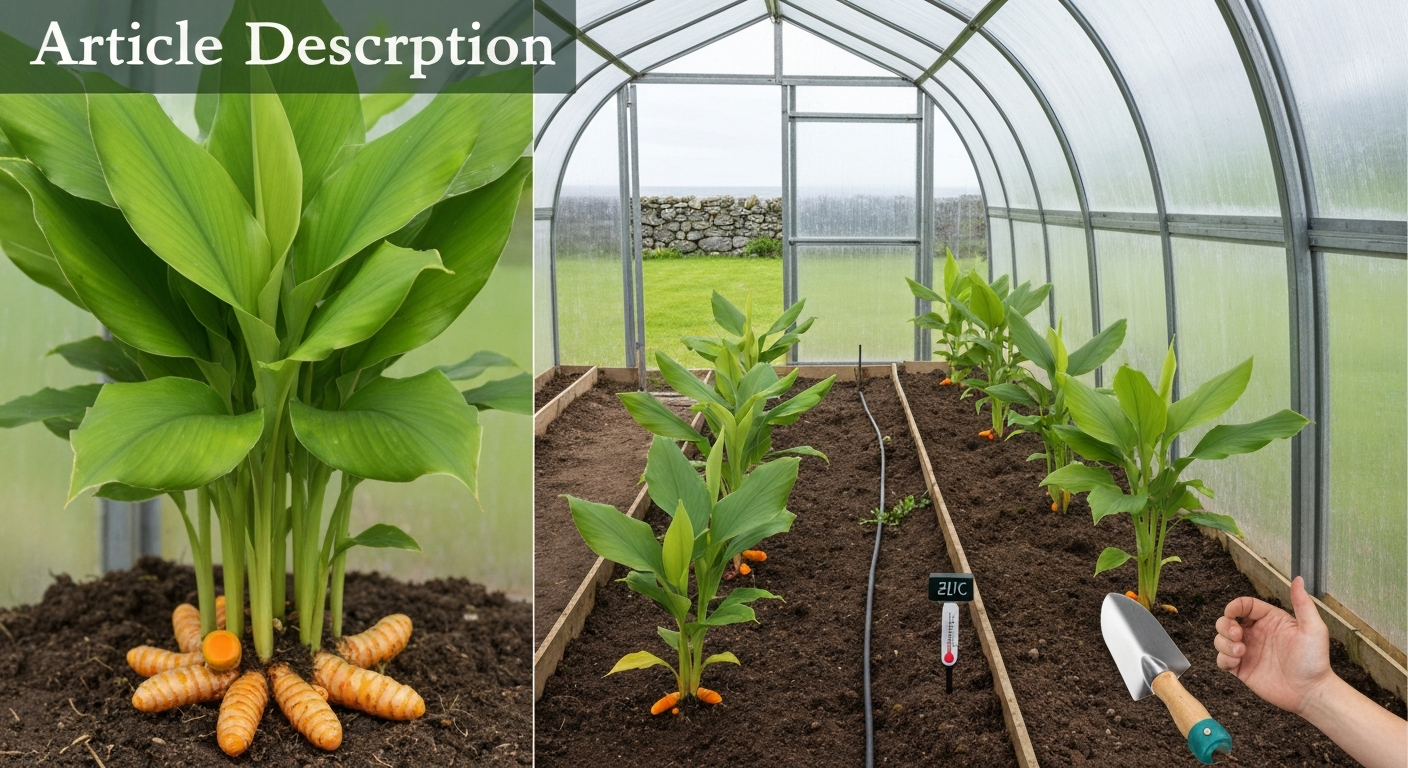
What turmeric actually needs vs what Ireland offers
Turmeric (Curcuma longa) is a tropical crop native to South Asia. It wants warm, humid conditions with a long growing window, ideally blank" rel="noopener noreferrer">7 to 10 months from planting to harvest. Agronomic research puts the optimum air temperature range at roughly 18.2–27.4°C, and even at the lower end of that range, yields drop and disease pressure increases. Ireland's 1991–2020 national climate averages show a summer mean of 14. Met Éireann, 30 Year Averages (1991–2020) provides county‑level and station monthly mean air temperature, rainfall and sunshine data showing Irish summer means around 14.6°C for 1991–2020 blank" rel="noopener noreferrer">Met Éireann — 30 Year Averages (1991–2020). 6°C and a peak monthly mean of 15.2°C in July. Soil temperatures are correspondingly modest. The Royal Horticultural Society classifies Curcuma longa as H1A, meaning it requires protection above 15°C year-round and a minimum greenhouse temperature of around 18°C for successful cultivation. So the Irish outdoor environment, while not impossible in the warmest spots, is genuinely marginal for this crop.
Beyond temperature, turmeric needs well-drained, organic-rich soil, consistent moisture without waterlogging, and a reasonably long frost-free window. Ireland scores reasonably on rainfall and humidity, but the growing season length and warmth are the binding constraints. To accumulate enough thermal time (estimates from field research suggest roughly 2,800–3,800 degree-days to maturity, depending on cultivar), Ireland needs to supply most of that heat artificially or through a very favourable microclimate.
Choosing the right growing approach for your situation
Before you buy rhizomes, decide which growing setup matches your resources and ambitions. There are four practical options for Irish growers, and they are not equally effective.
| Approach | Feasibility in Ireland | Key requirement | Best for |
|---|---|---|---|
| Outdoor in open ground | Low to marginal | Warm sheltered microclimate, long season | Southwest coastal gardens with mild winters |
| Polytunnel or greenhouse | Good to high | Maintain ≥18°C through growing season | Most Irish home growers |
| Container growing (outdoors/in) | Good | Deep pots, heat mat for sprouting, mobility | Those without a polytunnel |
| Indoor under grow lights | High (but effort-intensive) | Full-spectrum lights, heat mat, space | Year-round cultivation regardless of season |
My honest recommendation is the polytunnel first, containers second. I have tried leaving potted turmeric outside through an Irish summer and the results were poor: slow growth, little rhizome bulk by autumn. Once I moved operations under cover, everything changed. If you already have a polytunnel for tomatoes or peppers, turmeric fits right in alongside those crops and enjoys the same warmth.
Site selection and soil requirements
For outdoor or polytunnel bed growing, turmeric wants a well-drained, friable loam that is rich in organic matter. A sandy loam or clay loam both work as long as drainage is good. Waterlogging is one of the fastest ways to lose a crop to rot, so avoid low-lying beds or clay-heavy spots that pond after rain. The acceptable soil pH range is wide, roughly 4.3 to 7.5, but the sweet spot is slightly acidic to neutral, around pH 5.5 to 7.0. Most Irish garden soils fall somewhere in that range, so pH is rarely the problem.
Prepare beds generously with compost before planting. Work in at least 10 cm of well-rotted compost or leaf mould, and if drainage is suspect, raise the bed by 20–30 cm or grow in ridges. In containers, use a free-draining mix: roughly two parts peat-free multipurpose compost, one part perlite, and one part composted bark or coir works well. Avoid dense, heavy potting compost on its own, as it holds too much moisture around the rhizomes.
Temperature and light: the non-negotiables
Turmeric sprouts best when soil temperature is in the mid-20s Celsius, around 24–30°C. Below 18°C, sprouting slows dramatically and can stall for weeks. This is why pre-sprouting on a heat mat indoors is so important for Irish growers. Once plants are established and growing, aim to keep air temperatures above 18°C consistently, and ideally above 20°C for good leaf and rhizome development. Night temperatures below 15°C regularly will slow the plant and compress your effective growing window.
On light, turmeric is more flexible than many tropical crops. It tolerates partial shade and research has shown that around 25% shade can actually improve leaf area and rhizome yield in some conditions, which means polytunnel or greenhouse shading cloth is not a concern. Indoors, use a full-spectrum LED grow light delivering at least 16 hours of light per day during the growing period. In a polytunnel during Irish summer, natural light is generally sufficient, though south-facing orientation and clean polytunnel film help maximise what you get.
Planting schedule for Ireland
Timing is everything in a short cool season. Here is how to structure the year for best results.
- Late January to February: Source your seed rhizomes. Store in a warm, dry spot (not the fridge) until you are ready to chit.
- February to early March: Begin pre-sprouting. Place rhizome pieces on moist compost or wrap loosely in damp paper and set on a heat mat at 24–27°C. Check weekly for bud emergence.
- March to April: Once buds are clearly visible (1–2 cm), pot up rhizomes individually into 15 cm pots with your free-draining mix. Keep indoors or in a heated propagation space above 18°C.
- Late April to May: For polytunnel growing, transplant once your tunnel is reliably warm overnight. For outdoor growing, wait until late May or early June when 10 cm soil temperature approaches 18°C — this is rarely before late May even in the south.
- May through September: Main growing season. Water regularly, feed monthly, and maintain warmth under cover.
- October to November: Leaves yellow and die back as the plant enters dormancy. This signals harvest time. Lift rhizomes before the first hard frost.
Growing turmeric outdoors in warm Irish microclimates
If you have a genuinely sheltered, south-facing spot, particularly in the milder counties of the southwest, it is worth trying turmeric outdoors. I would not call it a reliable outdoor crop in Ireland, but in ideal conditions it can produce modest rhizomes.
- Choose a south or southwest-facing bed sheltered from wind by a wall, hedge, or fence. The soil should warm up noticeably earlier in spring in this spot compared to open ground.
- Prepare the bed with generous compost as described above. Raise it by at least 20 cm to improve drainage and soil warmth.
- Pre-sprout rhizomes indoors on a heat mat from February. Do not plant out until late May, and only when you are confident overnight temperatures are above 10°C consistently.
- Plant rhizomes 8–10 cm deep, buds pointing upward, spaced 25 cm apart with 45 cm between rows.
- Cover with a cloche or fleece for the first few weeks after planting. Remove cloches only during the warmest part of summer.
- Harvest in October to November when foliage dies back. Expect smaller rhizomes than polytunnel-grown plants, but usable fresh turmeric nonetheless.
Growing turmeric in a polytunnel or greenhouse
This is the most practical route for most Irish growers and the one most likely to give you a real harvest. A polytunnel that also grows tomatoes or cucumbers will be warm enough for turmeric through most of the Irish summer.
- Pre-sprout rhizomes indoors from February to March as described in the schedule above.
- Prepare a polytunnel bed in March, incorporating generous compost and checking drainage. Raised ridge planting (10–15 cm high) inside the tunnel is ideal.
- Transplant pre-sprouted rhizomes into the polytunnel bed from late March to April once night temperatures inside the tunnel are holding above 15°C without supplemental heat. If your tunnel is unheated and nights are still cold, wait until May.
- Space plants 25–30 cm apart, 45–60 cm between rows. Plant rhizome setts 8–10 cm deep.
- Water regularly but avoid letting the bed stay waterlogged. A drip irrigation line works well here.
- Feed every 3–4 weeks with a balanced liquid fertiliser once plants are actively growing (see feeding section below).
- By late September to October the plants will show yellowing leaves. This is the cue to reduce watering and prepare to harvest.
Container growing: pots, soil mix, and mobility
Containers let you move turmeric to wherever warmth is available, which is a real advantage in Ireland. The main rule is to use deep pots: at minimum 30 cm depth and 30 cm diameter per plant, though larger is better for rhizome bulk. Wide, shallow containers are the number one mistake I see beginners make with this crop.
- Pre-sprout rhizomes on a heat mat in February to March as above.
- Fill containers with the free-draining mix: two parts peat-free compost, one part perlite, one part composted bark or coir. Add a slow-release granular fertiliser at the recommended rate.
- Plant one rhizome sett per 30 cm pot, 8–10 cm deep, bud side up.
- Keep containers on the heat mat or in a warm spot indoors until the shoot is well established.
- Move outdoors into a sheltered sunny spot from late May, or into the polytunnel from April. Bring back indoors in September before nights cool below 10°C.
- Water consistently, allowing the top 2–3 cm of compost to dry between waterings. Never let the pot sit in a saucer of standing water.
- Harvest when leaves yellow in autumn by tipping the entire pot out and gently extracting rhizomes from the compost.
Indoor growing under grow lights
Indoor cultivation under artificial lights removes the dependency on Irish weather entirely and is genuinely viable, though it takes more equipment and attention. This is the right approach if you want to extend the season beyond what a polytunnel can offer, or if you want to start much earlier.
- Set up a full-spectrum LED grow light (at least 200–300 true watts for a small grow area) on a timer running 16 hours per day.
- Place containers on a heat mat set to 24–27°C for sprouting, reducing to 20–24°C once plants are established.
- Maintain room or tent temperature above 18°C at all times. A seedling heat mat alone is insufficient if the room drops to 10°C at night.
- Space containers so leaves are not crowded. Turmeric can reach 60–90 cm tall indoors, so allow vertical clearance.
- Position grow lights 30–40 cm above the canopy and raise the light as the plants grow.
- Use the same watering and feeding regimen as for container growing. Indoor environments tend to dry compost faster, so check moisture more frequently.
- Plants grown entirely indoors can theoretically be started earlier and harvested later, potentially extending your effective season by 2–3 months compared to outdoor growing.
Watering, drainage and feeding
Turmeric wants consistent moisture but punishes poor drainage. The ideal is soil that stays evenly moist, like a wrung-out sponge, not alternating between bone dry and waterlogged. In practice, this means watering generously when the top layer dries out, then allowing a brief drying period before the next watering. During the main growing season in a warm polytunnel, this could be every 2–3 days. In containers outdoors in cooler weather, once or twice a week may be enough.
Signs of overwatering include yellowing lower leaves, soft or mushy rhizome bases if you probe, and slow sluggish growth. Underwatering shows as leaf edges browning, leaves curling inward, and dry crumbly compost. Both are common mistakes.
For feeding, start with a nitrogen-forward liquid fertiliser (such as a high-N seaweed or vegetable feed) in the early leafy growth phase, roughly monthly. As the season progresses into late summer and rhizome development ramps up, switch to a lower-nitrogen, higher-potassium feed to encourage rhizome bulking rather than continued leaf production. Avoid over-feeding with nitrogen late in the season as this pushes top growth at the expense of roots.
Overwintering and frost protection
Turmeric rhizomes cannot survive ground frost. In Ireland, even the mildest coastal areas will see frosts from November onward, so you cannot leave rhizomes in the ground over winter without protection. Here is how to handle the dormant season.
- Once foliage yellows fully (October to November), lift all rhizomes from the ground or tip out containers.
- Brush off excess soil gently. Do not wash the rhizomes if you plan to store them, as moisture encourages rot.
- Cure rhizomes you intend to store in a warm, dry spot for 1–2 weeks before long-term storage.
- Store seed rhizomes (those you plan to replant next season) in a paper bag or open tray with dry compost or sand, at around 12–15°C. A frost-free shed, garage, or cool indoor cupboard works well.
- Check stored rhizomes monthly for rot or desiccation. Discard any that show soft spots.
- For container-grown plants, you can simply bring the entire pot inside to a frost-free space and allow the plant to go dormant in the pot, reducing watering to almost nothing. Resume watering and warmth in February.
Harvesting, curing and storing your turmeric
The harvest signal is unmistakable: leaves turn yellow and the whole plant begins to die back, usually from October onward in Ireland. Do not wait for a hard frost, which can damage rhizomes. Lift carefully with a fork, working from the outside of the clump inward to avoid cutting through the rhizomes.
For fresh use, turmeric rhizomes can go straight to the kitchen after brushing off soil. Fresh turmeric is more intensely flavoured than dried and keeps in the fridge for 2–3 weeks, or in the freezer for several months.
For drying and making turmeric powder, boil or steam the rhizomes briefly (around 45 minutes), then slice thin and dry in a dehydrator or low oven (50–60°C) until completely hard and crisp. The interior should be dry all the way through with no soft or moist centre. Dried slices can be ground in a spice grinder or powerful blender. Store ground turmeric in an airtight container away from light.
Set aside your best, healthiest-looking rhizomes (with visible buds) as seed material for the following year. These go into dormant storage as described above.
Pests, diseases and common problems
Turmeric in Ireland faces a different pest profile than it does in tropical production systems, but there are still problems to watch for.
| Problem | Symptoms | Organic control |
|---|---|---|
| Rhizome rot (Pythium/Fusarium) | Soft, discoloured rhizome bases; plant wilts suddenly | Improve drainage; avoid overwatering; use disease-free rhizomes; remove affected plants immediately |
| Leaf blight | Brown or water-soaked lesions spreading from leaf edges | Reduce humidity; improve air circulation in polytunnel; remove affected leaves |
| Aphids | Clusters on new growth; sticky residue; distorted leaves | Blast off with water; use insecticidal soap; encourage ladybirds |
| Vine weevil (in containers) | Sudden plant collapse; C-shaped white grubs in compost | Use nematode soil drench (Steinernema kraussei) in late summer |
| Slugs | Ragged holes in leaves and stems, especially at ground level | Copper tape around containers; slug pellets; nocturnal checks |
| Leaf yellowing (non-disease) | Even yellowing, older leaves first | Often normal dormancy signal; if mid-season, check for underwatering or nutrient deficiency |
The most common issue I have seen Irish growers encounter is rhizome rot from overwatering combined with cool soil temperatures, especially early in the season. If your polytunnel is cold at night and you are watering generously, the rhizomes just sit in wet cool compost and rot before they even sprout. The fix is heat first, water second.
Realistic yield and timeline expectations
Let's be honest about what you can expect in Ireland. In a polytunnel with consistent warmth from April to October, you can get a genuine harvest of fresh rhizomes from a single plant: typically 200–500 g per plant in good conditions, occasionally more. That is enough for fresh kitchen use and seed stock for the following year, but not enough to supply a market stall.
In containers moved in and out, yields tend to be lower, in the 100–300 g range per pot, depending on pot size. Outdoor growing in open ground in most of Ireland will give very modest results, if any: small, underdeveloped rhizomes with little culinary value. The growing season is simply too short and too cool outside to accumulate the thermal time turmeric needs.
Time to harvest is 8–10 months from planting. If you pre-sprout in February and plant out in April, you are looking at an October to December harvest window. That timeline is tight but workable with polytunnel production. Do not expect to rush it: turmeric will not deliver mature rhizomes in a 4–5 month season regardless of what you do.
How Ireland compares to Michigan, Texas, Georgia and Minnesota
If you have been reading around this topic, you may have seen advice aimed at U.S. growers. Ireland sits in an interesting middle ground compared to those states. Here is a quick climate comparison to put it in perspective.
| Location | Summer high (avg °C) | Frost-free window | Outdoor turmeric? | Best approach |
|---|---|---|---|---|
| Ireland | ~14–17°C | ~6–7 months (variable) | Marginal to low | Polytunnel or containers |
| Michigan | ~22–26°C | ~5–6 months | Marginal (short season) | Containers or greenhouse |
| Texas | ~32–38°C | 9–12 months (south) | Yes (heat is fine) | Outdoor with irrigation |
| Georgia | ~28–33°C | 8–10 months | Yes | Outdoor or containers |
| Minnesota | ~22–28°C | ~4–5 months | Very marginal | Greenhouse or indoor only |
In warmer U.S. states like Texas and Georgia, outdoor turmeric is genuinely viable and growers can focus mainly on irrigation and soil prep rather than heat management. For detailed outdoor-growing advice and region-specific tips, see can you grow turmeric in Texas. Michigan growers face a short-season problem similar to Ireland, though summers are warmer. For a focused comparison of growing turmeric in Michigan's short-season climate, see our guide 'can you grow turmeric in Michigan'. Minnesota is arguably tougher than Ireland in terms of season length, and like Ireland, greenhouse or indoor production is the only realistic route. Can you grow turmeric in Minnesota is a useful comparison for growers in similarly cool, short-season regions. If you are comparing notes with a friend growing turmeric in Georgia, understand that their experience will be quite different from yours.
Cold-short seasons vs warm regions: which method fits where
The core principle is simple: the warmer and longer your growing season, the more you can rely on outdoor cultivation. The cooler and shorter your season, the more you need to manufacture warmth artificially. Ireland, Michigan, and Minnesota all sit in the 'manufacture warmth' category. Texas and Georgia do not. If you are an Irish grower looking at advice for warm-climate states, filter it through that lens: polytunnel or greenhouse growing is the baseline in Ireland, not the exception.
Within Ireland itself, there is meaningful variation. The southwest (Kerry, Cork, parts of Waterford) has the mildest winters and warmest summers, and outdoor growing in a sheltered spot there is more plausible than in, say, Donegal or the Irish midlands. East-coast gardens also tend to have drier and slightly warmer summers than the west, which helps.
Microclimate tips to push the season
You do not always need a full polytunnel to improve your odds. Several practical microclimate tricks can meaningfully extend the effective growing season in Ireland.
- South-facing walls: plant at the base of a south-facing stone or brick wall. The wall absorbs heat during the day and radiates it back overnight, raising local air and soil temperatures by 2–4°C compared to open ground.
- Raised beds: soil in a raised bed warms up faster in spring and drains better, both of which benefit turmeric. A bed raised 30 cm or more and positioned in full sun can be workable for outdoor growing in milder counties.
- Cloches and fleece: use glass or polycarbonate cloches over young plants in May and June to trap warmth. Horticultural fleece draped over plants on cold nights can prevent damage at temperatures that would otherwise check growth.
- Dark mulch: a layer of black polythene mulch or dark compost on the soil surface absorbs solar radiation and raises soil temperature. This is especially useful early and late in the season.
- Thermal mass: in a polytunnel, placing large water-filled containers (dark-coloured if possible) near your turmeric plants acts as a thermal buffer, storing daytime heat and releasing it overnight.
- Sheltered spots: avoid frost pockets (low-lying areas where cold air settles) and exposed corners. A slightly elevated, wind-protected spot can be 2–3°C warmer on a clear cold night.
Equipment worth having
You do not need to spend a lot to grow turmeric in Ireland, but a few key pieces of kit make a real difference.
- Heat mat: the single most useful piece of equipment for sprouting rhizomes. A basic propagation heat mat with a thermostat costs around €30–50 and makes the difference between rhizomes sprouting in 2 weeks and sitting dormant for months.
- Polytunnel or greenhouse: if you do not already have one, even a small walk-in polytunnel (3m x 6m) transforms what you can grow in Ireland. This is a worthwhile investment beyond just turmeric.
- Deep containers: 30–40 cm deep fabric pots or plastic planters. Fabric pots have the advantage of air-pruning roots and preventing waterlogging.
- Full-spectrum LED grow lights: for indoor growing, look for LEDs marketed for vegetable cultivation with a full-spectrum output. A timer is essential.
- Digital min/max thermometer: cheap and essential for monitoring overnight temperatures in your growing space so you know whether conditions are actually warm enough.
- Horticultural fleece and cloches: useful for both early-season warmth and late-season frost protection outdoors.
Sourcing rhizomes and planting material in Ireland
Where you buy your rhizomes matters. For Irish growers, there are a few practical options to consider.
The simplest starting point is organic turmeric rhizomes from a health food shop or farmers' market. Look for fresh, plump rhizomes with visible buds or bud scars. Avoid anything shrivelled, mouldy, or with signs of softness. The downside of supermarket turmeric is that it may have been treated to suppress sprouting, though organic sources are less likely to have this issue.
Specialist herb and unusual vegetable seed suppliers in the UK and Ireland increasingly stock turmeric seed rhizomes, particularly from late winter onward. Ordering from EU-based suppliers avoids the import complexity that comes with bringing plant material in from outside the EU. If you are buying from a non-EU supplier, be aware that importing plants or rhizomes for planting into Ireland from third countries requires a valid phytosanitary certificate and the consignor or importer must be registered with DAFM (the Department of Agriculture, Food and the Marine). Movements of plants within the EU require a plant passport under EU Regulation 2016/2031. It is not worth the legal and biosecurity risk to skip these requirements.
Tissue-culture (micropropagated) plantlets from specialist suppliers offer disease-free starting material, which reduces the risk of introducing rhizome rot pathogens to your garden. If you plan to grow turmeric seriously over multiple years, disease-free stock is worth the extra cost. Always verify that any supplier's material complies with EU plant health import requirements.
- Buy from EU-based suppliers where possible to simplify plant health compliance.
- Choose fresh, firm rhizomes with at least one visible bud per sett (20–30 g pieces are ideal).
- Avoid rhizomes from unknown sources that show signs of rot, shrivelling, or surface mould.
- If sourcing from outside the EU, check DAFM requirements before ordering.
- Buy in late January or February so you have time to pre-sprout before the planting window.
Where to start and what to try next
If you have read this far and are ready to try turmeric in Ireland, here is a short checklist to get moving. Order or source your rhizomes in January or February. Set up a heat mat and a warm indoor space for pre-sprouting. Decide whether you are going polytunnel, container, or outdoor microclimate, and prepare your growing space before April. Track temperatures in your growing area with a min/max thermometer and do not plant out until nights are reliably above 15°C under cover. Expect to harvest in October to November, and set aside your best rhizomes for next year.
Turmeric pairs well with other warm-season crops that benefit from the same growing conditions. Ginger (Zingiber officinale) is turmeric's close relative and follows exactly the same schedule and care requirements in Ireland. If you enjoy growing one, try the other alongside it. Galangal is another option for the adventurous polytunnel grower. All three benefit from the same deep containers, free-draining mix, heat mat start, and polytunnel protection that turmeric needs.
Growing turmeric in Ireland is worth trying if you have a polytunnel or are willing to invest in containers and a heat mat. It is not a low-effort crop, but it is not as difficult as people assume once you stop fighting the climate and start working around it. Set up your warm environment first, then let the plant do what it does.
FAQ
Can you grow turmeric in Ireland — is it feasible for home gardeners and hobbyists?
Yes — but only reliably with protection. Turmeric (Curcuma longa) is a warm, frost‑tender tropical crop that prefers mid‑20s °C. In Ireland outdoor, unprotected production is marginal because summer means (~14–15 °C) are below its optimum. However, hobbyists can grow it successfully in containers, conservatories, polytunnels or heated greenhouses, or outdoors only in very warm sheltered microclimates with season‑extension techniques.
Why is Ireland challenging for turmeric compared with tropical climates?
Turmeric’s optimal air temperatures are roughly 18–27 °C and it is frost‑sensitive. Ireland’s 1991–2020 summer mean (~14.6 °C; July ~15.2 °C) and cooler soil temperatures limit rhizome bulking, extend time to maturity and increase disease risk. Therefore warm, long, frost‑free growing periods or artificial heat are needed to reach good yields.
What is the clear planting feasibility verdict for outdoor vs protected production in Ireland?
Outdoor (unprotected): generally not recommended except in rare very warm microclimates and with season‑extension; success is limited. Protected (greenhouse, polytunnel, heated indoors, containers with heat mats/grow lights): recommended and practical for hobbyists to reach usable harvests.
Step‑by‑step: how to grow turmeric outdoors in Ireland if you want to try?
1) Choose the warmest, sunniest, sheltered spot (south‑facing wall, raised beds). 2) Improve soil: deep, friable, high organic matter, excellent drainage; pH ~5–7. 3) Pre‑sprout seed rhizomes indoors on a heat mat at ~24–28 °C for 2–6 weeks. 4) Plant when soil 10 cm temperature is consistently ≥18 °C and all frost danger has passed (late May–June in warm sites). 5) Plant rhizome pieces 8–10 cm deep, 25–40 cm between plants, 45–60 cm between rows. 6) Mulch heavily to retain heat and moisture; use cloches or temporary polythene to raise local temperature. 7) Provide regular watering (keep moist but not waterlogged) and balanced feed. 8) Harvest after ~8–10 months or when foliage yellows, keeping expectations modest unless season is unusually warm.
Step‑by‑step: greenhouse/polytunnel method for Ireland
1) Use an unheated greenhouse/polytunnel in mild sites or a heated greenhouse for consistent results. 2) Pre‑sprout on heat mats (24–28 °C) for 2–6 weeks. 3) Plant in deep pots or beds with well‑drained, high‑organic soil. 4) Maintain air temps ideally 18–28 °C daytime; avoid sustained drops below ~15 °C. 5) Provide bright, indirect light or 12–16 hours supplemental LED/HID if light is limiting. 6) Keep substrate evenly moist, feed monthly with balanced NPK then reduce N late season to encourage rhizome bulking. 7) Harvest at 8–10 months when leaves die back.
Step‑by‑step: container/indoor method for Ireland (recommended option)
1) Use deep pots (min 30 cm/12 in depth; larger for multiple rhizomes) with free‑draining, high‑organic potting mix. 2) Pre‑sprout rhizome pieces on a heat mat (24–28 °C) or start directly in pots on heat mat. 3) Place in bright, indirect light (east/south window) or under grow lights (12–16 h/day). 4) Keep substrate temperature ~22–28 °C for best growth; maintain even moisture. 5) Use balanced fertiliser every 4–6 weeks; reduce nitrogen in last 6–8 weeks before harvest. 6) Provide humidity (misting/humidity tray) and good air circulation. 7) Harvest after 8–10 months when foliage yellows; small indoor yields are typical.
Next Articles
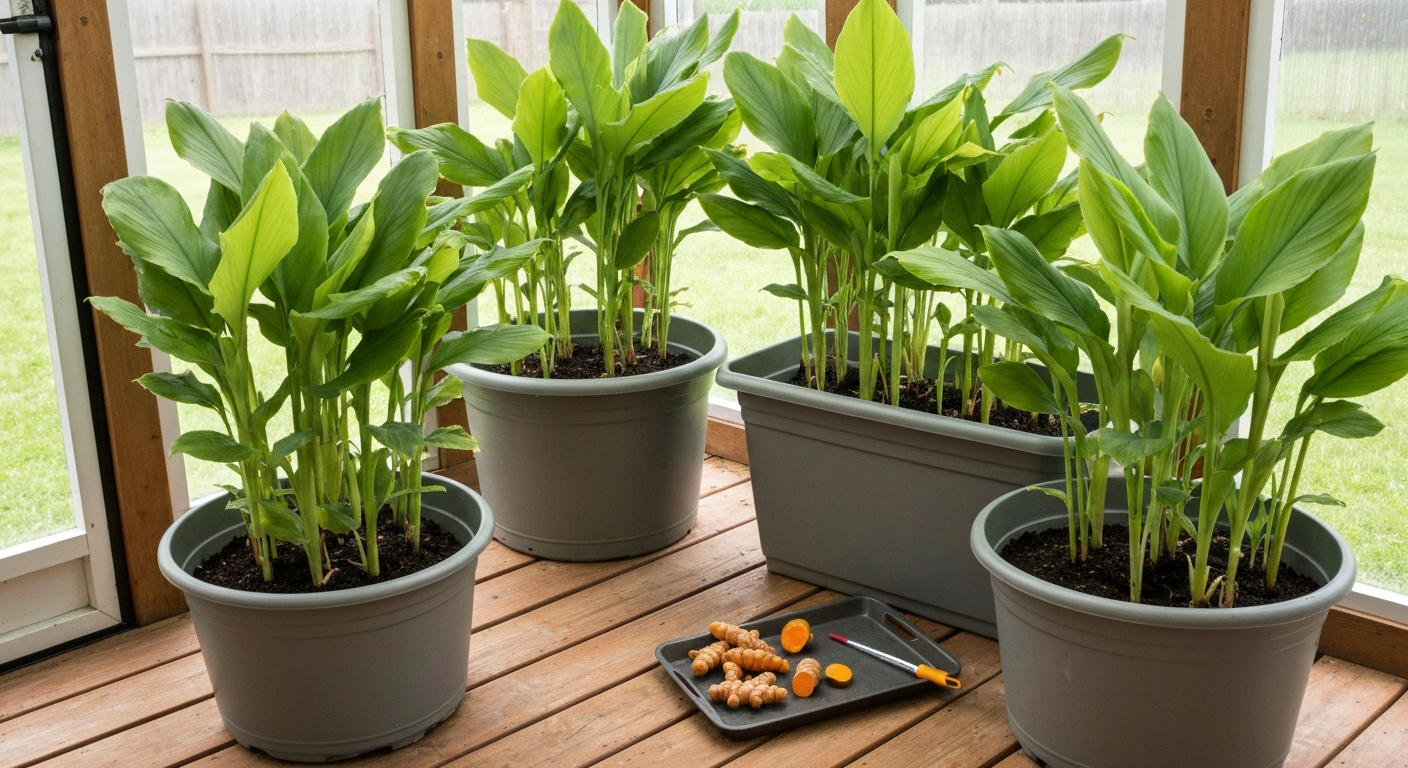
Can You Grow Turmeric in Minnesota? Feasibility & Guide
Can you grow turmeric in Minnesota? Yes, step-by-step planting, container, greenhouse and overwintering tips.
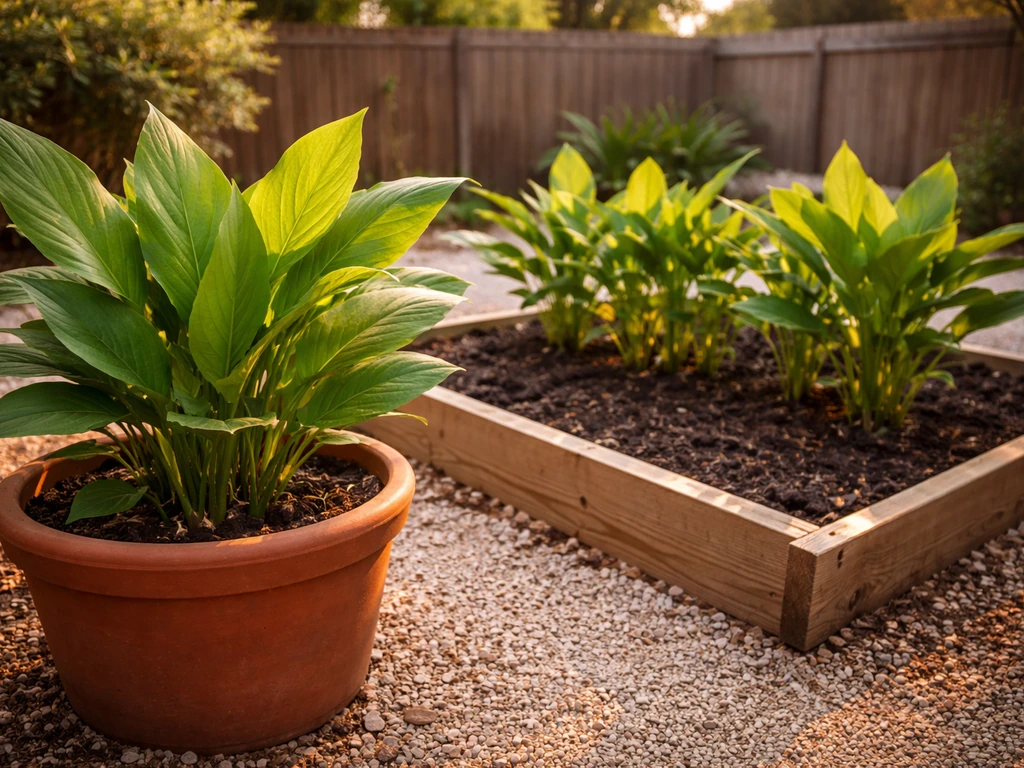
Can You Grow Turmeric in Texas? How to Succeed
Learn if you can grow turmeric in Texas and get step-by-step container or in-ground instructions, timing, care, and harv
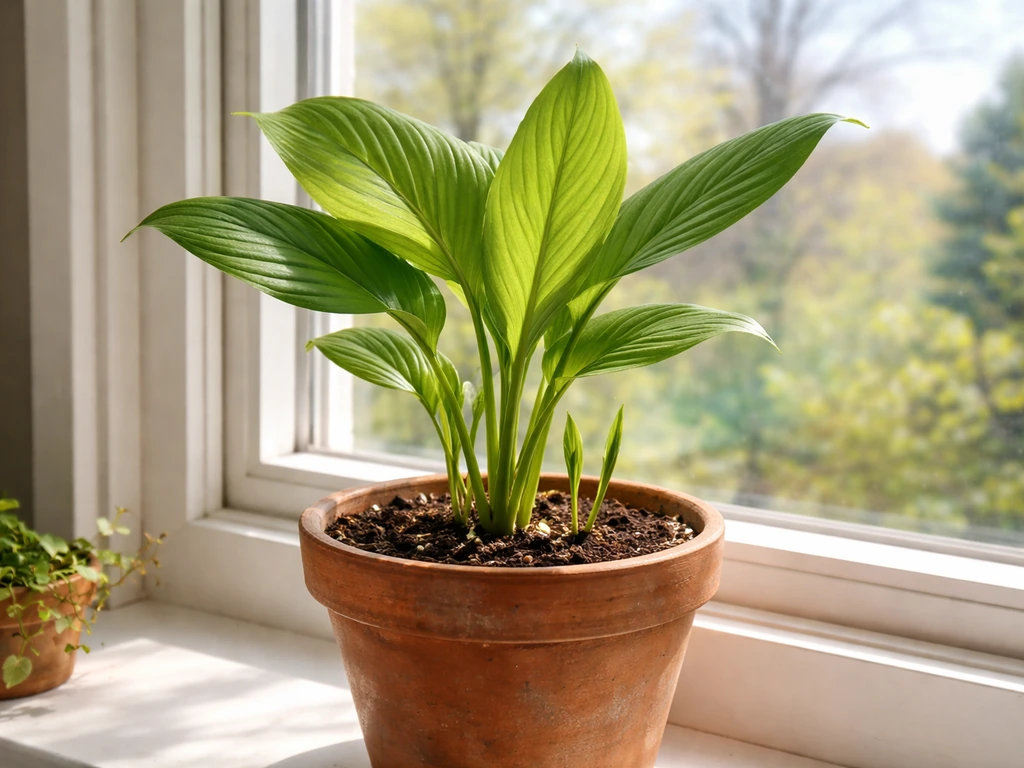
Can You Grow Turmeric in Michigan? How to Succeed
Learn if you can grow turmeric in Michigan and get a step-by-step guide from indoor starts to harvest and overwintering.