
Yes, you can grow turmeric in Minnesota, but not the way you'd grow it in Georgia or Texas. Minnesota sits mostly in USDA hardiness zones 3a through 5a, and turmeric is a tropical plant that wants warm soil, humid air, and a long frost-free season. What that means in practice is this: outdoor in-ground planting is a long shot without serious season extension, container growing indoors or in a heated greenhouse is very doable, and a combination approach, starting rhizomes indoors in late winter and moving containers outside for summer, is the sweet spot for most home gardeners here. You can get a real harvest. It just takes planning.
Can You Grow Turmeric in Minnesota? Feasibility & Guide

Marcus Petersen
18 Jul 2026
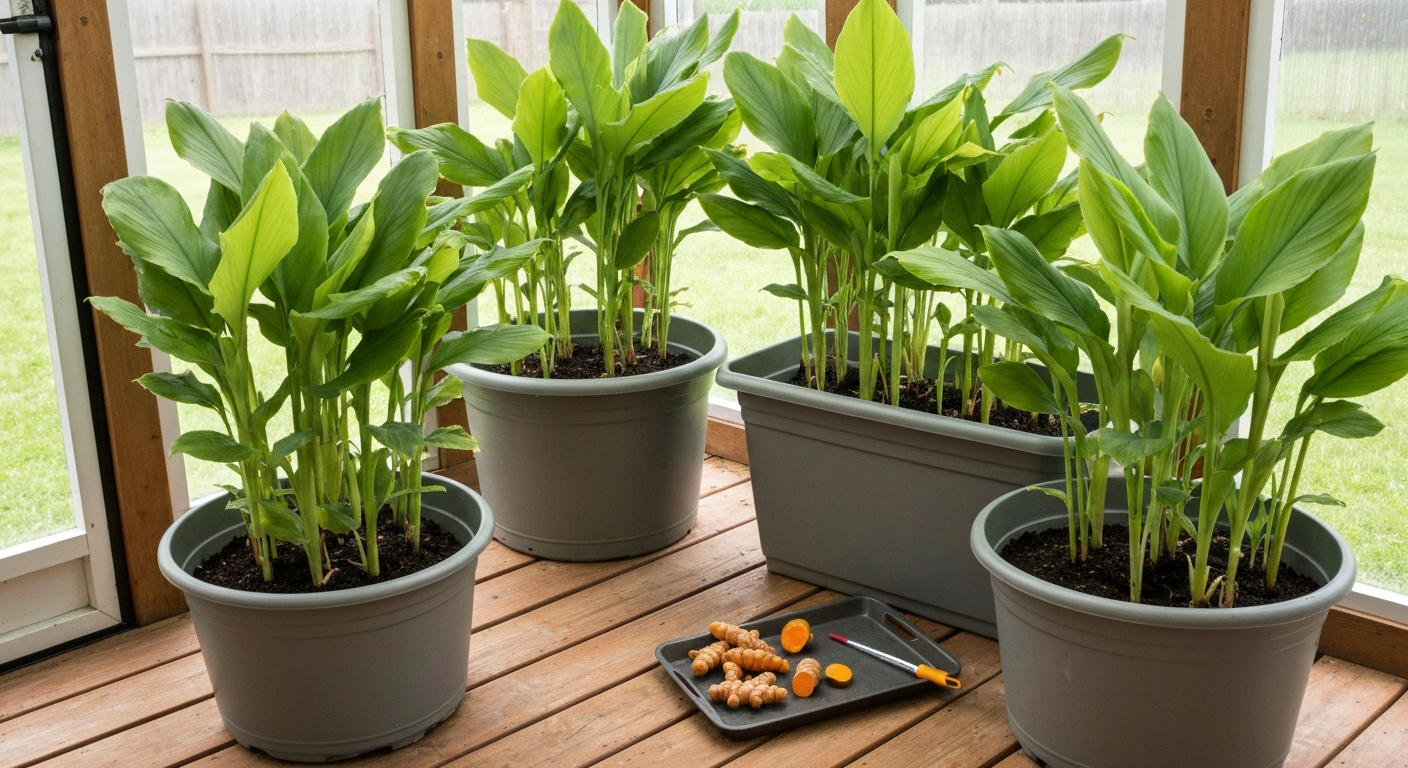
What turmeric actually needs to thrive
Turmeric (Curcuma longa) is native to South and Southeast Asia, and it grows best where temperatures stay between roughly 65°F and 82°F (18–27°C) through its growing season. A controlled trial found no sprouting at all at 14°C (57°F), and the optimum sprouting temperature for turmeric came in around 30°C (86°F). Temperatures above about 32°C can damage tissue, so it's not just cold that causes problems. The plant also needs rhizomes to bulk up over a long season. Extension research suggests you can harvest small 'baby' turmeric rhizomes around five months after planting, but for full-sized cured rhizomes you're looking at about seven months of warm, active growth.
Turmeric is also photoperiod-sensitive. It enters rhizome-filling mode under short days, which is one reason the harvest window tends to fall in autumn. This matters for indoor growers who use supplemental lighting: if you're running lights year-round and never letting daylength shorten, rhizome development can stall. The standard workaround is to stop the extra light in late summer and let shortening days trigger bulking.
On the zone side, turmeric has no cold hardiness to speak of. It's not rated for any USDA zone as a perennial in the continental US outside of the warmest parts of Florida and Hawaii. Minnesota's winter minimum temperatures range from around -40°F in the far north to about -15°F in the Twin Cities metro, which would kill rhizomes left in the ground in minutes. Every single method for growing turmeric here either involves bringing it inside or creating an artificial warm microclimate.
Your four real options in Minnesota
There's more than one way to make this work, and the right choice depends on your space, budget, and how much effort you want to put in. Here's an honest rundown of each approach.
Outdoor in-ground beds
This is the hardest path. Minnesota's average last frost ranges from early May in southern counties to late May or even early June up north, which leaves a theoretical frost-free window of roughly 120 to 150 days in the south and fewer than 120 days in much of the north. Turmeric needs closer to 210 frost-free days for a full harvest. You can compress that window somewhat by starting rhizomes indoors in February or March and using black plastic mulch outdoors (which adds roughly 4 to 5°F of soil warmth at 2-inch depth), but you're still running a real risk of coming up short on heat units. I treat outdoor planting as an experiment worth trying once with a handful of rhizomes, not as a reliable annual strategy.
Containers moved outdoors for summer
This is what I'd recommend for most home gardeners. You start rhizomes in containers indoors in late February or early March, move them outside once nighttime temps are reliably above 50°F (typically mid to late June in much of Minnesota), and bring them back in before the first fall frost. This stretches your warm growing window to about six months or more, which is enough to get a real harvest of full-sized rhizomes. Containers also let you control soil mix, drainage, and temperature much more precisely than an outdoor bed.
Greenhouse or deep winter greenhouse
A heated greenhouse gives you the most control and the longest season. The University of Minnesota has been trialing deep winter greenhouse designs, angled south-facing glazing combined with underground thermal mass, and researchers are specifically experimenting with ginger and turmeric in those structures. If you have or are building a heated greenhouse, turmeric is a natural fit. An unheated hoophouse or high tunnel alone won't get you through a Minnesota winter, but it can meaningfully extend the outdoor portion of the season in spring and fall.
Full indoor growing
Growing turmeric entirely indoors under lights works, but it demands consistent warmth (daytime temperatures of at least 68°F and never below 50°F), supplemental full-spectrum lighting, and some attention to humidity. UVM Extension recommends containers at least 12 inches in diameter for indoor turmeric. The yield per plant indoors under typical home conditions tends to be modest, but for a hobbyist who just wants fresh turmeric root and the satisfaction of growing it, it's a legitimate option year-round.
How to pick the right approach for your situation
| Approach | Up-front cost | Effort level | Expected yield | Best for |
|---|---|---|---|---|
| Container (in/out) | Low–moderate ($20–60 in supplies) | Moderate | 0.5–1.5 lb per large container | Most home gardeners, limited space |
| Outdoor bed with season extension | Moderate ($30–80 for black plastic, row cover) | High | Variable, often low in short seasons | Experimenting gardeners, southern MN |
| Heated greenhouse | High (existing structure needed) | Low once set up | 1–3+ lb per large container | Serious hobbyists, small-scale growers |
| Full indoor under lights | Moderate ($50–150 for grow lights) | Moderate | 0.25–0.75 lb per container | Apartment/no outdoor space, year-round interest |
If you have outdoor space and a few spare pots, the container method gets you the best return on effort. If you're in the southern Twin Cities metro and want to try an in-ground bed for the experience, go for it, but hedge your bet by also keeping a couple of containers inside. Time investment is mainly front-loaded in late winter when you're pre-sprouting, and the back-end harvest work in October takes a few hours at most.
Minnesota seasonal planting calendar
| Month | Task |
|---|---|
| February | Source rhizomes; start pre-sprouting on a heat mat indoors (aim for 80–85°F) |
| March | Pot up sprouted rhizomes into containers with 8+ inches of substrate; keep indoors under lights or in a bright south window |
| April | Continue indoor growth; harden off gradually if moving to a heated greenhouse or sunroom |
| May | Do not move outdoors yet unless nighttime temps are consistently above 50°F; begin hardening containers near a warm south-facing wall in late May in southern MN |
| June | Move containers outdoors after last frost risk passes (early June for most of the state); place in full sun with protection from strong wind |
| July–August | Peak vegetative growth; water and fertilize regularly; monitor for pests |
| Early September | Begin watching overnight forecasts; have containers ready to move inside if temps drop below 50°F |
| Late September–October | Tops begin yellowing as days shorten; bring containers indoors before first frost; allow foliage to die back fully |
| October–November | Harvest rhizomes once tops are fully yellow/brown; cure and store |
| December–January | Rest period; store saved rhizomes in a cool (not cold), dry location for replanting in February |
Picking and sourcing your rhizomes
Turmeric sold as fresh root in grocery stores is sometimes treated with growth inhibitors or fungicides, and it may carry pathogens you don't want in your garden. Buying certified clean rhizomes from a reputable seed or specialty plant supplier is worth the extra few dollars. Look for vendors who specialize in ginger family plants or tropical rhizomes, and check that they ship to Minnesota in late winter or early spring when you need them.
For varieties, the most widely available is standard Curcuma longa, which is what you'll find from most domestic seed suppliers and what the bulk of extension research covers. If you can find them, selections bred or selected for container performance or shorter growing seasons are worth trying in Minnesota's compressed season, though availability varies. I've had good luck with rhizomes ordered from specialty tropical plant nurseries in late January or early February, specifying I wanted fresh, actively dormant roots rather than already-sprouted plants that might stress in transit.
One practical note: if you're sourcing from outside the US or from any source you're uncertain about, Minnesota has standard agricultural import rules to consider. The USDA APHIS regulates the importation of plant material, and domestic purchases from reputable US suppliers sidestep most of those concerns. Stick to domestic sources for simplicity and plant health.
Soil mix, containers, and drainage
Turmeric hates wet feet. Root and rhizome rots are the most common way home gardeners lose their plants, and they almost always trace back to either a poorly draining soil mix or overwatering. For containers, use a coarse, well-draining soilless mix: something built from coconut coir, perlite, and bark works well. Avoid heavy potting mixes that hold moisture for extended periods. UF/IFAS specifically recommends a soilless substrate for container turmeric both to prevent waterlogging and to make end-of-season cleaning easier when you're separating rhizomes.
For pH, aim for slightly acidic soil around pH 6.0 to 6.5. Research correlating soil chemistry with curcumin content points to approximately pH 6.2 as favorable. Standard soilless mixes tend to start near neutral or slightly acidic, which is fine. Test your mix if you're amending it with local compost or garden soil, and adjust with sulfur or lime as needed.
Container size matters. For a meaningful harvest, use at least a 15-gallon container and plant three seed rhizomes per container, or use 5-gallon containers with one rhizome each. Make sure there's a minimum of 8 inches of substrate depth so rhizomes have room to spread horizontally. Every container must have drainage holes, and I don't use saucers during the outdoor growing season, only when plants are sitting inside where drainage onto floors is a problem.
Planting step-by-step for Minnesota
- In late January or early February, lay rhizomes on barely moist potting mix in a tray and cover loosely with plastic wrap. Place on a heat mat set to 80–85°F. Check every few days for moisture and signs of sprouting.
- Once sprouts reach 1–2 inches (typically 3–5 weeks depending on rhizome health), pot up into your final containers. Bury rhizomes horizontally about 2 inches deep in your pre-moistened soilless mix.
- Keep potted plants in the warmest spot in your house, ideally a south-facing window or under grow lights providing at least 12 hours of bright light. Daytime temps should stay above 68°F; never let them drop below 50°F.
- Begin hardening plants off in late May by setting containers outside in a protected spot for a few hours each day when temperatures are above 60°F, gradually increasing outdoor time over 1–2 weeks.
- Move containers fully outside once nighttime lows are consistently above 50°F and last frost risk has passed (aim for early to mid-June for most of Minnesota). Place in a full-sun location.
- For an outdoor in-ground trial: prepare a raised bed with black plastic mulch laid at least 2 weeks before planting to pre-warm soil. Wait until soil temperature at 2-inch depth is at or above 70°F before planting. Cover with a low tunnel for the first few weeks.
- Monitor soil temperature with a probe thermometer. Turmeric planted into cold soil will sit dormant or rot, not sprout.
Light, temperature, and humidity inside Minnesota's growing windows
Outdoors during Minnesota's summer, turmeric will generally get plenty of light, but watch for heat stress on extremely hot days above 90°F. In that case a little afternoon shade is actually helpful, not harmful. Indoors or in a greenhouse, aim for at least 12 hours of bright light per day during the vegetative phase. Once you want to trigger rhizome bulking in late summer, stop extending daylength and let natural shortening days do the work.
Humidity is something Minnesota gardeners have to think about, especially when plants are indoors during a dry heating season. Turmeric appreciates humidity above 50%. Grouping containers together, placing a tray of water nearby, or using a room humidifier in the growing space during winter months all help. Outdoors during summer, ambient humidity in Minnesota is usually adequate.
Watering and fertilizing through the season
The rule of thumb I use is this: water when the top inch of the mix feels dry, and water thoroughly until it drains from the bottom. Then don't water again until that top inch dries out. In the heat of July and August outdoors, that might mean watering every other day for a large container in full sun. In spring and fall when growth is slow and temperatures are cooler, that might stretch to twice a week or less. Overwatering kills more container turmeric than underwatering does.
For fertilizing, a balanced slow-release granular fertilizer worked into the mix at planting gives a good base. Once plants are actively growing, supplement with a liquid balanced fertilizer (something like 10-10-10 or a fish-based organic option) every two to three weeks through June, July, and August. Back off on nitrogen in September to encourage rhizome storage rather than leaf production. Potassium is particularly important for rhizome development, so a fertilizer with a slightly elevated K ratio in the back half of the season is worth using if you can find it.
Pest and disease watch list
Rhizome rot is the big one, and it's almost always a drainage or overwatering problem. If you set up your container and soil mix correctly from the start, you've addressed most of the risk. Spider mites are a real pest on indoor turmeric, particularly in dry Minnesota winters. You'll spot them by the fine webbing on leaf undersides and a stippled, dusty look to the foliage. Treat early with insecticidal soap or neem oil, repeated weekly for three weeks. Fungus gnats are a nuisance in wet potting mix; letting the soil dry out between waterings is usually enough to break their cycle without any sprays.
Outdoors, aphids occasionally colonize new growth. A strong stream of water to knock them off works well for minor infestations, and insecticidal soap handles heavier ones. Rhizome scale is occasionally reported in imported rhizomes, which is another reason to buy from reputable domestic sources and inspect rhizomes closely before planting. Any rhizome that looks mushy, discolored inside, or has unusual spots on the skin should be discarded.
Overwintering and replanting year after year
One of the best things about turmeric in a container system is that you can save rhizomes from one year and replant them the next, building up your stock over time. After harvest in October or November, select healthy, firm rhizomes with visible growth buds (called 'eyes') for next year's planting stock. Cure them briefly at room temperature for a few days to toughen the skin, then store in a paper bag or cardboard box in a location that stays between 55°F and 65°F, like an interior basement or a cool closet. Do not refrigerate them; temperatures below 50°F will cause chilling injury. Check monthly for any soft or moldy rhizomes and remove them immediately.
Alternatively, you can leave the rhizomes in their container over winter in a basement or cool garage where temperatures stay above 50°F, letting the substrate go dry during dormancy. I've had decent success with this approach for small containers, though I lose a higher percentage of rhizomes than when I dig and store them separately.
How and when to harvest, cure, and store your turmeric
The signal to harvest is when the above-ground foliage turns yellow and begins to die back, which in a container system brought indoors in September will typically happen in October or November. Don't rush it: the plant is still moving carbohydrates into the rhizomes during that senescence phase. Once the tops are fully yellowed, tip the container out and dig through the substrate by hand. Rhizomes will have spread out from the original seed pieces, and in a 15-gallon container you can reasonably expect somewhere between half a pound and 1.5 pounds of fresh rhizomes from healthy plants.
For fresh use, rinse rhizomes, let them air-dry for a day, and refrigerate in a paper bag for up to three weeks or freeze for longer storage. For curing (which concentrates the curcumin and improves shelf life), boil or steam the cleaned rhizomes for 45 to 60 minutes, then spread them in a single layer to dry at around 140°F in a food dehydrator or low oven for several days until they're hard and no longer pliable. Dried cured turmeric can be ground into powder and stored in an airtight jar away from light for up to a year.
When things go wrong: common problems and quick fixes
| Symptom | Likely cause | Fix |
|---|---|---|
| Rhizomes not sprouting after 6+ weeks | Too cold (below 65°F soil temp) | Move to heat mat; raise ambient temperature to 75–85°F |
| Yellowing leaves mid-season | Overwatering, poor drainage, or nitrogen deficiency | Check soil moisture; let dry out; apply liquid fertilizer if soil drainage is fine |
| Mushy or rotting rhizomes at planting or harvest | Root rot from wet soil or chilling damage in storage | Discard affected rhizomes; improve drainage; store above 55°F |
| Leaf tip browning/crispy edges | Low humidity or inconsistent watering | Increase humidity; water more consistently |
| Stunted growth despite warmth | Compacted or heavy soil, or rootbound container | Repot into fresh coarse mix; size up container |
| Foliage not dying back by November (indoor plants) | Daylength not shortening enough to trigger dormancy | Reduce photoperiod to 10–11 hours of light per day in September |
| Spider mite damage (stippled, dusty leaves) | Dry indoor conditions | Apply neem oil or insecticidal soap weekly for 3 weeks; increase humidity |
How Minnesota compares to Michigan, Texas, Georgia, and Ireland
Minnesota is one of the tougher climates on this list, but it's not uniquely impossible. Michigan faces very similar challenges: short growing seasons, cold winters, and zones that largely overlap Minnesota's southern half. Gardeners in Michigan are working with essentially the same container-plus-indoor-start strategy, though the eastern Lower Peninsula's proximity to Lake Michigan can create milder microclimates. If you're reading this from Michigan, the same calendar and methods apply with minor adjustments for your specific county's frost dates.
Texas is a different story entirely. Much of Texas, especially the Gulf Coast and central regions, offers long enough warm seasons and mild enough winters that outdoor in-ground turmeric is genuinely viable. For practical guidance, see can you grow turmeric in Texas. Growers in Texas face a different challenge: summer heat that sometimes exceeds turmeric's upper threshold around 90°F, and the need for afternoon shade and irrigation management. The season-extension tricks needed in Minnesota are largely irrelevant there.
Georgia sits in a middle zone. Much of Georgia has long enough warm seasons for outdoor turmeric with reasonable success, particularly in the central and southern parts of the state. For specifics on growing turmeric in Georgia, see can you grow turmeric in Georgia. Northern Georgia at higher elevations starts to resemble the shorter-season constraints Minnesotans deal with, though on a much milder scale. Georgia gardeners rarely need to start rhizomes as early indoors as Minnesota growers do.
Ireland presents a different kind of challenge: it's not brutally cold by Minnesota standards, but it's cool, cloudy, and lacks the summer heat turmeric needs to thrive. Mean summer temperatures in Ireland rarely reach the 70s°F consistently, which keeps rhizome development sluggish. Container growing indoors or in a polytunnel is essentially the only realistic approach, similar in structure to Minnesota's indoor/container method but driven by lack of heat and light rather than extreme cold. See our guide can you grow turmeric in Ireland for practical, Ireland-specific tips on managing heat, light, and protected-culture approaches.
So which approach is actually worth your time?
If you want to grow turmeric in Minnesota and actually harvest something meaningful, the container method with an indoor start is the clear recommendation. It works, it's relatively low cost, and it doesn't require any special infrastructure beyond a heat mat, some large containers, and a warm spot indoors for winter. Try two or three 15-gallon containers in your first year. If you get into it and want more volume, adding a heated greenhouse or deep-winter greenhouse structure opens up serious production potential.
An outdoor trial bed is worth doing once if you're in southern Minnesota and you're curious about what's possible. Use raised beds, black plastic mulch, and a low tunnel for the first month. Don't expect a full harvest, but you might surprise yourself in a warm year. Just don't skip the indoor start: rhizomes going into cold soil directly from a package in June will almost certainly fail.
Full indoor growing under lights is the right choice if you have no outdoor space, live in an apartment, or want to grow turmeric year-round as a houseplant-scale project. Yields are modest, but for a handful of fresh rhizomes and the experience of growing a tropical crop from scratch in a Minnesota winter, it absolutely delivers.
What to budget and what to expect
| Approach | Estimated first-year cost | Time investment | Space needed | Realistic fresh yield |
|---|---|---|---|---|
| Container (in/out, 3x 15-gal) | $30–60 (containers, mix, rhizomes) | 4–6 hours total over the season | 3–6 sq ft outdoors + indoor staging | 1–4 lb fresh rhizomes |
| Outdoor bed with black plastic + low tunnel | $40–90 (plastic, row cover, raised bed amendments) | 6–10 hours total | 4–8 sq ft raised bed | 0–2 lb (highly variable) |
| Indoor under grow lights (2x 12-in containers) | $60–150 (lights, containers, mix) | 3–5 hours total | 4–6 sq ft under lights | 0.5–1.5 lb fresh rhizomes |
| Heated greenhouse (existing structure) | $15–30 per year (rhizomes, media) | 2–3 hours total once set up | 2–4 sq ft bench space | 2–5 lb fresh rhizomes |
These numbers reflect first-year costs for a small hobbyist setup. If you save rhizomes from your first harvest for replanting, your cost in subsequent years drops to nearly zero beyond potting mix and fertilizer. Over two or three years, a household growing three large containers can realistically accumulate enough rhizome stock to supply most of its own turmeric needs and have some to share.
More crops to explore in Minnesota's extended season
Turmeric and ginger are closely related plants with almost identical growing requirements, so if you've set up a container system for turmeric, adding a few ginger containers the same year makes complete sense. Both respond well to the same soil mix, heat mat pre-sprouting routine, and seasonal indoor-outdoor movement. Garlic is a much easier cold-climate crop that rewards Minnesota growers with very little infrastructure, and it's a natural companion topic to explore alongside tropical rhizomes. Season extension techniques including high tunnels, low tunnels, and row cover are the backbone of making any of these marginally-suited crops work here, and going deeper on how those structures manage heat and humidity will pay off across your whole garden. Those are all worth exploring in their own right if turmeric turns out to be your gateway to growing unusual crops in a challenging climate.
FAQ
Can you grow turmeric in Minnesota?
Yes — but with qualifications. Turmeric is a tropical plant that needs warm temperatures and a long frost‑free season. In Minnesota, practical home production is possible using containers (indoors or on a heated porch), unheated season extension (high tunnel/hoophouse with soil warming) for a single‑season harvest, or in dedicated heated greenhouses/deep‑winter greenhouses for multi‑year production. In‑ground, unheated field production across most of Minnesota is generally impractical because the state’s cool soils and short warm season usually don’t provide the sustained 18–30 °C (64–86 °F) conditions turmeric prefers.
What climate and USDA zone requirements does turmeric have?
Turmeric grows best at daytime/nighttime temperatures roughly 18.2–27.4 °C (65–81 °F); sprouting minimums are near 17 °C (62.6 °F) and optimum sprouting around 30 °C in trials. It is a tropical, frost‑sensitive crop; USDA hardiness zones are not directly applicable for overwintering outdoors (it will not survive Minnesota winters). Use USDA Plant Hardiness Zone map to understand winter minima (MN is mainly zones 3a–5a) and plan to protect rhizomes indoors/heated structures through winter.
Should I grow turmeric outdoors in the ground, in containers, in a greenhouse, or indoors in Minnesota?
Best options for Minnesotans: 1) Container culture (indoors or moved outdoors in summer) — lowest cost and highest success for home gardeners. 2) Heated greenhouse or deep‑winter greenhouse — best for reliable multi‑year production but higher cost. 3) High tunnel/hoophouse or unheated greenhouse with soil warming, black plastic mulch, and season extension — can produce a single seasonal crop in southern MN and with good warming techniques. Unheated, open‑field production is usually not worth the effort except for experimental trials.
When and how should I pre‑sprout and plant turmeric in Minnesota?
Pre‑sprout rhizomes indoors 4–8 weeks before outdoor planting: place seed pieces on moist, warm (≈26–28 °C / 80–82 °F) soilless mix or use a heated germination mat until buds show. Plant outdoors (in soil beds or large containers) after soil temps are consistently above ~65–70 °F (~18–21 °C) and the risk of cool nights is gone — in southern MN this may be late May to mid‑June; in cooler parts it may be June or later. For containers started indoors you can move them outdoors once warm, or finish the crop fully indoors/greenhouse.
What soil mix, container size and drainage do you recommend?
Use a coarse, well‑draining, moisture‑retentive mix: equal parts coconut coir or peat moss, high‑quality compost, and coarse perlite or horticultural bark. Aim for slightly acidic to neutral pH (~6.0–6.8). For containers, use at least one 5‑gallon pot per seed rhizome (one rhizome per 5‑gal) or a 15‑gal pot for 2–3 rhizomes; provide 20–30 cm (8–12 in) of loose substrate depth. Ensure excellent drainage; waterlogged media encourages root and rhizome rot.
What light, temperature and humidity conditions does turmeric need in Minnesota?
Light: bright, indirect light or morning sun with afternoon shade; in high summer provide 25–40% shade to prevent foliar heat stress during establishment. Temperature: daytime ideally 65–86 °F (18–30 °C); maintain root zone above ~62 °F (17 °C) for sprouting. Overwinter indoors avoid drops below ~50 °F (10 °C). Humidity: moderate to high humidity helps foliage; use trays, grouping, or humidifiers indoors if air is very dry.
Next Articles
Can You Grow Turmeric in Texas? How to Succeed
Learn if you can grow turmeric in Texas and get step-by-step container or in-ground instructions, timing, care, and harv
Can You Grow Turmeric in Michigan? How to Succeed
Learn if you can grow turmeric in Michigan and get a step-by-step guide from indoor starts to harvest and overwintering.
Can You Grow Black Pepper in the US Where and How
Learn where black pepper can be grown in the US and how to grow it indoors or in warm zones for fruit.