
Yes, ginger can grow in Europe, but where you live on the continent makes a huge difference between growing it outdoors with ease and fighting it every step of the way. In the Mediterranean south, Spain, Italy, and Greece, outdoor ginger is genuinely doable in sheltered spots. In the UK, Germany, France, the Netherlands, and most of northern and central Europe, you are almost certainly growing it in containers indoors or in a heated greenhouse. Ginger is a tropical plant that needs warmth to thrive, and most of Europe simply does not provide enough of it outdoors for long enough. That does not mean it is not worth trying. It just means you need to go in with clear eyes about what the plant actually needs.
Does Ginger Grow in Europe? How to Grow It at Home

Marcus Petersen
2 Jul 2026
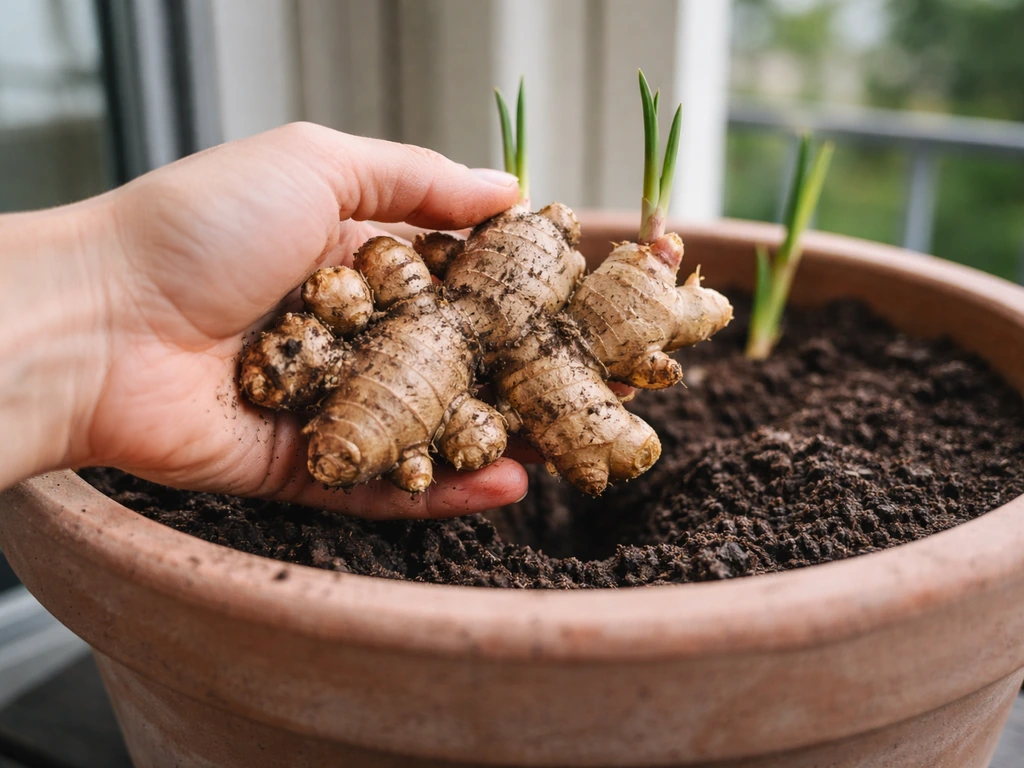
Where in Europe ginger actually works
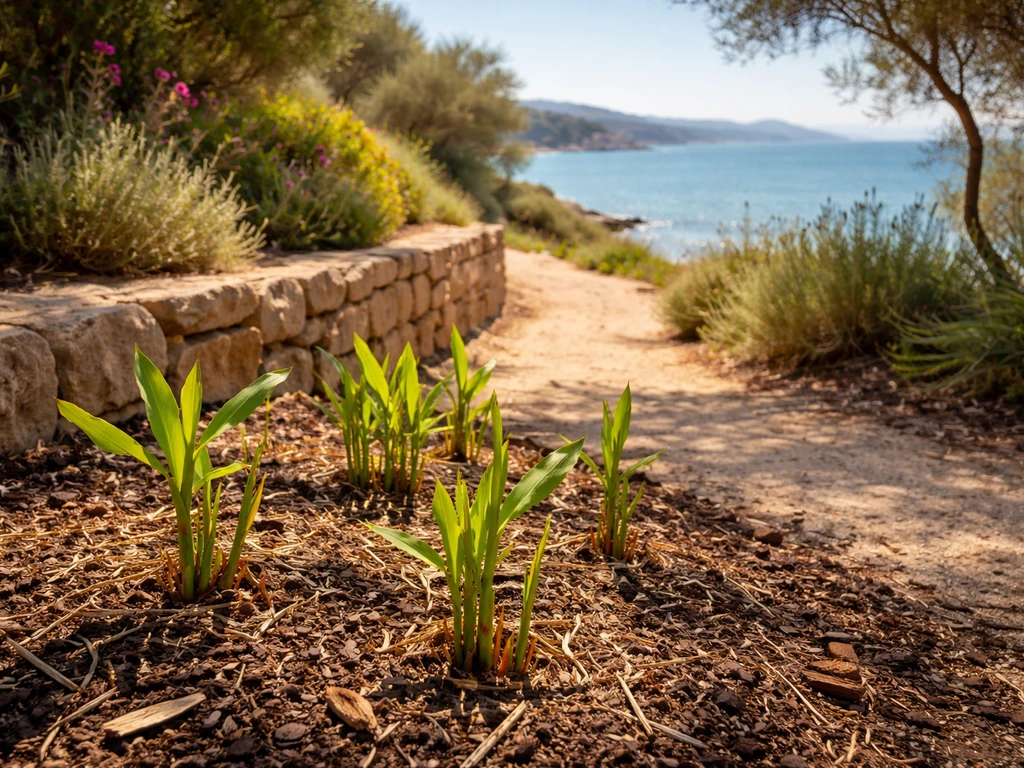
Ginger (Zingiber officinale) is rated by the Royal Horticultural Society as H1a, meaning it needs a minimum temperature above roughly 15°C year-round to survive. That immediately rules out most of northern and central Europe as viable outdoor-year-round territory. However, the growing season is a different story from year-round survival, and that is where most European hobbyists work with the plant.
Coastal southern Europe is the sweet spot. The Mediterranean coast of Spain, southern France (particularly the Côte d'Azur), Italy from Liguria down through Sicily, coastal Portugal, and the Greek islands all offer long, warm summers with temperatures regularly hitting 25 to 30°C, the range where ginger genuinely grows. If you want to know how to grow it at home, the key is to give your ginger the warm soil and consistent moisture it needs ginger genuinely grows. In these areas, you can plant outdoors in a sheltered, sunny spot in spring and realistically expect a harvest before the first cool spell in autumn or early winter.
Inland southern Europe is trickier. Parts of central Spain and southern France can dip below freezing in winter and see cool spring and autumn temperatures. You can still grow ginger here, but you need to start it indoors, move it outside during the warmest months, and have a plan to bring it in before temperatures drop below 13°C. The warm season is long enough in these areas to get a reasonable rhizome if the summer is hot.
Northern and central Europe, covering the UK, Ireland, Belgium, the Netherlands, Germany, Poland, Scandinavia, and similar climates, is container territory, full stop. Summers are often too short and too mild to develop a full-sized rhizome before you need to bring the plant in. You can absolutely grow ginger in these regions, people do it successfully every year, but you are managing it as a container plant that lives mostly indoors or in a heated greenhouse, spending only the warmest summer weeks outside.
Which type of ginger is right for you
For eating, you want common culinary ginger, Zingiber officinale. This is what you find in grocery stores, what goes into cooking, and what most growing guides are written about. It produces the knobby pale-yellow rhizomes you are familiar with. This is almost certainly what you are here for.
There are also ornamental gingers, including Hedychium (ginger lily) species and other Zingiber relatives. Some of these are hardier than Zingiber officinale, with certain Hedychium varieties tolerating light frost with protection. If you live in the UK or northern Europe and want ginger purely as a garden plant rather than for cooking, ornamental gingers are worth considering. They are not the same as culinary ginger in terms of rhizome flavor, but they are easier to keep alive outdoors in marginal climates. For the purposes of this guide, though, the focus is on the culinary variety.
| Type | Use | Cold Tolerance | Best For |
|---|---|---|---|
| Zingiber officinale (culinary ginger) | Eating, cooking | Very low, above 13°C minimum | Mediterranean, container growers everywhere |
| Hedychium species (ginger lily) | Ornamental, some culinary uses | Some varieties tolerate light frost | UK, northern Europe gardens with winter protection |
| Alpinia / other ornamental gingers | Ornamental | Varies by species | Decorative use, mild coastal regions |
How to actually plant and grow it
Containers vs. ground
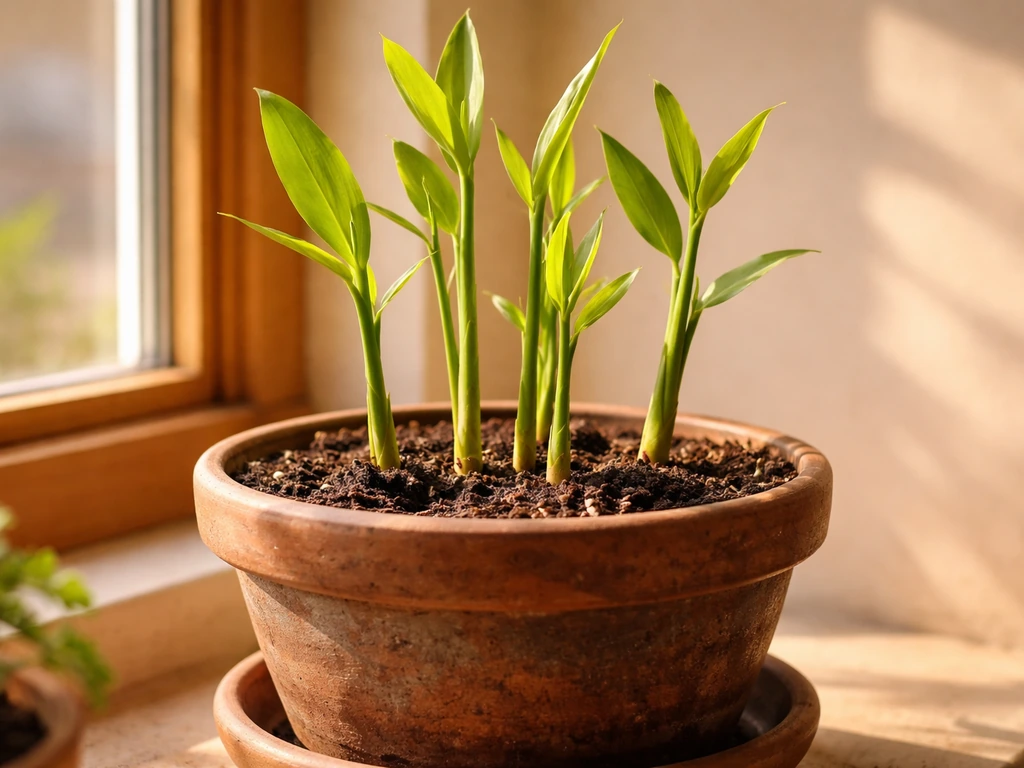
For most of Europe, containers are the practical choice even if you ultimately move the pot outside in summer. Use a wide, shallow container, at least 30 to 40 cm across, because ginger rhizomes spread horizontally. Terracotta looks nice but dries out fast; a plastic or glazed pot holds moisture better, which ginger prefers. In the Mediterranean south, planting directly into a raised bed or garden border is fine as long as drainage is good.
Soil mix
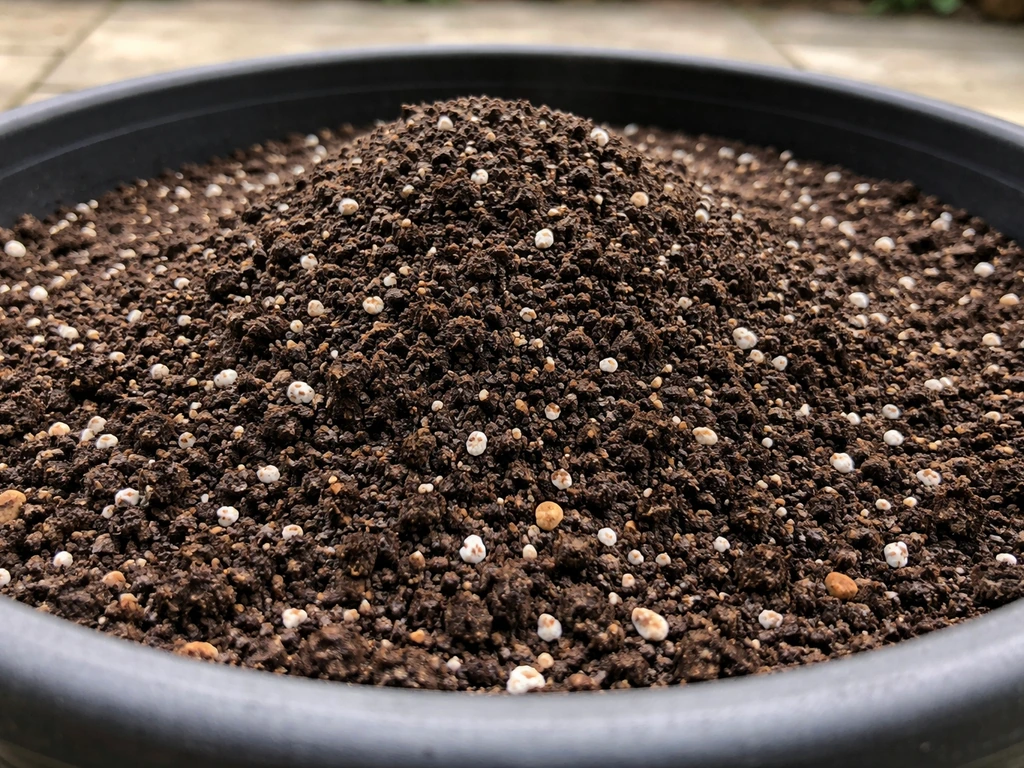
Ginger wants rich, moisture-retentive but well-drained compost. I use a mix of good peat-free compost with some perlite or coarse grit added, roughly 80% compost to 20% drainage material. The RHS recommends planting into temperatures of 25 to 28°C, so do not rush this in cold spring weather. The soil needs to be warm before the rhizome does much of anything.
Planting time and rhizome prep
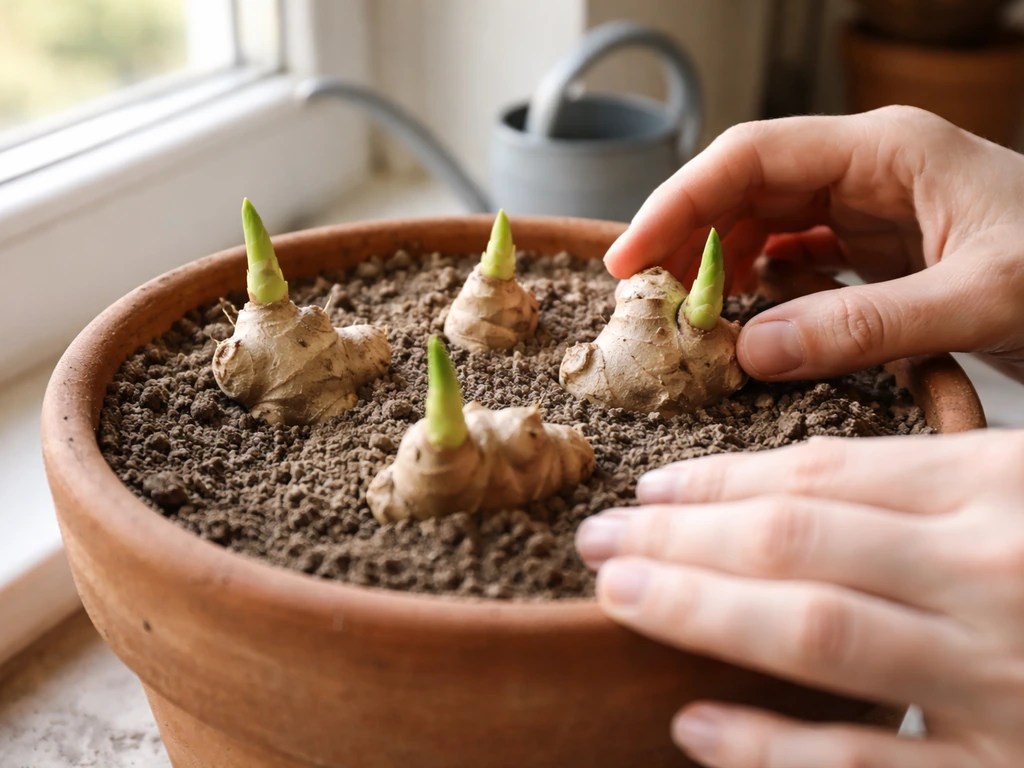
In northern Europe, start rhizomes indoors in late February or March to give them the longest possible warm season. If you are planning when to grow ginger in North India, you can use the same idea: start indoors early in the season so the plant gets a long warm run-up before any cool weather hits. In southern Europe, April is fine for an outdoor start. Pick a rhizome piece with plump, visible growth buds, those small slightly greenish or pinkish nubs on the surface. If you are using a supermarket rhizome, soak it in warm water for a few hours before planting to help wake it up. Plant it just below the soil surface, about 2 to 5 cm deep, bud side up. Keep the pot somewhere warm, ideally 25°C or above, until you see shoots emerge. A heat mat under the pot speeds this up considerably.
Watering
Ginger wants consistent moisture but absolutely hates waterlogged roots. During active growth in warm weather, water regularly and keep humidity reasonably high. In a container indoors, misting the leaves occasionally helps. When temperatures drop in autumn and the plant starts to die back naturally, reduce watering significantly. Letting the soil get too wet during cool periods is one of the fastest ways to rot the rhizome.
Getting an actual harvest: light, heat, and timing
Ginger needs full sun to partial shade and consistent warmth above 25°C for as much of the growing season as possible. The research is clear that optimum growth happens at soil temperatures of around 25 to 26°C. In a UK summer where daytime highs are often 18 to 22°C, you are working below the optimal range, which is why northern European growers frequently end up with disappointing rhizome size even after a full season.
The full growth cycle from planting to mature harvest is 8 to 10 months. That timeline is simply not available outdoors in northern Europe, which is another reason container growing indoors extends the season. In the Mediterranean, an April outdoor planting can reach harvestable size by December or January, fitting reasonably within the warm season. In the UK, you need to have the plant growing indoors or in a heated greenhouse through spring and autumn to stretch the season artificially.
You can harvest young, tender ginger (often called baby ginger) earlier, around 4 to 6 months in, when the skin is thin and the flavor is milder. This is a practical strategy for northern European growers who simply cannot sustain the full cycle. Look for the soil starting to crack and the foliage yellowing as a signal that the rhizome is maturing. Dig carefully and you can often take a portion of the rhizome while leaving some in place.
Overwintering: keeping rhizomes alive through cold and wet
Once temperatures consistently drop below about 13°C, your ginger will start to die back. The leaves yellow and drop, which is completely normal. At this point your job is to keep the rhizomes alive until spring. In southern Europe with mild winters, you may be able to leave container-grown ginger in a cool indoor spot or unheated greenhouse. In northern Europe, you need a bit more care.
The two main killers during overwintering are cold and excessive moisture. I have lost rhizomes to rot far more than to actual freezing because wet compost in a cold room is almost guaranteed to cause problems. After the plant dies back, reduce watering to almost nothing. Let the compost dry out significantly. Store the pot or the dug rhizomes somewhere that stays above 10 to 12°C, a spare bedroom, a frost-free garage, or an unheated but well-insulated greenhouse all work. The RHS cites optimal storage around 12°C with 65 to 75% relative humidity as ideal for keeping rhizomes viable. Peer-reviewed research in a PMC study on ginger rhizomes reports they can still sprout even at room temperature when stored at relative humidity as low as about 40%, which can change weight loss and sprouting behavior and makes dormancy control important during overwintering 65 to 75% relative humidity.
If you dig rhizomes out of the pot for storage, keep them in slightly barely damp (not wet) compost, sand, or coconut coir. Do not seal them in an airtight bag because they can sprout prematurely and the lack of airflow encourages rot. A cardboard box or a breathable container in a cool room is the approach that has worked best for me. Check them every few weeks and remove any soft or discolored pieces immediately before rot spreads.
For the rare mild-winter scenario in the UK or coastal western Europe, outdoor overwintering with a thick dry mulch mound over the root zone plus a waterproof cover such as a cloche or even an upturned plastic container over the crown can work in sheltered spots in USDA-equivalent zone 9 or above. This is marginal and risky, but hobbyists in Cornwall and coastal Ireland have had success with it.
Pests and disease
Rhizome rot is the most serious issue, caused by a mix of fungal and bacterial pathogens that thrive in warm, wet, poorly drained conditions. Good drainage and not overwatering prevent most problems before they start. If you see soft, dark, foul-smelling rhizome tissue, cut it away immediately and let the remaining rhizome dry out before replanting.
Bacterial wilt is a more serious disease that can come in on infected planting stock. It is one of the main reasons to be cautious about planting rhizomes from questionable sources. Root-knot nematodes are another issue in outdoor planting in southern European soils, particularly in areas where nematodes are already a problem. Rotating planting spots every few years helps, and container growing sidesteps the issue almost entirely.
Indoors, red spider mite can be a nuisance, particularly in dry heated environments. Keeping humidity up around the plant reduces the risk. If you see fine webbing on the undersides of leaves, act quickly with an appropriate treatment.
Where to get seed rhizomes in Europe
The most accessible starting point is a supermarket. Fresh culinary ginger from a well-stocked grocery store or Asian food market often sprouts reliably, especially if you choose a piece that already has visible buds. The downside is that some commercial rhizomes are treated with a growth inhibitor, and you cannot verify they are disease-free. That said, I have started ginger from supermarket rhizomes successfully plenty of times. The soaking-in-warm-water trick helps break any chemical inhibitor that might have been applied.
For a cleaner, more reliable start, look for rhizomes specifically sold as planting stock. Specialist online nurseries in the UK and Germany stock Zingiber officinale as a garden plant, not just a grocery item, and these are more likely to be sold disease-free with healthy buds. Search for specialist tropical plant nurseries, which often carry several Zingiber and Hedychium varieties alongside culinary ginger.
Organic ginger from shops is sometimes a good middle ground because it is less likely to have been treated with sprout inhibitors. Look for plump, firm rhizomes with multiple well-developed buds. Shriveled or very dry rhizomes have lower sprouting success. If you order online from a nursery, try to do so in spring so the rhizomes are delivered and planted at the right time, not stored through a warm summer in a delivery warehouse.
Is it worth it? A practical verdict by region
If you are in southern Spain, Italy, Greece, or coastal Portugal, yes, plant outdoors this spring with minimal fuss. You have the climate for it and a genuinely good shot at a real harvest. If you are in the UK, Ireland, northern France, Germany, or similar, ginger is absolutely worth trying as a container plant, but calibrate your expectations. You will likely get younger, smaller rhizomes than what you see in shops, and you will spend time managing the plant through the cold season. That does not make it not worth doing, growing your own ginger is satisfying even in small quantities, but go in knowing it is a project, not a set-and-forget crop. What you can grow on Ginger Island depends on the crops you plant, the season, and whether you can meet their warmth and watering needs what can you grow on ginger island.
The US-focused side of this site covers where ginger grows in specific American regions and climate zones, which follows a broadly similar logic: warm southern climates get outdoor success, cooler northern climates need containers. If you are wondering where does ginger grow in the US specifically, you can map those same warmth and season-length requirements to your state or USDA zone where ginger grows in specific American regions and climate zones. The fundamentals are the same whether you are in northern France or the US Pacific Northwest. If you want to dig deeper into climate zone comparisons for ginger, that regional US breakdown covers a lot of the same temperature and season-length principles that apply directly to the European context.
FAQ
I’m in Europe, can I grow ginger outdoors year-round if I have a sunny garden?
It can, but you should think in terms of “warm enough for long enough” rather than typical winter survival. If your summer days rarely push soil temps near the mid-20s°C range, you will usually get baby ginger only, even if the plant stays alive until autumn.
Is terracotta better or worse than plastic for growing ginger in European containers?
A terracotta pot can work, but expect faster drying and more frequent watering, which increases rot risk if you overcorrect after the pot dries out. For steadier results, use plastic or glazed pots, and consider a tray to catch runoff so you can water consistently without leaving the bottom constantly wet.
Can I harvest ginger in Europe without killing the plant (like a continual harvest)?
Yes, but treat it as a partial harvest strategy. When you remove some rhizome, leave at least one growing bud section or crown portion so the plant can continue developing. Use a sharp tool, re-cover with fresh mix, and keep temperatures warm for the remaining season.
What should I do if my ginger rhizomes start to rot in a European winter setup?
If your ginger sits in cool, wet compost, the smell often comes before visible decay. Remove the plant, check the rhizome for soft or dark tissue, cut away affected parts with a clean blade, then replant into drier, well-drained mix warmed to room temperature.
If I grow ornamental ginger in Europe, will it still produce cooking ginger?
Not all “ginger” is the culinary type, and ornamental gingers like Hedychium may not give you the same rhizome you want for cooking. Culinary ginger (Zingiber officinale) is the one grown for the knobby pale-yellow rhizomes used in kitchens.
When should I move ginger from indoors to outdoors in Europe, and when should I move it back?
In general, don’t start too early outdoors in marginal European climates. If nighttime temps drop below the mid-teens°C, growth stalls and you risk uneven development. Start indoors, then move outside only during the warmest, most stable weeks.
Can I store ginger rhizomes in a sealed bag in winter to prevent drying out?
They can, so you need airflow. Use a breathable storage container (cardboard box, vented bin) and avoid airtight bags. Also check every few weeks, remove any soft pieces immediately, and keep “barely damp” conditions, not soggy.
Why isn’t my supermarket ginger sprouting, even though I soaked it?
Start with firm rhizomes with visible buds, then expect uneven sprouting because different sections wake up at different times. If nothing appears after several weeks, re-check warmth (ideally around the mid-20s°C), confirm the rhizome is just under the surface, and avoid overwatering while it sits cool.
Can I grow ginger fully indoors in Europe, and will I need grow lights?
Yes, but plan for space and light. Because ginger prefers consistent warmth and you may need a long season, grow lights can help once shoots emerge, especially in European winters when indoor light levels are low, even if temperatures are acceptable.
If my harvest is small in northern Europe, is that normal or should I change my method?
Your biggest determinant is whether you can keep soil temperatures warm for much of the growing period. Without that, expect smaller rhizomes. Many European container growers switch to “baby ginger” harvest around 4 to 6 months to match the realistic season length.
Next Articles
Can You Grow Gilded Ginger? How to Grow It Anywhere
Learn if you can grow gilded ginger anywhere, with zone tips, container steps, and fixes for sprouting and rot.
What Can You Grow on Ginger Island? Crop Guide
Best crops for Ginger Island, including giant crop rules, planting windows, and what to grow for yield or ease.
Can You Grow Black Pepper in the US Where and How
Learn where black pepper can be grown in the US and how to grow it indoors or in warm zones for fruit.