
Yes, you can grow luffa in Canada, but it demands real effort and the right setup. Most of Canada simply does not have a long enough warm season to ripen luffa into a usable sponge outdoors without help. If you're in southern Ontario, the Lower Mainland of British Columbia, or anywhere that regularly gets 130 or more frost-free days with warm summers, you have a fighting chance growing directly in the ground with early-maturing varieties. Everywhere else, you're looking at season-extension tools like a greenhouse, hoophouse, or at minimum black plastic mulch and row covers, or you settle for harvesting immature luffa as a edible vegetable rather than a sponge.
Can I Grow Luffa in Canada? Practical How-To for Gardeners

Marcus Petersen
30 Jul 2026
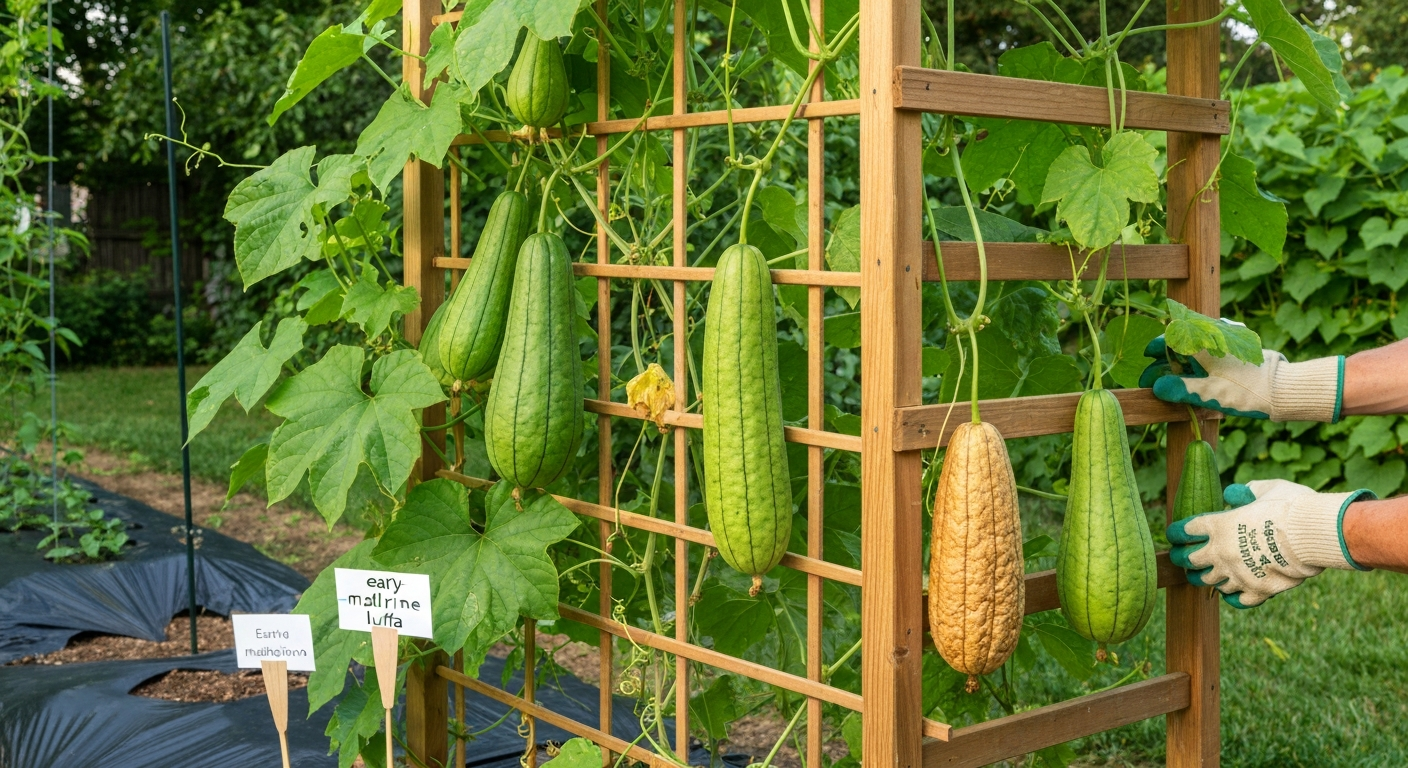
Which parts of Canada can actually grow luffa?
Canada's plant hardiness zones, mapped by Natural Resources Canada at planthardiness.gc.ca, give a useful baseline for understanding winter extremes, but for luffa the number that matters most is frost-free days, not winter minimum temperature. Luffa is a frost-tender annual that needs a long, hot growing season. According to Environment and Climate Change Canada's 1991-2020 Climate Normals, the frost-free period varies enormously across Canadian municipalities.
| Region / Example City | Approx. Frost-Free Days | Luffa Feasibility |
|---|---|---|
| BC Lower Mainland (e.g., Abbotsford, Chilliwack) | 160-200+ | Best outdoor odds; sponge maturity realistic with early varieties |
| Southern Ontario (Windsor, Hamilton, Niagara) | 140-175 | Feasible outdoors with early varieties and season-extension tricks |
| Greater Toronto Area | 130-155 | Marginal outdoors; hoophouse or row covers strongly recommended |
| Montreal / southern Quebec | 120-145 | Risky outdoors; season extension nearly essential for sponges |
| Ottawa / Kingston | 115-135 | Very marginal; greenhouse or hoophouse growing makes more sense |
| Prairies (Calgary, Saskatoon, Winnipeg) | 80-115 | Outdoor sponge maturity is not realistic; edible-stage harvest only or full greenhouse |
| Atlantic Canada (Halifax, Fredericton) | 110-140 | Marginal; row covers and black plastic help but sponge success is uncertain |
| Northern Canada / most of the territories | Under 80 | Not feasible for luffa under any practical outdoor method |
The sweet spot in Canada is the same narrow band where gardeners push the limits with other long-season crops: the southernmost strip of Ontario and the Fraser Valley in BC. If you're in those zones and you pick an early-maturing cultivar, you have a realistic shot at actual sponges from an outdoor garden. If you're anywhere else, you need to be honest with yourself about what you're trying to achieve. Growing luffa as a novelty edible vegetable (harvested young at 6-8 inches before the fiber hardens) is achievable in many more regions, including parts of the Prairies in a good year.
Heat, frost-free days, and soil: what luffa actually needs
Luffa is a tropical cucurbit at heart. It germinates best when soil temperatures reach at least 21-24°C (70-75°F) and grows most vigorously when daytime air temperatures consistently stay above 24°C (75°F). If your summers are cool and cloudy, the plant will still grow, but fruit development drags. The critical number for sponge maturity is roughly 120-150 frost-free days of warm weather, not just any frost-free days. Early-maturing varieties marketed as short-season can reach usable sponge stage in around 90-110 days under ideal warmth, but that rarely happens in Canada because our summers often lack the sustained heat that subtropical luffa genuinely thrives in.
- Soil temperature at transplant time: minimum 18°C (65°F), ideally 21°C+ (70°F+)
- Frost-free days needed: 120-150 for sponge maturity; 90-110 for short-season varieties under warm conditions
- Air temperature: sustained daytime highs above 24°C for good fruit development
- Soil pH: 6.0-7.0 is the target range; slightly acidic to neutral
- Drainage: luffa does not tolerate waterlogged roots; raised beds or well-drained loam are ideal
- Fertility: moderately rich soil with good nitrogen for early vine growth, then backing off nitrogen as fruits set (avoid over-fertilizing once flowering starts)
Soil preparation matters more in Canada than in warmer climates because you need every advantage at transplant time. Work in a few inches of compost, aim for that 6.0-7.0 pH, and lay black plastic mulch over the bed before transplanting. The plastic pre-warms the soil by several degrees and helps hold that warmth on cold nights, which is genuinely useful in a Canadian spring.
Picking the right variety and finding seed in Canada
Variety selection is probably the single most important decision a Canadian luffa grower makes. Standard luffa varieties can require 150 days or more to reach sponge maturity, which is simply not available in most of Canada. You want to specifically look for cultivars described as 'short-season' or 'early-maturing,' with seed suppliers indicating sponge maturity in the 90-110 day range. Even at 110 days, you're cutting it close in many Canadian gardens, so look for the low end of that range.
- Look for 'short-season' or 'early' labels on seed packets, with days-to-maturity figures of 90-110 days
- Luffa cylindrica (smooth luffa/sponge gourd) is the common sponge-producing species; Luffa acutangula (ridged luffa) matures faster and is better for edible use
- Seek seeds from Canadian or northern US suppliers who understand short-season growing, such as Seeds of Diversity Canada members or seed companies that cater to short-season gardeners
- Fedco Seeds (Maine) specifically notes luffa in their catalog with short-season context, and ships to Canada
- Avoid generic import seeds without days-to-maturity information; unknown maturity timing is a real risk in a short-season climate
- If you find locally saved seed from Canadian growers, especially from BC or southern Ontario, that seed has likely been selected for earlier maturity over multiple generations and is worth hunting down
Outdoor ground, containers, or greenhouse: which method fits your region?
There's no single answer here because the right growing method depends heavily on where in Canada you are. I've tried all three approaches and each has real trade-offs.
Outdoor in-ground growing
This works best in BC's Lower Mainland and southwestern Ontario where you have 140 or more warm frost-free days. Use black plastic mulch to pre-warm soil, orient rows to maximize sun exposure (south-facing slope if you have one), and use floating row covers in early June until nights are reliably above 12-13°C. Outdoor growing gives you the most vine space and the highest potential yield per plant, but you're betting on the weather. One cold, cloudy August can ruin your sponge harvest entirely. I've had outdoor luffa fruits sit green on the vine right up to September frost and never fully mature.
Container growing
Containers on a south-facing patio or deck work well for gardeners in marginal zones like the Toronto area, Montreal, or Atlantic Canada. The soil in containers warms up faster in spring and you can move plants indoors if a late frost threatens. Use large containers (at least 20-25 litres per plant), and be prepared to water every day or even twice a day in heat. Container plants are productive but typically produce fewer fruits than in-ground vines. A trellis or fence is still essential because luffa can easily reach 3-5 metres.
Greenhouse or hoophouse
For gardeners on the Prairies, in northern Ontario, or anywhere with under 130 frost-free days, an unheated hoophouse or greenhouse is not optional, it's necessary. SARE research on high tunnels showed that unheated high tunnels reliably extend the effective growing season on both ends while improving crop quality. A well-managed hoophouse in Winnipeg or Saskatoon can give luffa the kind of accumulated heat it needs when the outdoor climate simply cannot deliver it. If you have a heated greenhouse, luffa becomes a genuinely fun crop to grow across a much wider range of Canada.
| Growing Method | Best Suited For | Pros | Cons |
|---|---|---|---|
| In-ground outdoor | BC Lower Mainland, SW Ontario (140+ frost-free days) | Maximum vine size, highest yield potential, lowest cost | Weather-dependent, one bad summer ends the harvest |
| Container on patio/deck | Marginal zones (Toronto, Montreal, Atlantic) | Faster soil warm-up, movable, good for urban gardens | Frequent watering needed, fewer fruits per plant |
| Unheated hoophouse/tunnel | Prairies, northern Ontario, short-season zones | Season extension on both ends, protection from rain and cold snaps | Space and cost of structure, requires ventilation management |
| Heated greenhouse | Any Canadian region | Full control, reliable sponge harvest anywhere in Canada | Cost and energy use; often overkill for a home gardener |
Step-by-step timeline from last frost to first fall frost
The key to a successful Canadian luffa is starting early indoors and knowing your local frost dates. Look up your municipality's climate normals on Environment and Climate Change Canada's website to find your average last spring frost and first fall frost dates. Then work backwards and forwards from those dates.
- 8-10 weeks before last frost: Start seeds indoors (see the seed-starting section below). This is typically late February to mid-March for most of southern Canada.
- 4 weeks before last frost: Begin hardening off transplants gradually; soil temperature outside is still too cold but you want stocky, sun-adapted plants ready to move.
- 2 weeks before last frost: Lay black plastic mulch over prepared beds to begin pre-warming soil. Install trellis or support structure now while you can work the ground freely.
- At last frost date or just after (soil at 18°C+): Transplant outdoors under row covers. Don't rush this step; cold soil stalls luffa more than cold air.
- 2-3 weeks after transplant: Remove row covers once nights are above 12-13°C consistently; begin training vines onto trellis.
- Midsummer (roughly 6-8 weeks after transplant): Male flowers appear first, followed by female flowers. Pollination begins; monitor for cucumber beetles and squash bugs.
- 8-10 weeks after transplant: First fruits forming. For edible immature harvest, pick fruits at 6-8 inches. For sponges, leave fruits on vine.
- 10-14 weeks before first fall frost: This is your last realistic window for fruit set if you want sponge maturity. Fruits set after this point may not mature before frost.
- At first fall frost or just before: Harvest any remaining fruits still on vine, even if not fully brown. Green luffa can sometimes finish curing indoors if the fiber has begun to develop.
- After harvest: Process sponges within a few weeks; soak, peel skin, shake out seeds, clean in a dilute 10% bleach solution, and air-dry thoroughly.
Starting luffa seeds indoors
Indoor seed starting is not optional for Canadian luffa growers. You need 8-10 weeks of indoor head start to have any realistic chance of sponge maturity, especially in zones with under 140 frost-free days. I start mine 9 weeks before my last frost date. Luffa seeds have a hard seed coat, so nick the edge of each seed gently with a nail file or soak seeds in warm water for 12-24 hours before sowing. This dramatically improves germination speed and uniformity.
- Sow into individual 10 cm (4-inch) pots or deep cells; luffa develops a taproot early and resents being disturbed
- Use a light, well-draining seed-starting mix with good drainage; heavy mixes cause damping-off
- Sow seeds about 1-2 cm deep, one per cell
- Soil temperature is critical: maintain 24-29°C (75-85°F) using a heat mat; germination at room temperature is slow and uneven
- Germination typically takes 7-14 days at the right temperature; at cooler temps it can stretch to 3 weeks or fail
- Once seedlings emerge, move to bright light immediately (a south-facing window plus supplemental grow light for 14-16 hours per day works well)
- Keep seedlings warm, at least 18-21°C (65-70°F) at all times; cold nights slow growth significantly indoors
- Water consistently but do not let pots sit in water; soggy conditions invite damping-off
I lost my first batch of luffa seedlings to a heat mat failure in March, which set me back almost three weeks. Keep a thermometer probe in the soil to confirm your mat is actually delivering the right temperature, not just what the dial says. Luffa seeds that germinate in sub-optimal temperatures often produce weak, slow seedlings that never really catch up.
Hardening off and transplanting into Canadian conditions
Hardening off takes about 10-14 days and you need to be patient with it. Luffa seedlings raised indoors under warm, calm conditions are highly susceptible to wind damage, sunscald, and cold shock when moved outside abruptly. Start by putting them outside in a sheltered, partly shaded spot for 1-2 hours on the first day, then gradually increase outdoor exposure over two weeks until they're spending full days outside.
The soil temperature cue matters as much as the calendar date. Even if your last frost has technically passed, if the soil is still sitting at 13-15°C (55-60°F), transplanting luffa will result in a plant that just sits there looking miserable for weeks. Wait until the soil at 5-10 cm depth reads at least 18°C (65°F), and ideally 21°C (70°F). Black plastic mulch installed two weeks before transplant date genuinely helps achieve this faster in Canadian springs.
- Transplant spacing: 60-90 cm (24-36 inches) between plants in-ground; one plant per large container
- Plant at the same depth the seedling was growing in its pot; burying the stem like you would with tomatoes is not necessary or beneficial for luffa
- Water in well at transplanting with lukewarm water; cold tap water can shock roots in already-marginal soil temperatures
- Cover transplants with floating row covers immediately if overnight temperatures are forecast below 10°C (50°F) in the first few weeks
- Row covers provide approximately 1.5-4°C of frost protection depending on material weight, which buys you meaningful insurance in a Canadian spring
- For container transplants, use the same soil temperature rules; move containers to the warmest south-facing wall or patio surface you have
- Begin attaching the main vine to your trellis within the first week after transplant; luffa grows fast once warm and an unsupported vine sprawling on the ground loses growing time
Trellis, training, and vine management
Luffa vines are vigorous growers and will reach 3-5 metres or more in a good Canadian summer. A sturdy trellis is not a nice-to-have, it's essential. Hanging fruits need the support anyway, and trellised vines get better air circulation, which reduces disease. A simple cattle panel, concrete reinforcing mesh, or a frame strung with heavy twine works fine. Install it before transplanting so you don't damage roots later.
Train the main stem vertically as the primary growing point. Some growers pinch side shoots early to direct the plant's energy into fewer, larger fruits rather than a tangle of vines, which can help in a short-season Canadian garden where you need fruits to mature before frost. Once the vine reaches the top of your trellis, you can pinch the growing tip to redirect energy to fruit development. This matters more in Canada than in warmer climates because every week of growing season is precious.
Watering, feeding, and keeping the plant healthy
Luffa needs consistent moisture but not wet feet. In a Canadian summer with normal rainfall supplemented by irrigation, aim for about 2.5 cm (1 inch) of water per week at the root zone. Drip irrigation under black plastic mulch is ideal because it delivers water to the roots while keeping the foliage dry, which helps prevent fungal issues.
For fertilizing, luffa is a moderate feeder. A compost-enriched bed at planting gives good early nutrition. Once fruits begin setting, ease back on nitrogen-heavy fertilizers; excess nitrogen at that stage pushes vine and leaf growth at the expense of fruit development. If you see yellowing older leaves during the growing season, that's often a nitrogen deficiency signal, and a balanced side-dress or liquid feed can help. University of Florida extension research on luffa production highlights nitrogen, phosphorus, and potassium management as key to consistent fruit development, which holds true for Canadian growing conditions as well.
Pollination: don't ignore it
Luffa is monoecious, meaning each plant produces separate male and female flowers. Male flowers appear first, usually by several weeks, so don't panic when your first flowers show up and no fruits form. Female flowers have a tiny immature fruit at the base of the bloom. Pollination relies on bee visits, and research shows that large solitary bees like carpenter bees are particularly effective luffa pollinators.
In a Canadian garden this matters for one specific reason: if you're growing luffa in a hoophouse or greenhouse, pollinators can't get in to do the job. You'll need to hand-pollinate by transferring pollen from a male flower to a female flower using a small paintbrush or simply by picking a fully open male flower and pressing it gently into the center of an open female flower. Do this in the morning when flowers are fully open. Poor pollination is one of the most common reasons Canadian luffa plants produce few or no fruits, especially under cover.
Pests and diseases to watch for in Canadian gardens
Luffa shares pest problems with all cucurbits. In Canada the main culprits are striped and spotted cucumber beetles, squash bugs, aphids, and in parts of Ontario and Quebec, squash vine borers. Cucumber beetles are vectors for bacterial wilt, which can kill a plant quickly, so monitoring matters more than just tolerating a few beetles. Row covers in early summer exclude beetles during the vulnerable seedling stage, but must be removed once flowering starts to allow pollinator access.
- Cucumber beetles: yellow-and-black striped or spotted beetles that feed on foliage and transmit bacterial wilt; use row covers early and yellow sticky traps for monitoring
- Squash bugs: grey-brown shield-shaped bugs and their bronze egg masses on leaf undersides; hand-pick eggs and nymphs; kaolin clay spray helps deter adults
- Squash vine borer: primarily a concern in eastern Canada; orange-and-black moth lays eggs at stem base; wilting of a healthy-looking vine is the symptom; split and remove larvae if caught early
- Aphids: clusters on new growth and under leaves; strong water spray, insecticidal soap, or beneficial insects manage them
- Powdery mildew: common in late summer; improved air circulation via trellising helps; affected leaves late in the season won't usually kill the plant if fruits are already set
Harvesting for sponges vs. eating
If you're growing luffa for sponges, patience is the hardest part. You leave fruits on the vine until the skin turns brown, the fruit feels lighter (water content drops), and it begins to shrivel. NC State extension guidelines put typical sponge maturity at around 90-110 days for early varieties and up to 150 days or more for standard types. At that point, the fibrous interior is developed enough to make a usable sponge. If frost is coming and your luffa is still green but the interior has started to firm up and feel fibrous, cut it and try to finish curing indoors in a warm, dry spot. Some will finish, some won't.
For sponge processing: remove the outer skin by cracking and peeling it off, shake out the seeds (save them for next year), and rinse the fiber skeleton under running water. A brief soak in a 10% bleach solution whitens and sanitizes the sponge before a final rinse and thorough air-drying. If you're growing for eating, harvest young fruits at 6-8 inches before the fiber hardens, typically around 10-14 days after fruit set. At that stage, luffa has a mild zucchini-like flavor and works well in stir-fries and curries.
Realistic expectations: what yields and outcomes look like in Canada
Don't expect the prolific production you'd read about from subtropical growing regions. Literature on intensive luffa production reports fruit yields of roughly 20-25 fruits per plant under optimal warm-climate conditions. Ascertaining anatomical parameters & chemical composition of Luffa cylindrica fibers, MDPI/PMC article (peer‑reviewed) summarizes fiber and fruit yields and notes wide variation by region and management blank" rel="noopener noreferrer">Ascertaining anatomical parameters & chemical composition of Luffa cylindrica fibers — MDPI/PMC article (peer‑reviewed). Peer‑reviewed production studies report ~20–25 fruits per plant and, under intensive high‑density planting, tens of thousands of fruits per hectare blank" rel="noopener noreferrer">Peer‑reviewed production studies report ~20–25 fruits per plant and, under intensive high‑density planting, tens of thousands of fruits per hectare.. In a Canadian garden, especially in the shorter-season provinces, expect 3-10 mature sponge-quality fruits per plant in a good outdoor season, and fewer if the summer is cool. Container plants typically produce fewer fruits than in-ground vines. A BC Lower Mainland or Windsor, Ontario garden with a full warm summer and an early variety is where the higher end of that range is realistic.
The most common failure mode in Canada is not pests or disease but simply running out of season. Fruits that set in August in Toronto or Montreal often don't have enough heat-accumulation days left before October frost to fully mature into sponges. This is why the early indoor start, the warm soil, and the early-variety seed selection all compound together. Every week you can add at the warm end of the season matters.
Season-extension tools worth having in Canada
Beyond the hoophouse and greenhouse options already discussed, a few targeted tools make a real difference for Canadian luffa growing.
- Black plastic mulch: pre-warms soil by several degrees and maintains warmth through summer; one of the highest-return investments for any warm-season crop in Canada
- Floating row covers (lightweight): Texas A&M extension research shows row covers provide roughly 1.5-4°C of frost protection depending on material weight; useful for protecting transplants in May and for extending harvest into September
- Wall-O-Water or similar season extenders: useful around individual transplants in May for the first few weeks outdoors
- Thermal mass in a hoophouse (water jugs, black painted barrels): absorbs daytime heat and releases it overnight, preventing temperature crashes that slow luffa development
- Heat mats for soil warming at transplant time in containers or raised beds: less common but useful for very early outdoor starts
Is growing luffa in Canada worth trying?
If you're in BC's Fraser Valley or southwestern Ontario, yes, absolutely worth a try with an early-maturing variety, good soil prep, and a bit of row cover insurance. You'll likely get sponges in most years. If you're in the Toronto area, Montreal corridor, or Atlantic Canada, it's worth trying but be prepared to call it a win if you get a few good sponges, and plant extra in case of a short summer. If you're on the Prairies, grow it in a hoophouse or greenhouse, or grow it for young edible fruits and don't count on sponges outdoors. For region-specific guidance, see our can you grow loofah in Colorado resource for tips tailored to Colorado's climate and growing season. Northern Canada is simply not luffa territory for sponge production without a controlled growing structure.
If you're comparing notes with gardeners in the northern US, luffa feasibility in southern Ontario and BC is roughly comparable to what gardeners face in Michigan or Ohio, where short summers and cool nights create similar challenges. For a U.S. comparison and practical tips for similar short-season climates, see can you grow luffa in Michigan. If you're curious about similar regional challenges for other crops, see our guide on can you grow lychee in Ohio for a comparable discussion of climate limits and season-extension strategies. For a Pacific Northwest comparison, see can you grow loofah in washington for specific notes on climate and season-extension in Washington state. If you’re asking 'can you grow loofah in Ohio', the short answer is yes in many parts, treat it like southern Ontario by starting seeds early, using short-season varieties, and employing season-extension tactics. For specific guidance tailored to climates like Michigan, see our can you grow loofah in Michigan resource for timing, variety choices, and season-extension tips. The fundamentals are the same: start early, choose short-season varieties, warm your soil, and give the vine every advantage you can from the first warm day to the last. For related regional guidance, see our article on can you grow soursop in Michigan.
FAQ
Can I grow luffa (loofah) in Canada?
Yes — but only in parts of Canada with a long, warm growing season or with season extension. Luffa is a tropical/subtropical vine that needs a long frost‑free period and sustained warm temperatures to ripen to a usable sponge. In southern Ontario, southern Québec, the southern Interior of British Columbia (e.g., Okanagan), and some parts of the Maritimes, outdoor success is realistic in warm microclimates. In cooler zones you can still grow luffa using season‑extension techniques (greenhouse, unheated high tunnel, row cover, containers with bottom heat) or by targeting immature edible fruit instead of full sponges.
What minimum heat and season length does luffa need to reach sponge maturity?
Aim for at least ~120 frost‑free days for reliable outdoor sponge maturity; many varieties need 120–150+ days. Some 'early' cultivars claim ~90–110 days, but that’s optimistic for cool climates. Luffa grows best when daytime temps consistently reach 24–32°C and nights stay above ~10–15°C during fruit development.
How can I check whether my location has a long enough growing season?
Use your local Environment and Climate Change Canada (climate normals) last‑spring and first‑fall frost dates to calculate average frost‑free days. Compare that number to the days‑to‑sponge‑maturity of the variety you plan to grow (preferably 120+ days). Also check the Natural Resources Canada plant hardiness map for microclimate context; southern municipal stations (e.g., Toronto, Windsor, Vancouver inland valleys) have the best odds.
Which Canadian provinces/regions are most realistic for outdoor luffa?
Most realistic without heated structures: southern Ontario (Niagara, Windsor, Toronto area), southern Québec along the St. Lawrence (Montérégie, Montreal region in warm summers), southern Interior BC (Okanagan, Creston), and parts of the southern Maritimes in warm coastal microclimates. Northern or high‑latitude/altitude regions generally need season extension.
When should I start luffa seed indoors and when to transplant based on frost dates?
Start seeds indoors 4–6 weeks before your average last spring frost if you plan to transplant outdoors into warm, protected beds; for earlier starts or protected transplants, start 6–8 weeks before frost date. Transplant only after night temps are reliably above ~10°C and soil is warm. For example, if your average last frost is May 10: start seeds around late March–early April, transplant late May–early June (or later depending on local warmth). Adjust timeline for your municipal frost dates.
What soil and fertility does luffa prefer?
Luffa likes deep, well‑drained, fertile soil with good organic matter and a slightly acidic to neutral pH (6.0–7.0). Use a balanced starter fertilizer at transplant (e.g., 5–10–10) and side‑dress with nitrogen when vines begin heavy growth and again early fruit set. Follow local extension N‑P‑K recommendations and leaf tissue testing for high‑yield plans.
Next Articles
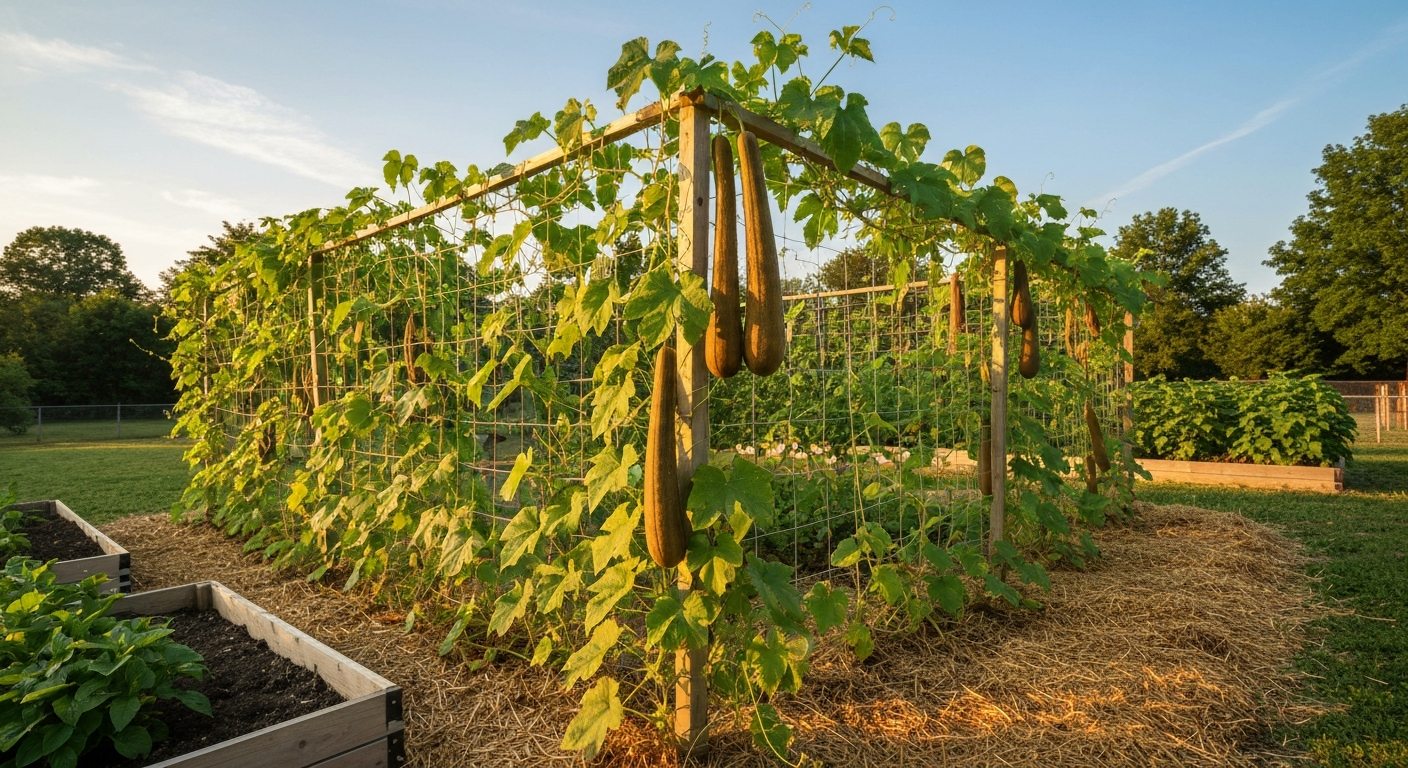
Can You Grow Luffa in Michigan? Guide for Home Gardeners
Yes, you can grow luffa in Michigan with season extension: zones, varieties, planting, trellis, harvest tips.
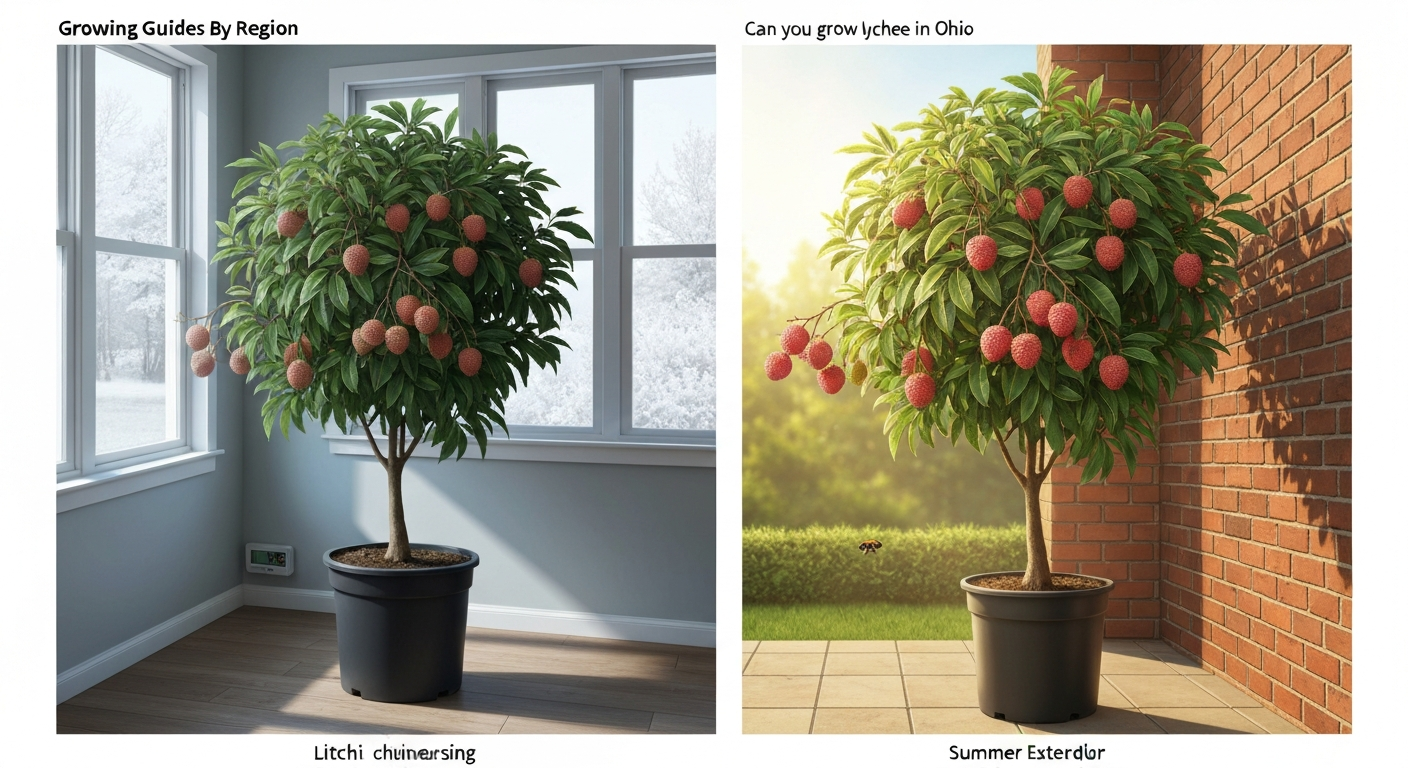
Can You Grow Lychee in Ohio? Feasibility, Care & Alternatives
Can you grow lychee in Ohio? Realistic verdict, container & greenhouse options, year‑round care, overwintering tips.
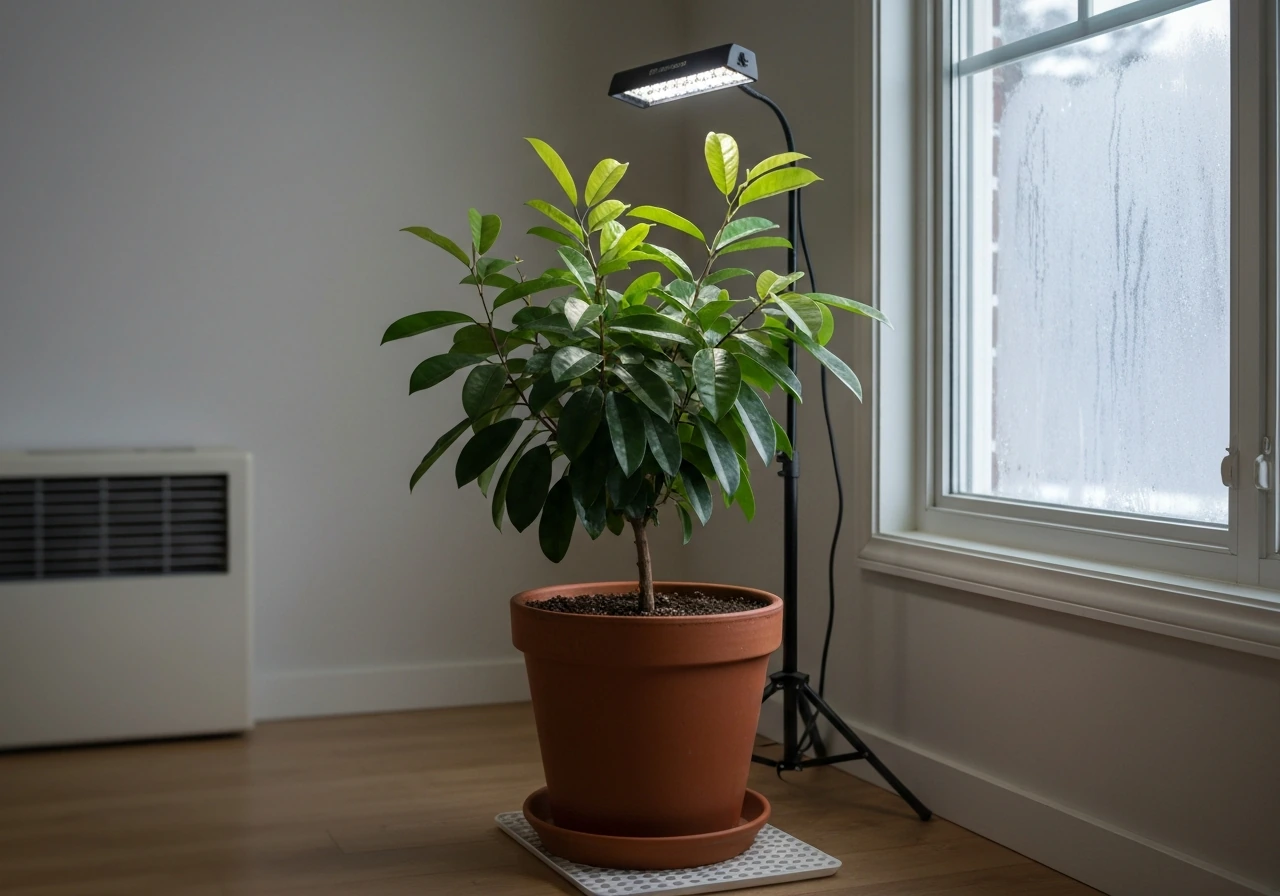
Can You Grow Soursop in Michigan? Indoor and Outdoor Guide
Can you grow soursop in Michigan? Indoor container plan, cold protection, light, soil, and realistic fruiting expectatio