
Yes, you can grow cinnamon in Georgia, but how easily depends almost entirely on where in the state you live. Along the coast and in the southeastern lowlands, Cinnamomum cassia (and even true cinnamon, C. verum, in protected spots) can survive outdoors year-round with minimal fuss. Move inland to Atlanta or the Piedmont and you are in marginal territory, needing frost protection most winters. Head into the north Georgia mountains and outdoor cinnamon becomes a container or greenhouse project, full stop. The good news is that Georgia is genuinely one of the better U.S. states for experimenting with cinnamon outside of Florida and Hawaii, and a hobbyist willing to match species choice to location can pull off a real harvest.
Can You Grow Cinnamon in Georgia? Zone Guide for Gardeners

Marcus Petersen
6 Aug 2026
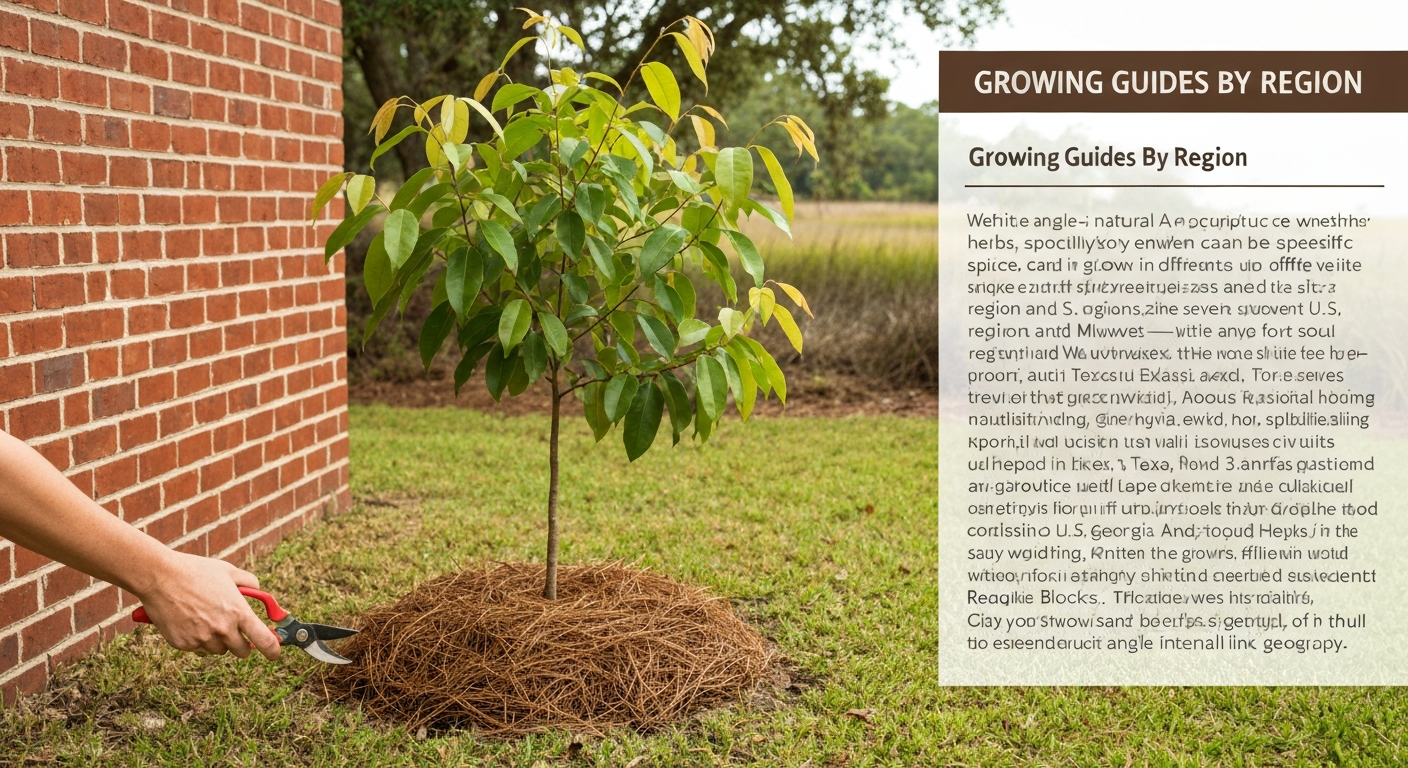
At-a-Glance Feasibility by Georgia Zone
| Georgia Region | USDA Zone | Outdoor Viability | Recommended Approach |
|---|---|---|---|
| Coastal / Southeast (Savannah, Brunswick, St. Marys) | 8b–9a/9b | Good to Excellent | Ground planting with light frost prep |
| Southeast Piedmont / South Georgia (Albany, Valdosta, Waycross) | 8a–8b | Good | Ground planting; protect young plants from hard freezes |
| Central Georgia / Metro Atlanta | 7b–8a | Marginal | Container or heavily protected ground plant; C. cassia only |
| North Georgia Piedmont (Gainesville, Athens area) | 7a–7b | Difficult | Container growing; bring indoors below 28°F |
| Blue Ridge / Mountain Counties (Dahlonega, Clayton, Blue Ridge) | 6a–7a | Not recommended outdoors | Greenhouse or indoor container only |
Choosing Your Species: C. verum vs. C. cassia
These two species taste different and behave differently in the garden, and the distinction matters a lot for Georgia growers. Cinnamomum verum, known as Ceylon or true cinnamon, produces the mild, complex flavor in high-end cooking. It is native to the humid coastal lowlands of Sri Lanka, where temperatures rarely dip below about 60°F and annual rainfall runs between roughly 1,750 and 3,750 mm. Cinnamomum verum is a tropical, frost‑sensitive species cultivated primarily in the warm, humid coastal lowlands of Sri Lanka, with optimal growth around 25–32°C and in wet‑zone rainfall regimes (see Quality and safety aspects of cinnamon (Cinnamomum zeylanicum) in Sri Lanka, Department/Research summary (ResearchGate hosting)) blank" rel="noopener noreferrer">Quality and safety aspects of cinnamon (Cinnamomum zeylanicum) in Sri Lanka — Department/Research summary (ResearchGate hosting). It gets unhappy below 50°F, stops growing well below about 60°F, and can be seriously damaged or killed by any real frost. In Georgia, C. verum is only reliably outdoor-viable in zones 9a and above, meaning a small strip of the southeastern coast.
Cinnamomum cassia, the Chinese cinnamon that accounts for most of the cinnamon sold in U.S. grocery stores, is the practical choice for almost all Georgia gardeners. Cassia tolerates brief, light frosts down to roughly 20°F to 27.5°F (about -6.5°C to -2.5°C), which covers a much wider slice of Georgia. The flavor is stronger and spicier than true cinnamon, which is actually what most American recipes expect. Cassia trees are also more widely available from U.S. nurseries. For anyone in zones 7b through 8b, cassia is the only realistic outdoor option. Even coastal Georgia growers who want C. verum should keep a container backup of cassia, I learned that lesson after losing a young verum to a late-February cold snap in what I thought was a bulletproof microclimate.
| Attribute | C. verum (Ceylon) | C. cassia (Chinese) |
|---|---|---|
| Flavor | Mild, sweet, complex | Strong, spicy, bold |
| Frost tolerance | Damaged at 32°F, killed below ~23°F | Can survive brief dips to ~20°F |
| Ideal outdoor zones (GA) | 9a–9b only | 7b–9b with protection |
| Nursery availability (U.S.) | Moderate (specialty online sources) | Good (broader availability) |
| Best for Georgia hobbyist? | Coastal only, or container | Yes, statewide with appropriate strategy |
What Cinnamon Actually Needs to Thrive
Cinnamon is a tropical tree that evolved in warm, humid, frost-free environments. Optimal growth happens between roughly 77°F and 90°F (25–32°C). It wants full sun to partial shade, at least 6 hours of direct light per day, and high humidity if you can manage it. Georgia's humid subtropical climate actually does a decent job on the humidity front, especially in summer, but the cold winters are the deciding factor. The plant also needs consistent moisture without waterlogging, it will not tolerate standing water around its roots. In terms of light, a south or southeast exposure sheltered from cold north winds is ideal almost everywhere in Georgia.
Frost sensitivity is the central challenge. Even cassia, the hardier option, can suffer leaf damage at a sustained 28°F and dieback of young stems at 25°F or below. A mature, established cassia in the ground is more resilient than a young sapling, but a hard freeze event like the ones Atlanta sees every few years can set a ground-planted tree back significantly. This is why site selection and frost protection planning are not optional steps, they are the core of the whole project for most Georgia gardeners.
Georgia's Geography, Zone by Zone
Georgia spans a remarkable climate range for a single state. According to the 2023 USDA Plant Hardiness Zone Map, the coast around Savannah and Brunswick sits in zones 8b to 9a, with average annual extreme minimum temperatures of 15°F to 25°F. The southeastern lowlands extending toward Valdosta and Waycross run 8a to 8b (10°F to 20°F minimums). Metro Atlanta and the central Piedmont are mostly zone 7b to 8a (5°F to 15°F). The north Georgia mountains, including areas around Dahlonega and the Blue Ridge range, drop to zones 6a through 7a, where hard freezes below 0°F are possible. Each of these zones calls for a different strategy.
Coastal Georgia (8b–9a) is genuinely promising territory. Savannah's climate normals show mean winter daily lows frequently in the 40s°F, and while extreme cold events do occur (absolute minimums can reach the low 20s°F in severe winters), they are infrequent enough that a well-sited cassia in the ground with frost cloth available for emergencies is a reasonable proposition. Savannah station normals (KSAV) report mean winter daily lows frequently in the 40s°F and show absolute climatological annual extreme minimums in the low 20s°F (see SAVANNAH GA, NCEI local climatological data / station normals) SAVANNAH GA — NCEI local climatological data / station normals. Southeastern lowlands (8a–8b) are similar but see hard freezes more regularly, so a more proactive frost-protection routine is needed. Central Georgia and metro Atlanta are where I personally garden, and I will be honest: outdoor cinnamon here is a gamble. I have managed to keep a container-grown cassia alive for four years by moving it to an unheated garage during cold snaps, but I would not trust it in the ground without serious infrastructure. North Georgia mountains are greenhouse or indoors territory.
How Georgia Compares to Neighboring and Sibling States
Context helps here. Texas offers a similarly wide climate range, with South Texas coastal zones (9b–10a) being outright excellent for outdoor cinnamon, rivaling Georgia's best spots. See the can you grow cinnamon in Texas guide for detailed information about South Texas climates and species selection. California's coastal zones in Southern California are arguably the best in the contiguous U.S. for C. verum outdoors, given the mild winters and Mediterranean warmth, though humidity can be limiting in drier inland valleys. Tennessee sits just above Georgia in coldness, with most of the state in zones 6b–7b, making outdoor cinnamon a container-only project for nearly all Tennessee gardeners. Michigan and Ohio are significantly colder, spanning zones 5a through 7a, where cinnamon requires a heated greenhouse to survive winter and outdoor planting is not realistic outside of a very heated microclimate. For a detailed, greenhouse-focused answer for colder climates, see Can you grow cinnamon in Michigan. For Georgia gardeners, the takeaway is that the state's best zones are genuinely competitive with Texas's southern reaches and far ahead of Tennessee, Michigan, and Ohio. If you are in coastal Georgia and envious of what you read in a California or Texas guide, the gap is smaller than you might think, especially for cassia.
Realistic Growth Rate and Harvest Timeline
This is where I want to set honest expectations, because cinnamon is not a fast-return crop. A young tree planted in spring will spend its first year mostly establishing roots, and meaningful bark harvest from a ground-planted tree in Georgia's favorable zones typically starts at year 2 to 4. Practical cultivation guides and plantation agronomy literature both put the first usable harvest at 2 to 4 years, with 3 years being a common real-world baseline. At that point you are harvesting young coppiced shoots, not the trunk, the shoots need to reach roughly pencil-to-finger thickness before the inner bark is worth peeling.
Yields at home scale are modest by any measure. Research trials have recorded dry bark yields on the order of a few hundred grams per plant per harvest cycle under managed conditions, with one agronomy trial reporting around 232 g of dry bark per plant under a specific coppicing treatment. Commercial smallholders in Sri Lanka work in the range of 100 to 125 kg of dried quills per hectare annually, with well-managed plantations reaching 168 to 250 kg per hectare after full establishment. For a home hobbyist with two or three trees, expect to get enough bark for personal use after year 3 or 4, probably a handful of quills per season from each tree. You will not be stocking a spice shop, but you will absolutely be able to make cinnamon from your own yard, which is genuinely satisfying.
Step-by-Step Home-Scale Cultivation Plan
- Select your site: Choose the warmest, most sheltered spot available — a south-facing wall or fence creates a microclimate that can raise effective zone hardiness by half a zone or more. Avoid low spots where cold air pools on clear nights.
- Choose your species: Zones 9a and above, try C. verum if you want the adventure. Zones 7b through 8b, stick with C. cassia. Get a plant from a reputable nursery rather than starting from seed if you want to save a year or two.
- Prepare the bed: Work the soil to at least 18 inches deep. Mix in coarse sand or perlite if your native soil is heavy clay (common in much of Georgia's Piedmont). Aim for a slightly raised bed to ensure drainage.
- Plant after last frost: In coastal Georgia, April planting is fine. In Atlanta and inland zones, wait until mid-April to early May. Do not rush it — a late cold snap hitting a freshly planted tree is a fast way to lose it.
- Water in thoroughly: Soak the planting hole and surrounding soil. Set a watering schedule to keep soil consistently moist but never soggy for the first 8 weeks.
- Mulch immediately: Apply 3 to 4 inches of organic mulch (pine straw or hardwood chips) around the base, keeping it a few inches away from the stem. This retains moisture and moderates root-zone temperature.
- First-year care: Water deeply once or twice a week during dry spells. Fertilize lightly with a balanced slow-release fertilizer at planting and again in mid-summer. Do not push heavy growth late in the season — you want the plant to harden before fall.
- Frost-protection prep (fall): Before the first expected freeze, have frost cloth or burlap ready. For young trees in marginal zones, have a plan to cover or move them at short notice. Set up temperature alerts for your local forecast.
Soil, Water, and Fertilizer Details
Cinnamon wants well-drained, slightly acidic soil with a pH between 5.5 and 6.5. Georgia's native soils range from the heavy red clay of the Piedmont to the sandy loams of the coastal plain, and neither extreme is perfect out of the box. Piedmont clay holds too much water and compacts around roots; coastal sand drains too fast and is low in organic matter. In both cases, amending with compost (a 3 to 4 inch layer worked into the top 12 to 18 inches) is the practical fix. For container growing, use a mix of quality potting soil, coarse perlite, and orchid bark in roughly a 2:1:1 ratio to keep drainage sharp.
Watering rhythm matters more than quantity. Deep, infrequent watering that encourages roots to chase moisture downward beats frequent shallow watering. In Georgia summers, that means a thorough deep soak twice a week in the absence of significant rain. In winter, reduce watering significantly for ground-planted trees. For container plants, check soil moisture before watering and let the top inch dry between waterings during cooler months. For fertilization, a balanced slow-release granular fertilizer (10-10-10 or similar) applied in early spring and again in early summer is sufficient. Avoid high-nitrogen fertilizers late in summer, they push soft new growth that is vulnerable to the first frost.
Propagation Methods
Starting from Seed
Cinnamon seed loses viability quickly, seeds must be sown within a few weeks of harvest and are rarely available commercially in fresh condition. If you can source fresh seed, sow them just below the surface in a warm (75–85°F), humid seed-starting mix. Germination takes 2 to 4 weeks. Expect variable germination rates, and know that seedlings will add a year or more to your timeline versus buying a started plant. For most Georgia hobbyists, seed starting is more of a curiosity than the recommended path.
Softwood and Semihardwood Cuttings
- Take cuttings in late spring to early summer when new growth is semi-firm (semihardwood) — about 4 to 6 inches long with at least two leaf nodes.
- Remove the lower leaves, leaving one or two at the tip.
- Dip the cut end in rooting hormone powder or gel.
- Insert into a mix of perlite and peat (or perlite and coco coir), about 2 inches deep.
- Cover with a clear plastic dome or bag to maintain high humidity (80%+). Keep out of direct hot sun.
- Maintain rooting media temperature at 75–85°F using a seedling heat mat if needed.
- Check for rooting at 6 to 10 weeks by gently tugging. Once rooted, gradually open the humidity dome over 1 to 2 weeks to harden the cutting before transplanting.
Air-Layering
- Select a healthy branch about pencil-thickness, at least 12 inches from the tip.
- Make two parallel cuts through the bark about 1.5 inches apart and remove the ring of bark between them (girdle the branch), exposing the cambium layer.
- Dust the exposed wood with rooting hormone.
- Pack moist sphagnum moss (squeezed to damp, not dripping) around the girdled section, forming a ball about the size of a tennis ball.
- Wrap tightly with clear plastic film and secure both ends with tape or twist ties so no moisture escapes.
- Roots will appear through the moss in 6 to 12 weeks. Once roots are visible and dense, cut the branch just below the moss ball.
- Pot the new plant in well-draining mix and keep it in a shaded, humid spot for 2 to 3 weeks before gradually introducing more sun.
Container Growing for Marginal Georgia Climates
Container growing is the right strategy for anyone in Atlanta and northward, and a smart backup for Piedmont gardeners. Use a container at least 15 to 20 gallons for a mature plant (you can start smaller and pot up annually). The pot must have multiple large drainage holes, no exceptions. Use a fast-draining mix as described above. Terra cotta breathes but dries fast in Georgia summers; glazed ceramic or heavy-duty plastic holds moisture better and is easier to move. Plan the container location carefully, because a fully leafed-out cinnamon in a 20-gallon pot is not light.
Prune container plants to keep them at a manageable size (4 to 6 feet is practical for indoor overwintering). Root-prune every 2 to 3 years by removing the plant, trimming the outer inch of root ball, and repotting in fresh mix in the same container. In Georgia's climate, container plants can live outdoors from late April through early to mid-October in most zones. Bring them in when sustained nighttime temperatures drop below 45°F if you are growing C. verum, or below 32°F for cassia. A cool but frost-free garage or enclosed porch works fine for cassia over winter; C. verum wants a warmer interior space.
Greenhouse and Heated-Structure Options
For north Georgia mountain gardeners, or anyone wanting to grow C. verum reliably, a greenhouse or heated structure is the path to consistent success. Maintain nighttime lows of at least 50°F for C. verum and 40°F for cassia. During the growing season, greenhouse temperatures should ideally stay below 95°F, ventilation is critical in a Georgia summer since enclosed structures can hit dangerous temperatures on clear June or July days. Install a thermostat-controlled exhaust fan and shade cloth rated for 30 to 40% light reduction if your structure runs hot.
Humidity inside a heated winter greenhouse should stay between 50 and 70%. A small humidifier or regular misting helps if your heating system dries the air too much. Supplemental lighting is rarely needed in a well-oriented Georgia greenhouse during summer, but during short winter days, a T5 or LED grow light on a 12-hour timer can maintain adequate light levels. Heating costs are the main economic consideration, a small propane or electric heater keeping a modest greenhouse above 45°F through a Georgia winter is usually manageable, especially compared to the heating demands faced by growers in Michigan or Ohio.
Frost Protection and Overwintering Tactics
Even in favorable Georgia zones, a surprise hard freeze is a real threat. The following checklist is what I keep posted in my shed from November through March.
- Monitor forecasts daily from mid-November through mid-March; set up weather alerts for your specific ZIP code, not just the regional forecast.
- When temps below 30°F are forecast, cover ground-planted trees with frost cloth (also called row cover fabric) weighted down at the edges. A single layer of medium-weight frost cloth provides roughly 4°F of protection.
- For young trees under 3 feet tall, use an inverted nursery pot or cardboard box over the whole plant on nights below 28°F, then remove it in the morning.
- Wrap the trunk of established trees in burlap or foam pipe insulation for hard freeze events (below 25°F). The trunk is the most critical part to protect.
- Water the soil deeply the day before a hard freeze — moist soil retains heat far better than dry soil.
- For container plants, move to a garage, carport, or enclosed porch when sustained temps below 40°F (for C. verum) or 32°F (for cassia) are expected.
- String incandescent holiday lights under frost cloth for extra heat during extreme events — LED lights do not generate enough heat, so use old-style incandescent strings.
- After a freeze event, do not prune frost-damaged stems immediately. Wait until late February or early spring growth confirms which wood is truly dead.
Pruning, Training, and Canopy Management
Left to its own devices, a cinnamon tree can reach 30 to 60 feet in its native tropical setting. In a Georgia garden, you want to keep it much smaller for practical access and frost-protection ease. The standard approach is to cut the main stem back to about 1.5 to 2 feet in the second or third year to encourage multiple coppice shoots from the base. These shoots, typically pencil to finger diameter, are what you eventually harvest for bark. Maintain 6 to 10 vigorous shoots per plant, removing weak or crossing growth each spring. On an established tree, do an annual light prune in late February to remove any frost-damaged wood and thin the interior for air circulation. Keeping the plant to a manageable 4 to 8 feet for ground-planted trees in Georgia also makes frost cloth application far easier.
Harvesting Bark and Making Quills
Harvest is one of the more satisfying parts of this whole project, and the process is simpler than most people expect. The right time to harvest is when young coppiced shoots are about 1 to 2 years old after the initial coppicing cut, with stems roughly 0.5 to 1 inch in diameter. Harvest during a dry period if possible.
- Cut selected shoots at the base with clean, sharp loppers or a pruning saw.
- Remove leaves and side branches, leaving a clean smooth stem.
- Make a shallow lengthwise slit through the outer bark — just deep enough to reach the inner bark layer without cutting into the wood.
- Using the back of a knife or a dedicated bark-peeling tool, gently work the outer bark away from the wood, sliding it along the stem to loosen a long section.
- Peel the inner bark (the actual cinnamon layer — thin, fragrant, tan-colored) away from the outer bark and from the wood underneath.
- Lay the strips on a clean dry surface in a warm, well-ventilated spot out of direct sun. As they dry over 3 to 7 days, they will naturally curl inward into quills.
- Once fully dry and crisp, store in airtight glass jars out of direct light. Home-dried quills will keep for 12 to 18 months before flavor degrades significantly.
Common Pests, Diseases, and Troubleshooting
Cinnamon in Georgia's humid climate is susceptible to a handful of problems. Root rot from poor drainage is the most common killer of young container and ground-planted trees, if your leaves yellow and drop and the soil is wet, suspect the roots before anything else. Improve drainage immediately. Leaf spot fungi (various species) show up as brown or yellow spots on foliage, especially during Georgia's wet summers. Remove affected leaves, improve air circulation through pruning, and avoid overhead watering. A copper-based fungicide applied as a preventive in late spring can help in persistently humid locations.
Scale insects are a common pest on cinnamon, appearing as small brown or tan bumps on stems and leaves. A heavy infestation causes leaf yellowing and stunted growth. Treat with horticultural oil or neem oil applied thoroughly to all surfaces, repeating every 10 to 14 days for two to three applications. Spider mites can appear during hot dry spells, causing stippled, bronzed foliage and fine webbing. Knock them back with forceful water sprays and neem oil. Mealybugs show up as white cottony clusters, especially in leaf axils; treat with isopropyl alcohol applied with a cotton swab or a neem oil spray. In north Georgia and mountain areas, any pest or disease issue is compounded by the stress of cold conditions, so the best cultural fix is always to give the plant the most favorable environment you can manage.
Protecting Plants in Marginal Georgia Zones: Seasonal Checklist
| Season / Month Range | Key Action |
|---|---|
| Late October – early November | Reduce watering; apply extra mulch (4–6 inches) around root zone of ground-planted trees |
| Mid-November | Set up weather alerts; stage frost cloth and covers near the planting site |
| First freeze forecast | Cover with frost cloth; move containers indoors or to protected structure |
| December – February (hard freeze events) | Double-layer frost cloth below 25°F; wrap trunk; use incandescent lights for extra heat |
| Late February – early March | Assess winter damage; wait for new bud break before pruning dead wood |
| March – April | Resume regular watering; light spring fertilization; move containers back outdoors after last frost date |
| May – September | Full outdoor growing season; water deeply twice weekly in dry spells; watch for pests and fungi |
Outdoor vs. Container vs. Greenhouse vs. Alternatives: A Decision Guide
Here is how I think about the decision based on where you are in Georgia and how much effort you want to put in. If you are in zone 8b or 9a (coastal Georgia, southern lowlands) and willing to keep frost cloth handy, go ahead and plant C. cassia in the ground. That is the simplest, most rewarding path. If you are in zone 8a (southeastern Piedmont, south-central Georgia) and want to ground-plant, commit to a proactive frost-protection routine and start with cassia. If you are in Atlanta or the central Piedmont (zones 7b–8a), container growing with a winter move to a garage or porch is the most reliable strategy. You can make it work; it just requires seasonal logistics. If you are north of Atlanta or in the mountain counties (zones 6a–7b), put the plant in a container and keep it in a greenhouse or bright indoor space from October through April. If you want the flavor of cinnamon but not the hassle of protecting a tropical tree in a cold-ish zone, consider growing Vietnamese cinnamon (C. loureiroi), which has similar hardiness to cassia and is sometimes more available, or shift your energy toward ginger, which is more forgiving in Georgia's climate and offers a related exotic-spice growing experience.
Annual Care Calendar for Georgia Cinnamon Growers
| Month | Task |
|---|---|
| January – February | Protect from freeze events; minimal watering; inspect for pests on container plants kept indoors |
| March | Assess frost damage; begin light watering as temperatures warm; hold fertilizer until consistent 50°F nights |
| April | Last frost risk passes (coastal) or easing (inland); move containers back outdoors; apply balanced slow-release fertilizer |
| May | Plant new trees after last frost date; begin regular deep watering schedule; watch for scale and leaf spot |
| June – July | Peak growing season; water twice weekly if no rain; second fertilizer application in early July; monitor for spider mites in dry spells |
| August | Continue watering and pest monitoring; avoid fertilizing after mid-August to prevent late soft growth |
| September | Evaluate shoots for upcoming harvest; reduce fertilization; begin tapering irrigation |
| October | Harvest mature coppice shoots before cold arrives; apply fall mulch layer; prepare frost supplies |
| November | Move containers to protected locations; cover ground plants during first freeze events |
| December | Full dormancy management; frost protection as needed; plan spring purchases or propagation |
Supplies, Startup Costs, and What to Realistically Expect
Starting a small cinnamon growing project in Georgia is not an expensive hobby, but knowing the rough costs helps set expectations. A starter plant from a specialty nursery typically runs $15 to $40 depending on size and species. A 15 to 20 gallon pot with drainage saucers costs $20 to $50. A bag of quality potting mix plus perlite runs $25 to $35 for enough to fill a large container. Frost cloth (a 10 x 12 foot piece of medium-weight row cover) is roughly $15 to $25. Slow-release fertilizer, rooting hormone, and neem oil add another $30 to $40 to your first-year investment. Total startup for a two-tree container setup: roughly $150 to $250 all-in.
What do you get back? Year 1 and 2: nothing to harvest, just growth. Year 3 to 4: your first modest harvest, likely 50 to 150 g of dried bark per plant if the tree is healthy and you time the harvest well. By year 5 and beyond on a well-managed coppiced plant, you can reasonably expect a few hundred grams of dry bark per tree per harvest cycle. That is enough cinnamon for a committed home baker for a season, and the novelty of peeling your own quills is something you simply cannot buy.
Explore More State-by-State Cinnamon Guides
If you are curious how Georgia's feasibility stacks up in detail against neighbors and other regions, the site has dedicated guides for each state. For warmer comparisons, the Texas and California guides cover what is possible in the warmest American growing zones, including outdoor C. verum viability. For colder-state context, the Tennessee guide is the most relevant neighbor to Georgia's northern mountain counties. For specific northern-neighbor details, see the Tennessee guide, titled “can you grow cinnamon in Tennessee,” which covers zone-by-zone feasibility and winter strategies (1fa77c51-f989-4a4e-8e9f-f9dbeef30823). The Michigan and Ohio guides are the place to go if you are considering greenhouse-only strategies for cold climates, or if you are in Georgia's mountain counties and want to understand the full cold-climate container and greenhouse playbook in depth. Can you grow cinnamon in Ohio? That state guide explains why Ohio is generally greenhouse-only and what heated-structure strategies work there.
Final Verdict for Georgia Gardeners
Georgia is one of the more viable states in the Southeast for growing cinnamon, and the answer for most of the state is a conditional yes. Coastal and southeastern Georgia gardeners in zones 8b and above have genuinely good odds with C. cassia in the ground and can experiment with C. verum in sheltered spots. Central Georgia and Atlanta-area gardeners can succeed with container-grown cassia and committed winter management. North Georgia mountain gardeners should go greenhouse or container-indoors, or reconsider the effort-to-reward ratio and grow something more naturally suited to their climate. Whatever your zone, choose cassia over verum unless you are firmly in zone 9a or above, start with a nursery plant rather than seed to save time, and treat frost protection as a non-negotiable part of the plan rather than an afterthought. The harvest is slow, modest, and absolutely worth it if you are in a zone where the plant can thrive with reasonable care.
FAQ
Can you grow cinnamon in Georgia (the state)?
Short answer: Yes, with qualifications. In warm, frost‑free or marginal‑frost areas of coastal and southern Georgia (USDA zones 9a–9b) you can grow cinnamon outdoors year‑round, especially Cinnamomum cassia. In much of metro and inland Georgia (zones 7b–8b) outdoor survival is marginal — container or protected greenhouse production is recommended. In cool mountain pockets (zones 6a–7a) outdoor production is generally not feasible without strong winter protection; containers or year‑round greenhouse/indoor culture are the realistic options.
Why does USDA hardiness zone matter for cinnamon in Georgia?
Cinnamon species are tropical/subtropical and differ in cold tolerance. USDA zones map average annual extreme minimum temperatures: C. verum (true/Ceylon) is very frost‑sensitive and performs reliably only where winter minima rarely drop below about 25–30°F (≈−4 to −1°C) — roughly zone 9 conditions. C. cassia is somewhat hardier and may tolerate brief light freezes down to roughly 20–27°F (≈−6.5 to −3°C) in sheltered microclimates, meaning parts of zone 8 (warmer pockets) may host cassia with protection. Use local microclimate data (NOAA/PRISM) to refine your site decision.
Which cinnamon species should I choose for Georgia — Cinnamomum verum or C. cassia?
Pick by climate and goals: - If you have warm coastal/southern Georgia (zones 9a–9b) and want the milder 'true' cinnamon flavor, grow C. verum but expect it to prefer very warm, humid, frost‑free conditions or greenhouse culture. - If you live inland or in marginal winter climates (zones 7–8) and want easier outdoor survival, choose C. cassia (hardier to brief cold) and plan to protect during rare freezes. - For containers/greenhouse growers anywhere, either species can work; C. verum prefers warmer, more humid greenhouse conditions.
Realistic expectations: growth rate, harvest timeline and likely yields for a hobbyist
Expect slow initial growth compared with fast annual vegetables. Common hobbyist timelines: - First peelable shoots: 2–4 years after planting (many guides cite 2–3 years for first small harvests if planted from fast‑growing nursery stock or cuttings). - Regular harvests: after initial harvest, you can coppice/harvest on roughly a 2‑year cycle for small stems. - Yield: small home trees will yield only hundreds of grams of dried bark per plant annually once mature; commercial yields are in the 100–250 kg/ha range after establishment, so hobby plots are modest. Plan for small, culinary‑scale harvests rather than commercial quantities.
What site and soil conditions do cinnamon trees need in Georgia?
Key requirements: - Temperature: warm, frost‑free or protected site; daytime warmth and minimal cold stress during winter. - Light: bright filtered sun to partial shade; avoid intense mid‑day sun for young plants. - Humidity: prefers humid sites; inland gardeners should increase ambient humidity around plants or use greenhouse. - Soil: well‑drained loamy to sandy soils, slightly acidic to neutral pH, avoid waterlogging. - Irrigation: regular moisture is important; avoid drought stress. Amend heavy clay with compost and raised beds/containers to ensure drainage.
Propagation methods (seed, cuttings, air‑layering) for home gardeners
Options and practicality: - Seed: produces variable plants, slower and less reliable for true cultivar traits; germination can be slow. - Semi‑hardwood cuttings: common for home propagation; use rooting hormone, warm humid environment (mist/propagation dome), takes weeks to months. - Air‑layering: reliable for producing a large, established limb ready to pot or plant; excellent for preserving cultivar identity and faster establishment. For best success in Georgia, use cuttings or air‑layering from healthy nursery stock.
Next Articles
Can You Grow Cinnamon in Tennessee? Realistic Options and Care
Yes, but true cinnamon often fails outdoors in Tennessee; indoor container or sheltered cassia may work with care and pa
Can You Grow Cinnamon in California? Realistic Guide
Yes in warm California microclimates or containers, with species limits, frost care, and realistic timelines for harvest
Can You Grow Cinnamon in Ohio? Feasibility and Care Tips
Can you grow cinnamon in Ohio? Learn if true cinnamon works, plus container care and indoor overwintering steps.