Yes, you can grow cayenne pepper almost anywhere in the U.S., but whether it's easy or a serious project depends entirely on where you live. In the South, Texas, and Southwest, cayenne is practically foolproof outdoors. In the Northeast, Midwest, and Pacific Northwest, it's doable but requires planning: start seeds indoors 8–10 weeks before your last frost, use season-extension tools, and pick a cultivar with a shorter days-to-maturity. In the coldest zones (Zone 4 and below), containers or a greenhouse are your most reliable route to a real harvest.
Can You Grow Cayenne Pepper? USDA Zones, Tips & Timeline Guide
Marcus Petersen
15 Jul 2026
What you're actually growing
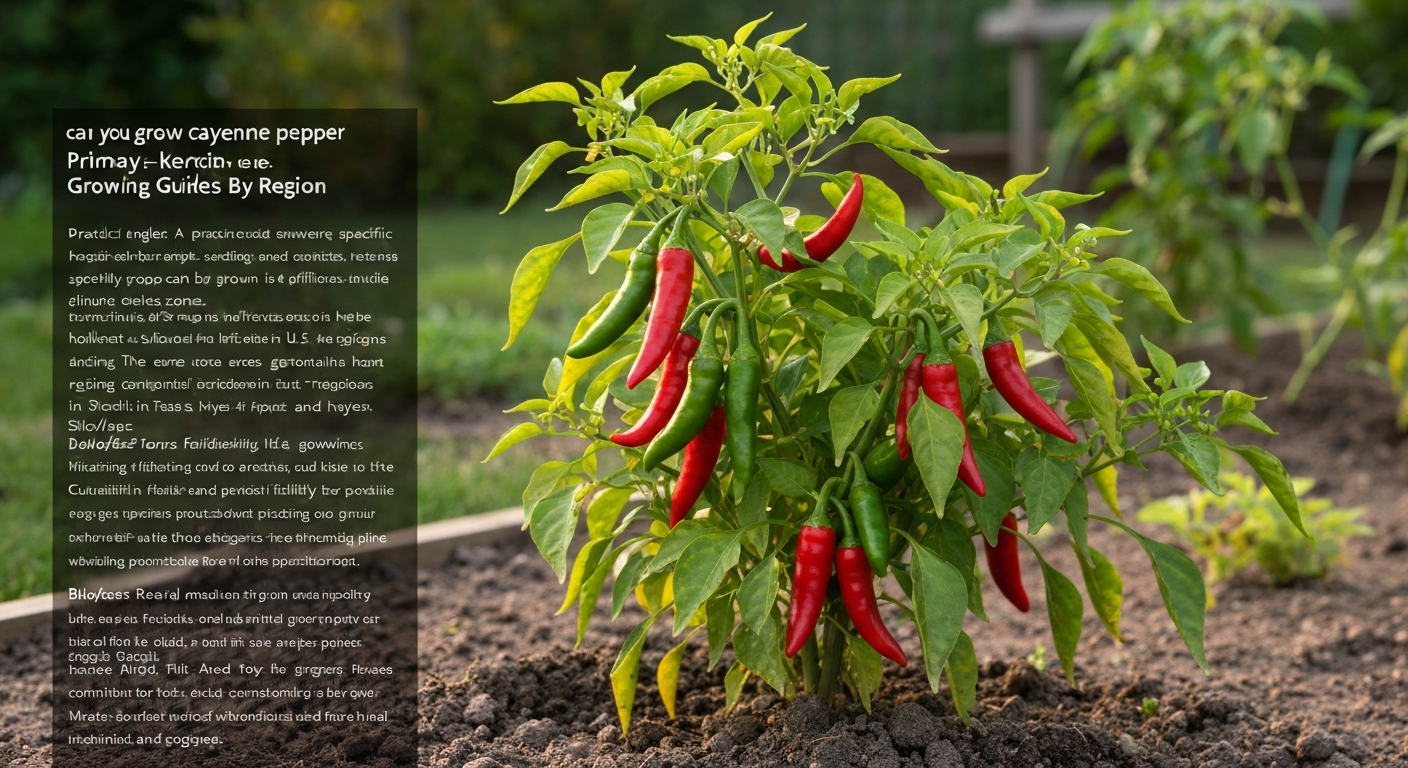
Cayenne pepper (Capsicum annuum) is a warm-season annual in most of the U.S. that originated in tropical South America and wants heat from the moment seeds sprout. Plants typically grow 18–36 inches tall, produce slim, finger-length fruits in the 30,000–50,000 Scoville range, and need roughly 70–100 days from transplant to ripe fruit depending on the cultivar. That last point matters a lot in cool climates: if your frost-free window is shorter than 90 days, you need to stack every advantage you have. Cayenne is in the same Capsicum annuum species as bell peppers and jalapeños, so it responds to the same cultural conditions, it just needs everything leaning toward the hot side. If you're curious about growing related nightshades, see can you grow belladonna for guidance on cultivating Atropa belladonna and how it differs from edible peppers.
It's worth quickly clarifying where cayenne fits in relation to some plants people search alongside it. If you're wondering about other pepper species, see our guide 'can you grow black pepper in Michigan' for specifics on growing Piper nigrum in cold climates. Cayenne is nothing like black pepper (Piper nigrum), which is a tropical vine that requires essentially year-round warmth and high humidity, conditions that make black pepper a much harder grow in the U.S. And while cayenne is hot, it's nowhere near ghost pepper territory in terms of heat or the patience required to grow them. For specifics on cultivating much hotter varieties, see our guide can you grow ghost peppers. Ghost peppers (Bhut jolokia) need an even longer season and more heat accumulation than cayenne. On the toxicity front, cayenne is perfectly safe to eat; it belongs to the nightshade family, but unlike belladonna or deadly nightshade, it produces fruit that's actively used in cooking and medicine worldwide.
Region-by-region: where cayenne thrives and where it struggles
South, Texas, and Southwest (Zones 7–10)
This is cayenne's natural comfort zone in the U.S. In Zone 8 and warmer, you can direct-sow transplants as early as late February to mid-March after your last frost, and in Zone 9–10 you may get multiple harvests or even overwinter plants as short-lived perennials with light frost protection. The long, hot summers in Texas, Louisiana, New Mexico, and Arizona mean plants have more than enough time to mature and dry on the vine. Your main challenges are heat stress above 95°F (blossoms drop), inconsistent irrigation in droughty climates, and pests like aphids and spider mites that thrive in dry heat. Afternoon shade cloth during the peak of summer can actually help blossom set in the hottest parts of Texas and Arizona.
Northeast (Zones 5–6)
Cayenne is absolutely doable in the Northeast, but you need to treat it like a project, not an afterthought. Last frost dates range from early May in southern New England to late May in upstate New York, Vermont, and Maine. That gives you roughly 130–150 frost-free days in the best years, which is enough for cayenne if you start seeds indoors in late February or early March and use black plastic mulch to warm the soil. I've grown cayenne in Zone 6a and gotten solid harvests, but I've also had summers where a cold, wet July stalled fruit set for weeks. Pick a cultivar in the 70–80 day range rather than the 100-day varieties, and you'll dramatically improve your odds.
Midwest (Zones 5–6, some Zone 4)
The Midwest presents the same challenge as the Northeast but with more weather volatility. In Iowa, Illinois, Indiana, and Ohio (mostly Zone 5–6), the frost-free window is workable for cayenne with an indoor start. In Minnesota, Wisconsin, and Michigan's Upper Peninsula (Zone 4–5), you're pushing it outdoors without season extension. Michigan's Lower Peninsula and southern border states offer Zone 6 conditions that support cayenne reasonably well, though maritime influence from the Great Lakes can mean cooler, cloudier summers in some spots. High tunnels or even simple low tunnels make a real difference here. Starting seeds in early to mid-February and getting transplants in the ground under row covers by late April can meaningfully extend your effective season.
Pacific Northwest and maritime climates (Zones 7–9, but cool)
This one surprises people. Portland and Seattle technically sit in Zone 8–9 on the USDA map, but the cool, overcast summers are genuinely tough on heat-loving peppers. Daytime highs often stay in the 70s, and nighttime temps in June and July can dip into the low 50s, right at the threshold where blossom set becomes unreliable. OSU Extension is pretty direct about this: pepper plants often fail to set fruit consistently when nights stay cool. Cayenne can work here, but you almost always get better results in a greenhouse, high tunnel, or a south-facing microclimate backed by a masonry wall. If you're growing outdoors in coastal Oregon or Washington, use black plastic mulch, choose a fast-maturing cultivar (70–75 days), and don't be surprised if your harvest comes late in September.
Canada and northern border zones (Zone 3–4)
Outdoor cayenne in Zone 3–4 is a real stretch without significant infrastructure. Frost-free windows of 90 days or fewer leave almost no margin. Container growing brought inside before frost, or a proper heated greenhouse, is the practical answer here. If you're curious about growing true black pepper (Piper nigrum) in Canadian conditions, see our guide on can you grow black pepper in Canada. If you're in southern Ontario or British Columbia's Lower Mainland, Zone 6 conditions make outdoor cayenne feasible with season extension, but you'll want to treat it exactly like a grower in Michigan's Zone 5 would: early indoor start, plastic mulch, row covers, and a fast-maturing variety.
USDA zone and climate checklist
| USDA Zone | Typical Last Spring Frost | Transplant Outdoors | Start Seeds Indoors | Season Extension Needed? |
|---|---|---|---|---|
| Zone 3 | Late May–early June | Early June | Late February–early March | Yes — high tunnel or greenhouse recommended |
| Zone 4 | Mid to late May | Late May–early June | Mid-February–early March | Yes — row covers and plastic mulch minimum |
| Zone 5 | Late April–mid-May | Mid to late May | Early to mid-February | Recommended — row covers, plastic mulch |
| Zone 6 | Mid-April–early May | Early to mid-May | Late January–mid-February | Helpful but optional in warm summers |
| Zone 7 | Late March–mid-April | Mid to late April | Late January–early February | Not typically needed |
| Zone 8 | Late February–mid-March | Mid to late March | Early January | Not needed |
| Zone 9–10 | Little to no frost risk | February or earlier | December–January | Not needed; manage heat instead |
Frost is your hard boundary on both ends of the season. Cayenne plants are killed by temperatures below 32°F, and growth essentially stops below 55°F. Use your local NOAA/NWS climate normals to nail down your specific first and last frost dates, county-level data is more accurate than state averages, especially in hilly terrain or near large bodies of water.
Exactly what cayenne needs to grow well
Light
Full sun, period. Aim for at least 6–8 hours of direct sunlight daily; 8–10 hours produces the best yields. In the Pacific Northwest or Great Lakes region where cloudy summers are common, this is often the limiting factor regardless of temperature. Plant in the most sun-exposed spot you have.
Soil
Cayenne wants well-draining, loamy soil with a pH between 6.0 and 6.8. It's not particularly forgiving of heavy clay or constantly wet conditions, waterlogged roots invite Phytophthora root rot fast. Work in 2–3 inches of compost before planting to improve both drainage and fertility. If your native soil is predominantly clay, raised beds with a custom mix will serve you far better than fighting the ground.
Water
Consistent, even moisture is key. Pepper plants stressed by drought or erratic watering develop blossom end rot, a calcium-related abiotic disorder where the fruit tip collapses and turns dark. It's not a disease you spray away, it's a symptom of irregular moisture that limits calcium uptake. Aim for about 1–2 inches of water per week (rain plus irrigation), and use mulch to reduce evaporation. Drip irrigation is ideal; overhead watering increases disease pressure.
Temperature
The sweet spot for cayenne growth is 70–80°F during the day and 60–70°F at night. Below 55°F at night, blossom set becomes unreliable. Above 95°F, flowers drop rather than set fruit. In extreme heat climates, afternoon shade cloth rated at 30–40% can help preserve pollination during the hottest weeks. In cool climates, black plastic mulch, row covers, and south-facing exposures all help push temperatures into the productive range.
Frost sensitivity
Cayenne has zero frost tolerance. A light frost at 30–32°F will kill foliage and likely the plant unless it's a well-established container plant that can be moved indoors. Even a near-frost at 35°F for a prolonged night can cause cold injury to flowers and young fruit. Never transplant until nighttime lows are consistently above 50–55°F.
Seed starting and transplanting timeline
Start pepper seeds indoors 8–10 weeks before your average last frost date. Starting Seeds Indoors | University of Minnesota Extension (sowing depth and emergence guidance): sow pepper seeds shallowly (about 1/8–1/4 inch deep); at warm seed‑zone temperatures with bottom heat, seeds often emerge in about 7–14 days, while cooler seed‑zone temperatures lengthen or prevent emergence. That's the standard from virtually every university extension I've consulted, and it tracks with my own experience. Earlier than 10 weeks and you end up with rootbound, leggy seedlings that stall after transplanting. Later than 6 weeks and you're setting out undersized plants that take longer to establish and produce.
- Fill small cells or 2-inch pots with a sterile, soilless seed-starting mix (peat or coir plus perlite or vermiculite). Do not use garden soil — it harbors pathogens and compacts in containers.
- Sow seeds 1/8 to 1/4 inch deep, one or two per cell. Pepper seeds are small; a shallow cover is all they need.
- Set trays on a seedling heat mat and maintain the seed zone at 80–85°F. At this temperature, expect germination in 7–14 days. At cool room temperatures (65°F or lower), germination may take 3–4 weeks or fail entirely.
- Once seeds sprout, move them under grow lights immediately. Provide 12–16 hours of light per day, keeping LED or fluorescent fixtures 2–4 inches above the seedling canopy. Leggy seedlings are almost always a light problem, not a nutrient problem.
- Water from the bottom when possible to reduce damping-off risk. Let the top of the medium dry slightly between waterings.
- Begin hardening off seedlings 10–14 days before your transplant date. Set them outside in a sheltered spot for a few hours each day, gradually increasing exposure to sun and wind over the two-week period.
- Transplant outdoors when soil temperatures are near 65°F and nighttime lows are consistently above 55°F. Space plants 12–18 inches apart in the row, with 24–30 inches between rows. Wider spacing improves airflow and reduces disease pressure.
Common cayenne cultivars and what to expect
| Cultivar | Days to Maturity | Scoville Range | Notes |
|---|---|---|---|
| Cayenne Long Red | 70–75 days | 30,000–50,000 SHU | Classic, widely available; good choice for short seasons |
| Cayenne Large Red Thick | 70–80 days | 30,000–50,000 SHU | Thicker walls; good for drying and powder |
| Ring of Fire | 60–65 days | 40,000–50,000 SHU | Shorter season; excellent for Zones 5–6 and cool summers |
| Hades Hot | 70 days | 50,000–70,000 SHU | Compact habit; works well in containers |
| Joe's Long Cayenne | 80–85 days | 25,000–35,000 SHU | Fruits up to 12 inches; best for Zones 7 and warmer |
| Golden Cayenne | 75 days | 30,000–50,000 SHU | Yellow-ripening variant; similar culture to standard cayenne |
If you're in Zone 5 or colder, or gardening in the Pacific Northwest, Ring of Fire is the cultivar I'd prioritize first. Its 60–65 day maturity window gives you the most insurance against a shortened season. Joe's Long Cayenne is beautiful but save it for warmer climates where you have time to let those long fruits fully ripen.
Feeding, pruning, and keeping plants productive
Fertilizing
Peppers are moderate feeders. Before planting, incorporate a balanced fertilizer or compost into the bed. Once transplants are in the ground and have had 2–3 weeks to establish, begin feeding every 2–3 weeks with a fertilizer lower in nitrogen relative to phosphorus and potassium. Heavy nitrogen early on promotes lush foliage at the expense of fruit. When plants begin flowering, shift entirely to a lower-nitrogen formulation, something in the 5-10-10 or 3-10-10 range. I've made the mistake of over-feeding with nitrogen mid-season; the plants looked spectacular but set almost no fruit until I backed off.
Pruning and pinching
Cayenne plants produce a main 'Y' fork (the first branch point, sometimes called the crown set) fairly early. Some growers pinch the first flower that appears at that fork to redirect energy into branching and a stronger root system before fruiting begins. In long-season climates this is worth doing; in short-season climates, I'd skip it, every day of fruit development counts. As the season progresses, remove any dead or damaged leaves, and thin crowded branches enough to allow good airflow through the canopy. Dense foliage holds moisture and invites fungal disease.
Staking and canopy support
Mature cayenne plants loaded with fruit can be top-heavy and are prone to leaning or snapping in wind. A single bamboo stake driven 8–10 inches into the soil beside the main stem and tied loosely at two points is usually enough for standard varieties. In exposed gardens or with particularly productive plants, a small tomato cage works well. Check ties periodically, a tie that was loose at planting can girdle the stem as it thickens.
Growing cayenne in containers and indoors
Container growing is the smartest strategy for anyone in Zone 5 or colder, maritime climates with cool summers, or anyone who wants to overwinter plants rather than start from seed each year. The setup requires more attention but gives you total control over the plant's environment.
- Pot size: use a minimum 5-gallon container per plant. Smaller pots restrict root development, dry out too fast, and significantly reduce yield. Larger containers (7–10 gallons) produce noticeably better plants if you have the space.
- Soil mix: use a high-quality potting mix with good drainage — never garden soil, which compacts and drains poorly in containers. A mix of potting soil, perlite, and a small amount of compost works well. Aim for a light, fluffy texture.
- Drainage: every container must have drainage holes. Sitting in a saucer of standing water is a fast route to root rot.
- Watering frequency: containers dry out faster than garden beds, especially in summer heat. Check soil moisture daily during hot weather and water when the top inch feels dry.
- Indoor grow lights: if keeping plants indoors year-round or overwintering them, provide 12–16 hours of light daily from a full-spectrum LED grow light kept 2–4 inches above the canopy.
- Temperature: indoor spaces often run cooler than outdoor summer conditions. Keep container plants above 60°F at all times; 65–75°F is ideal.
- Overwintering: in fall before first frost, cut plants back by about one-third, bring them indoors to a bright window or under grow lights, and reduce watering significantly. Resume normal care in late winter when you want them to re-enter active growth.
Stretching your season in cool climates
If you're in Zone 5 or 6 and want to grow cayenne outdoors, season extension is less of a bonus and more of a requirement for a reliable harvest. The good news is that even simple, low-cost tools can add two to four weeks to your effective growing season on both ends.
Black plastic mulch
Black plastic mulch laid over the bed before transplanting is one of the most cost-effective tools for pepper growers in cool climates. It warms the soil several degrees compared to bare earth, suppresses weeds, and retains moisture. Transplant through slits cut in the plastic. I use this every season in Zone 6 and it consistently pushes soil temps into the productive range several weeks earlier than bare soil.
Row covers and low tunnels
Floating row cover (also called remay or garden fabric) draped over transplants or supported on low wire hoops protects plants from frost, blocks wind, and traps warmth. A lightweight (1.5 oz) cover adds a few degrees of frost protection; a heavier (2.0 oz) cover adds more. The critical rule: vent or remove covers on warm, sunny days when internal temperatures can exceed 90°F, causing heat stress and flower drop. OSU Extension explicitly flags this as a common mistake. Check under covers on any sunny afternoon above 70°F outside.
High tunnels and hoop houses
A hoop house or high tunnel is the most powerful season-extension tool short of a heated greenhouse. Unheated high tunnels can extend the growing season by 4–8 weeks in cold climates and significantly improve fruit set in cool-summer regions like the Pacific Northwest. ATTRA’s Season Extension Techniques for Market Gardeners documents that low tunnels, high tunnels (hoophouses), floating row covers, and plasticulture reliably extend the season and improve fruit set for peppers in cooler U.S. regions. The warm, sheltered environment inside a high tunnel consistently allows cayenne to ripen where open-field growing would fail. If you're in Zone 4 or Zone 5 and serious about peppers, a basic caterpillar tunnel is one of the better investments you can make.
Cold frames and indoor-to-outdoor transition
A cold frame (essentially a low box with a transparent lid) is a useful transition tool for hardening off seedlings and protecting young transplants in spring. Set cold frames in a south-facing position, prop the lid open during warm days, and close it at night. This two-week transition period before fully unprotected outdoor growing dramatically reduces transplant shock and cold stress.
Harvesting, drying, and storing cayenne
Cayenne fruits are technically edible at the green stage, but the characteristic heat and flavor fully develops at the red-ripe stage. For most culinary and drying purposes, wait until fruits have fully turned red. They'll slip off the stem with a slight twist when ripe. Regular harvesting encourages the plant to keep producing, so don't leave ripe fruits hanging once they've colored up.
For drying, the easiest method is to thread whole fruits on a string (ristra-style) and hang them in a warm, dry, well-ventilated spot out of direct sun for 3–4 weeks. Alternatively, a food dehydrator set to 125–135°F produces dried cayenne in 6–12 hours. An oven on its lowest setting (ideally 170°F or below) with the door slightly ajar also works. Once completely dry and brittle, grind fruits in a spice grinder or blender to produce cayenne powder. Store powder in an airtight glass jar away from light and heat; it retains good flavor and heat for 1–2 years. Wear gloves and eye protection when handling cut or dried cayenne, capsaicin oil transfers easily to skin and eyes.
Realistic yield expectations
A healthy, well-tended cayenne plant in a favorable climate will produce 50–100 fruits or more over the season. In Zone 7 and warmer with a full season, this is entirely achievable. In Zone 5–6 with season extension, expect 25–60 fruits per plant in a good year. Container plants typically yield less, 20–40 fruits is realistic, but can produce year-round indoors under lights. The days-to-first-harvest count from transplanting (not from seed), so a 70-day variety transplanted after your last frost date should have ripe fruit in early to mid-August in most of the Midwest and Northeast.
Pests, diseases, and common problems
Pests to watch for
- Aphids: cluster on new growth and undersides of leaves; knock off with a strong spray of water or treat with insecticidal soap. Check regularly because populations can explode fast in warm weather.
- Flea beetles: create small round holes in leaves; worst on young transplants. Row covers at transplanting time prevent most infestations. Damage is mainly cosmetic on established plants.
- Thrips: tiny insects that rasp leaf and flower surfaces, leaving silvery streaking; also vector tomato spotted wilt virus. Control with reflective mulches and insecticidal soap.
- Spider mites: common in hot, dry conditions; look for fine webbing on undersides of leaves. Overhead misting helps deter them; miticide treatments are available for heavy infestations.
- Pepper weevil: more common in the South; larvae feed inside developing fruit. Use clean transplants, rotate crops, and remove infested fruit immediately.
Diseases to watch for
- Bacterial spot: water-soaked lesions on leaves and fruit; favored by warm, wet weather. Avoid overhead irrigation, improve airflow, and use copper-based sprays preventively.
- Phytophthora root and crown rot: sudden wilting and death; almost always tied to waterlogged soil. Well-draining beds and consistent (not excessive) irrigation are the primary prevention.
- Powdery mildew: white powdery coating on leaves in humid conditions. Improve airflow with pruning and spacing; treat with potassium bicarbonate or neem oil at first sign.
- Tomato spotted wilt virus: causes bronzing, ring spots, and plant stunting; no cure. Manage thrips (the vector), remove infected plants immediately, and use resistant varieties where available.
- Blossom end rot: dark, sunken tip on developing fruit; caused by calcium uptake issues tied to irregular watering. Fix by irrigating consistently and mulching to retain moisture — not by applying foliar calcium sprays, which don't solve the root cause.
Where to source seeds and plants
Seeds are more widely available than transplants for cayenne, and starting from seed gives you access to a much broader cultivar selection. Reputable mail-order seed companies (Burpee, Baker Creek Heirloom Seeds, Johnny's Selected Seeds, Pepper Joe's, and others) carry multiple cayenne varieties including short-season options specifically bred for northern growers. For local sourcing, independent garden centers and farmers markets often carry pepper transplants in spring, though cultivar selection is more limited. If you're in Zone 5 or colder, be cautious about transplants from big-box stores, they're often grown on a national schedule that doesn't match your local frost dates, and some are set out for sale before it's safe to plant them outdoors in your area.
Is it worth growing cayenne where you live?
In Zone 6 and warmer, cayenne is a reliable, low-maintenance crop and absolutely worth a spot in the garden. The effort is modest once transplants are in the ground, the yield is generous, and homegrown dried cayenne powder is genuinely better than what you'll find in most grocery stores. In Zone 5 and the Pacific Northwest, cayenne is worth growing if you're willing to put in the infrastructure: start seeds early, use plastic mulch and row covers, pick a fast-maturing cultivar, and accept that some summers will disappoint you. In Zone 4 and colder, I'd point you toward containers or a high tunnel before recommending open-field growing, not because it's impossible, but because the margin for error is thin enough that most seasons end in frustration without some form of protected culture. Whatever your zone, the combination of a good seed-start schedule, consistent water, and smart season extension will get you further than any single trick on its own. If you're gardening outside the U.S., see can you grow pepper in Australia for guidance specific to Australian climates.
FAQ
Quick answer: can you grow cayenne pepper at home?
Yes — cayenne (Capsicum annuum) can be grown by home gardeners across U.S. regions if you meet its warm‑season needs (warm soil, warm nights, full sun). Cold climates require season extension (start seeds indoors, use row covers/greenhouses or containers) to ripen reliably.
Which USDA zones and U.S. regions can grow cayenne reliably?
Zones 8–10 (South, much of Texas, Southwest) — reliable outdoor success and full ripening. Zones 6–7 (Mid‑Atlantic, parts of Midwest/Northeast, maritime pockets) — possible outdoors with good sites and sheltered microclimates; season extension improves reliability. Zones 3–5 and cooler parts of the Northeast/Midwest/Canada — outdoor in-ground ripening is unlikely; container growing, long indoor starts plus tunnels/greenhouses or grow lights are the practical routes. Pacific Northwest/maritime (cool summers) — generally need season extension (low tunnels, greenhouses) or containers with portable placement to ripen peppers. Use your local last/first frost normals to plan.
Exact environmental/growing requirements (light, soil, water, temperature, frost sensitivity)
Light: full sun — 6–8+ hours direct daily. Soil: fertile, well‑drained loam with pH ~6.0–7.0; amend with compost and use sterile mixes for seedlings. Water: consistent moisture; avoid fluctuations to prevent blossom end rot. Temperature: seeds germinate best with seed‑zone temps ~65–85°F (optimum 65–75°F); daytime growth 70–80°F, nights 60–70°F. Frost sensitivity: frost kills plants and unripe fruit; transplant only after nights consistently above ~50–55°F and soil warmed to ~60–65°F.
Propagation and timing: when to start seeds and transplant by zone
General rule: start seeds 6–10 weeks before your average last spring frost. Use local last‑frost date (NWS/NOAA normals) and count back weeks. Rough calendar by USDA zone: - Zones 3–5: start indoors 8–10+ weeks before last frost; expect transplant after last frost plus 2–4 weeks of warm soil or use season extension. - Zones 6–7: start 8 weeks before last frost; transplant when nights >50–55°F and soil ~60–65°F. - Zones 8–10: start 6–8 weeks or direct‑seed/plant transplants earlier once soil workable; many gardeners transplant in spring but can also plant multiple successions. Seed depth: 1/8–1/4 inch. Harden off 7–14 days before transplanting.
Spacing, container sizes and plant numbers
In‑bed spacing: 12–24 inches between plants, rows 30–36 inches apart depending on variety. Containers: minimum 5‑gallon container per plant for full‑size cayenne; smaller dwarf types can use 2–3 gallon pots but yield drops. For multiple plants on a balcony, allow 12–18 inches between pots and good air flow.
Step‑by‑step cultural care: feeding, pruning, staking
Feeding: incorporate compost at planting; side‑dress with balanced fertilizer (e.g., 5‑10‑10 or 10‑10‑10) once plants set and again midseason; avoid excessive nitrogen that delays fruiting. Pruning: remove suckers only to open canopy if overcrowded; light tip pruning can encourage branching. Staking: usually not required for single cayenne plants unless heavy fruit load or windy sites — short stakes or tomato rings help. Irrigation: consistent deep watering 1–2 inches/week (more in hot weather); mulch to retain moisture.
Next Articles
Can You Grow Ghost Peppers in the US Yes How to Do It
Yes, grow ghost peppers in the US with the right warmth, long season, and setup for your climate zone.
Can You Grow Belladonna Indoors? Conditions, Safety, Steps
Learn if you can grow belladonna indoors, needed light and care, safety risks, and whether it’s worth attempting at home
Can You Grow Black Pepper in Texas? Feasibility, Care, Harvest
Can you grow black pepper in Texas? Learn feasibility, best regions, container method, care, and peppercorn harvest tips