
Yes, moringa can grow in California, but where you live in the state determines almost everything about how you'll manage it. In Southern California and the low desert, moringa can behave like a true perennial shrub or tree, coming back year after year with minimal fuss. In the Central Valley it's possible with frost protection on the worst nights. Along the cooler Northern California coast or at any elevation above roughly 1,500 feet inland, you're looking at container culture, annual replanting, or serious season-extension work. California is a big, climatically fractured state, and the honest answer is: the farther south and lower you are, the better your chances.
Can Moringa Grow in California? Regional Guide & How-To

Marcus Petersen
13 Jul 2026
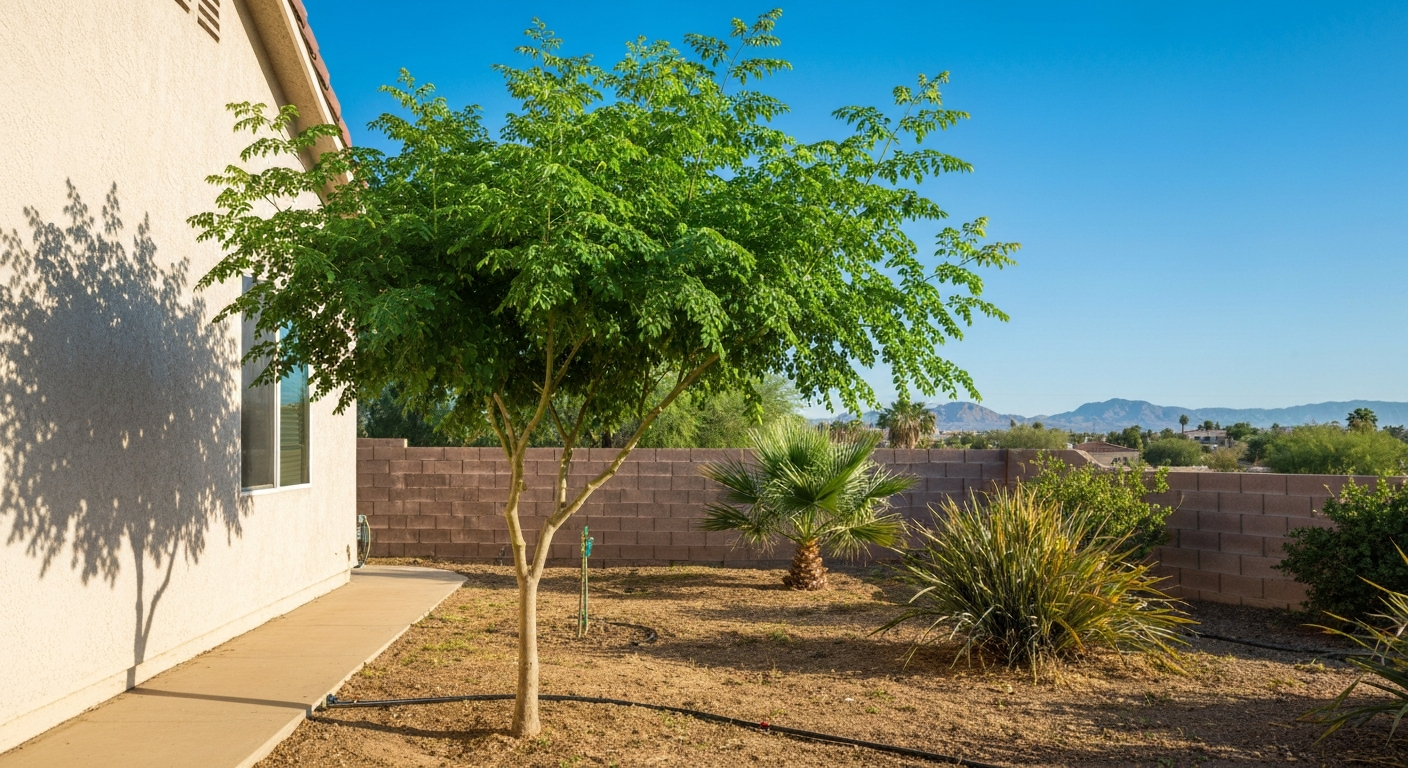
Moringa's climate and zone needs
Moringa oleifera is a tropical tree, full stop. It evolved in semi-arid, warm parts of the Indian subcontinent and thrives between roughly 25–35°C (77–95°F). Its cold tolerance is the limiting factor for almost every California grower. Research on cold stress physiology puts the median lethal temperature (LT50) for most provenances around -2.8°C (about 27°F), with some hardier accessions surviving brief dips to about -3°C. But that figure is for short, sharp frosts, not prolonged cold. Controlled chilling studies found that sustained cool regimes, like 10°C days and 5°C nights held for just eight days, caused unrecoverable injury. That matters enormously in places like Sacramento or Fresno, where cold snaps can last a week at a stretch.
For zone framing, start with the USDA Plant Hardiness Zone Map, which classifies California sites by average annual minimum temperature. You want to be in USDA Zone 10a or warmer (average winter minimum above -1°C / 30°F) to grow moringa outdoors as a perennial without heroic intervention. Zone 9b sites (average minimum around -3.9°C to -1.1°C / 25–30°F) are marginal territory where a bad winter can kill it to the roots or outright. Zone 9a and colder means container or annual-only production. Overlay that with Sunset's Western Garden climate zones, which are genuinely more useful for California because they capture summer heat accumulation, fog influence, and growing-season length that the USDA map ignores. Sunset Zones 13, 19, 20, 21, 22, 23, and 24 in Southern California and coastal areas track well with moringa viability. For site-specific soil drainage data, USDA NRCS's Web Soil Survey or UC Davis's SoilWeb will show you the texture and drainage class of your actual parcel, which matters because moringa hates waterlogged roots almost as much as it hates frost.
How California's regions stack up for moringa
Northern California: coastal vs. inland
Northern California is the toughest part of the state for moringa. The Bay Area's thermal-belt microclimates, think south-facing slopes in Marin, parts of Contra Costa, or protected East Bay hillside gardens, can sometimes support moringa as a tender perennial if you site it well and protect it when temperatures drop. But most of coastal Northern California sits in Sunset Zones 15–17, where cool foggy summers simply don't deliver the heat moringa needs to thrive, even if frost isn't the main problem. In those zones expect slow, straggly growth and poor production. Move inland to Sacramento, Redding, or the foothills and you get the summer heat moringa loves, but winters regularly dip below 28°F (-2.2°C) for multi-day stretches. UCCE guidance for California gardeners is blunt about this: in colder California locations, moringa is commonly grown in containers or treated as an annual and cut back or brought inside during winter. For most Northern California gardeners, container culture is the realistic path.
Central Valley and interior valleys
The Central Valley is genuinely interesting territory. Summer heat is exceptional, routinely exceeding 38°C (100°F) for weeks, which moringa loves. Soils in many Valley locations are loamy to sandy-loam and well-drained, close to the ideal pH range of 5.5–7.0 that production reviews identify. The problem is winter. Fresno averages a low of about 28–30°F on cold January nights, and valley fog events can hold temperatures below 35°F for days. You're borderline Zone 9b, which means some years moringa will come through with minimal damage, and other years a hard freeze will kill it to the ground. Many Central Valley growers report that moringa acts like a root-hardy perennial in practice: the top freezes back but the root crown regenerates in spring if mulched heavily. Whether you call that a perennial or an annually-cut-back shrub is somewhat semantic. For interior valleys farther south, like the Antelope Valley or Coachella approach, the calculus shifts in your favor as you move south and lower.
California coast, fog belts, and maritime climates
The California coast is a paradox for moringa. Frost is rare in many coastal locations, which sounds ideal, but summer temperatures are also moderated by the marine layer, often staying in the 60s°F in places like San Francisco, Santa Cruz, or the Marin coast. Moringa in those conditions may survive but will not perform well. It needs heat to put on real growth, and a foggy coastal summer simply doesn't supply it. You'll get a living plant, possibly even a tree that survives multiple years, but yields will be low and growth slow. If you're on the coast south of Point Conception, around Santa Barbara, Ventura, or coastal Los Angeles, the calculation changes: summers are warmer, frost is uncommon, and moringa can do surprisingly well. Coastal San Diego is arguably the most reliable zone for low-maintenance moringa in the entire state outside of the desert. For the Central and Northern Coast, my honest recommendation is container culture with a sheltered south-facing wall position to capture reflected heat.
Southern California and desert or inland hot zones
Southern California is where moringa genuinely earns its reputation as a fast-growing, productive tree. UC Desert Research and Extension tested moringa production in Imperial County at Holtville, and the results confirmed real production potential under low-desert conditions. The Coachella Valley, Imperial Valley, and lower desert zones around Palm Springs sit in USDA Zone 10a-11a, frost is rare or essentially absent, and summer heat is abundant. Inland Empire locations like Riverside and San Bernardino are one step behind, solidly in Zone 10a, with occasional light frosts that require attention but rarely kill established plants. San Diego County's low-elevation inland valleys, places like El Cajon or Santee, are excellent. Los Angeles basin gardens with good sun exposure are reliable. In these areas, moringa can reach 3–5 meters (10–16 feet) or more in a single season if watered and fed well, and with pruning management you can keep it productive for many years.
What to actually expect: size, yield, and how fast it grows
Under good Southern California or desert conditions, moringa is genuinely one of the fastest-growing trees you can plant. From seed, you can expect 3–5 meters of height in the first growing season in ideal heat. In the Central Valley, figure 1.5–3 meters if summers are hot and winters don't cut it back. In marginal Northern California sites, maybe 1–1.5 meters by the end of summer before cold intervenes. Leaf harvests can begin as early as 60 days from seed. Pod production (the drumstick pods used in cooking) typically requires a more established plant and a long, warm growing season, which practically means Southern California or low-desert sites. In the high-heat zones, first pods are possible within 6–8 months from seed. In cooler or shorter-season sites, pods are unlikely in the first year and marginal even thereafter.
As a perennial in frost-free Southern California, moringa can live for many years and develop a substantial trunk. Annual leaf yields from a managed, heavily pruned backyard tree are typically in the range of several kilograms of fresh leaves per plant per year, but this varies enormously with water, fertilization, and pruning regimen. In container culture, longevity depends on pot size; a 15-gallon container can support a productive shrub for several seasons, but you'll eventually want to size up or plan on dividing or replacing it.
Varieties to choose and where to find them in California
The variety question matters more than many beginners realize. PKM-1 is the most widely documented high-yield cultivar in production literature; it's been used in research trials including priming and germination studies and is widely available through mail-order seed suppliers. PKM-1 is a good choice for high-heat zones like the low desert and inland Southern California. For marginal sites, some growers report that locally-adapted seeds from Southern California or desert-proven seedlings show better performance than generic stock, though formally named cold-tolerant cultivars are not widely commercially available in the US market yet.
For Southern California and desert growers, a handful of specialty nurseries in San Diego, Riverside, and Los Angeles counties carry moringa seedlings seasonally, typically spring through early summer. Check local tropical and exotic plant nurseries, farmers markets in San Diego and Los Angeles, and Craigslist or Facebook Marketplace garden groups where backyard growers often sell divisions or seedlings cheaply. For seed, TopTropicals, Trade Winds Fruit, and several USDA-compliant mail-order sources ship reliably to California addresses. When buying seed, look for labeled provenance if possible; fresh seed (current-season) germinates much better than old stock. Avoid bargain bulk seed of unknown origin if you're in a marginal zone, where the difference between a cold-sensitive and slightly more cold-tolerant accession can mean life or death for your plant.
| Variety / Type | Best California Region | Heat Tolerance | Cold Tolerance | Notes |
|---|---|---|---|---|
| PKM-1 | Low desert, inland Southern CA | Excellent | Low | High-yield, widely researched; best in Zone 10a+ |
| PKM-2 | Southern CA, Central Valley | Excellent | Low | Similar to PKM-1; good leaf and pod yield |
| Locally-sourced Southern CA seed | Coastal and inland Southern CA | Good | Slightly better | Unverified provenance but often desert-acclimated |
| Generic mail-order (unlabeled) | Southern CA, container use anywhere | Variable | Variable | Acceptable for trial; avoid for marginal zones |
Planting, soil prep, and care in California conditions
When to plant
In Southern California and the low desert, plant after the last frost risk has passed and soil temperatures have reached at least 20°C (68°F), which typically means late March through April in the inland valleys and low desert, and February to March in frost-free coastal locations. In the Central Valley, wait until April or even early May to be safe from cold snaps. In Northern California, starting seeds indoors in March or April and transplanting after the last frost (mid-April to May depending on elevation and microclimate) gives you the longest possible warm season.
Planting calendar
| Region | Seed Start Indoors | Direct Sow / Transplant Outdoors | First Harvest (Leaves) | Notes |
|---|---|---|---|---|
| Coastal Southern CA (SD, LA) | Feb | Feb–Mar | May–Jun | Frost risk near zero; can plant year-round in warmest spots |
| Inland Southern CA / Low Desert | Feb–Mar | Mar–Apr | May–Jun | Best production window; heat ample |
| Central Valley (Fresno, Sacramento) | Mar–Apr | Apr–May | Jun–Jul | Frost risk past May 1 most years; mulch roots in winter |
| Bay Area thermal belts | Mar–Apr | Apr–May | Jun–Jul | Container preferred; position against south-facing wall |
| Northern CA coastal / higher elevation | Apr | May (container) | Jul–Aug | Annual or container only; marginal production |
Soil and site
Moringa wants well-drained, sandy to loamy soil with a pH of roughly 5.5–7.0. It will tolerate a wide range of soils but will struggle, and may die from root rot, in heavy clay or waterlogged ground. California's coastal and valley soils vary enormously, so look up your parcel on USDA NRCS Web Soil Survey before digging. If your soil is clay-heavy, raised beds or mounded planting positions are your best option. Sandy desert soils in the Imperial and Coachella valleys are close to ideal. Most California backyard soils benefit from mixing in perlite or coarse sand to improve drainage in the planting hole, especially in the first season.
Germination and propagation
Seed is the easiest and most reliable propagation method. Moringa germinates fast under warm conditions: at 20–30°C (68–86°F) you can expect emergence beginning 5–7 days after sowing, with most seeds up within two weeks. I soak seeds in warm water for 24 hours before planting, and this does measurably improve germination speed and vigor, consistent with what the priming research shows. Plant seeds about 1–2 cm deep in a warm, moist medium and don't let them chill. If your nighttime indoor temperatures drop below 18°C, use a heat mat. Vegetative propagation via hardwood cuttings is possible and is the method of choice if you want to clone a productive parent plant: cuttings from thick (thumb-width or larger) stems root reasonably well in sandy media kept warm and moist. Air layering also works and produces a larger, established plant faster. For most home gardeners, fresh seed is the simplest and cheapest starting point.
Watering and irrigation
Young moringa needs consistent moisture for the first one to two months after transplanting. The study blank" rel="noopener noreferrer">Effect of irrigation frequency and selenium fertilization on the vegetative growth and biomass yield of Moringa oleifera and Moringa peregrina (PMC) reports that young moringa requires regular watering during the first 1–2 months for establishment and that crop‑coefficient/ETc approaches can be used to build irrigation schedules. Dry out the root zone during establishment and you risk mortality, especially in the high-heat desert where evaporation rates are brutal. Once established, moringa is genuinely drought tolerant, one of its real merits, but leaf and biomass yields drop significantly under water stress. For California's dry summers, a drip emitter running on an ETc-based schedule is the most efficient approach. California Irrigation Management Information System (CIMIS) stations provide local ETo data you can use with published moringa crop coefficients (Kc values range roughly 0. A peer‑reviewed lysimeter study, "blank" rel="noopener noreferrer">Evapotranspiration and crop coefficients of Moringa oleifera under semi‑arid conditions in Pernambuco," measured moringa ETc and reported Kc values that can be used to convert local ETo into practical irrigation schedules. 8–1.1 depending on growth stage) to calculate actual water needs. In practice: water established plants deeply once or twice a week in peak summer heat, less in spring and fall, and cut back to near zero in winter dormancy.
Feeding and pruning
Moringa is not a heavy feeder but responds well to balanced fertilization, particularly nitrogen during active growth. A balanced slow-release fertilizer applied in spring and midsummer is sufficient for most backyard situations. Avoid heavy feeding in fall, which pushes tender new growth into frost season. Pruning is important for two reasons: it keeps the tree at a manageable height for harvest, and it stimulates the dense, multi-stemmed growth that produces more leaf mass per plant. The standard approach for leaf production is to top the main stem at about 1–1.5 meters and allow lateral branching. Repeat hard pruning after each harvest cycle. In Southern California this can mean two to three major pruning events per year.
Frost protection and overwintering in marginal zones
If you're in a marginal zone, Central Valley, Bay Area thermal belts, or cooler inland spots in Southern California, your main job in winter is keeping the root crown alive. Heavy organic mulch (15–20 cm deep) over the root zone is the single most effective action. Frost cloth or agricultural fleece draped over the plant on nights below -2°C (28°F) buys meaningful protection, especially against radiative frost. A south-facing wall position adds several degrees of warmth. If you're growing in a container, moving the plant to a garage, shed, or covered patio on cold nights is straightforward and effective. The plant will often drop its leaves and go semi-dormant in response to cold; don't panic, keep the roots barely moist, and wait for spring warmth to trigger regrowth. What kills marginal-zone moringa is usually not a single cold night but a sustained week of cool temperatures, as the physiology research confirms. For a comparison of survival in cooler climates, see guidance on whether moringa grows in Canada. So focus protection efforts on multi-day cold events, not just single-night dips.
Container and greenhouse growing
Container culture is not a consolation prize. It's a legitimate and effective strategy for every California grower north of the Tehachapis and for anyone in a marginal microclimate. Use a porous, fast-draining potting mix and a container sized to the tree's current height. A five-gallon pot works for the first season, but you'll want to move to a 10–15 gallon container in year two if you're keeping the plant as a perennial. Larger containers allow more root development and longer-term culture. The trade-off is weight and mobility; a 15-gallon pot with soil and a two-meter moringa is heavy. Use wheeled plant dollies from the start. A small unheated greenhouse or a south-facing sunroom is an excellent environment for container moringa during California winters: it protects from frost while still allowing some dormancy, and the plant typically bounces back vigorously when moved back outside in spring.
Pests, diseases, and common problems in California
Moringa is relatively pest-resistant, which is one reason it's popular in tropical subsistence farming. In California the main issues are aphids on new growth (especially in spring flush), spider mites in hot dry conditions (a particular issue in the desert and Central Valley), and caterpillars or whitefly in warmer coastal areas. All of these are manageable with standard IPM approaches: insecticidal soap for soft-bodied insects, strong water sprays to knock back mites, and hand removal of caterpillars. Root rot is the disease most likely to kill your plant, and it's almost always a drainage problem. If your leaves are yellowing and the stem base looks soft, check drainage first. Powdery mildew can appear on shaded or crowded plants with poor airflow. The fix is the same as for most plants: improve air circulation and reduce overhead moisture.
Harvesting moringa in California
Leaf harvest can start as early as 60 days from seed when plants are actively growing in warm conditions. Young leaves and growing tips are the most tender and nutrient-dense. Harvest by snipping stems with leaves intact, removing no more than one-third of the plant at a time to avoid stressing it. Leaves can be eaten fresh, dried, or powdered. Pods (drumsticks) require a longer, warmer season and are realistically achievable only in Southern California and the low desert for most home gardeners. Pods are harvested young, before the fibrous walls harden, and are cooked in curries and soups. Seeds inside mature pods can also be used for oil pressing or replanting. In frost-free Southern California locations, harvesting can happen year-round with appropriate pruning management; in the Central Valley and marginal zones, your productive window is roughly May through October.
Troubleshooting and honest decisions about your approach
I've watched plenty of California gardeners kill moringa by planting too early, putting it in clay soil, or underestimating a cold snap in an inland valley. The most common failure modes are: planting out before soil is warm enough, waterlogged soil in winter, and insufficient frost protection on a multi-day cold event. If you're in a marginal zone and have killed one or two plants, don't assume moringa won't work for you. Try containers, try a better-drained site, try later planting.
The honest comparison with other states is that California's warmest regions are competitive with Texas and parts of the Southeast for moringa production, while its cooler northern and coastal areas are closer to the marginal conditions you'd find in border-climate states. If you're comparing California to somewhere like Georgia or the Gulf Coast, the lower-desert and inland-empire parts of Southern California match up well; Northern California is comparably tricky to the mid-Atlantic states. For more on growing moringa in humid southeastern climates, see our guide: Can moringa grow in Georgia. Other warm US regions with robust moringa growing communities, including Texas and parts of the Deep South, benefit from humidity and milder winters that give them a slight edge in the southernmost zones, but California's desert and inland Southern California regions compete on sheer summer heat. If you're in the Southeast and asking can moringa grow in North Carolina, consult the dedicated guidance for cooler, more humid climates to compare winters, humidity, and suitable strategies.
Is moringa worth growing in California?
If you're in San Diego, the Coachella or Imperial Valley, coastal Los Angeles, or the warmer inland areas of Southern California: yes, absolutely, plant one or two this spring and manage them for years. If you're in the Central Valley: worth trying, plan for winter protection and accept that a bad winter may kill the tops back; the roots often survive if mulched. If you're on the foggy Northern California coast or above 1,500 feet anywhere in the state: grow it as an annual or in a container, enjoy the summer leaf harvests, and don't count on a perennial. The plant is fast enough from seed that starting fresh each year is genuinely not a burden. California is a state where moringa can range from effortless perennial to challenging annual depending on which zip code you're gardening in, and knowing which situation you're in is most of the battle. For broader, region-by-region guidance across the country, see Can moringa grow in the US. If you're asking "can i grow moringa" for your specific location, check the regional guidelines above to match your climate and microclimate to realistic expectations.
FAQ
Can moringa (Moringa oleifera) be grown successfully in California?
Yes — but success depends on region and microclimate. In warm frost‑free microclimates (many coastal Southern California sites, protected urban thermal belts in the Bay Area, and some low‑elevation Southern California inland pockets) moringa can behave as a multi‑year perennial. In much of the Central Valley and low desert it can also be grown as a perennial where winters stay above light‑frost thresholds; in cooler Northern interior, higher‑elevation, and mountain areas it is typically grown as an annual or in containers/greenhouse and overwintered indoors or regrown each spring.
How do I tell if my site in California is suitable (useful zoning guidance)?
Use USDA Plant Hardiness Zones for baseline winter minima (average annual minimum temperature) and overlay with Sunset Climate Zones to capture coastal influence, summer heat and growing‑season length. Moringa tolerance aligns with sites that seldom drop below about −2 to −3 °C (roughly USDA zones 9b–11, with some microclimates in colder zones if protected). For finer detail, consult PRISM or local historical minimums and your county UC Cooperative Extension guidance.
Region‑specific verdicts for California: Northern CA, Central Valley, coastal, Southern CA — what should I expect?
Northern interior/high‑elevation: generally NOT perennial; use containers, greenhouse or annual planting. Central Valley: many low‑elevation and warm valley sites can support multi‑year trees if winter minima stay near or above light‑frost thresholds; expect possible dieback in cooler winters. Coastal (mild urban/coastal terraces and sheltered Bay Area thermal belts): good for perennial culture where maritime moderates lows. Southern California (coastal, inland basins, low desert): best overall for perennial growth — coastal microclimates and inland low deserts generally support multi‑year production; very warm inland pockets produce fastest growth and yields.
What realistic expectations should I have for size, yield and overwintering in California?
Size: in warm sites, moringa can reach 10–25+ feet (3–8 m) in several years without heavy pruning; in cooler/short‑season areas it may be smaller (2–6 ft) if grown as an annual or container. Yield: leaf and pod yields are highest in warm, long‑season sites with regular irrigation—expect first usable leaf harvest within 2–3 months from seed, meaningful pod/seed yield often in first year in warm climates but larger yields in year 2+. Overwintering: in marginal zones expect top dieback; trunks or roots may resprout from base if not killed by deep freeze. In marginal zones plan to protect trunks/roots or treat as annuals.
Which varieties are recommended for California and where can I buy seed or seedlings?
Recommended: common cultivars like fast‑growing local provenances, PKM‑1 (popular in trials), and seed marketed as 'California‑adapted' or from reputable nurseries. Choose seed labeled fresh and from a reputable supplier. Buy from California specialty nurseries, local growers, UC/extension recommended sources or nation‑wide seed houses that ship to CA. For clonal uniformity, purchase nursery‑propagated seedlings or rooted cuttings from regional nurseries.
Step‑by‑step planting and care tailored to California soils, sun and irrigation (including containers and greenhouses)
Site: full sun (6–8+ hours), well‑drained sandy/loamy soil, avoid heavy waterlogged clay. Planting: sow seed 1–2 cm deep in warm soil (germination best 20–30 °C); transplant seedlings when 4–6 in and roots fill the cell. Spacing: 3–6 m (10–20 ft) for large trees or 1–2 m for hedgerow/dwarf forms. Irrigation: keep moist during establishment (first 4–8 weeks), then reduce—trees are drought‑tolerant but higher irrigation increases leaf/pod yield. Use drip with emitters sized from local ET and moringa crop coefficients (or water deeply 1–2×/week in warm months). Containers: use fast‑draining potting mix, 5–15+ gallon for multi‑year culture; water more frequently and fertilize regularly. Greenhouse/protected: raise seedlings or overwinter potted trees; maintain warm night temps and avoid prolonged cool regimes.
Next Articles
Does Moringa Grow in Canada? How to Grow It at Home
Yes, but only with warmth. Learn how to grow moringa in Canada using containers, light, and overwintering tips.
Can Moringa Grow in North Carolina? How to Succeed
Yes, moringa can grow in North Carolina as an annual or container plant; get heat, timing, and winter protection tips.
Can Moringa Grow in Texas? How to Plant and Overwinter It
Find out if moringa grows in Texas and get step-by-step planting, watering, and overwintering for seed or cuttings.