
Yes, ghost pipe does grow in Georgia. It's not rare across the state, but you won't find it just anywhere. It shows up in specific forest habitats, mostly in the northern mountains and foothills, and it's completely dependent on conditions that can't be faked: deep shade, moist leaf litter, and the right underground fungal network. If you're hoping to spot it in the wild or grow it yourself, knowing exactly where and why it appears makes all the difference. If you're wondering about other areas, the same key idea applies: ghost pipe’s presence in Ohio depends on finding the right cool, shaded forest habitat and its associated fungi ghost pipe in Ohio.
Does Ghost Pipe Grow in Georgia? Habitat and Growing Tips

Marcus Petersen
29 Jun 2026
What ghost pipe actually is
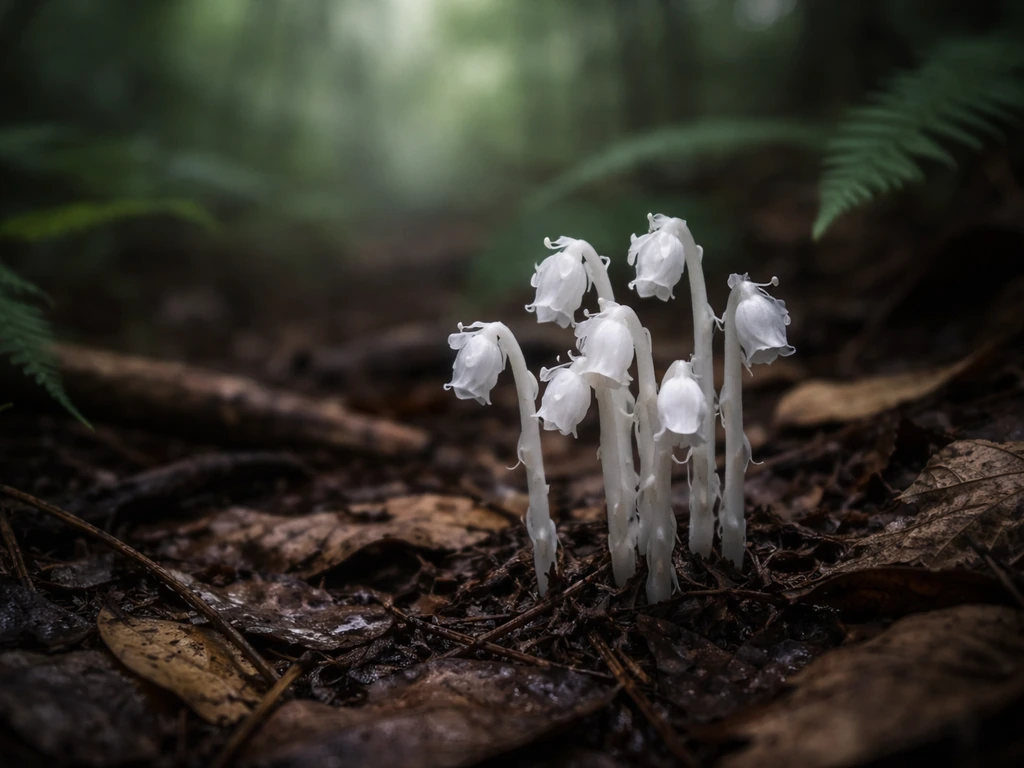
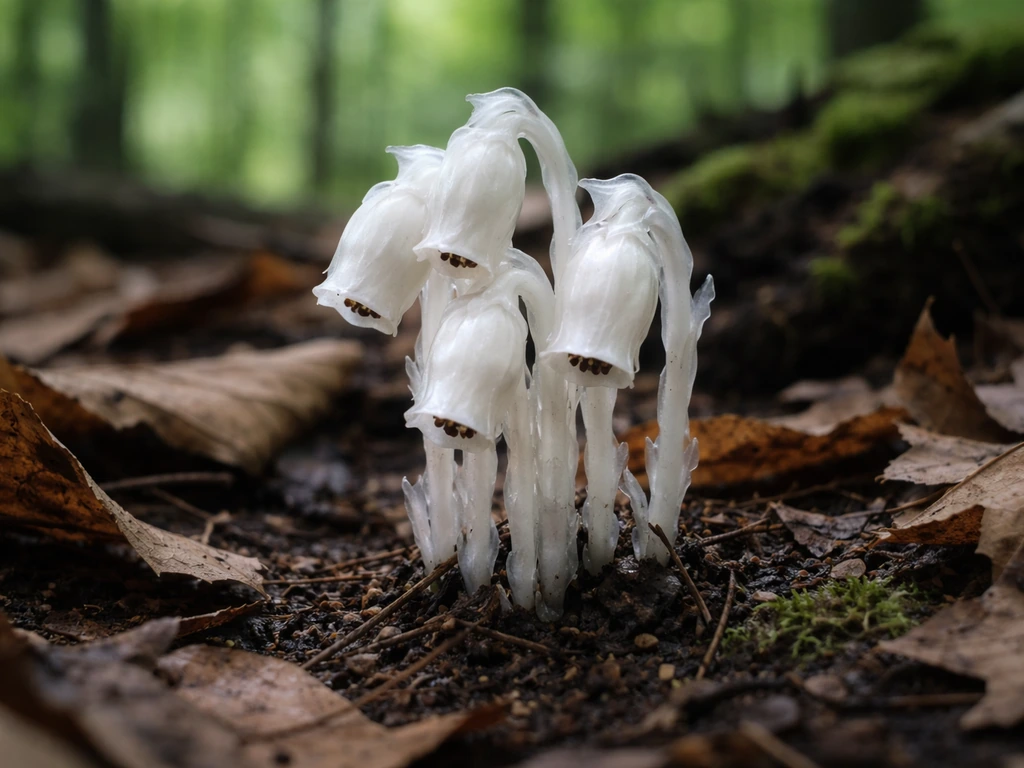
Ghost pipe (Monotropa uniflora) is one of the strangest plants in North American forests. It has no chlorophyll, produces no green tissue at all, and does zero photosynthesis. The whole plant is waxy white (sometimes with a pale pink blush), and it emerges from the forest floor looking more like a fungus than a flowering plant. It blooms in summer, nods its single flower downward like a pipe, and then dries to a papery brown husk after releasing seed.
The reason it can survive without photosynthesis is that it taps into mycorrhizal fungi in the soil, essentially stealing sugars that those fungi have already pulled from nearby trees. This makes it mycoheterotrophic: it lives at the end of a chain that runs from tree roots to fungi to ghost pipe. The USDA Forest Service calls it a mycotrophic wildflower, and that classification matters enormously for anyone trying to find or grow it, because it means the plant is entirely dependent on that underground fungal partnership. No fungi, no ghost pipe, period.
Its native range covers most of eastern North America, parts of the West Coast, and extends into Central America and Asia. In the eastern U.S.blank" rel="noopener noreferrer">, it turns up from Maine all the way down through the Appalachians and into the Deep South, which is exactly why Georgia is in play.
Georgia's climate zones and what they mean for ghost pipe
Georgia spans USDA hardiness zones 6a through 9a, depending on where you are. That's a huge range for a single state, and it matters a lot for ghost pipe. The northern mountain counties (Blue Ridge, Cohutta, Chattahoochee-Oconee National Forests) sit in zones 6a to 7a, with cooler summers, higher rainfall, and the kind of old-growth hardwood forest structure that ghost pipe needs. The Piedmont runs through the middle of the state in zones 7b to 8a, and while it has forested areas, conditions are warmer and drier. The Coastal Plain to the south gets into zones 8b and 9a, with long hot summers and pine-dominated landscapes that are generally wrong for this species.
Ghost pipe needs a genuine cool season, good summer moisture, and intact mixed hardwood forest with an established fungal community underneath. The northern Georgia mountains check all those boxes. As you move south through the state, the forest composition shifts, the heat load increases, and the specific fungal partnerships ghost pipe relies on become less certain. The plant isn't impossible in the Piedmont, but sightings become spotty and habitat-dependent rather than predictable.
Does ghost pipe grow in Georgia, and where to find it
It does, and the short answer on location is: look north. Does ghost pipe grow in Oklahoma too? The same mycorrhizal forest conditions that it needs elsewhere are what determine whether it can establish there. The Blue Ridge mountain region in the northeast corner of the state is your best bet, particularly in moist coves, north-facing slopes, and stream hollows inside established hardwood forest. Counties like Rabun, Towns, Union, Gilmer, and Fannin have the right combination of forest age, moisture, elevation, and temperature to support consistent ghost pipe populations. Amicalola Falls State Park, the Cohutta Wilderness, and stretches of the Chattahoochee National Forest are all worth exploring.
In the Piedmont, sightings are less consistent but do happen. If you're wondering whether ghost pipe grows in Michigan, the key is finding mature, undisturbed hardwood forest with the right fungal partnerships does ghost pipe grow in michigan. Look in older, undisturbed forest patches near creek drainages where the canopy is dense and the leaf litter is deep. Sweetgum, oak, and beech-dominated stands are better candidates than young or disturbed forest. South of the fall line, through the Coastal Plain, ghost pipe sightings are uncommon and you shouldn't organize a search around finding it there. The habitat just doesn't match well, and the sandier soils with longleaf pine and wiregrass simply don't support the mycorrhizal networks this plant depends on.
Timing is important too. Ghost pipe in Georgia typically emerges in late spring through midsummer, roughly May through August, often peaking after a stretch of warm, humid weather following decent rainfall. If you want to know whether it grows in Texas too, you can use the same approach with local records and verified sightings Ghost pipe in Georgia. You won't see it in winter or early spring. If you're planning a trip to look for it, aim for June or July and head into the mountains after a rainy stretch.
Habitat clues that tell you you're in the right spot
Ghost pipe is picky, and once you understand what it needs, you can start reading the forest for signs you're in the right place. Here's what to look for:
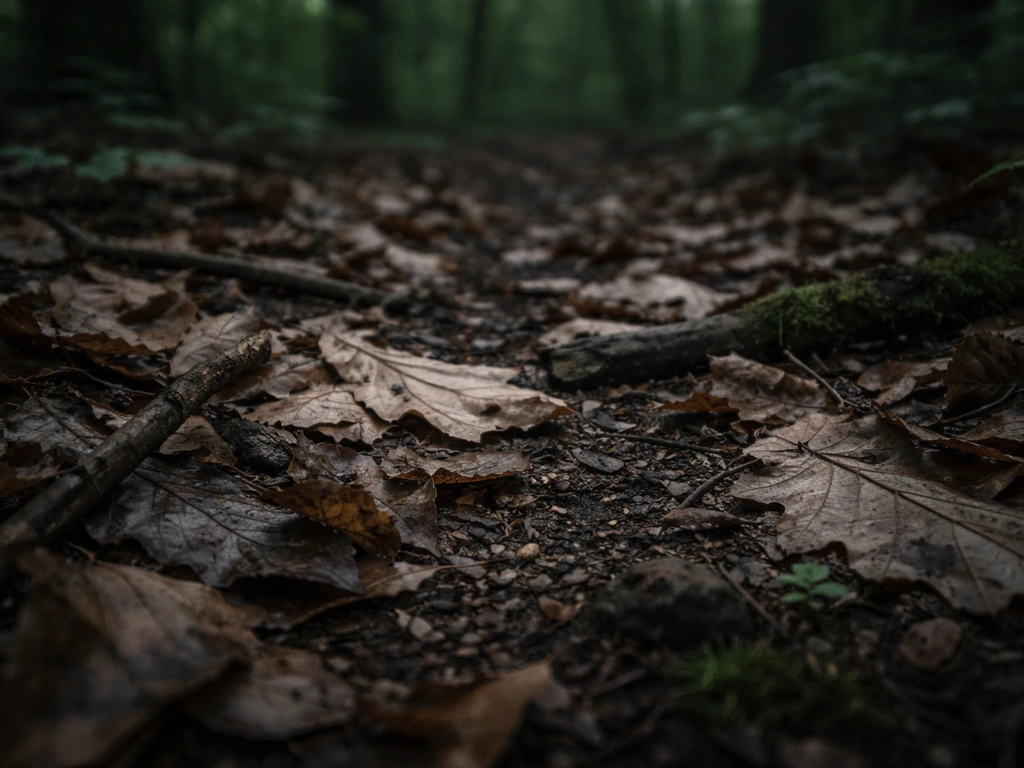
- Deep shade from a closed hardwood canopy, preferably old trees like beech, oak, hemlock, or mixed mesic hardwoods
- Thick, intact leaf litter that's been accumulating for years, not a raked or disturbed forest floor
- Consistent moisture, either from a nearby stream, seep, or north-facing slope that holds humidity
- Humus-rich, acidic soil with good fungal activity (you may see mushrooms nearby, which is a good sign the fungal network is active)
- Little to no direct sunlight reaching the forest floor, especially during midday
- Undisturbed forest: logging, grading, or heavy recreation pressure usually destroys the fungal networks ghost pipe depends on
The mycorrhizal fungi ghost pipe connects to are typically associated with hardwood trees, especially beech and oaks. If you're walking through a beech-dominated cove in the north Georgia mountains and the forest floor is dark, damp, and deeply leafy, you're in exactly the kind of place ghost pipe could appear. Keep your eyes near the base of larger trees and along the edges of root systems.
Can you grow ghost pipe on purpose? Here's the honest answer
I'll be straight with you: cultivating ghost pipe intentionally is, for most home gardeners, not a realistic goal. This isn't a plant you can pot up, water, and watch grow. It has no photosynthetic capacity, so soil fertility, sun exposure, and fertilizer are irrelevant. What it needs is a living, established mycorrhizal fungal network already connected to tree roots, and that network takes years to develop in undisturbed forest. You can't replicate that in a raised bed or a container on your porch.
The North Carolina State University Extension makes this explicit: transplanted ghost pipe requires the appropriate fungi to be present in the new location, and that's the sticking point. Even moving a clump from one part of the forest to another nearby spot is likely to kill it if the fungal community doesn't match up. Research into mycoheterotrophic plants has shown that germination itself is triggered by specific fungal cues, meaning even getting the seed to sprout requires the right underground partner.
If you still want to try, the most realistic approach isn't a traditional garden setup but rather creating conditions in an existing mature hardwood forest on your property. That means:
- Identifying a spot under established hardwoods (beech or oak preferred) that already shows signs of active fungal life like mushrooms emerging nearby
- Collecting ripe seed (the dried capsules turn upright when seeds are ready) from a wild plant, ideally with permission on public land or from your own property
- Scattering seed on undisturbed leaf litter in late summer or fall and leaving it completely alone
- Accepting that germination may take one to several years, and results are genuinely unpredictable
- Never transplanting living plants from the wild, as it nearly always kills them and disturbs the population
This approach has a low success rate, but it's the only one with any realistic chance. If you don't already have mature, undisturbed hardwood forest on your property with an intact fungal community, the honest advice is to save yourself the frustration and just go looking for it in the wild instead.
Sourcing, legality, and what to watch out for

Finding ghost pipe for sale is tricky, and for good reason. Most commercial vendors selling "ghost pipe plants" or tinctures are working with wild-harvested material, which raises immediate red flags around sustainability and legality. Ghost pipe is protected in several states and is listed as a species of concern in others. In Georgia, collecting plants from state parks and national forest land without a permit is illegal, and that applies to ghost pipe just like any other native wildflower.
If you see ghost pipe seeds for sale online, approach with caution. Mislabeling is common in the specialty seed market, and the seeds are tiny and difficult to verify. There's also a meaningful risk that "seeds" sold as ghost pipe were harvested from protected areas or are simply incorrectly identified. A few specialty native plant nurseries occasionally offer Monotropa uniflora, but availability is inconsistent and these are almost always collected from a single source location, which brings its own ecological concerns.
The most ethical path is to work with seed from plants on private land where you have explicit permission, or to connect with a native plant society (Georgia has an active chapter of the Georgia Native Plant Society) that may know of legal, responsibly sourced material. Timing matters for seed collection: the capsules ripen and open roughly four to six weeks after flowering, usually late summer in Georgia.
Your practical next steps starting today
If your goal is to confirm whether ghost pipe grows near you specifically, start with iNaturalist. To answer the question for your area, check iNaturalist and look for confirmed Monotropa uniflora sightings in Indiana. Search Monotropa uniflora observations in Georgia and you'll see a heat map of confirmed sightings with photos, dates, and GPS-level location data. This will tell you quickly whether anyone has documented it in your county or nearby areas, and it's updated by real observers in real time. As of recent years, the northern mountain counties have solid clusters of verified observations.
From there, here's how to decide what to do next:
- If you're in north Georgia (Blue Ridge, Cohutta, or Chattahoochee NF area): plan a hike in June or July into a moist cove or north-facing hardwood hollow after a rainy stretch, and you have a reasonable chance of spotting it
- If you're in the Piedmont: check iNaturalist for local sightings first, then focus your search on older, undisturbed forest patches along creek drainages
- If you're in south Georgia: save the trip and look at the sibling articles for states with better overlap, or accept that ghost pipe isn't a realistic find in your backyard
- If you want to grow it: only attempt it if you have mature undisturbed hardwood forest on your property, and even then, treat it as a long-shot experiment rather than a garden project
- For verification and community knowledge: contact the Georgia Native Plant Society, whose members often know specific sites and can help you understand what's protected and what isn't
Ghost pipe is genuinely worth seeking out in Georgia if you're in the right part of the state. If you’re wondering whether it grows in Missouri too, the same idea applies: it needs intact mixed hardwood forest with the right underground fungal partners native to the eastern forests. It's one of the more unusual plants native to the eastern forests, and spotting it in a misty north Georgia cove is a real experience. Just go in with the right expectations: this is a forest explorer's find, not a garden plant. The effort to locate it in the wild is far more likely to pay off than any attempt to cultivate it from scratch.
FAQ
What part of Georgia has the best odds of seeing ghost pipe?
Your best chances are in northern mountain counties, especially in mature hardwood coves and stream hollows inside places like the Blue Ridge region. Within the same county, look for deep shade with consistently moist leaf litter rather than the widest or most scenic trail, because ghost pipe is tied to very specific microhabitats.
Can ghost pipe grow in central Georgia (Piedmont) if I find a shady spot?
It can, but it is usually spotty and less predictable than in the mountains. Shady forest alone is not enough, you also need intact mixed hardwood conditions and a stable underground fungal network, so sightings tend to cluster in older, less disturbed forest patches near creek drainages.
How long after a rain should I look, and what time of day matters?
Many sightings come after a warm, humid period following decent rainfall, so plan trips for the next few days after that kind of weather. Time of day mainly affects your ability to see waxy white plants on dark forest floors, a mid-morning to early-afternoon visit can be easier for spotting than low-angle lighting in dawn or dusk.
How can I avoid confusing ghost pipe with other white “forest” plants or fungi?
Ghost pipe is a waxy white plant with downward-pointing, pipe-like flowers on a single-stem look. True fungi fruiting bodies often lack that plant-like stalk and flower shape, and other pale spring ephemerals typically have green parts earlier in the season, ghost pipe does not.
Is it legal to collect ghost pipe or take cuttings in Georgia?
In general, collecting from state parks and national forest land without proper authorization is not allowed, and ghost pipe can be protected or considered a species of concern in multiple places. If you are thinking about taking any part of the plant, check current Georgia and site-specific rules first, and assume you need permits for collection.
If I see ghost pipe once, will it likely be there every year in the same exact spot?
Not necessarily. Because it depends on an established fungal partnership, local presence can fluctuate with forest moisture patterns, canopy condition, and disturbance. A site with repeated observations is the better target, and even then, assume it might not emerge every year at the same intensity.
Why can’t I transplant ghost pipe to my yard, even if I dig up a healthy clump?
Ghost pipe is mycoheterotrophic, it relies on specific underground fungi connected to nearby tree roots. Transplanting often breaks that fungal association, and even nearby relocation can fail if the underground fungal community does not match. Success is unlikely outside of a mature, undisturbed forest system.
Are “ghost pipe seeds” sold online usually trustworthy?
Be cautious, mislabeling is common and many seed listings are hard to verify because ghost pipe seeds are tiny and identification can be uncertain. There is also an ecological risk if seed came from protected areas or from wild-harvest practices, so treat unsolicited or unusually cheap offers as a red flag.
If I want to document sightings near me, what should I record?
For confirmation and usefulness to others, note the date, exact location, habitat details (canopy type, leaf-litter depth, slope or drainage), and ideally a clear photo showing the flower orientation. Submitting observations with precise coordinates helps create a more reliable picture of where ghost pipe actually grows in Georgia.
Can ghost pipe be found outside forests in Georgia, like in pine woods or disturbed areas?
Generally, no. The plant is strongly tied to cool, deep shade, moist leaf litter, and an intact mixed hardwood forest fungal network. Pine-dominated landscapes, sandy soils, and heavily disturbed ground are typically poor matches because they do not reliably support the fungi ghost pipe depends on.
Next Articles
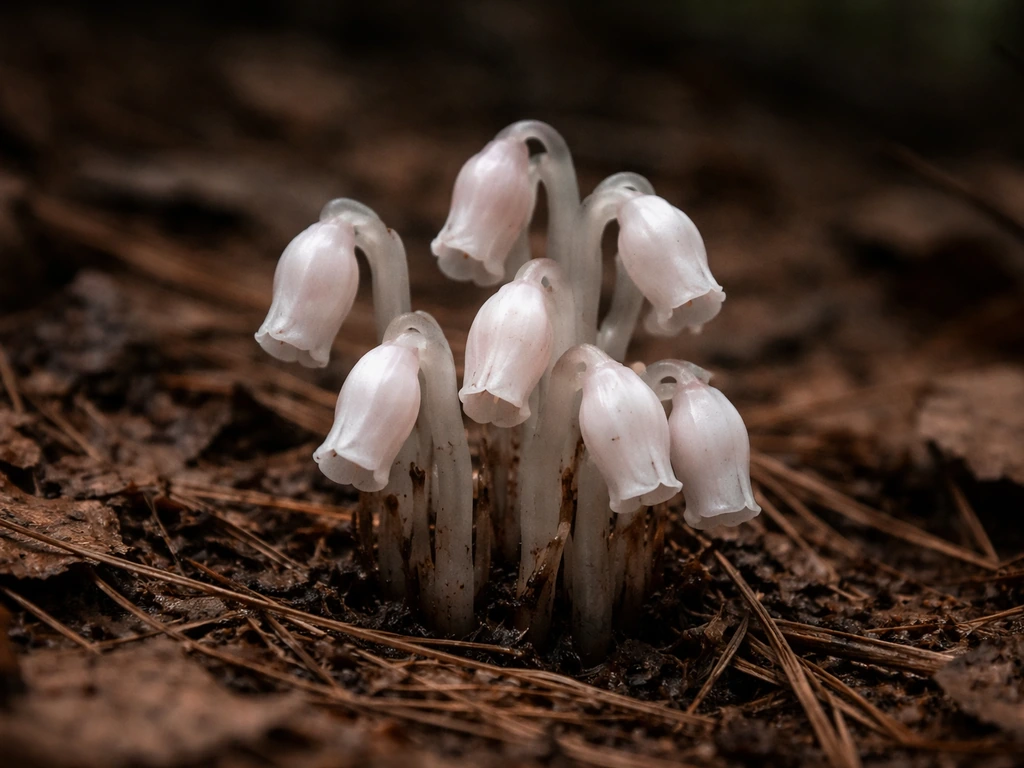
Does Ghost Pipe Grow in Ohio? Habitat and Sightings
Find out if ghost pipe grows in Ohio, where it may appear, and how to confirm sightings and identify it safely.
Does Ghost Pipe Grow in Michigan? Habitat, ID, and Odds
Find out if ghost pipe grows in Michigan, where it appears in forests, how to ID it, and realistic odds.
Can You Grow Black Pepper in the US Where and How
Learn where black pepper can be grown in the US and how to grow it indoors or in warm zones for fruit.