
Yes, ghost pipe (Monotropa uniflora) does grow in Ohio. If you're wondering whether it also grows in Georgia, the answer depends on whether the same kind of mature, moist, shaded forest habitat and compatible fungi are present does ghost pipe grow in georgia. It's not common, and you won't find it in a typical backyard garden, but it shows up in established, mature forests across the state, with documented records from counties like Licking, Franklin, Athens, and Hocking. If you're hoping to cultivate it yourself, though, I'll be upfront: that's essentially not possible with standard gardening methods. What you can do is learn where to look for it wild, how to confirm real Ohio records, and how to recognize it if you stumble across it.
Does Ghost Pipe Grow in Ohio? Habitat and Sightings

Marcus Petersen
12 Jun 2026
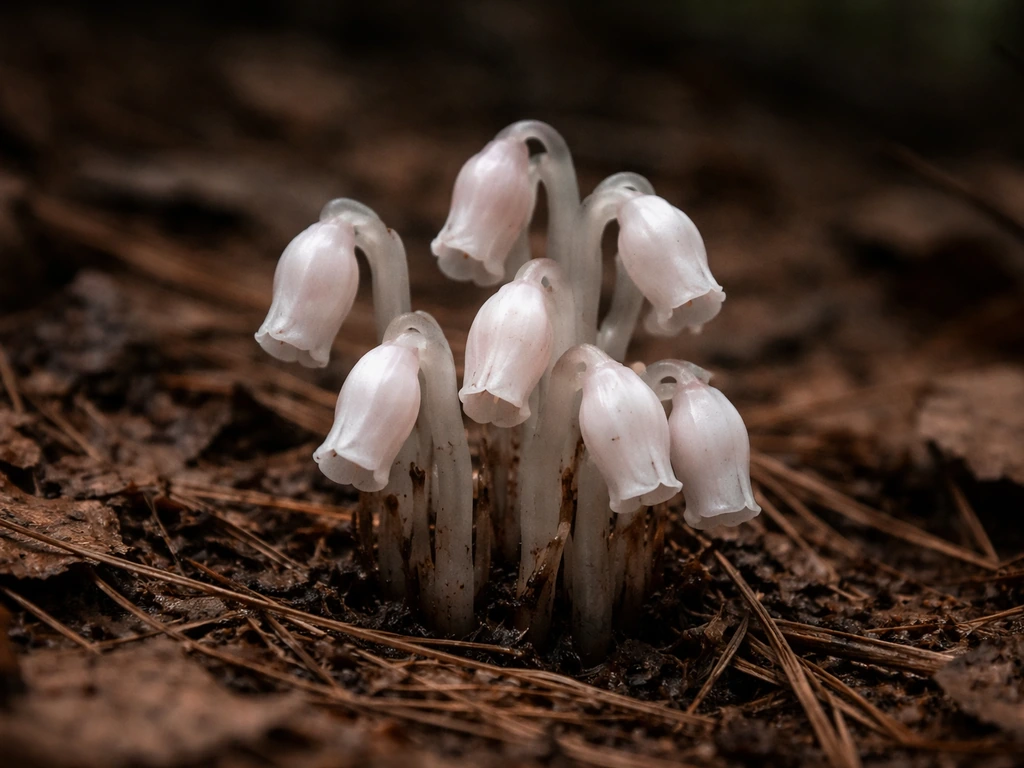
What ghost pipe actually is
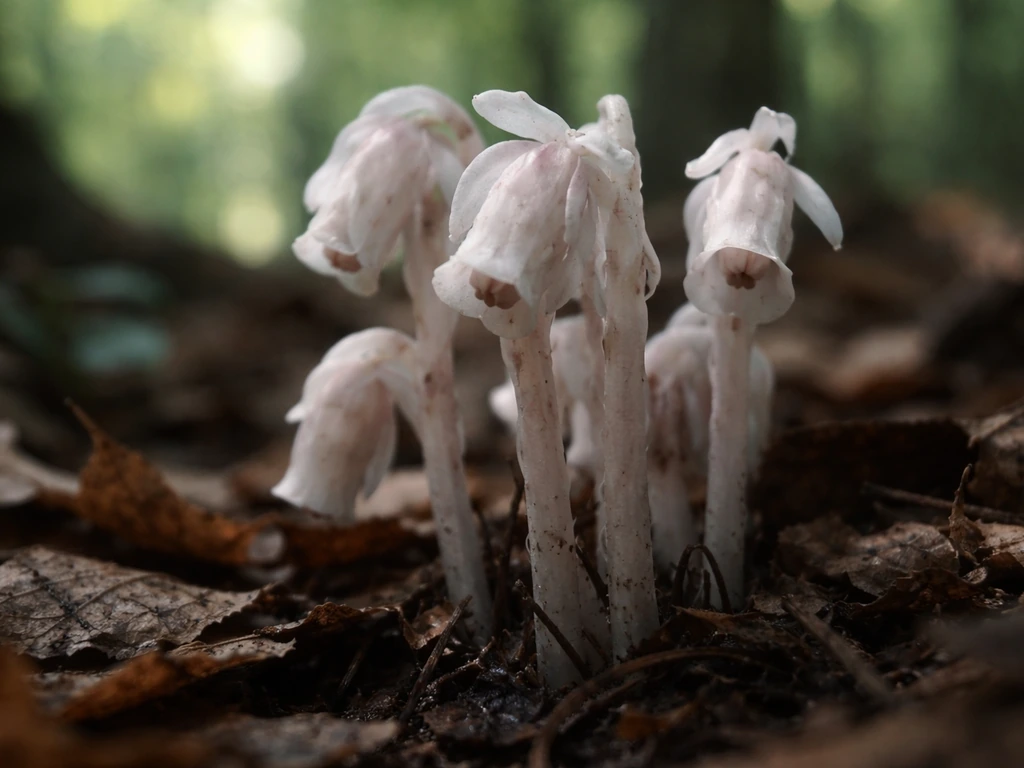
Ghost pipe (Monotropa uniflora) is one of the strangest plants in eastern North America. It's entirely white or pale pink, produces no chlorophyll, and never photosynthesizes. Instead, it's mycoheterotrophic, meaning it steals nutrients from underground fungi rather than making its own food. Those fungi, typically members of the Russulaceae family, are themselves connected to tree roots in a mycorrhizal network. Ghost pipe essentially taps into that network as a parasite on the fungus. Each stem carries a single nodding flower (that's what 'uniflora' means), and the whole above-ground plant emerges briefly in summer, usually July through September in Ohio, before collapsing back into the leaf litter.
It ranges broadly across the U.S. but appears scattered rather than abundant anywhere. The USDA Forest Service describes its habitat as mature, moist, shaded forests, and that description is key to understanding where it turns up in Ohio. In Indiana, ghost pipe is also reported in parts of suitable mature, shaded forests, but it is uncommon and not something you should expect to find easily ghost pipe grows in Indiana.
Where ghost pipe grows in Ohio specifically
The bulk of confirmed Ohio records cluster in the southeastern and central parts of the state, which makes sense ecologically. Southeastern Ohio, particularly Hocking County and Athens County, has some of the oldest, most intact forest ecosystems in the state. Hocking County's Clear Creek Metro Park has a documented ghost pipe population. Athens County records come from peer-reviewed forest chronosequence research that surveyed Monotropa uniflora in older-stand forest plots. Herbarium specimens held at Harvard's collections include Ohio localities such as Glenmary Park in Columbus, and the Denison University Herbarium holds a specimen from Granville in Licking County.
The common thread across these locations is forest age and moisture. Ghost pipe needs a fully established fungal network in the soil, which takes decades to develop under mature canopy. You're looking for deep-shade, humid forest floors with thick organic duff, typically under oaks, beeches, or mixed hardwoods. Ohio's unglaciated hill country in the southeast is better suited to this than the flatter, more agricultural landscape in the northwest. That said, pockets of suitable habitat exist in wooded ravines, old woodlots, and metro park forest preserves throughout the state.
Can you actually grow ghost pipe in your Ohio garden?
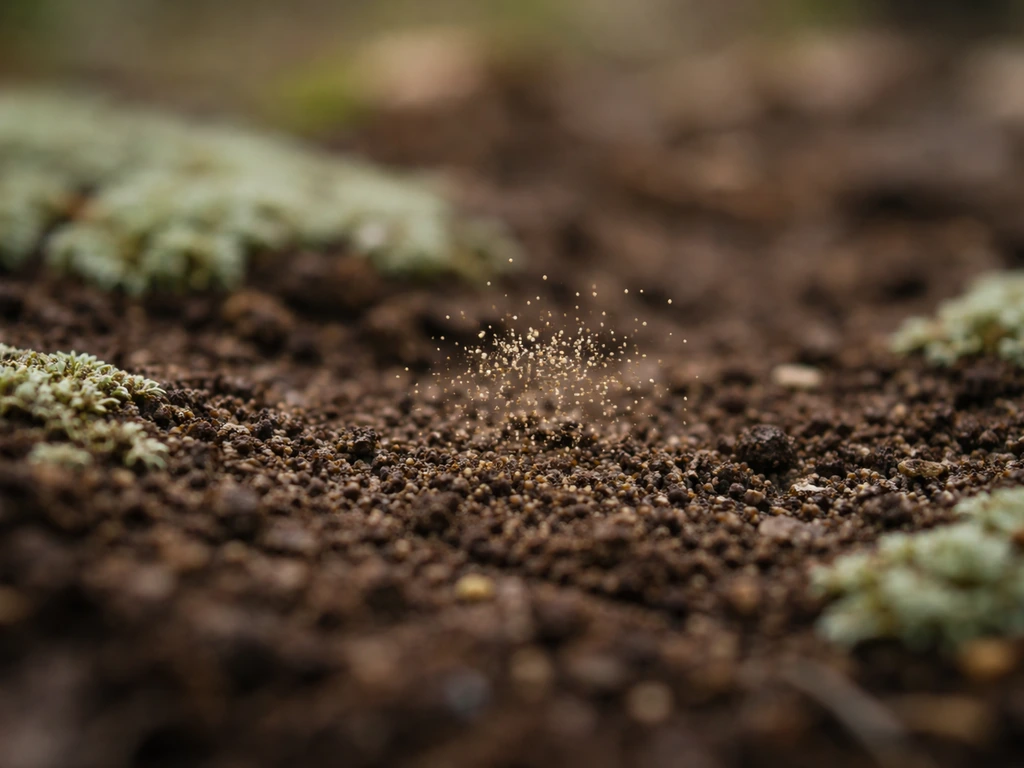
This is where I have to be honest: no, not really, and almost certainly not deliberately. Ghost pipe seeds are essentially dust, tiny undifferentiated embryos that cannot germinate without direct contact with compatible fungi. Research published in Seed Science Research confirms that germination is fungus-dependent, meaning the seeds need the right fungal partner in the soil before they'll do anything at all. You can't buy those fungi at a garden center, and you can't replicate a decades-old forest floor ecosystem in a raised bed or shaded corner of your yard.
Transplanting from the wild is equally futile and harmful. Ghost pipe has no roots of its own in the conventional sense. Its underground structures are connected entirely through the fungal network. Dig it up and you sever that connection instantly. The plant will die within hours, and you've damaged the forest patch you took it from. I've seen people try this, and it never works.
The only realistic scenario where a home gardener might see ghost pipe 'growing' on their property is if they already have mature, undisturbed forest with an established fungal community, and even then it's a matter of luck. If you have acres of old-growth or near-old-growth woodland, ghost pipe might already be there without you knowing it. Ghost pipe also grows in parts of Texas, but it is scattered and tied to mature, moist, shaded forest habitat ghost pipe might already be there. If you're wondering does ghost pipe grow in Oklahoma, the answer depends on whether mature, moist, shaded forests with long-established fungal networks are present.
How to verify Ohio records instead of guessing
If you want to know whether ghost pipe has been confirmed in your specific county or region, you have a few concrete tools available right now.
- iNaturalist: Search for 'Ghost Pipe' or 'Monotropa uniflora' and filter by Ohio. This pulls citizen-science observations with GPS coordinates, photos, and research-grade IDs. It's the fastest way to see where people have spotted it recently.
- BONAP (Biota of North America Program): BONAP maintains county-level distribution maps for Monotropa uniflora across the U.S., including Ohio counties. You can see which counties have documented records.
- GBIF (Global Biodiversity Information Facility): Aggregates herbarium specimens and observation records globally. Search Monotropa uniflora and filter to Ohio for locality-specific specimen data with collector names and dates.
- Harvard University Herbaria (HUH) online portal: Returns multiple Ohio specimen records with exact locality, collection date, and collector. This gives you verified, curated records rather than casual sightings.
- Denison University Herbarium: Holds an Ohio specimen from Granville (Licking County), useful if you're researching central Ohio occurrences.
- Ohio DNR and local naturalist groups: Contact the Ohio Department of Natural Resources or groups like the Native Plant Society of Northeastern Ohio. Local botanists often know current hotspots that don't make it into online databases.
If you find ghost pipe in Ohio: how to identify it and what to do
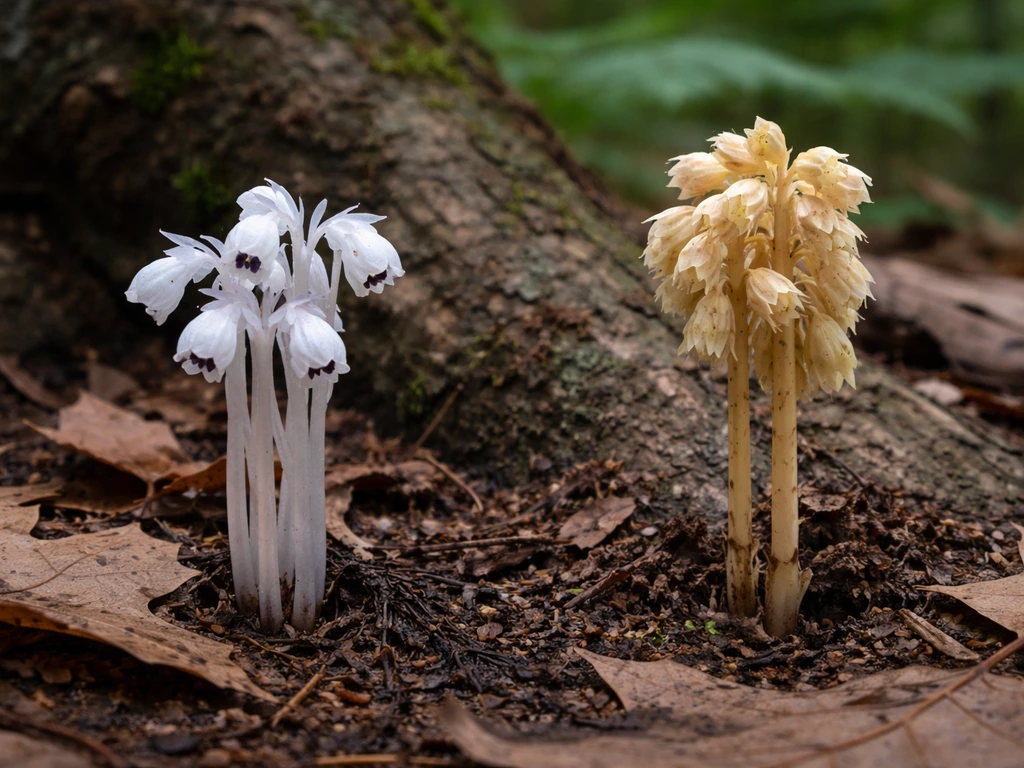
Ghost pipe is fairly distinctive once you know what you're looking at, but the Ohio DNR's Summer Wildflowers guide specifically calls out blank" rel="noopener noreferrer">one common mix-up: pinesap (Monotropa hypopitys). Both are mycoheterotrophic, lack chlorophyll, and grow in shaded forest settings. Here's how to tell them apart:
| Feature | Ghost Pipe (M. uniflora) | Pinesap (M. hypopitys) |
|---|---|---|
| Color | White to pale pink (sometimes purplish) | Yellow, orange, or reddish |
| Flowers per stem | Single nodding flower | Multiple flowers per stem |
| Stem appearance | Single, curved at tip like a pipe | Upright, clustered flowers at top |
| Bloom timing (Ohio) | Typically July to September | Often June to August, sometimes fall |
If you find something you think is ghost pipe, take photos from multiple angles, including the stem base, the flower from the side, and any nearby trees. Note the GPS location. Then upload it to iNaturalist for community verification. The expert community there is good at confirming Monotropa species from decent photos.
Do not pick it, collect it, or dig it up. Beyond the ecological damage, ghost pipe collapses and turns black almost immediately after being severed from its fungal host. You'll end up with a black mush and one fewer plant in the population. Leave it exactly where it is, photograph it, and report it. That's the most useful thing you can do.
Better alternatives if ghost pipe isn't in your area
If your property doesn't have the right conditions for ghost pipe, or you want unusual shade-forest plants you can actually cultivate, Ohio has some genuinely interesting options that are far more gardener-friendly.
- Pinesap (Monotropa hypopitys): Also mycoheterotrophic and not easily cultivated, but it occurs in similar Ohio habitats and is slightly more tolerant of varied forest conditions. Worth looking for in the same forest patches where you'd search for ghost pipe.
- Wild ginger (Asarum canadense): A true shade-loving native that grows in moist, humus-rich woodland soil. Slow to spread but very satisfying in a shaded garden setting, and widely available from Ohio native plant nurseries.
- Jack-in-the-pulpit (Arisaema triphyllum): Thrives in moist, shaded forest floors across Ohio. Unusual enough to be interesting, but it's actually growable from corms you can buy commercially.
- Trout lily (Erythronium americanum): Another Ohio native that prefers similar cool, moist woodland conditions. It spreads slowly but establishes well if you start with nursery-grown stock.
- Bloodroot (Sanguinaria canadensis): One of the most striking Ohio woodland natives, with white flowers on bare stems in early spring. It tolerates cultivation well and does great in a shaded garden with rich, well-drained soil.
Ghost pipe is fascinating precisely because it refuses to be tamed. If you're in Ohio and curious about it, your best bet is to head into a mature forest in Hocking, Athens, or similar southeastern counties in midsummer, move quietly through the duff layer, and look low to the ground. You might get lucky. But if you want something unusual to actually grow in your garden, the native woodland plants above will reward your effort far more reliably. Ghost pipe is one for the forest, not the flower bed.
If you're curious how ghost pipe occurrence compares in neighboring states, the situation is similar in Indiana and Michigan, where it also turns up in mature forest settings but remains impossible to cultivate deliberately. Wisconsin and Missouri also have records, each with their own regional forest types that determine where it shows up. Wisconsin does have documented ghost pipe records too, with the same mature, shaded, moist-forest conditions that it needs elsewhere Wisconsin records.
FAQ
If a county in Ohio has records, will ghost pipe show up every year in the same spot?
Not reliably. Ghost pipe emerges only briefly in summer (often July through September) and depends on the presence and health of specific soil fungi, so you can have suitable woods and still see no plants in a given year.
What is the most common look-alike in Ohio, and how can I avoid confusing it with ghost pipe?
Yes, it can be mistaken for pinesap. A key practical check is to photograph the whole plant and nearby trees, then compare against the Ohio DNR Summer Wildflowers guidance, because both are pale and shade-loving and both lack chlorophyll.
Is it better to transplant ghost pipe if I find it on my property?
Avoid any digging, even if your goal is “rescue” or “relocation.” Ghost pipe relies on an intact underground fungal connection, and severing it typically kills the plant quickly while also damaging the local forest patch.
I found what looks like ghost pipe, should I collect it if iNaturalist says it is likely Monotropa?
You should treat iNaturalist verification as confirmation of species identity, not permission to collect. Even when the ID looks likely, the safe next step is to leave it in place, keep photos for your notes, and report the sighting through the platform.
Can I grow ghost pipe by just making a shady, moist spot with lots of leaf litter or mulch?
Usually, yes. The plant is effectively tied to thick organic duff and a mature fungal network, so moving mulch, adding compost, or creating a shaded corner rarely replicates the decades-long underground conditions it needs.
Why might ghost pipe be absent from a forest that seems suitable on the surface?
It depends on whether the fungus network remains undisturbed. Heavy trail construction, soil scraping, or frequent disturbance can reduce the local conditions, so sites that look “woodsy” but are frequently trampled may still be poor candidates.
When is the best time of day and what part of the forest floor should I search for ghost pipe in Ohio?
Check both timing and microhabitat. Ghost pipe is low to the ground and can be easy to miss, so scanning the leaf litter and duff at the right season matters more than looking for it on open woodland edges.
Does ghost pipe always look white, or can color changes mean it is a different plant?
Ghost pipe can look similar across its pale white to pale pink forms, but it is still a single species with the same dependency on fungi. Color alone is not a reliable ID feature, so use multiple photos and nearby tree context instead of trusting “white versus pink.”
Next Articles
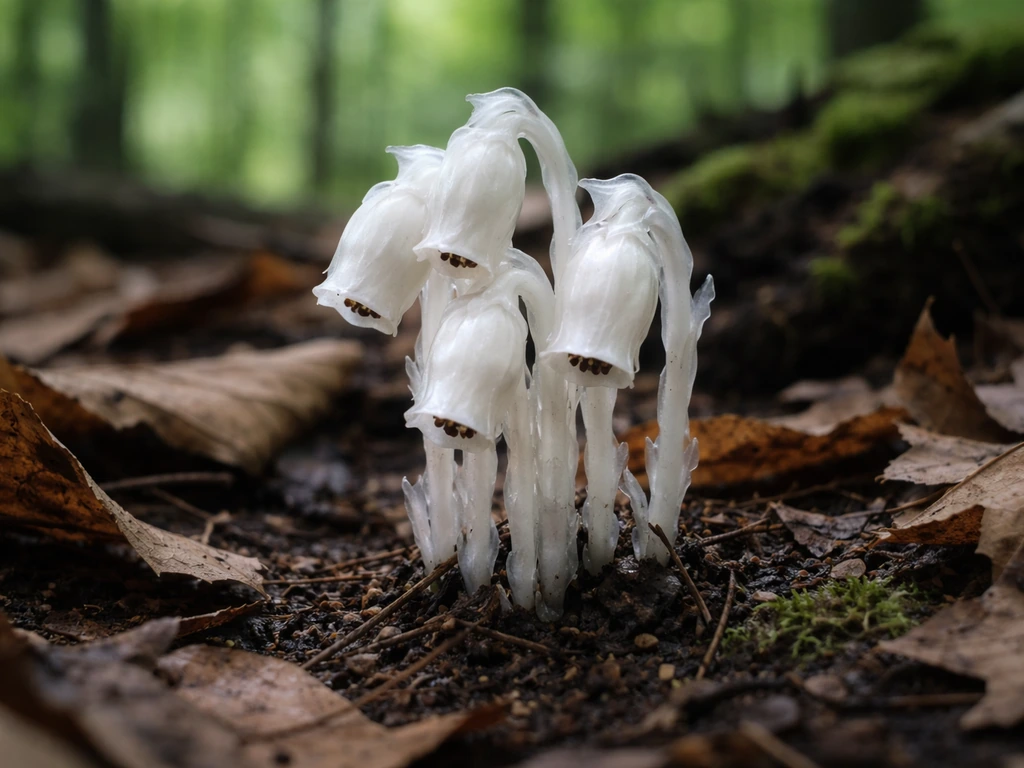
Does Ghost Pipe Grow in Michigan? Habitat, ID, and Odds
Find out if ghost pipe grows in Michigan, where it appears in forests, how to ID it, and realistic odds.
Can You Grow Black Pepper in the US Where and How
Learn where black pepper can be grown in the US and how to grow it indoors or in warm zones for fruit.

Can You Grow Capers in the US? Regional Guide for Home Gardeners
Regional guide to growing caper plants in the US, choosing cultivars, meeting soil and climate needs, and harvesting bud