
Yes, ghost pipe (Monotropa uniflora) does grow naturally in Michigan. Ghost pipe does not naturally grow in Georgia in the way it does in places like Michigan, where it has documented native populations. There are voucher specimens on record at the University of Michigan Herbarium, and it has been documented at sites like Asylum Lake Preserve. But calling it something you can "grow" is where things get complicated fast. Ghost pipe is one of the most ecologically demanding plants in North American forests, and finding it in Michigan is largely a matter of being in the right forest at the right time, not of planting or cultivating anything.
Does Ghost Pipe Grow in Michigan? Habitat, ID, and Odds

Marcus Petersen
9 Jun 2026
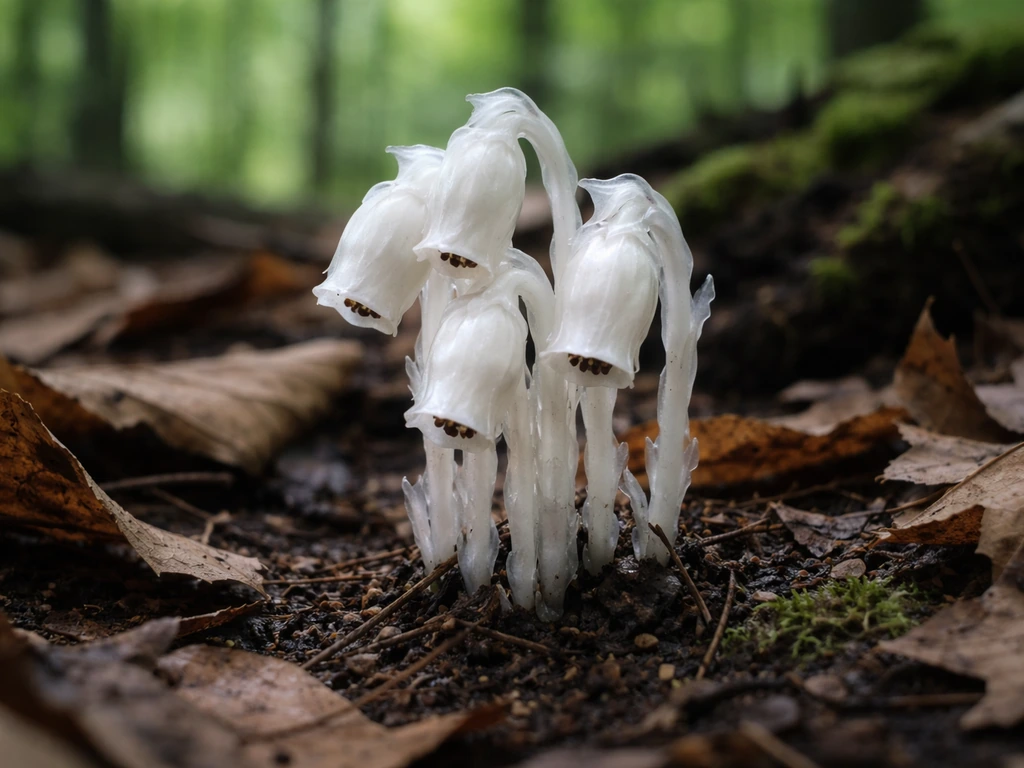
What ghost pipe actually is (and why Michigan matters)
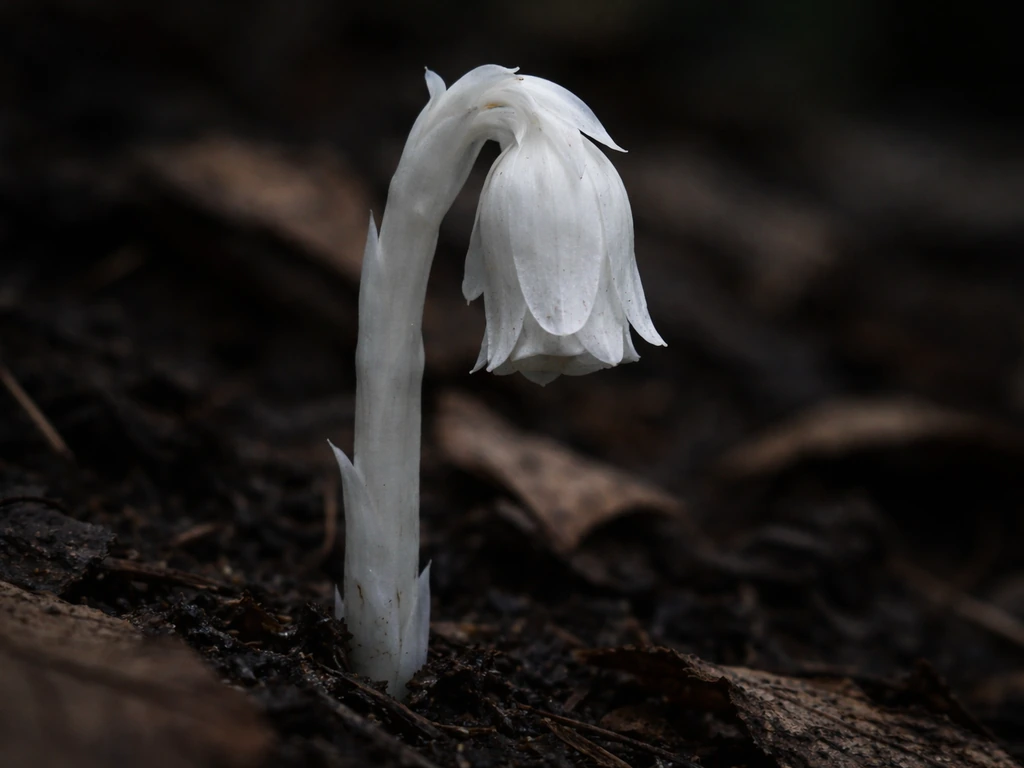
Ghost pipe looks like something from a fantasy novel: pale white, waxy, completely lacking green color. That's not a disease or albinism. Monotropa uniflora genuinely produces no chlorophyll and does zero photosynthesis. Instead, it steals carbon from ectomycorrhizal fungi, specifically from fungal networks in the Russulaceae family, which are themselves connected to the roots of photosynthetic trees like oaks, beeches, and conifers. The plant is a mycoheterotroph, which basically means it's a parasite on a fungus that is a mutualist with a tree. It's a three-way ecological relationship, and if any leg of that triangle is missing, you won't see ghost pipe.
It grows 10 to 30 cm tall with a single drooping flower at the top of each stalk, hence the species name "uniflora" (one-flowered). The whole plant, stem and all, is white to pale pinkish. Why does Michigan matter specifically? Because Michigan has the right forest types, the right fungal communities, and enough intact woodland to support this plant in scattered pockets across the state. It's not rare in the way an orchid is rare, but it's not something you stumble across everywhere either.
Does ghost pipe actually grow in Michigan? The native range story
Ghost pipe's native range covers much of North America, but the distribution is famously patchy, with large gaps between known populations. Michigan sits comfortably within that broader range. Herbarium records confirm its presence in the state, and it's considered native, meaning it belongs here ecologically rather than being introduced. Herbarium voucher records from the University of Michigan document Monotropa uniflora in Michigan, demonstrating it has been recorded via catalog material University of Michigan Herbarium voucher records. That said, even within confirmed populations, individual sightings can be sporadic. You might see a cluster of ghost pipe at a site one year and find nothing the next, because the above-ground plant only appears when conditions are right for that particular season.
Compared to neighboring states like Ohio, Wisconsin, and Indiana, Michigan's situation is quite similar: all of them fall within the native range, and all have the same challenge of patchy, forest-dependent populations. Ghost pipe can also occur in Indiana, but it is still highly patchy and depends on the same type of forest and fungal networks. Ghost pipe also appears in Wisconsin, but its populations are likewise patchy and depend on the right forest and fungal communities. Because the fungus-and-forest relationship is similar across the region, ghost pipe can also occur in Ohio, though records and sightings are typically just as patchy ghost pipe grow in Ohio. Michigan's abundance of mixed hardwood and conifer forests across the Lower Peninsula and especially the Upper Peninsula gives it solid habitat in theory. The Upper Peninsula's intact old-growth pockets and beech-maple forests are arguably some of the best ghost pipe habitat in the Great Lakes region.
The habitat requirements ghost pipe needs in Michigan
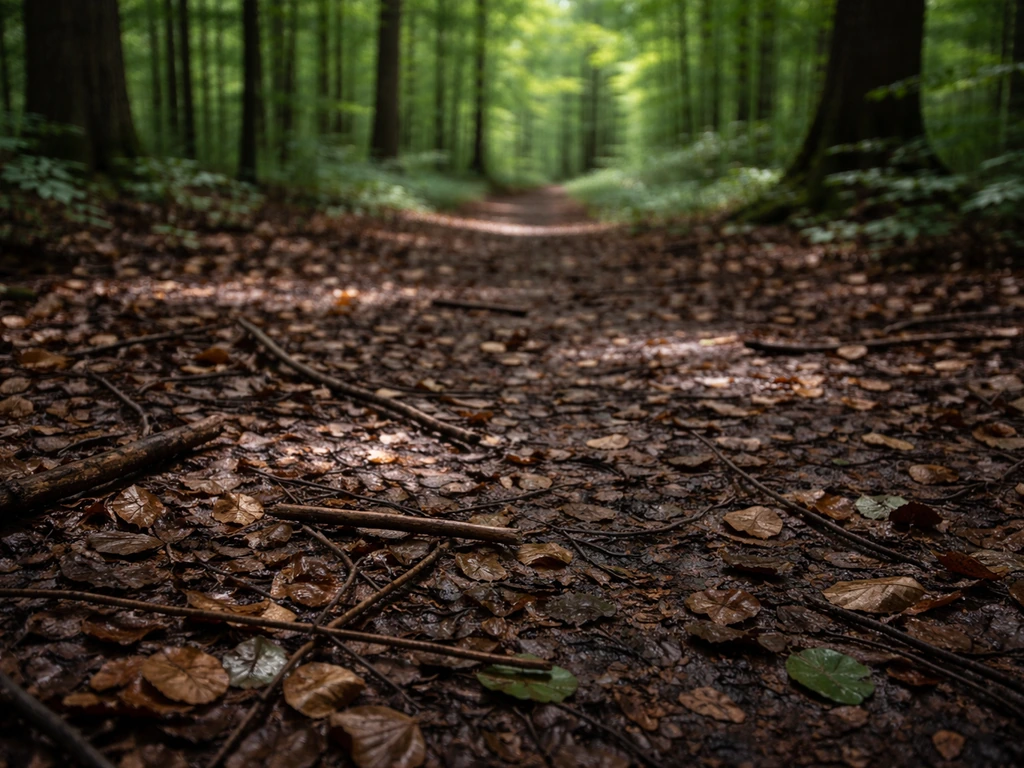
This plant is extremely specific about where it grows. If you want to find it, understanding its habitat requirements is half the battle. Here's what to look for in Michigan specifically:
- Mature, shaded forest with heavy canopy cover. Ghost pipe does not tolerate open sun. It needs deep shade from a closed canopy.
- Moist but well-drained forest floor. It tends to appear after periods of rain in summer, often in humus-rich leaf litter.
- Presence of ectomycorrhizal trees: beech, oak, and various conifers are key. In Michigan, beech-maple forests and mixed oak woodlands are prime suspects.
- Intact Russulaceae fungal communities in the soil. You can't see these, but their presence is implied by mature forest that hasn't been heavily disturbed.
- Undisturbed soil. Tilling, compaction, and construction destroy the fungal networks ghost pipe depends on.
- Slightly acidic, organic-rich soil typical of established forest floors.
In practical terms for Michigan, you're looking at the floors of mature hardwood forests, often near stands of American beech or large oaks, in areas that get reliable summer moisture. State forests, nature preserves, and the older sections of state parks are your best bets. Managed agricultural land, young second-growth woods, and urban green spaces are unlikely candidates.
Can you grow ghost pipe at home? The honest answer
No, not in any practical sense. I know that's frustrating to hear, but this is one plant where the usual gardener's toolkit simply doesn't apply. Ghost pipe has no chlorophyll, so it can't be grown from seed in a pot with soil and sunlight. It requires living fungal networks that are themselves integrated into living tree root systems. Britannica notes that fully mycoheterotrophic plants partner only with select fungal lineages, which helps explain why transplanting or cultivation is such an obstacle thrives only in partnership with select fungal lineages. You cannot replicate that in a garden bed or container.
Transplanting is equally futile. University of Washington propagation research explicitly warns that Monotropa uniflora has delicate root systems that resist transplanting. When you dig up ghost pipe, you sever the fungal connections it relies on for every calorie it gets. The plant effectively dies the moment you pull it from its native soil. There are documented propagation protocol attempts in academic settings, but success in a home garden context is essentially unheard of.
The realistic approach is to locate good habitat, visit it seasonally, and observe. That's not a consolation prize. Seeing ghost pipe in a Michigan forest is genuinely exciting, and the fact that you can't cultivate it makes finding it in the wild more meaningful.
How to identify ghost pipe correctly in Michigan
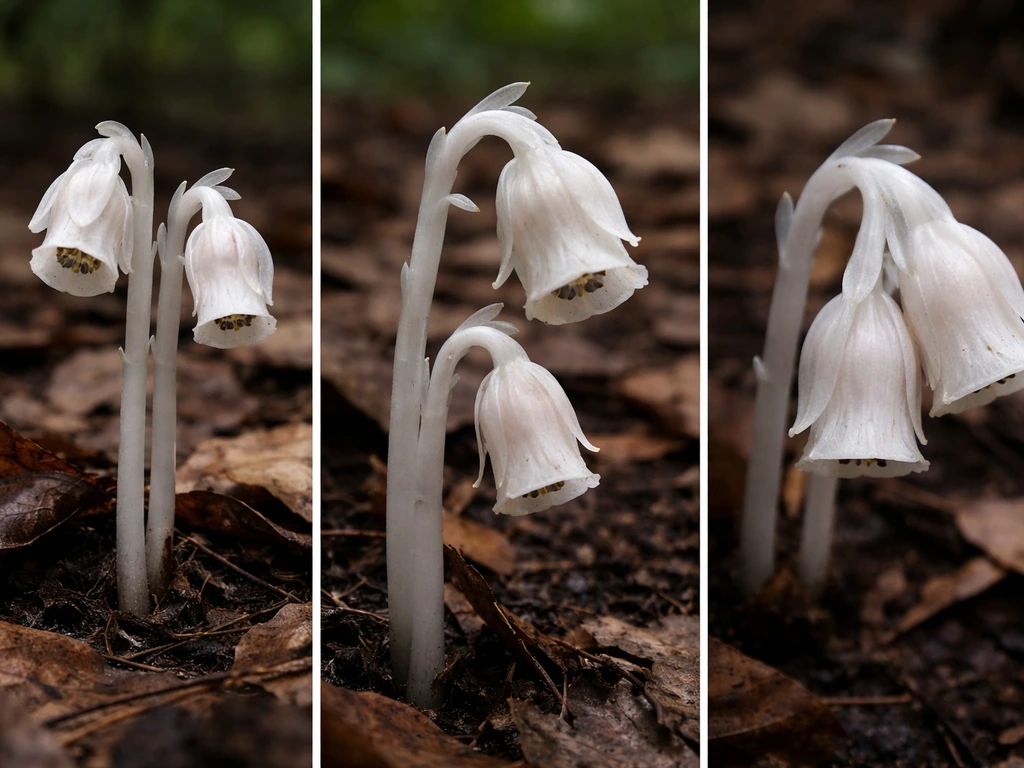
Ghost pipe is visually distinctive, but there are a couple of plants worth knowing about so you don't misidentify what you're seeing.
Key identification features
- Completely white to pale pinkish coloration with no green whatsoever
- Single flower per stalk, drooping downward like a nodding bell (1.5 to 2 cm long)
- Smooth stem without hairs on the outside
- Waxy, almost translucent appearance
- Turns black when damaged or dried
- Height roughly 10 to 30 cm
The main lookalike: pinesap
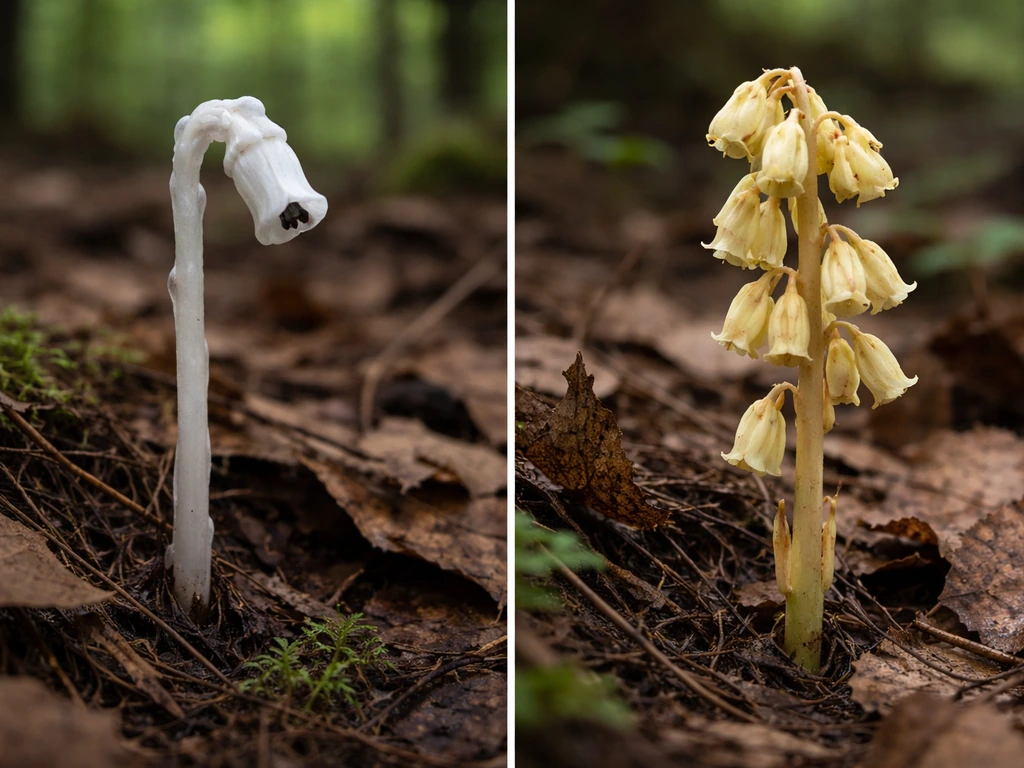
The most common confusion is with pinesap (Monotropa hypopitys), which also grows in Michigan forests and is also mycoheterotrophic. The single easiest distinction: pinesap has multiple flowers per stalk, while ghost pipe has only one. Pinesap also tends toward yellowish or reddish coloration rather than pure white. If you see multiple flowers on one stem, it's pinesap, not ghost pipe.
| Feature | Ghost Pipe (M. uniflora) | Pinesap (M. hypopitys) |
|---|---|---|
| Flowers per stalk | One only | Multiple (raceme) |
| Color | White to pale pink | Yellowish to reddish |
| Stem texture | Smooth (no hairs) | Slightly hairy |
| Michigan presence | Confirmed native | Also present in Michigan |
Also note that ghost pipe can show pink to reddish color variation, especially in some individual plants. This is normal variation and doesn't mean it's pinesap. The single-flower rule is your most reliable field test.
Practical next steps: where to look, when to go, and how to improve your odds
Timing: when ghost pipe appears in Michigan
Above-ground plants typically appear from late June through September, with peak emergence often occurring after summer rain events. If Michigan has had a wet stretch in July or August, that's an excellent time to go looking. The plants can emerge quickly after rainfall and may only be visible for a few weeks before dying back. So timing your visits to follow summer rain is one of the best practical strategies you have.
Where to look in Michigan
- Mature beech-maple forest floors in the Lower Peninsula, especially in areas with old-growth or second-growth forests that haven't been logged in decades.
- State forest lands and nature preserves with heavy canopy cover and undisturbed soil.
- Areas near streams or low spots within forests where moisture is consistent but drainage is adequate.
- The Upper Peninsula: intact conifer and mixed hardwood forests there arguably offer some of the best habitat in the state.
- iNaturalist observations for Michigan: searching the platform for recent Monotropa uniflora sightings in your county will give you a real-time map of where locals have spotted it this season.
Resources worth checking
- Michigan DNR's plant resources and threatened species lists: check these before you go anywhere near digging or collecting.
- University of Michigan Herbarium collections: useful for understanding which counties have documented records.
- Michigan Natural Features Inventory (MNFI): tracks rare species and can give you a sense of whether ghost pipe has been flagged in specific areas.
- Local native plant societies and foraging groups: members often have firsthand knowledge of specific woodland sites with regular sightings.
Legality and ethics of foraging or transplanting ghost pipe in Michigan
Michigan DNR foraging rules are clear that you cannot take or damage protected plant species, and you cannot harvest plants in ways that destroy or damage them. Ghost pipe's status on Michigan's threatened and endangered species list should be verified before you do anything beyond observation. As of now, Monotropa uniflora is not on the state T&E list as a threatened or endangered species, but local site-specific rules (nature preserves, state parks, national forests) may prohibit any collection at all regardless of species status.
Beyond the legal question, there's a strong ecological argument for simply leaving ghost pipe alone. Even if collection were permitted on a given piece of land, transplanting ghost pipe causes it to die immediately because of those severed fungal connections. There's no conservation benefit to the plant and no gardening benefit to you. Photographing it and leaving it in place is genuinely the best outcome for everyone involved, including the plant, the fungal network, and the host trees.
My honest recommendation: this is a plant worth seeking out in Michigan woods, not a plant worth trying to grow or collect. Focus your energy on identifying the right forest habitat, timing your visits after summer rain, and using community science tools like iNaturalist to find documented locations near you. In Texas, the same forest-and-fungus dependency limits where ghost pipe is likely to be found, so it is not something people typically grow there ghost pipe in Texas. That's where the real payoff is.
FAQ
If ghost pipe is native to Michigan, why do I sometimes never find it even in good forests?
Yes, but only within the narrow window when the above-ground stalk has emerged. In Michigan, sightings are often triggered by summer rain and can disappear after a few weeks, so “it was there last year” does not guarantee it will be visible on your planned date.
What specific Michigan forest conditions make ghost pipe more likely?
Look for a mature, undisturbed forest floor, typically under hardwoods like beech or large oaks, where soil stays consistently moist through summer. Avoid areas with frequent disturbance, heavy foot traffic, or recent clearing, because the living fungal and host-tree connections are what matter.
Are there common “easy” places to see ghost pipe in Michigan, like trails or parking areas?
It is possible to spot it in parks or public land, but the plant can be present without being “publicly advertised.” The safest approach is to use seasonal observation records (for example, recent iNaturalist checklists) and then confirm identity on-site rather than assuming it will occur in high-visibility areas.
How can I avoid confusing ghost pipe with pinesap when the color varies?
Yes, pinesap and ghost pipe can both be mycoheterotrophs, but pinesap usually has multiple flowers on a single stalk and often reads as yellowish or reddish. If you see more than one flower per stem, treat it as pinesap and do not assume it is a color variation of ghost pipe.
Does pink or reddish ghost pipe mean it is not ghost pipe?
Color alone is unreliable because ghost pipe can range from pure white to pale pinkish, and sometimes deeper pinkish or reddish tones. The most dependable field test is the number of flowers per stalk (one for ghost pipe, multiple for pinesap).
Can I bring ghost pipe home by carefully transplanting it or trying to keep it alive in a pot?
Do not attempt it. Even if you could remove a plant without immediately killing the above-ground part, the critical fungus-tree network is severed when roots are disturbed, and home propagation success is essentially not a realistic outcome outside controlled research settings.
If collecting seems tempting, is photographing it instead actually better for conservation?
It is not just “no harvesting,” it is also a practical conservation issue. Even where collection might be technically discussed, removing plants offers no lasting benefit, and photographing in place is the most helpful action because it avoids breaking the fungal associations the plant depends on.
When is the best time to look in Michigan, and does weather matter?
Often, yes. Many sightings are concentrated after wet stretches, so “late June through September” is the broad window, but the highest odds usually come right after summer rain events. If Michigan’s July or August has been dry, expect a lower probability of emergence.
What photos and details help verify a potential ghost pipe sighting in Michigan?
If you suspect you found it, take clear photos of the whole stalk (showing flower count), close-ups of the flowers, and the surrounding habitat (tree type, forest floor condition). Then document the location and timing for verification on community platforms.
What’s the difference between state rules and site-specific rules when it comes to ghost pipe in Michigan?
Be extra cautious because even if a plant is not on the state threatened and endangered list, local rules can still restrict picking or damaging any vegetation. Nature preserves, state parks, and similar properties may prohibit collection regardless of species status.
Next Articles
Can You Grow Black Pepper in the US Where and How
Learn where black pepper can be grown in the US and how to grow it indoors or in warm zones for fruit.

Can You Grow Capers in the US? Regional Guide for Home Gardeners
Regional guide to growing caper plants in the US, choosing cultivars, meeting soil and climate needs, and harvesting bud
Can You Grow Peppercorns in the US? A Zone-by-Zone Guide
Zone-by-zone guide to growing black pepper peppercorns in the US, including heat, humidity, indoor options, and timeline