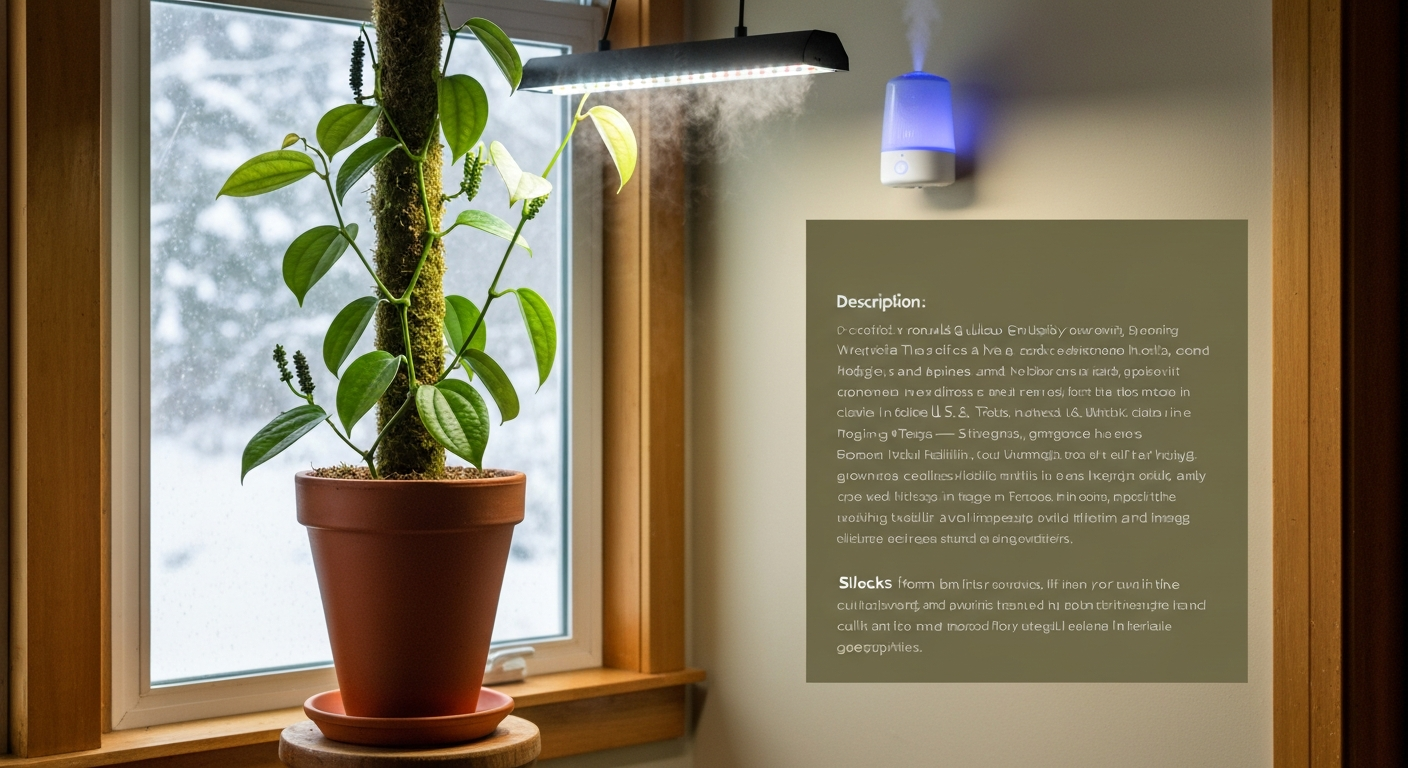
Yes, you can grow black pepper (Piper nigrum) in Michigan, but not outdoors in the ground. Michigan's winters will kill it outright. What you can do is grow it as a container plant indoors or in a heated greenhouse year-round, moving it outside during the warmest summer months if you want. It will grow, it can flower, and with enough patience and the right setup, it can eventually produce peppercorns. But this is a long-game tropical vine that demands consistent warmth, high humidity, and good light, and you should go in expecting a 2 to 4 year wait before your first real harvest. If you're willing to treat it like a houseplant project rather than a vegetable garden crop, it's worth attempting.
Can You Grow Black Pepper in Michigan? Practical Guide Tips!
Marcus Petersen
17 Jul 2026
Why Black Pepper Struggles in Cool Climates Like Michigan's
Michigan sits in USDA Hardiness Zones 5a through 6b depending on where you are in the state. Summers are warm but short, winters are brutal, and humidity levels indoors during heating season drop to levels that would stress most tropical plants hard. Black pepper is a creature of the humid tropics. It evolved in the wet, warm forests of the Western Ghats in India and needs sustained warmth to do anything useful. Growth slows noticeably below about 16°C (60°F), and real stress, including reproductive failure and leaf drop, kicks in around 10°C (50°F) or lower. A Michigan frost, or even a cold snap into the low 40s°F, can damage or kill a plant that hasn't been hardened at all. The problem isn't just the cold; it's also the dry indoor air Michigan gardeners deal with from October through April, which sits nowhere near the 70 to 90 percent relative humidity black pepper prefers.
I killed two plants in my first winter by putting them near a heating vent. The leaves dried up and the whole vine declined within six weeks. The plant didn't freeze. It desiccated. That's the less obvious Michigan challenge: keeping humidity up while also keeping temperature up, without burning the plant.
What Piper nigrum Actually Is and What It Takes to Fruit
Black pepper is a woody, climbing vine in the family Piperaceae, not related to capsicum peppers at all. In the wild and on farms, it climbs trees or support poles and can grow well beyond 4 meters (13 feet). What we call peppercorns are the dried fruits of this vine. Green peppercorns are unripe, black peppercorns are dried unripe fruit, and white pepper comes from the ripe seed with the outer skin removed. It's a perennial plant, meaning it doesn't die back seasonally the way a tomato does. Given the right conditions, a healthy Piper nigrum vine lives and produces for many years.
The life cycle that matters for hobby growers: once established from a cutting or young plant, expect a vegetative phase of roughly 2 to 3 years before the vine matures enough to flower under container conditions. After flowering, peppercorns take another 6 to 8 months to ripen. So your realistic timeline from purchasing a young cutting to harvesting your first peppercorns is somewhere between 2 and 4 years. That's not a reason to skip it, but it is a reason to start sooner rather than later and to keep the plant alive through Michigan winters rather than letting it fail and starting over.
The Exact Environmental Conditions Black Pepper Needs
Getting the environment right is the central challenge. Here are the targets you're aiming for in Michigan, indoors or in a greenhouse:
| Parameter | Optimal Range | Michigan Reality | Fix |
|---|---|---|---|
| Daytime temperature | 24–30°C (75–86°F) | Fine indoors in summer; too low in winter without heat | Keep plant in warmest interior room or heated greenhouse |
| Nighttime temperature | >15°C (59°F) | Risky near windows in winter | Move plant away from cold glass; use heat mat under pot |
| Relative humidity | 70–90% RH | 20–40% RH common in heated homes | Pebble trays, humidifier, or greenhouse enclosure |
| Light (DLI) | ~20–30 mol/m²/day | Very low Oct–Mar outdoors | Supplement with full-spectrum LED grow lights in winter |
| Light (PPFD) | ~300–700 μmol/m²/s | Insufficient at a window in winter | LED grow light hung 30–45 cm above canopy |
| Soil pH | 4.5–6.5 (optimum ~5.0–6.0) | Variable; test your mix | Use peat or coir-based mix, slightly acidic |
| Soil drainage | Well-drained, humus-rich | Avoid heavy clay or standing water | Use loose potting mix with perlite added |
Light is the factor most Michigan growers underestimate in winter. From roughly October through March, natural light through a south-facing window in Michigan rarely delivers the daily light integral a fruiting tropical vine needs. If you want your plant to grow vigorously (or have any hope of flowering) in winter, budget for a decent LED grow light. A full-spectrum fixture delivering around 300 to 500 μmol/m²/s at canopy level for 12 to 14 hours a day will get you into the right range without cooking the plant.
Outdoor vs. Greenhouse vs. Indoor Container: Your Three Real Options
Outdoor In-Ground Growing
Don't do it. There is no practical outdoor in-ground option for black pepper in Michigan. Even in the warmest corners of the state (southwest Lower Peninsula near Lake Michigan), you'd need the plant outside before the ground reaches 16°C consistently, and you'd need to bring it back in before the first frost in September or October. The growing window is simply too short and the logistics of moving a vining plant in and out every year are more trouble than the results justify. If you want a summer outdoor stint, that's fine as a supplement for an established container plant, but never as the main growing strategy.
Heated Greenhouse Growing
A heated hobby greenhouse is the closest you'll get to ideal conditions in Michigan. You can maintain 24 to 30°C year-round, use a humidifier or misting system to keep relative humidity above 70 percent, and the natural light situation in summer is genuinely excellent. The downsides are cost (heating a greenhouse through a Michigan winter is not cheap) and the winter light deficit, which still requires supplemental lighting for good growth from October through March. If you already have a greenhouse, black pepper is a rewarding vine to tuck into a warm, humid corner.
Indoor Container Growing
This is what most Michigan hobbyists will end up doing, and it works. Grow the vine in a container, keep it in a warm room (not near exterior walls or heating vents), add a humidifier nearby, and supplement light in winter. The plant won't grow as fast as it would in a greenhouse, and fruiting may take longer, but it's achievable. Container growing also forces you to manage the plant's size, which is actually helpful since unconstrained vines get very large.
| Method | Year-Round Feasibility | Cost | Fruiting Potential | Recommended? |
|---|---|---|---|---|
| In-ground outdoor | No | Low | None | No |
| Outdoor container (summer only) | Partial (supplement only) | Low | Very low alone | Only as a summer boost |
| Heated greenhouse | Yes | High (heating costs) | High with supplements | Yes, if you have one |
| Indoor container | Yes | Moderate (grow light) | Moderate with patience | Yes, best for most hobbyists |
Michigan vs. Texas, Australia, and Canada: How the Regions Stack Up
It helps to understand where Michigan sits in the global context of growing this plant. Compared to Texas, Michigan is at a real disadvantage. In South Texas or the Gulf Coast, outdoor container growing is feasible for much of the year, and a protected patio or greenhouse gets very close to tropical conditions with minimal intervention. Texas growers deal with heat stress in peak summer more than cold stress in winter, which is the opposite of Michigan's problem. If you're in Texas and considering black pepper, the path is meaningfully shorter and cheaper.
Australia's tropical north (Queensland, Northern Territory) can grow black pepper outdoors in the ground with no protection at all. The humid subtropical and tropical zones there are genuinely suitable. For more on regional suitability and outdoor cultivation in Australia, see can you grow pepper in australia. Southern Australia is more like Mediterranean California and still much warmer than Michigan in winter.
Canada, particularly in provinces like Ontario or British Columbia, faces challenges similar to or greater than Michigan's. Cool-temperate and cold-temperate climates in Canada leave growers relying entirely on indoor or greenhouse production. Michigan gardeners have a slight edge in growing-season length and summer warmth, but both regions require the same indoor commitment. For Canada-specific guidance on indoor and greenhouse strategies in cool-temperate climates, see Can you grow black pepper in Canada.
| Location | Hardiness Zone Range | Outdoor In-Ground? | Best Approach | Time to Harvest (Estimate) |
|---|---|---|---|---|
| Michigan | 5a–6b | No | Indoor container or heated greenhouse | 3–4 years from cutting |
| Texas (South/Gulf Coast) | 8b–10a | Possible in warmest zones | Outdoor container or patio greenhouse | 2–3 years from cutting |
| Australia (Tropical North) | Equivalent to Zone 11–12 | Yes | Outdoor in-ground | 2–3 years from cutting |
| Canada (Ontario/BC) | 4a–7b | No | Indoor container or greenhouse | 3–5 years from cutting |
Picking a Variety and Where to Find Plants in Michigan
Piper nigrum varieties include Panniyur-1, Karimunda, and Sreekara among the most common in cultivation. For a Michigan hobbyist, variety choice matters less than getting a healthy, established plant or cutting to start with. What you're looking for is a vigorous, disease-free cutting or young plant rather than a specific cultivar, since varietal differences in flavor and yield are secondary when you're fighting climate constraints.
Your best sourcing options in Michigan are specialty online nurseries that ship tropical plants. Logee's Plants for Rare & Exotic Tropicals (based in Connecticut) regularly carries Piper nigrum and ships rooted plants in appropriate sizes. You can also find cuttings on Etsy from specialty tropical growers. Local options are limited: most Michigan garden centers don't stock Piper nigrum, but some university extension greenhouses and tropical plant societies (the Great Lakes area has several) occasionally have cuttings available through swaps or sales. If you're sourcing a cutting rather than a rooted plant, plan to root it yourself, which is straightforward with the right technique (covered below).
When buying online, request or select semi-hardwood cuttings (not soft new growth) or small rooted plants in 4-inch pots. Avoid bare-root shipping in cold months; schedule delivery for late spring if possible so the plant arrives when your indoor environment is naturally warmer.
How to Propagate Black Pepper: Cuttings, Layering, and Seeds
Stem Cuttings (The Best Method)
Vegetative propagation by stem cuttings is the standard approach, both commercially and for hobby growers. A Journal of Science and Technology article, “Studies on Macro Vegetative Propagation of Black Pepper using Vine Cuttings,” reports that vegetative propagation by stem (vine) cuttings is the standard and most reliable method for multiplying Piper nigrum and that seed propagation is uncommon in production systems Studies on Macro Vegetative Propagation of Black Pepper using Vine Cuttings (Journal of Science and Technology). Seeds are uncommon and unreliable for most hobbyists. Here's how to do it step by step:
- Take a semi-hardwood cutting with 2 to 3 nodes from a healthy vine, ideally in spring or early summer when the parent plant is actively growing. Cut just below a node using clean, sharp scissors.
- Remove leaves from the lower node, leaving one or two leaves at the top to support photosynthesis.
- Dip the cut end in IBA (indole-3-butyric acid) rooting hormone powder or solution at around 1000 ppm. This step significantly improves rooting success compared to untreated cuttings.
- Prepare a rooting mix: a 1:1:1 ratio of potting soil, coarse sand, and compost works well. The mix should drain freely but retain some moisture.
- Insert the cutting into the moist rooting mix so that the lower node is buried. Firm the mix gently around the stem.
- Cover loosely with a clear plastic bag or humidity dome to maintain high moisture around the cutting. Keep the setup at 24 to 28°C (75–82°F). A heat mat under the tray helps considerably in Michigan's cooler months.
- Check for rooting in 4 to 6 weeks by gently tugging. Once rooted, remove the dome gradually over a week to acclimate the cutting to ambient humidity.
- Transplant into a 6- to 8-inch pot with your acidic potting mix once roots are established and the cutting has pushed new growth.
Research trials with ideal conditions and rooting hormone treatments report rooting success above 90 percent for two-node cuttings. In a home setting without precise control you can realistically expect 50 to 75 percent success, which is still good. Take a few extra cuttings to account for losses.
Air Layering
If you already have a mature vine and want to propagate without detaching a cutting prematurely, air layering works well. Select a healthy stem section with at least two nodes. Wound the stem by removing a ring of bark about 2 to 3 cm wide. Apply rooting hormone to the wound, pack moist sphagnum moss around it, and wrap tightly with clear plastic film, sealing both ends. Roots usually develop within 6 to 8 weeks. Once you see vigorous root growth through the moss, cut the stem below the rooted section and pot it up. Air layering gives you a rooted cutting that has never been stressed by severance, which is a good advantage.
Growing from Seed
Growing black pepper from seed is possible but slow and less reliable than cuttings. Fresh seeds (not dried peppercorns from your spice rack, which are dead) germinate in 30 to 60 days at around 26 to 30°C with consistent moisture. If you can source fresh viable seed, sow it about 1 cm deep in a warm, moist propagation mix and keep it covered. Germination rates are variable. The bigger issue is that seed-grown plants add at least a year to your timeline before the vine is mature enough to consider flowering, so for Michigan hobbyists already facing a slow clock, cuttings are almost always the better starting point.
Container Setup, Trellis, and Potting Mix
Start a young rooted cutting in a 6- to 8-inch pot, then move up to a 12- to 18-inch (30- to 45-cm) container as the plant grows. Piper nigrum doesn't need a huge root zone relative to its vine length, but it does need good drainage. Avoid pots without drainage holes. A mix of quality peat- or coir-based potting soil with about 20 to 30 percent added perlite gives the right balance of moisture retention and aeration. Target a soil pH of 5.0 to 6.0; test with an inexpensive pH meter and amend with sulfur to lower pH if your tap water is alkaline (common in Michigan).
Black pepper is a climber and needs a vertical support from early on. A moss pole works well because the aerial roots can grip it, mimicking what the vine does in nature. Bamboo stakes or a small trellis also work. Plan for a support of at least 1 to 1.5 meters (3 to 5 feet) for a young plant, knowing that a mature, well-grown vine can reach 3 to 4 meters or more. Most Michigan indoor growers will manage the vine to a practical size by pruning, which doesn't harm production.
Year-Round Care: Watering, Feeding, and Pruning
Water consistently but never let the pot sit in standing water. In active growth (spring through summer), water when the top inch of soil is dry. In winter, reduce frequency slightly since growth slows and the risk of root rot from overwatering increases. Always use room-temperature water; cold water from the tap can shock roots in a warm tropical plant.
Feed with a balanced, slightly acidic liquid fertilizer (something like a 10-10-10 or a tomato/fruiting formula) every 2 to 3 weeks during the active growing season. Reduce to once a month in winter. Black pepper benefits from occasional foliar feeding with a dilute fertilizer spray, particularly during the growing season when you want to push vegetative growth. Avoid over-fertilizing with nitrogen; too much pushes leafy growth at the expense of flowers.
Prune lightly to keep the vine at a manageable size and to encourage lateral branching, which is where spikes (flower clusters) emerge. Pinching back the growing tip once a vine is established promotes branching. Remove any dead or yellowing stems promptly.
Overwintering and Humidity Strategies for Michigan Growers
Winter is when most Michigan growers lose their plants. The combination of low light, low humidity, and temperature fluctuations near windows is genuinely dangerous for Piper nigrum. Here's how to manage it:
- Move the plant to the warmest interior room, away from exterior walls and drafty windows. A bathroom with a south-facing window can work well due to naturally higher humidity.
- Run a small humidifier nearby, or at minimum use a large pebble tray filled with water under the pot. Aim to keep ambient humidity above 50 percent; 70 percent is better.
- Set up a full-spectrum LED grow light by late September. Run it for 12 to 14 hours a day. Position it 30 to 45 cm above the canopy.
- Place a seedling heat mat under the pot if your floor temperature drops below 18°C (65°F) in winter. Root zone warmth matters as much as air temperature.
- Avoid heating vents blowing directly on the plant; the dry heat is more damaging than slightly cooler ambient temperature.
- Don't fertilize heavily in December and January. The plant is in a slower phase and doesn't need pushing.
- Check for spider mites weekly in winter. Low humidity combined with warmth is exactly the environment mites love, and they can devastate a Piper nigrum vine quickly.
Common Pests and Disease Problems
Spider mites are the number one pest for indoor black pepper in Michigan, especially in dry winters. Check the undersides of leaves regularly for fine webbing or tiny moving dots. Treat at first sign with insecticidal soap or a dilute neem oil spray. Increasing humidity is the best long-term deterrent.
Root rot from Phytophthora or Pythium is the biggest disease risk and is almost always caused by overwatering or poor drainage. The symptoms are yellowing leaves, wilting despite moist soil, and black or mushy roots when you check. Prevention is much easier than cure: use a well-draining mix, let the top inch dry between waterings, and never let the pot stand in water. If you catch root rot early, remove affected roots, treat with a copper-based fungicide, and repot in fresh dry mix.
Scale insects and mealybugs occasionally appear. Remove manually with a cotton swab dipped in isopropyl alcohol and follow up with neem oil. Fungus gnats in the potting mix are a nuisance but not fatal; let the soil dry more between waterings and use sticky yellow traps to monitor populations.
Harvesting and Processing Peppercorns
Once your vine flowers (a remarkable event after 2 to 4 years of patience), the small white flower spikes develop into clusters of green berries. From flowering to harvestable berries takes 6 to 8 months. Here's how to handle the harvest depending on what product you want:
| Product | When to Harvest | Processing Method |
|---|---|---|
| Green peppercorns | Berries are full-sized but still green (about 5–6 months after flowering) | Use fresh or freeze-dry; brine in salt water for preservation |
| Black peppercorns | Berries are mostly green with a few just turning red/orange (6–8 months) | Sun-dry or dehydrate whole berries until skin shrivels and turns black; takes 3–5 days in a dehydrator |
| White peppercorns | Berries are fully ripe (red) | Soak ripe berries in water for 7–10 days to loosen outer skin, remove skin, then dry the inner seed |
| Red peppercorns | Berries are fully ripe and red | Use fresh, freeze, or brine; rare and perishable |
A realistic yield from a single container vine is modest: a few handfuls of peppercorns per harvest at best. Don't expect to fill your spice rack. But considering you grew it yourself in Michigan, a small jar of homegrown black pepper is genuinely satisfying and makes a great conversation piece. The vine can produce multiple harvests per year under good conditions as it matures.
Easier Pepper Alternatives Worth Considering First
If the commitment required for Piper nigrum sounds like more than you want to take on, Michigan is actually excellent territory for capsicum peppers. If you're curious about growing capsicum varieties, see can you grow cayenne pepper for guidance specific to cultivating hot pepper plants in climates like Michigan's. Cayenne peppers and ghost peppers grow outdoors as annuals in Michigan and are genuinely productive in a single season. They're not botanically related to black pepper, but they provide that heat and flavor satisfaction with a fraction of the effort. Ghost peppers in particular have become a popular project for Michigan gardeners who want something unusual and rewarding without the multi-year indoor commitment.
A note worth making: if you're sourcing plants online or from unusual nurseries, be careful about plant identification. Deadly nightshade (Atropa belladonna) and other Solanum nightshades have sometimes been mislabeled or confused with pepper plants, particularly when sold as seedlings. Belladonna is highly toxic and has been mistakenly purchased by gardeners expecting edible plants. If you're unsure about identification or safety, see can you grow belladonna for guidance on recognizing and handling toxic lookalikes. If a plant you bought as a pepper has a musty smell, purple flowers with a distinctive bell shape, and produces glossy black or red berries on a tall leafy shrub (not a vine), do not eat it. Stick to reputable nurseries and double-check botanical names before consuming anything.
Is It Worth Trying in Michigan?
Grow black pepper in Michigan if you enjoy long-term houseplant projects and don't mind investing in a grow light and a humidifier. It's genuinely achievable under indoor or greenhouse conditions, and the vine itself is attractive enough to be worthwhile as a foliage plant even before it fruits. Go in knowing you're signing up for a 2 to 4 year minimum timeline, that you'll need to actively manage humidity and light in winter, and that yields will be modest. If you want outdoor success, look at Texas or tropical climates where the plant can actually reach its potential outdoors. But for a Michigan hobbyist who likes a challenge, black pepper in a heated indoor setup is a project that pays off with enough patience.
FAQ
Can you grow black pepper (Piper nigrum) successfully in Michigan as a home gardener?
Yes — but with caveats. Piper nigrum is a true tropical vine and will not survive or fruit outdoors year‑round in Michigan. Successful home cultivation in Michigan is realistic only if you provide tropical conditions: warm temperatures year‑round (day ~24–30 °C / 75–86 °F, nights usually >15–16 °C / >59–61 °F), high humidity (≈70–90% RH), adequate light (supplemental in winter), and protected culture (heated greenhouse, sunroom, or strong indoor setup). Outdoors it can be grown as a summer container specimen for foliage only, but fruiting and reliable harvests require a controlled warm/humid environment.
What are the exact temperature and humidity targets I should aim for?
Target daytime temperatures ~24–30 °C (75–86 °F). Keep night temperatures above ~15–16 °C (59–61 °F); growth and flowering slow markedly below ~16 °C and damage risks rise near or below ~10 °C. Maintain high humidity around 70–90% RH for vigorous vine growth, flowering and fruit set. Short dips below these ranges can be tolerated briefly, but sustained cooler/drier conditions will stop flowering and prevent fruit development.
How much light does black pepper need indoors or in a greenhouse?
There are no species‑specific DLI studies, so treat black pepper like a fruiting vine: aim for a daily light integral (DLI) of roughly 20–30 mol·m⁻²·day⁻¹ for reliable flowering/fruiting. That typically means providing several hundred μmol·m⁻²·s⁻¹ PPFD during the light period. In Michigan’s short, low‑light winters you will usually need supplemental LED grow lights to reach these levels year‑round if you want continuous or winter fruiting.
What growing medium and soil pH should I use in containers?
Use a well‑draining, humus‑rich mix: examples include loam/garden soil + coarse sand + mature compost/vermicompost or a high‑quality potting mix amended with bark, perlite and compost. Aim for slightly acidic pH ≈5.0–6.0 (acceptable range ~4.5–6.5). Ensure good drainage to avoid root rot while keeping the media moisture‑retentive and rich in organic matter.
How should I propagate black pepper for a home setup?
Vegetative stem (vine) cuttings are the standard method. Take healthy two‑node cuttings from mature vines. Treat cut ends with an auxin rooting hormone (e.g., IBA around 500–1000 ppm as used in trials) and root in a free‑draining mix (soil:sand:compost or commercial medium). Under controlled conditions rooting rates can be very high (>80–90%). Purchase young plants from specialty nurseries if you want to skip propagation.
What container size and support structure do I need?
Start in a pot ~30–45 cm (12–18 in) diameter and depth for young plants. Mature plants benefit from containers 40–60 cm (16–24 in) or larger to support root volume. Provide a sturdy vertical support (moss pole, trellis, bamboo) at least 1–1.5 m (3–5 ft) for small plants; vines can grow several metres with support (commercial vines exceed 3–4 m / 10–13 ft). In a greenhouse you can train the vine up posts or horizontal wires to maximize space.
Next Articles
Can You Grow Cayenne Pepper? USDA Zones, Tips & Timeline Guide
Can you grow cayenne pepper? Yes, zone-by-zone steps, timing, containers, pests, harvest & storage tips.
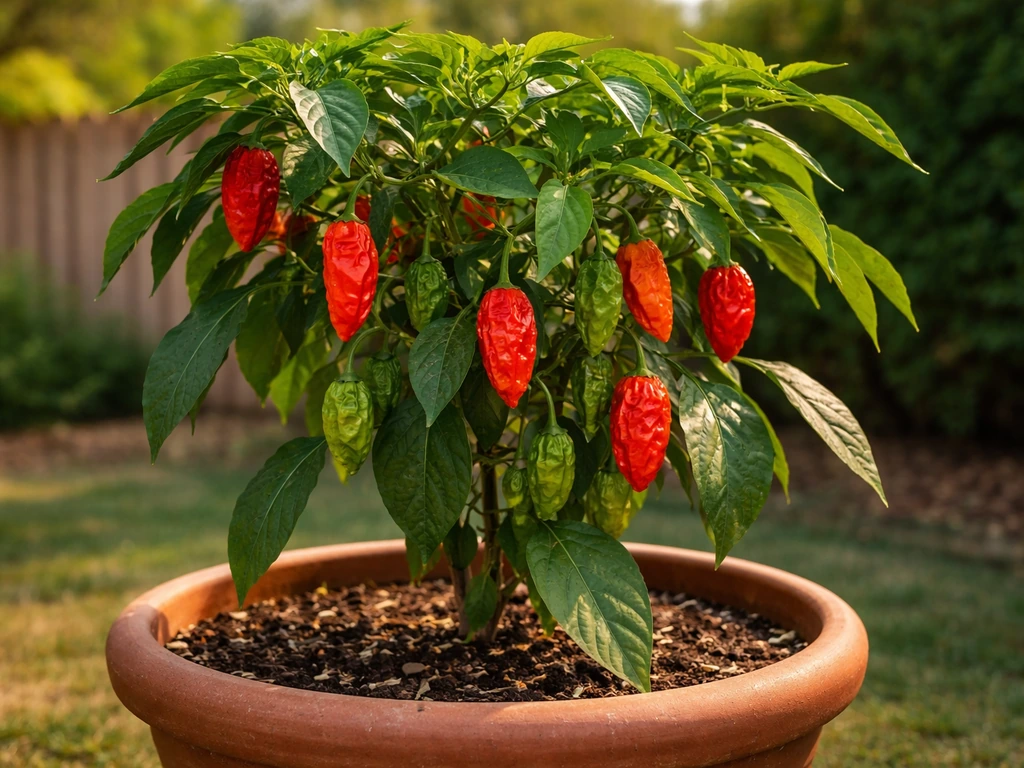
Can You Grow Ghost Peppers in the US Yes How to Do It
Yes, grow ghost peppers in the US with the right warmth, long season, and setup for your climate zone.
Can You Grow Belladonna Indoors? Conditions, Safety, Steps
Learn if you can grow belladonna indoors, needed light and care, safety risks, and whether it’s worth attempting at home