
Yes, moringa can grow in Georgia, but whether it grows as a perennial, a seasonal annual, or a container plant depends entirely on where in the state you are. Coastal and southeast Georgia (USDA zone 9a) can support moringa outdoors year-round in most winters. Central and south Georgia (zones 8a and 8b) can produce impressive growth from spring through fall, with a real chance of dieback or death in a hard freeze. In northern Georgia and the Blue Ridge foothills (zones 6b through 7b), treating moringa as a container or greenhouse plant is the only reliably successful approach. Know your zone before you plant, and you will avoid the disappointment of watching a beautiful tree turn to mush in January.
Can Moringa Grow in Georgia? Zone-by-Zone Growing Guide

Marcus Petersen
20 Jul 2026
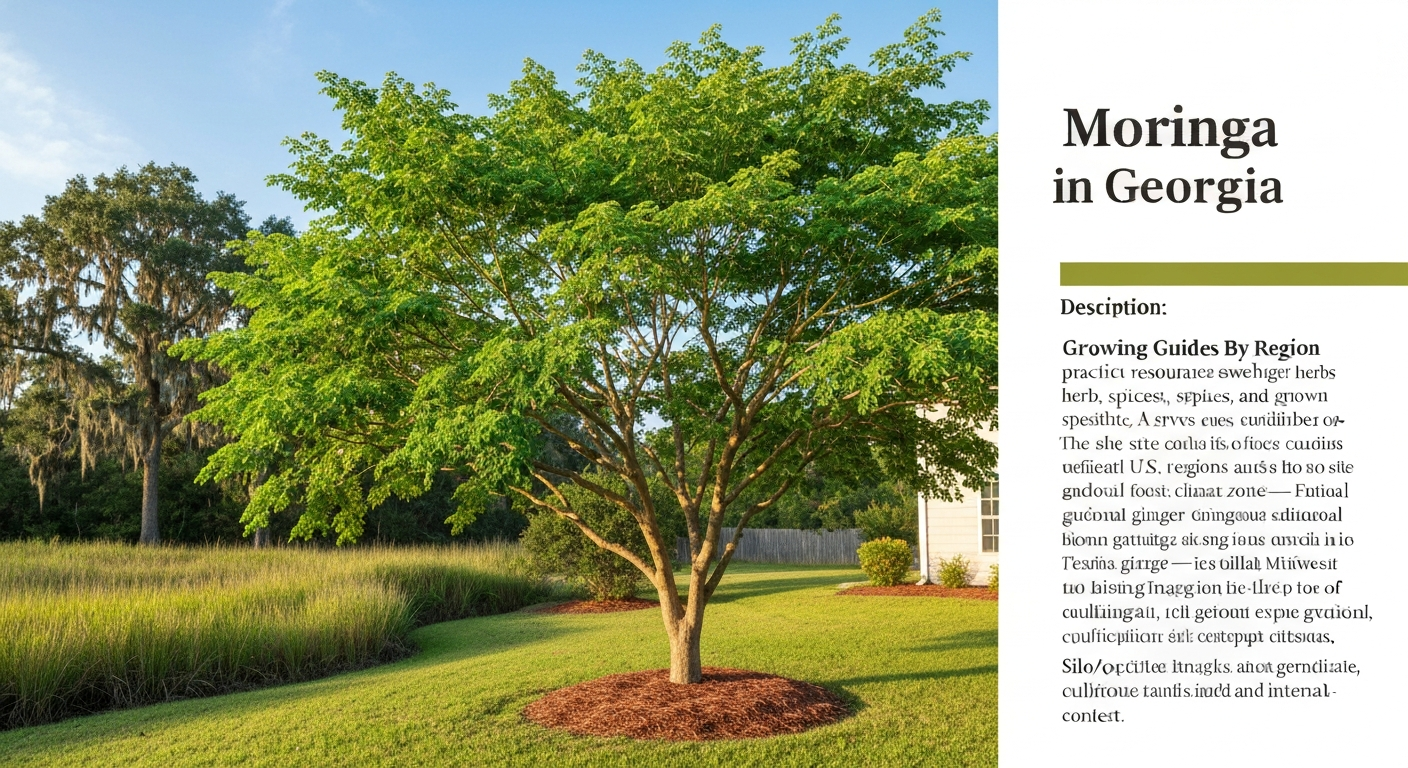
Georgia's climate zones and what they mean for moringa
Georgia spans more climate territory than most people expect. The 2023 USDA Plant Hardiness Zone Map, built from PRISM climate data using mean annual extreme minimum temperatures, places northern Blue Ridge mountain counties around zone 6b, the Atlanta metro in zones 7b to 8a, central Georgia in zones 8a to 8b, and the southeast coastal plain in zone 9a around areas like Brunswick and the Sea Islands. That is roughly a 3-zone spread across about 350 miles, and each step up the zone ladder matters enormously for a frost-tender subtropical tree like moringa.
Frost dates matter just as much as hardiness zones for a plant that dies back or dies outright at around -3°C (27°F). NOAA 1991-2020 climate normals put Atlanta's median last spring frost around March 24-25 and first fall frost around November 8-9, giving a growing season of roughly 229 days. Southeast Georgia near the coast pushes the last spring frost back to February and the first fall frost out to mid-December, which is why moringa behaves so differently in Savannah versus Dahlonega. Always check the frost dates for your specific zip code before planning a planting calendar.
Perennial, seasonal annual, or container plant: what to expect by zone
Moringa oleifera is a tropical tree that evolved in warm, dry climates. Peer-reviewed research puts the lethal tissue temperature (LT50) at roughly -2.8°C, and the same studies found that moringa does not develop meaningful cold acclimation the way temperate trees do. A brief light frost at -1°C might not kill a well-established plant, but repeated nights at -3°C or lower, or a single hard freeze below -5°C, will cause severe dieback or outright death. That biological ceiling is what drives all the zone-by-zone decisions below.
In zone 9a along the Georgia coast, winter lows rarely threaten moringa's survival threshold, so you can realistically expect a woody perennial that keeps its canopy through most winters and puts on new growth fast in spring. In zones 8a and 8b (the bulk of central and south Georgia), moringa will likely die back to the crown or ground level in an average winter but can resprout vigorously in spring from established root tissue, behaving more like a perennial herbaceous plant than a permanent tree. I have seen this described as a feature rather than a bug: the forced cut-back keeps the tree at a harvestable height. In zones 7b and below, including most of metro Atlanta and all of northern Georgia, you should realistically plan for container growing with indoor or greenhouse overwintering, or treat moringa as a warm-season annual you start fresh each year.
One important caveat on containers: pots expose roots to ambient air temperatures on all sides, which effectively makes them about one USDA zone colder than in-ground planting. A moringa in a container sitting on a patio in zone 8a is functionally experiencing zone 7a conditions at its roots on a cold night. Move containers to a protected spot, garage, or greenhouse well before the first frost date.
Zone guidance: overwintering outdoors, needs protection, or container-only
| USDA Zone | Georgia Locations | Moringa Treatment | Winter Survival Expectation |
|---|---|---|---|
| 6b | Blue Ridge peaks, Rabun County highlands | Container or greenhouse only | Will not survive outdoors; move inside before first frost |
| 7a | Blairsville area, high-elevation north Georgia | Container or greenhouse only | Outdoor survival very unlikely; treat as tender annual |
| 7b | Gainesville, Dalton, most of north Georgia foothills | Container recommended; annual as fallback | Outdoor survival possible in very mild winters only; roots vulnerable |
| 8a | Atlanta metro, Macon area, Columbus | Seasonal perennial with protection; container viable | Crown dieback likely most winters; vigorous spring regrowth from roots |
| 8b | Augusta, Valdosta, Thomasville area | Seasonal perennial; in-ground preferred | Most winters survivable with mulching; hard-freeze years cause dieback |
| 9a | Brunswick, coastal southeast Georgia, Sea Islands | Outdoor perennial | Year-round outdoor growing feasible; occasional cold snaps cause tip damage only |
Microclimates and site selection: small choices with big consequences
Microclimate is one of those words that gets thrown around loosely, but it is genuinely important for moringa in Georgia's middle zones. The difference between a site that loses plants every winter and one that reliably resprouts can be as little as 15 feet of placement. The goal is to capture every fraction of thermal advantage your property offers.
- South or southeast-facing walls: masonry or brick walls facing south absorb heat during the day and radiate it overnight, raising the immediate microclimate temperature by several degrees compared to an open garden bed. In zones 7b and 8a, this can be the difference between survival and death.
- Heat islands in urban areas: Atlanta and other Georgia cities run measurably warmer than surrounding rural areas due to heat island effects. A moringa planted in an urban Atlanta backyard with south-facing concrete will experience conditions closer to zone 8b than the official zone 8a classification.
- Sheltered spots away from cold air drainage: cold air flows downhill and pools in low spots and valley floors. Avoid planting moringa in low-lying areas, at the base of slopes, or anywhere frost settles visibly before neighboring spots. A slightly elevated planting site in the same yard can stay 2-3°F warmer on a still, clear night.
- Tree canopy and structure overhead: an overhead canopy from a large deciduous tree or a pergola can reduce radiative heat loss on cold nights, offering a few degrees of protection. This is not a substitute for good zone placement, but it helps in borderline situations.
- Raised beds and amended mounds: in areas with marginal drainage or heavy clay, raised beds warm up faster in spring and drain away cold, standing water that can stress roots during cold snaps. Check your local soil drainage class using USDA NRCS Web Soil Survey before committing to an in-ground planting.
Soil, sun, and water: the non-negotiables
Moringa is often described as easy to grow, and in the right conditions it really is. But there are a few hard constraints. The most important is drainage. Moringa will not tolerate waterlogged soil, and it declines fast in heavy Georgia clay that stays wet for days after rain. If your soil is poorly drained, fix it with raised beds, organic amendment, or choose a different site. The acceptable pH range is broad (roughly 5.0 to 8.0), but most practical cultivation guides aim for 5.5 to 7.5. Georgia's naturally acidic red clay soils often fall between 5.5 and 6.5, which is workable, but worth testing before planting.
Moringa wants full sun, at least 6 to 8 hours of direct sunlight daily. In Georgia's hot summers (optimal moringa growth happens between roughly 25°C and 35°C), this is not hard to provide, and the tree will reward you with fast growth. Shade reduces leaf production noticeably. In container growing, placing the pot in the sunniest available spot is especially important because container soil temperatures are already less stable than in-ground conditions.
Water needs are moderate. Moringa tolerates drought better than most leafy crops once established, but consistent moisture during the growing season increases leaf production significantly. In Georgia's humid climate, supplemental irrigation is often unnecessary from May through September, but during dry spells (which do occur in north Georgia in particular) light, regular watering improves results. The bigger risk in Georgia is overwatering or poor drainage, not drought. For container plants, substrate dries out faster than in-ground soil, so check moisture more frequently and plan on watering more often during peak summer heat.
Propagation and planting calendar for Georgia
You can start moringa from seed or from stem cuttings, and both work well. Cultivation ... of Moringa oleifera, review (seed and cutting propagation details) reports that Moringa is readily established from both seed and stem cuttings Cultivation ... of Moringa oleifera — review (seed and cutting propagation details). Seeds germinate quickly under warm conditions, typically within 5 to 14 days, but seed viability drops fast if seeds are stored poorly. Buy fresh seed each season if you are starting from scratch. Hardwood or softwood cuttings root readily and are worth considering if you have access to a good parent plant, because vegetatively propagated trees mature faster and begin producing leaves sooner. The tradeoff is that cutting-grown trees often develop shallower root systems, which can be a disadvantage for long-term in-ground plantings.
Timing your planting around Georgia's frost calendar is straightforward: do not put moringa outdoors until all frost risk has passed and soil has warmed. Starting seeds indoors 4 to 6 weeks before your last frost date lets you put a head start into the ground when conditions are safe. For Atlanta, that means starting seeds indoors around mid-February and transplanting around late March to early April. Coastal Georgia growers can start earlier. Northern Georgia growers planning container culture should wait until mid-April to move containers outdoors.
| Zone / Region | Start Seeds Indoors | Transplant / Move Outdoors | Begin Harvest (Leaves) | Move Indoors / Protect |
|---|---|---|---|---|
| 9a (coastal SE Georgia) | January–February | February–March | 60–90 days after planting | Only if hard freeze forecast |
| 8b (south-central Georgia) | February | Late March | 60–90 days after planting | November; mulch heavily |
| 8a (Atlanta metro, Macon) | Mid-February | Late March to early April | 70–100 days after planting | Late October to early November |
| 7b (north Georgia foothills) | Early March | Mid-April (containers) | 80–110 days after planting | Mid-October; move containers inside |
| 6b–7a (mountains) | March | Late April (containers only) | 80–110 days after planting | Early October; move containers inside |
Fertilizer, mulching, and pruning through the seasons
Moringa is a fast grower that responds well to nitrogen, and leaf yield from a home planting improves noticeably with regular feeding. Field trials confirm a clear biomass response to nitrogen application, so if leaf production is your goal, do not skip fertilizing. For a home gardener, a balanced slow-release fertilizer applied at planting, followed by a nitrogen-focused side dress every 6 to 8 weeks during the growing season, is a practical approach. Always base rates on a soil test rather than guessing. Georgia's Extension office soil testing service is worth using, especially if you are planting into native red clay that may already be nutrient-imbalanced.
Mulching is one of the highest-value things you can do for moringa in Georgia's middle zones. A 4 to 6 inch layer of organic mulch around the base of the plant (kept away from the main stem) insulates root tissue from cold, retains moisture during summer dry spells, and improves soil structure over time. Going into winter, increase the mulch depth to 8 to 10 inches over the crown and root zone in zones 8a and 8b. This alone can mean the difference between a plant that resprouts in April versus one that is dead. I learned this lesson the expensive way after losing a well-established plant to a February cold snap that the mulch would have mitigated.
Pruning serves two purposes with moringa: it controls height (unpruned trees can reach 10 to 12 feet in a single Georgia season, making harvest difficult) and it encourages dense lateral branching with more harvestable leaf material. Pinch or cut the growing tip when the plant reaches about 1 to 1.5 meters to promote branching. Repeat light pruning throughout the season. In zones where dieback occurs each winter, the plant essentially self-prunes back to the crown, so focus your effort on managing new growth height and density during the warm season rather than heavy structural pruning.
Common pests, diseases, and troubleshooting in Georgia
Moringa has relatively few serious pest and disease problems in Georgia, which is one of its genuinely appealing qualities. Spider mites can be an issue during hot, dry spells, particularly for container plants in sheltered spots with low air circulation. Aphids occasionally target new growth. Both are manageable with water sprays or insecticidal soap. Root rot is the most common disease problem, and it is almost always tied to poor drainage or overwatering rather than a primary pathogen. Fix the drainage problem and root rot usually disappears.
The most common troubleshooting question I hear from Georgia gardeners is: why did my moringa not resprout in spring? Nine times out of ten, the root crown got too cold because the plant was in a low-lying spot with cold air pooling, or the container was left outside too long. If the stem is still firm and slightly green under the bark in March, be patient and keep the soil moderately moist. Moringa can be slow to resprout after a cold winter, sometimes not showing new growth until late April or even May in zone 8a. If the stem is soft, mushy, and brown all the way to the base, the plant is gone.
Winter protection: what actually works
In zones 8a and 8b, a layered approach to winter protection gives you the best chance of preserving a woody perennial base. Start with deep mulching over the root zone as described above. For young plants or during forecast hard-freeze events, a frost cloth or burlap wrap over the canopy adds a few degrees of protection for the above-ground tissue. For temperatures forecast below -3°C, additional measures like a heat lamp under a fabric tent can save a valuable plant, though this is more effort than most casual gardeners will sustain for the whole winter.
Container growers in zones 7b through 8a should plan to move pots into an unheated or lightly heated garage, sunroom, or greenhouse before the first frost. Moringa in dormancy does not need bright light but does need protection from freezing. In a minimally heated space (kept above 4-5°C), a container plant can survive winter with very occasional watering. A proper heated greenhouse is better for maintaining active growth year-round, which is the approach most serious hobbyists in northern Georgia take.
Realistic yield expectations for Georgia home growers
Moringa's productivity in Georgia is genuinely impressive during the warm season. An established in-ground plant in zone 8b or 9a can reach 8 to 12 feet in a single season and produce continuous leaf harvests every 3 to 4 weeks once established. Leaf yield from a single tree managed with regular pruning is more than enough for a household using moringa in cooking or as a nutritional supplement. Pods (drumsticks) require a longer growing season to develop and are more realistic in zone 9a or in years when zone 8b plants establish early and escape a late frost. In zones 7b through 8a where the plant dies back to the ground each winter, expect smaller, more shrub-like growth and plan for leaf harvest only rather than pods.
How Georgia compares to other U.S. growing regions
Georgia sits in an interesting middle ground for moringa among U.S. states. The southeast coastal strip rivals the best moringa conditions available in the continental U.S., comparable to coastal and southern California (zone 9-10) and parts of Texas's Rio Grande Valley. Central Georgia is broadly similar in frost risk to much of North Carolina's Piedmont, where the same zone 7b-8a split produces the same annual-versus-perennial dilemma. If you are curious how Georgia compares to North Carolina specifically, that question is worth a direct look because the two states share nearly identical zone patterns across their respective piedmont regions. For a focused comparison, see can moringa grow in North Carolina which examines zone overlaps and local tips. Texas, meanwhile, has broader zone 9 coverage in its southern half, which gives it a bigger footprint for outdoor perennial moringa than Georgia. For a dedicated state guide, see can moringa grow in Texas for region-specific advice. California's moringa prospects skew very different due to its Mediterranean dry summers and nearly frost-free coastal zones. For details, see can moringa grow in California. Canada, at the other end of the spectrum, is essentially container-and-greenhouse territory for moringa everywhere. If you need details on whether moringa can grow in Canada, see this guide on does moringa grow in Canada for container and greenhouse recommendations. For a broader look at nationwide feasibility, the general question of whether moringa can grow across the U. For a broader look at nationwide feasibility, see can moringa grow in the U.S. (internal resource ID 203f6f68-6dad-45f9-8f1e-03aa2fc994e7). S. is a useful starting point before diving into state-level guides.
Is moringa worth growing in Georgia? My honest take
If you are in coastal or south Georgia, absolutely yes. Plant it in the ground, mulch well, and expect a productive perennial with minimal intervention. If you are in central Georgia (zone 8a or 8b), it is worth growing as a seasonal perennial if you pick a good microclimate and protect the root zone through winter. Expect some dieback years and do not count on pods. If you are in Atlanta or north of it, be honest with yourself about the container commitment. Container moringa works well, produces real harvests, and is manageable on a porch or patio from May through October. But moving pots in and out each season is real work. If you want a low-maintenance landscape tree, moringa in zone 7b is not that. If you want a productive summer container plant that you're willing to manage, it absolutely delivers. For localized guidance and a quick zone-based decision, see our Can I grow moringa? guide.
FAQ
Short answer: can Moringa oleifera be grown in Georgia outdoors year‑round?
Short: Yes — but only in southern coastal/southeast Georgia (roughly USDA zone 9a) is year‑round outdoor perennial culture reliably possible. Much of central/south Georgia (zones 8a–8b) can grow moringa seasonally or with occasional winter damage; northern high‑elevation Georgia (zones 6b–7b) generally requires container/greenhouse/indoor overwintering or treating moringa as an annual.
How do Georgia USDA hardiness zones map to moringa survival and production?
General guidance by USDA zone: 9a (coastal/southeast) — likely perennial outdoors with low freeze risk; 8a–8b (central & lower piedmont) — possible multi‑year plants but at risk of trunk/foliage dieback after rare freezes; 6b–7b (northern mountains & high elevations) — outdoor perennial survival unlikely, treat as annual or use protected/container culture. Use your exact ZIP/county on the official USDA Plant Hardiness Zone lookup for parcel‑specific planning.
What local climate data should I check before planting in Georgia?
Check your USDA hardiness zone (USDA PHZM) and local NOAA frost‑date normals (last spring freeze / first fall freeze). These together tell you extreme minimum temperatures and frost‑free season length — both are critical because Moringa tissues are damaged around −1 to −3 °C and often killed below about −5 °C.
Which Georgia microclimates or site choices improve moringa success?
Choose warm, sheltered sites: south‑facing slopes, near heat‑storing structures, protected courtyards, urban heat islands, frost‑free coastal sites, and well‑drained raised beds. Avoid cold pockets, valley low spots with cold‑air pooling, and wet/hydric soils. Mulch and wind breaks reduce winter exposure; containers can be moved to protected microclimates.
What soil and sun conditions does moringa prefer in Georgia?
Sun: full sun (6–8+ hours daily) for best leaf and pod yield. Soil: well‑drained sandy‑loam to loam; pH broadly tolerant (~5.5–7.5). Avoid waterlogged clay — improve drainage with raised beds, berms, or incorporated coarse material and organic matter.
How should I water and fertilize moringa in Georgia?
Watering: establish with regular watering; mature trees tolerate drought but produce best with consistent moisture. Use ET‑based scheduling if irrigated broadly; containers need more frequent checks. Fertilizer: moringa responds to N and balanced NPK for leaf production; base rates on a soil test, split nitrogen applications for continuous leaf harvest, and avoid over‑watering with heavy N on poorly drained sites.
Next Articles
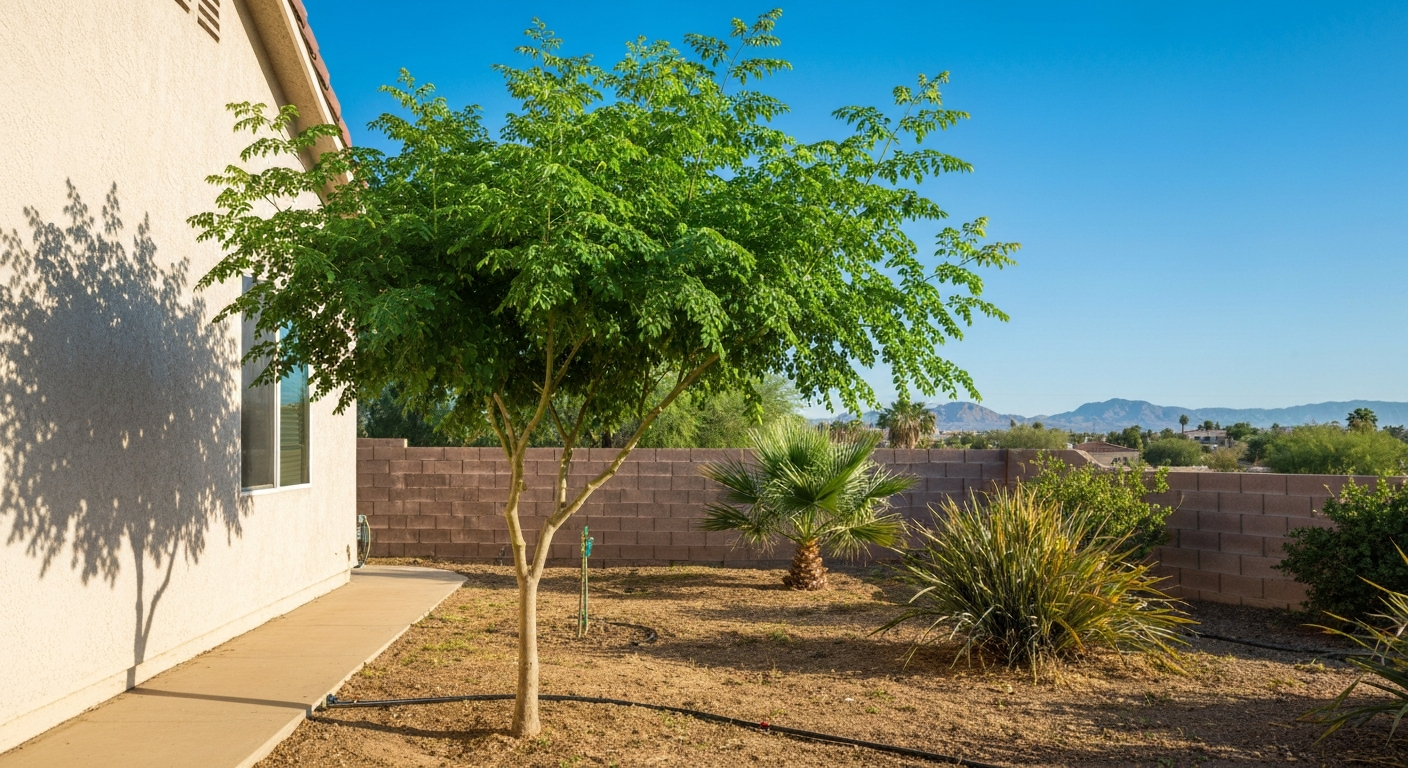
Can Moringa Grow in California? Regional Guide & How-To
Can moringa grow in California? Region-by-region verdicts, varieties, planting calendar, frost protection and yield tips
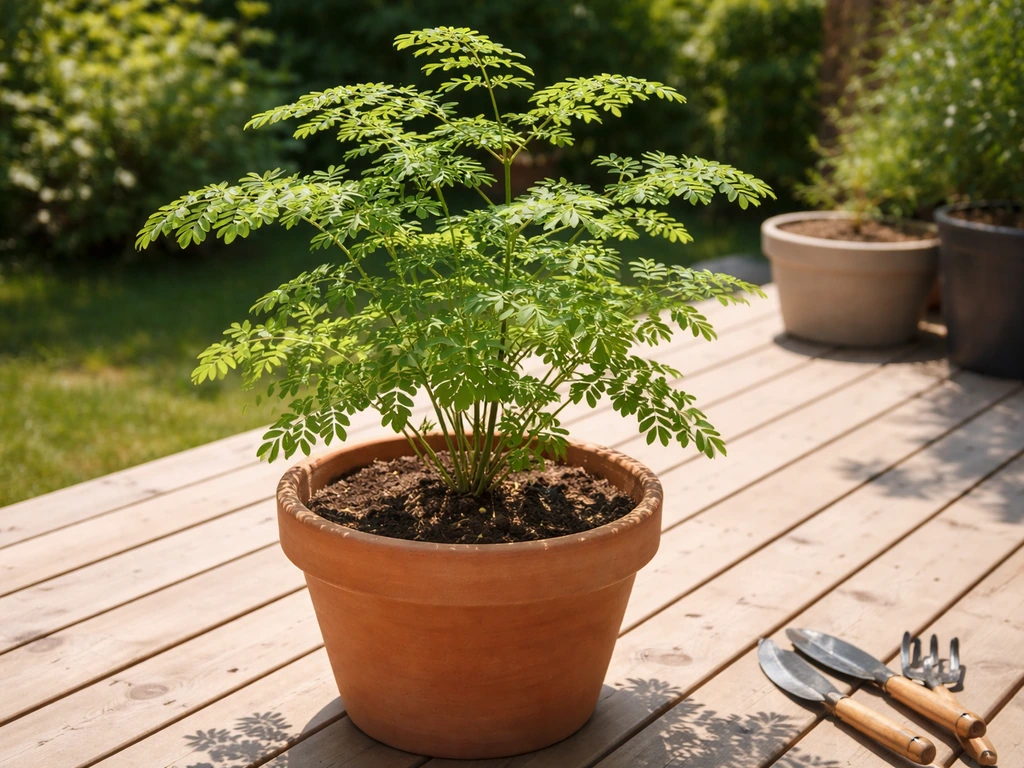
Does Moringa Grow in Canada? How to Grow It at Home
Yes, but only with warmth. Learn how to grow moringa in Canada using containers, light, and overwintering tips.
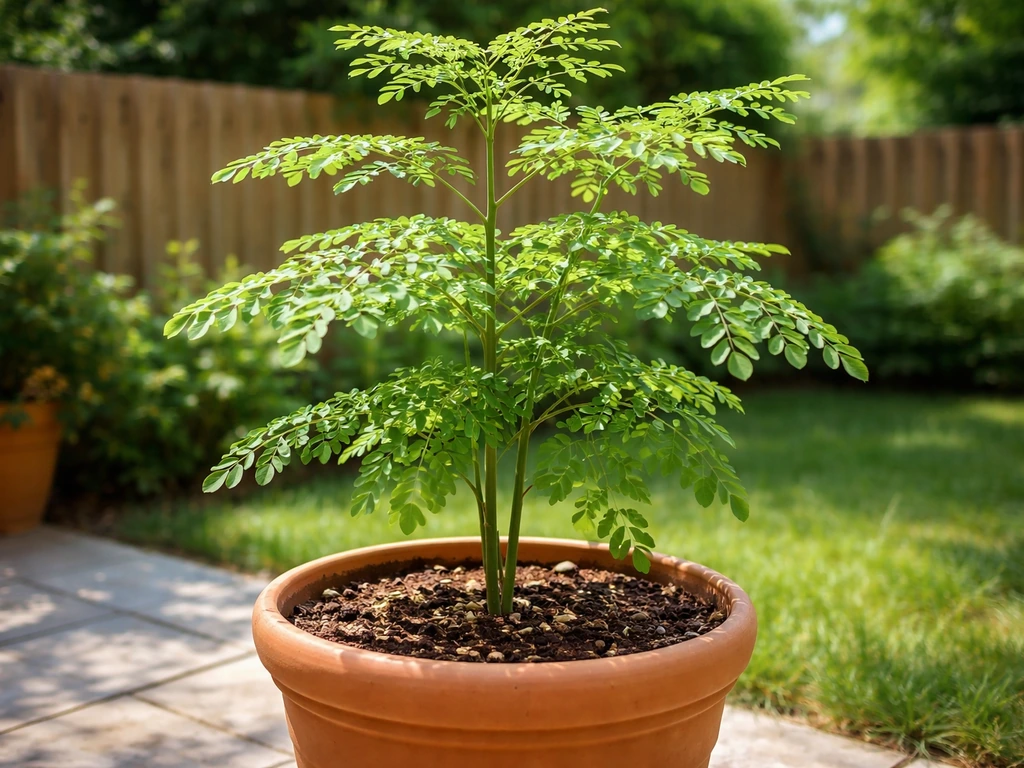
Can Moringa Grow in North Carolina? How to Succeed
Yes, moringa can grow in North Carolina as an annual or container plant; get heat, timing, and winter protection tips.