
Yes, you can grow sandalwood in India, and in much of the country the climate is genuinely suited to it. For a practical guide that answers 'can i grow sandalwood' and walks through site selection, hosts, and timelines, see the linked resource on growing sandalwood. Santalum album is native to the Deccan Plateau and has been cultivated across southern and central India for centuries. The honest catch is that this is not a plant you sow in a pot on a balcony and harvest in a few years. It is hemi-parasitic, meaning it depends on host plants from seedling stage onward, and commercially useful heartwood takes at least 12 to 15 years to develop. If you go in knowing that, and you have the right site and the patience, it is absolutely worth planting.
Can I Grow Sandalwood in India? Practical Guide for Gardeners

Which sandalwood should you actually grow?
The name 'sandalwood' covers several species that are very different in practice, so the first decision matters. Indian sandalwood (Santalum album) is the species with the highest-value heartwood oil, dominated by alpha- and beta-santalol. High-quality S. album oil meets ISO 3518:2002 standards with alpha-santalol around 41 to 55 percent and beta-santalol around 16 to 24 percent. No other sandalwood comes close on those chemistry numbers, which is why it commands premium prices in perfumery and aromatherapy.
Red sandalwood (Pterocarpus santalinus) is a completely different plant in a different plant family. It is valued for its deep red wood dye and traditional medicine uses, not for fragrant oil. It grows well in Andhra Pradesh and parts of Tamil Nadu and is less demanding in cultivation, but it will not give you the fragrant heartwood that Santalum album produces. Agarwood (Aquilaria species) is yet another category, producing resinous oud fragrance only when the tree is infected or stressed, which makes it a separate cultivation challenge entirely. If you want region-specific guidance on cultivating agarwood (Aquilaria species) outside its native range, see can agarwood grow in the USA for information about climate, hosts, and feasibility in American conditions. If your goal is the classic sandalwood oil or fragrant chips, S. album is the one to grow.
| Species | Common Name | Heartwood Value | Fragrant Oil? | Cultivation Complexity | Best Indian Zones |
|---|---|---|---|---|---|
| Santalum album | Indian sandalwood | Very high (ISO-grade oil) | Yes, alpha/beta-santalol | High (hemi-parasitic, slow) | Karnataka, AP, Tamil Nadu, Maharashtra, Odisha |
| Pterocarpus santalinus | Red sandalwood | Moderate (dye/timber) | No | Moderate | Rayalaseema (AP), dry TN |
| Aquilaria species | Agarwood | Very high (resin/oud) | Only with infection | Very high | Assam, Northeast India |
For the rest of this article I am focusing on Santalum album because that is what most home gardeners and hobbyists in India are asking about when they say 'sandalwood.' If you are curious about red sandalwood or agarwood as separate projects, they deserve their own deep dives.
The hemi-parasitic habit: what it actually means for you as a grower
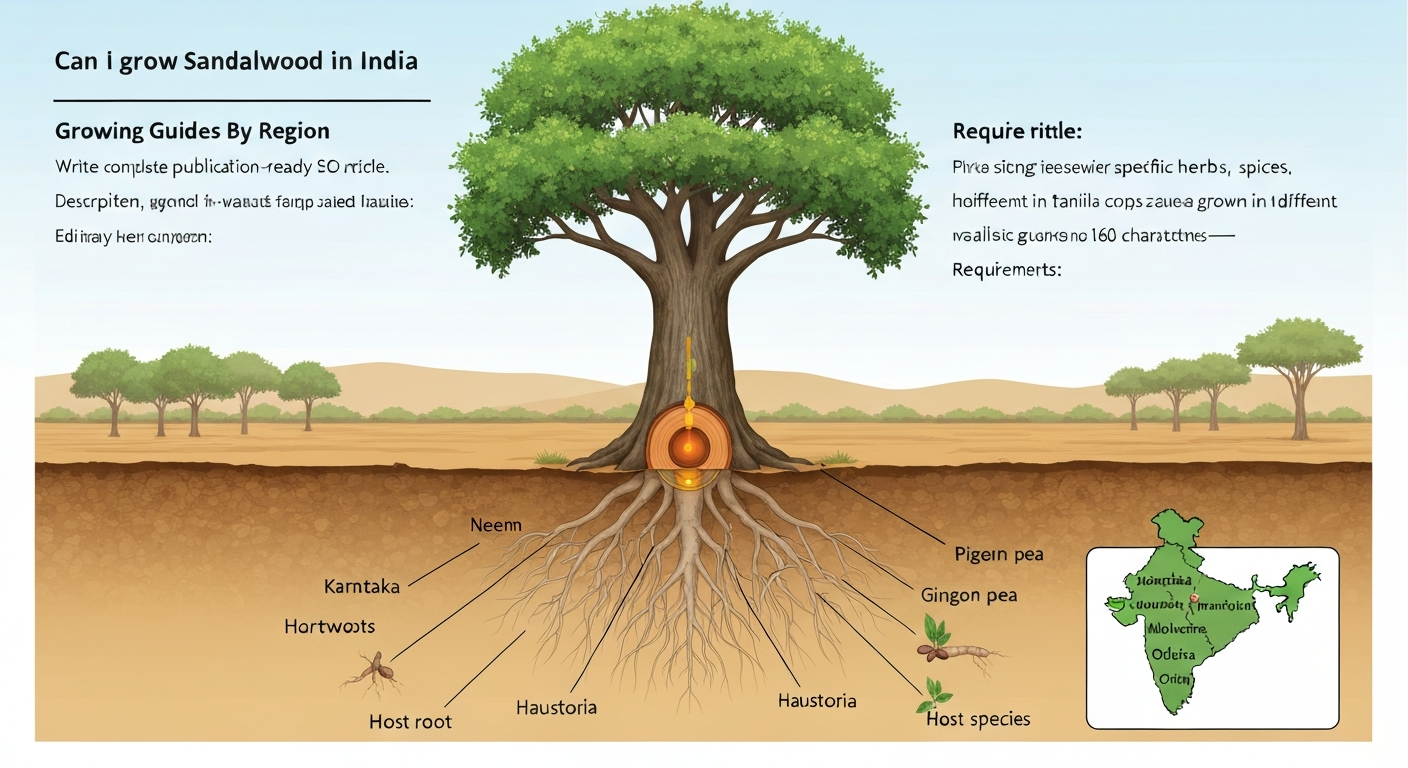
Santalum album is described as a facultative hemiparasite, and this single biological fact reshapes everything about how you grow it. The seedling can survive on its own for a short time, but it sends out specialized root structures called haustoria that attach to neighboring plant roots and extract water, nitrogen, and other nutrients from them. This is not optional behavior you can skip. Without host plants nearby, sandal seedlings grow slowly, stress easily, and often die in dry conditions. With good hosts, they grow faster, tolerate drought and salinity better, and ultimately develop more heartwood.
Haustoria begin forming very early in seedling development, and research has shown that establishing contact with a compatible host early in nursery life improves long-term survival. The Indian Institute of Wood Science and Technology (IWST) protocol specifically recommends planting a primary pot-host like Cajanus cajan alongside sandalwood seedlings from the 4 to 6 leaf stage onward in the nursery. See the Sandalwood Information System, Silviculture (IWST/ICFRE) for nursery protocols recommending Cajanus cajan as a primary pot-host and step-by-step guidance Sandalwood Information System — Silviculture (IWST/ICFRE). If you skip this step, you are working against the plant's fundamental biology from day one.
Where in India is sandalwood realistically suited?
Santalum album naturally occurs and has been historically cultivated across a fairly wide belt of India. The core native range is the Deccan Plateau, and the best commercial regions are Karnataka (especially the eastern and southern districts), Andhra Pradesh (particularly the Rayalaseema and Telangana belt), Tamil Nadu, and parts of Maharashtra and Odisha. These states generally match the agroclimatic envelope the species prefers: annual rainfall between roughly 500 and 2,000 mm, elevations from about 300 m to 1,200 or 1,500 m above sea level, and a tropical to subtropical temperature range without hard frosts. For a broader agroclimatic summary across regions, see Growing Sandalwood, USDA Forest Service Gen. Tech. Rep. PSW-122 (Neil et al.) Growing Sandalwood — USDA Forest Service Gen. Tech. Rep. PSW-122 (Neil et al.).
Frost is the limiting factor in the north. Young sandalwood plants are frost-sensitive, so open-field planting in the hills of Uttarakhand or in the Punjab plains where temperatures drop below zero in winter is not realistic without protection. On the other hand, the hot and humid northeast (Assam, Meghalaya) tends toward waterlogging-prone soils and heavy rainfall that can cause root rot. The sweet spot is a warm, semi-arid to sub-humid climate with a well-defined dry season, which roughly describes peninsular India and parts of Madhya Pradesh and Chhattisgarh.
| Region/State | Suitability | Key Conditions | Watch Out For |
|---|---|---|---|
| Karnataka (Mysore Plateau, Chitradurga belt) | Excellent | 600–1,100 mm rainfall, red loams, 600–1,000 m elevation | Theft risk high; legal requirements strict |
| Andhra Pradesh (Rayalaseema, Telangana) | Excellent | 550–900 mm, laterite and red soils, dry season defined | Summer heat stress in seedlings |
| Tamil Nadu (dry zones) | Very good | 500–900 mm, well-drained red/sandy soils | Irrigation needed in extended dry spells |
| Maharashtra (Marathwada, Vidarbha) | Good | 600–1,000 mm, black cotton soils need amendment for drainage | Waterlogging on heavier black soils |
| Odisha (southern and western districts) | Good | 800–1,200 mm, laterite hills | Higher humidity; fungal issues |
| Madhya Pradesh / Chhattisgarh | Moderate | 700–1,200 mm, suitable in drier districts | Colder winters at higher elevations |
| Rajasthan / Gujarat (dry zones) | Marginal | Irrigation-dependent; tolerates aridity with hosts | Water stress without irrigation |
| Northeast / Western Ghats high-rainfall zones | Poor | Excessive rainfall and waterlogging risk | Root rot, poor heartwood development |
Site selection and soil: what the tree needs underfoot
Drainage is non-negotiable. Santalum album will not tolerate waterlogged or seasonally saturated ground, and if you plant it in a low-lying area that holds water after the monsoon you will lose the tree. IWST field records show it grows naturally on red ferruginous loams, rocky or gravelly soils, and shallow stony ground. That might sound like poor land, but for sandalwood that actually works in your favor: stones and gravel maintain drainage, and the tree's haustorial feeding habit means it does not need rich soil to survive.
Preferred soil pH is roughly 6.7 to 7.5, so slightly alkaline to neutral soils suit it well. Very acidic soils (below 6.0) are less ideal. If you are planting on black cotton soils common in Maharashtra or Madhya Pradesh, you need to build raised beds or mounds and add coarse sand or gravel to the planting pit to break up the waterholding structure. On loamy red soils in Karnataka or AP you can largely plant without major amendment as long as the topography does not collect water.
For home gardeners working with limited space, a gentle slope with southern or eastern exposure is ideal. It gives you solar access, improves drainage naturally, and provides some wind shelter if backed by a tree line. Avoid planting directly under large canopy trees that will shade the sandal heavily, but having them at a 10 to 15 m distance is fine and may even provide useful host root contact over time.
Propagating from seed: what the numbers actually look like
Sandalwood can be grown from seed, and for most home growers this is the most accessible starting point. But go in with honest expectations: IWST reports roughly 6,000 seeds per kilogram, mean germination around 30 percent under standard nursery conditions, and a plantable seedling percentage of only about 15 percent. That means if you start with 100 seeds, plan for 15 healthy transplantable seedlings on a good run, fewer if conditions are not ideal.
Seed source matters a great deal. Collect fruits from mother trees older than 20 years, and use fresh seeds stored less than a year. Viability drops significantly with older or poorly stored seed. In practice, sourcing good seed in India is best done through your state forest department nursery, IWST (based in Bengaluru), or a registered sandalwood grower association. Avoid unmarked commercial seed sold online without provenance documentation.
Step-by-step nursery process
- Collect ripe, deep-purple to black fruits directly from the tree (fallen fruits are often infested); remove the fleshy pulp by soaking and rubbing, then dry seeds in shade for one to two days.
- Presoak seeds in gibberellic acid (GA3) at approximately 500 ppm for 16 hours before sowing. This is the IWST standard pretreatment. Avoid boiling water or concentrated sulfuric acid scarification, which some older protocols mention but which can reduce germination compared to GA3.
- Sow in shallow seed trays or nursery beds in a well-draining mix. Water once daily; the growing medium should feel just moist, not wet. Germination typically begins within 2 to 4 weeks.
- At the 4 to 6 true-leaf stage (roughly 6 to 10 weeks), transplant seedlings into containers together with a primary pot-host. This co-planting step is critical for haustorial development.
- Use 270 cc root-trainers if available (IWST preference over standard polybags). A mix of sand:soil:compost at 35:15:50 works well. An improved version adds 5 percent burnt rice husk and 5 percent charcoal for better aeration.
- If using polybags, IWST recommends 30 x 14 cm bags minimum. Root-trainers produce better root architecture and haustorium development at 6 to 8 months.
- Maintain seedlings in partial shade (about 50 percent shade cloth) for the first 2 to 3 months, then gradually harden off in full sun before field planting.
- Seedlings are ready for field planting when 8 to 12 months old and approximately 20 to 30 cm tall, with visible healthy growth and a well-established pot-host.
Vegetative propagation: grafting, budding, and air-layering
Vegetative propagation lets you reproduce trees with known genetics, which matters if you have access to a high-performing mother tree with good heartwood or oil yield. It is more technically demanding than seed propagation but worth considering for small plantings where you want predictable output.
Grafting (typically approach grafting or cleft grafting) is used in some IWST and commercial nursery programs to multiply elite clones. The rootstock is usually a 6 to 12 month old S. album seedling. Budding (shield or patch budding) is another option and has shown reasonable success rates in trials when done during active growing periods, typically after the monsoon. Air-layering has been used experimentally but is less commonly adopted in standard nursery practice because the success rate is more variable and the resulting plants tend to lack the strong root architecture that benefits haustorial development. For most home growers, seed propagation with careful nursery management is more practical than attempting grafting without prior experience.
Host species: the most important planting decision you will make
Choosing the right host plants is where most home growers either succeed or quietly fail without understanding why. S. album forms functional haustorial connections with over 50 documented species in experimental and field conditions. But not all hosts are equal in terms of growth response, and a few documented 'hosts' actually suffer serious damage from heavy sandal parasitism.
The practical approach is to think in two categories: primary (pot or nursery) hosts that get the seedling established, and secondary (field) hosts that sustain the tree for decades. Primary hosts are typically fast-growing herbaceous or semi-woody plants whose roots are dense and accessible. Field hosts are usually trees or robust shrubs that will survive long-term parasitism and ideally also fix nitrogen or tolerate the local climate stress well.
Primary (nursery/pot) host species
- Cajanus cajan (pigeon pea): the most widely used primary host in IWST protocols; nitrogen-fixing, fast-growing, roots accessible quickly in polybags and root-trainers
- Mimosa pudica: a good secondary primary host in pots; roots colonize container media well and form haustoria connections reliably
- Alternanthera sessilis: small herbaceous plant used in some nursery trials; easy to maintain alongside sandal seedlings in containers
Field host species by region
| Host Species | Common Name | Best Suited Regions | Notes |
|---|---|---|---|
| Azadirachta indica | Neem | Peninsular India, semi-arid zones | Widely available; improves K+/Na+ balance in sandal under drought; highly recommended |
| Melia dubia | Malabar neem | Karnataka, AP, Tamil Nadu | Fast-growing, deep-rooted; good long-term field host, commercial agroforestry use |
| Casuarina equisetifolia | Casuarina | Coastal AP, Tamil Nadu, Odisha | Nitrogen-fixing; good host but needs ample space |
| Prosopis juliflora | Mesquite | Dry zones of Rajasthan, Gujarat, AP | Drought-tolerant; useful in arid agroforestry but invasive in some areas |
| Leucaena leucocephala | Subabul | Peninsular India broadly | Nitrogen-fixing; widely available; good all-round host |
| Dalbergia sissoo | Shisham | North and central India | Deep roots; works well in drier northern zones |
| Syzygium cumini | Jamun | Throughout peninsula | Useful dual-purpose host (fruit + sandal support) |
| Phyllanthus emblica | Amla | Peninsular and central India | Dual-purpose; produces edible fruit alongside sandal |
| Punica granatum | Pomegranate | Dry peninsular zones | Use cautiously; some reports of host stress under heavy parasitism |
IWST recommends a host-to-sandalwood ratio of roughly 2:1 to 3:1 in plantation designs, with spacing typically at 6 m x 3 m in quincunx (offset) arrangements so that host roots are accessible from multiple directions around each sandal. For a home garden with just a few trees, aim for at least two to three established host species planted within 1 to 3 m of each sandal tree. Do not plant sandal and hosts at exactly the same time if you can avoid it. Getting the hosts into the ground 3 to 6 months earlier gives them time to establish root systems before the sandal seedlings arrive.
How long before you see heartwood and oil?
This is the honest, slightly uncomfortable part of the conversation. Heartwood formation in Santalum album typically begins around 8 to 13 years in field conditions in India, with the 10 to 13 year range being commonly cited as when heartwood becomes visually distinct. Commercially useful quantities of heartwood, meaning enough to justify harvest and oil extraction, generally accumulate after 12 to 15 years. After a tree passes the 10-year mark on a good site, it may add roughly 1 kg of heartwood per year, though this is highly variable by site, host quality, provenance, and management.
Oil content in heartwood is typically reported in the 2 to 6 percent range in mature trees, with roots generally richer in oil than the stem and branches. Tree age, position in the wood (radial and axial), and growing conditions all affect these numbers. Younger heartwood from a poorly managed tree on a bad site will have lower oil content and less commercial value than older heartwood from a well-managed tree with good host associations. If you plant today, your realistic first harvest window is 2038 to 2042 at the earliest for a home planting made in 2026.
Legal and regulatory realities you cannot ignore
Sandalwood is a protected species under Indian law. In Karnataka, Tamil Nadu, and Andhra Pradesh, it has historically been classified as government property regardless of whether it grows on private land, under the respective state forest or tree protection acts. This is changing slowly with amendments in some states (Karnataka amended its laws in 2002 to allow private landowners more rights, and Andhra Pradesh followed with reforms), but the regulatory situation is still complex and varies by state.
Before you plant, contact your state forest department to understand: whether you need a permit to grow sandalwood, what documentation you will need for eventual harvest or sale, and whether there are any transit pass requirements for moving the wood or oil. The IWST in Bengaluru (under ICFRE) is a reliable source for both nursery material guidance and regulatory referrals. Do not skip this step. Growing sandalwood without knowing the local rules can mean the tree you spent 15 years nurturing cannot legally be harvested or sold without complications.
Theft is also a real practical concern in Karnataka and AP where sandalwood has high market value. Mature trees on private farmland are routinely targeted by organized gangs. This is not a reason not to plant, but it is a reason to not announce your plantation publicly, to consider intercropping layouts that reduce visibility of individual trees, and to be aware of local enforcement contacts.
What about growing sandalwood outside India, or in a container?
Growing Indian sandalwood outside India is technically possible in climates that match its agroclimatic range, which is why there are commercial sandal plantations in Australia (Northern Territory, Queensland) and some experimental plots in Hawaii and parts of the southern USA. For a related discussion about cultivating non-native trees in India, see the article titled 'can we grow argan tree in india' which examines climate and site considerations for argan cultivation. If you're also exploring aromatic plants, see our guide on can you grow patchouli for cultivation tips specific to patchouli. But the climate match matters: S. For specific guidance about growing sandalwood in the United States, see can i grow sandalwood in usa. album needs warm, frost-free conditions, well-drained soils, and compatible host species, all of which limit where it can be grown outdoors in the US or Canada. For a focused discussion on cold-climate cultivation, see can you grow sandalwood in Canada. In most of those contexts it becomes a greenhouse or container project, which adds significant complexity and cost, and heartwood development in containers is very poor over the long timelines involved.
For someone specifically asking whether India is a good place to grow sandalwood, the answer is clearly yes compared to temperate regions, because the baseline climate in peninsular India is already close to ideal. If you are in India and considering this as a long-term investment, you are working with natural advantages that growers in the USA or Canada simply do not have.
Practical next steps if you want to start
- Check your state forest department regulations first: Karnataka (KSFDI), Andhra Pradesh (AP Forest Dept), Tamil Nadu (TNFD), or equivalent, before you source a single seed or seedling.
- Contact IWST (Bengaluru) or ICFRE regional centers for certified nursery material or seed sourcing guidance. State forest department nurseries in Karnataka and AP also supply sandal seedlings.
- Assess your site for drainage: pour a bucket of water in your planting pit and time how long it takes to drain. If water sits for more than 30 to 40 minutes, amend heavily with coarse sand or gravel, or build raised mounds.
- Establish your field hosts 3 to 6 months before planting sandal seedlings. Neem, Melia dubia, or Leucaena are good first choices depending on your region.
- Start a small nursery batch of 20 to 30 seeds using the GA3 pretreatment and root-trainer protocol with Cajanus cajan as a pot-host. Do not plant more than you can manage until you have seen one successful nursery cycle.
- Keep records: planting date, host species used, monsoon and irrigation inputs, and annual height measurements. Heartwood development is correlated with growth rate, so tracking size gives you the earliest useful signal of tree health.
Growing sandalwood in India is worth doing if you have the right site, the patience for a 12 to 15 year timeline, and you treat the legal and host-planting requirements as non-negotiable from day one. If you're also curious about growing Mediterranean herbs in Indian conditions, see can we grow oregano in India for practical guidance. It is not worth doing if you expect a fast return, have poorly drained soil you are not willing to fix, or are in a frost-prone northern region without protection infrastructure. Get the biology right early, specifically the host planting, and the tree will largely take care of itself once established.
FAQ
Can I grow sandalwood in India?
Yes — Indian sandalwood (Santalum album) can be grown by home gardeners and small growers in many parts of India, but success depends on choosing the right sites, providing compatible host plants, good nursery practices, and patience (commercial heartwood/oil develops slowly over 8–15+ years).
Which sandalwood species should I choose — Indian sandalwood (S. album) or alternatives like red sandalwood or other Santalum species?
If your goal is fragrant heartwood/oil, choose Santalum album (Indian sandalwood). Red sandalwood (Pterocarpus santalinus) is a different timber species (valuable for timber/dye) and does not produce sandalwood oil. Other Santalum species grown abroad have lower α/β‑santalol content; they are easier to grow in some climates but do not match S. album oil quality.
Where in India is sandalwood realistically suited?
S. album grows across a broad tropical–subtropical band: successfully cultivated in peninsular states (Karnataka, Tamil Nadu, Kerala, Andhra Pradesh), parts of Maharashtra, Telangana and some drier zones with 500–2,000+ mm annual rainfall. It prefers well‑drained, ferruginous loams, rocky or shallow soils and is frost‑sensitive. Avoid waterlogged or saline sites.
What is the key biology I need to know (hemiparasitism and hosts)?
S. album is a facultative hemiparasite — seedlings can germinate alone but develop root haustoria early that attach to other plants to draw water and nutrients (not carbon). Early contact with compatible hosts improves survival and growth. Hosts influence drought/salinity tolerance and later heartwood development.
Which host species should I use in nursery and in the field?
Nursery/primary hosts (short‑term) commonly used: Cajanus cajan (pigeon pea), Mimosa pudica, Alternanthera spp. Field/long‑term hosts: Azadirachta indica (neem), Melia dubia, Casuarina equisetifolia, Prosopis juliflora, Leucaena leucocephala, Dalbergia sissoo, Syzygium cumini and fruit trees used in agroforestry. Use hosts known to be compatible locally; avoid species documented to suffer heavy damage from parasitism (monitor citrus/pomegranate).
What are practical, region‑specific planting requirements (climate, soils, rainfall, drainage)?
- Climate: tropical–subtropical, avoid frost; elevations up to ~1,200–1,500 m. - Rainfall: broadly tolerant (~500–2,000+ mm/year); dry-season irrigation helps establishment. - Soils: well‑drained red/ferruginous loams, gravelly or shallow soils; avoids waterlogging and heavy clay. - Drainage: essential — do not plant in saturated soils. Adjust host choice for local drought/salinity conditions.
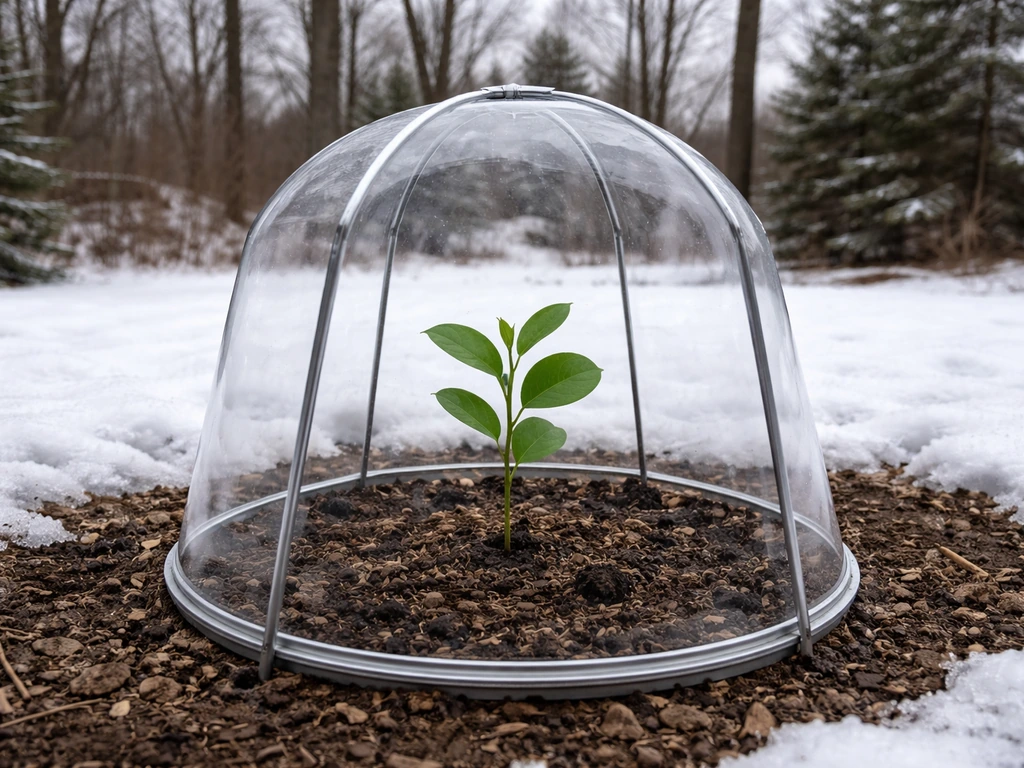
Learn if you can grow sandalwood in Canada, key climate and host needs, and realistic alternatives and steps.
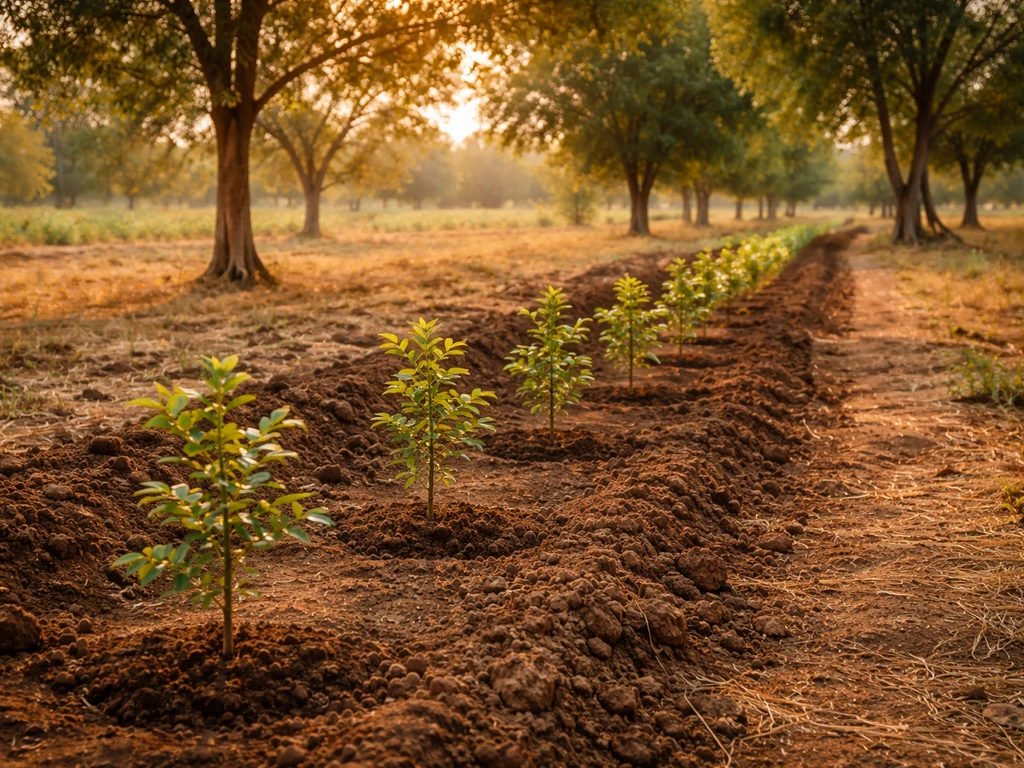
Yes, but sandalwood needs warm climate, specific soil and often host plants. Learn how to start and timelines in India.
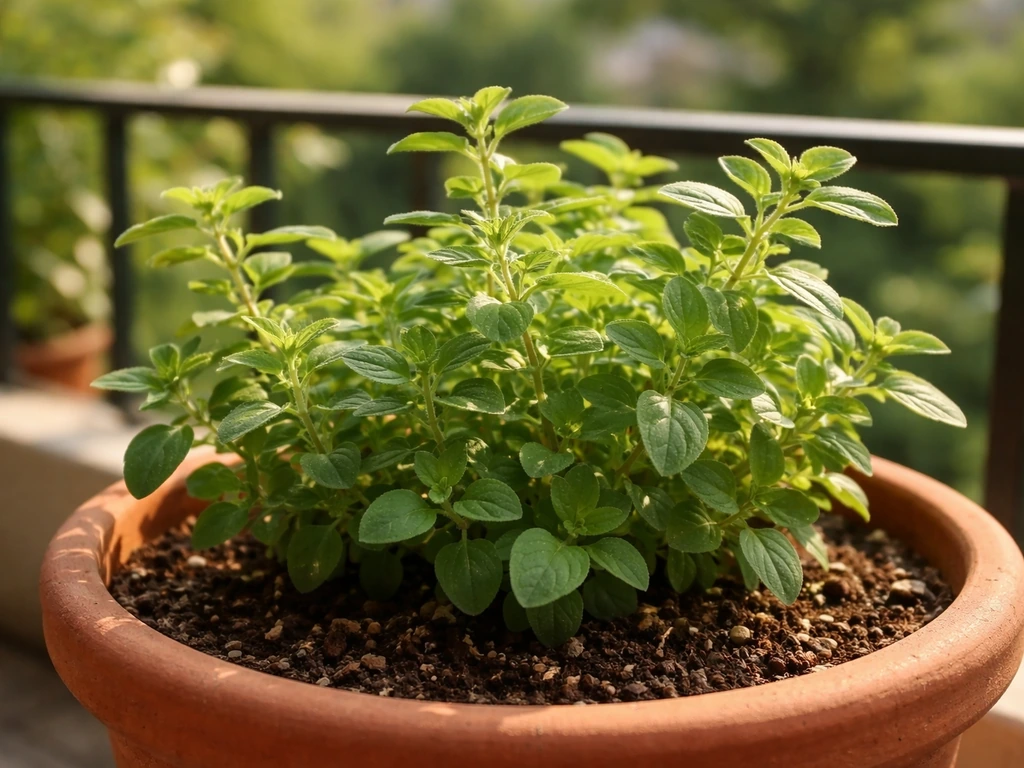
Yes, grow oregano in India: climate fit, planting season, soil, watering, containers, propagation, pruning and troublesh