
Yes, you can absolutely grow garlic in Indiana, and it's one of the more forgiving crops you can put in the ground here. If you're wondering about other crops for the same kind of climate questions, can you grow shampoo ginger in California is a similar feasibility question worth checking before you plant. Indiana's climate is actually well-suited for it: the state gets cold enough winters to give garlic the chill period it needs, and the spring and early summer growing window is long enough to bulk up a decent bulb before harvest. Fall planting is the standard approach, and if you do it right, you'll dig garlic in late June or early July with almost no fuss in between.
Can You Grow Garlic in Indiana? Best Types and Steps

Marcus Petersen
30 May 2026
What Indiana's climate means for your garlic
Indiana sits mostly in USDA hardiness zones 5b through 6b, which is ideal territory for garlic. If you are wondering about ginger instead, you can also grow ginger in California, but the timing and conditions are different from garlic can you grow ginger in California. Garlic needs a cold dormancy period to trigger proper bulb development, and Indiana winters reliably deliver that.
The real challenge isn't cold per se, garlic shoots can handle air temperatures down to about 20°F without damage. The risk is temperatures dropping below 10°F, which can cause dieback and hurt bulb development. That's where mulch earns its keep. Indiana also gets freeze-thaw cycles through late winter and early spring, and that repeated heaving is the biggest physical threat to newly planted cloves.
Mulch handles that too.
The other thing Indiana has going for it is a reasonable spring window. Garlic bulbs size up fast once temperatures climb and day length increases in May and June. You're typically looking at a mid to late June harvest for most hardneck varieties, maybe a little later for softnecks. That's a comfortable window before summer heat and humidity set in.
When to plant and when to harvest in Indiana
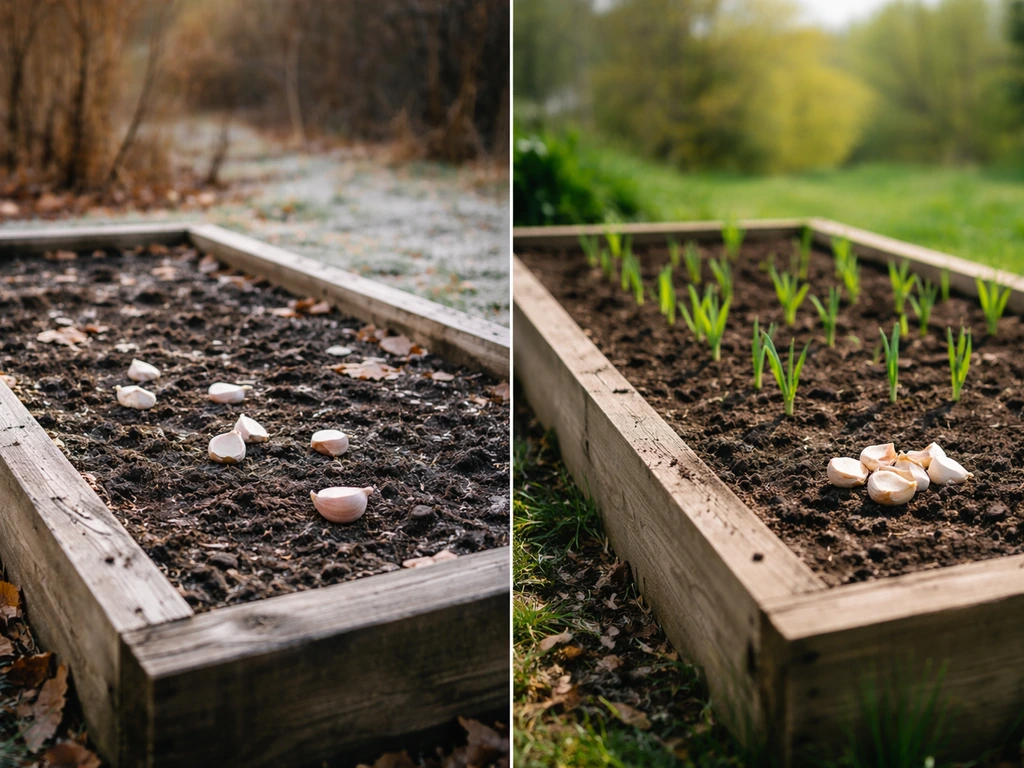
Plant garlic in the fall, specifically October through early November. That's the window consistently recommended across Midwest extension services, and it lines up with Indiana's typical first frost dates. You want cloves to establish roots before the ground freezes solid, but you don't want significant top growth before winter because tall shoots are more vulnerable to cold damage. Six weeks before hard freeze conditions is the practical target. In most of Indiana, that puts you squarely in October.
If you missed the fall window entirely, late March to mid-April spring planting is technically possible, but manage your expectations. Spring-planted garlic doesn't get the full chill period, and bulbs tend to be smaller and less well-formed. It's worth doing if you have extra cloves and an empty bed, but I wouldn't count on it for your main crop. Fall planting is the move.
For harvest, watch the leaves. When roughly half the lower leaves have yellowed and died back, but a few green leaves remain at the top, it's time to dig. That's usually late June for hardnecks and into early July for softnecks in Indiana. Don't wait until all leaves are yellow, the wrapper leaves protect the bulb, and if the plant is completely dried down you've already lost some of that protection.
Hardneck vs. softneck: which one belongs in an Indiana garden
Both types will grow in Indiana, but hardneck garlic is the better fit for the northern two-thirds of the state, and honestly it performs well statewide. Hardneck varieties produce a flower stalk called a scape in late spring, which you'll want to cut off so the plant redirects energy into the bulb. Those scapes are also edible and delicious, so it's a bonus harvest. Hardnecks have more complex flavor, larger individual cloves, and better cold hardiness, all of which make sense for Indiana conditions.
Softneck garlic is what you typically see braided and hanging in kitchens. It stores longer than hardneck, doesn't produce a scape, and is slightly more forgiving of warmer or less predictable winters. In southern Indiana, where winters are milder, softneck varieties are a reasonable option if long storage is a priority. But in most of the state, I'd reach for hardnecks first.
| Feature | Hardneck | Softneck |
|---|---|---|
| Best for Indiana | All zones, especially northern IN | Southern IN or mild-winter years |
| Clove size | Larger, easier to peel | Smaller, more cloves per bulb |
| Flavor | More complex, robust | Milder, more neutral |
| Storage life | 4–6 months | Up to 12 months |
| Scapes | Yes (harvest and eat them) | No |
| Cold hardiness | High | Moderate |
| Common varieties | Rocambole, Porcelain, Purple Stripe | Artichoke, Silverskin |
For Indiana specifically, Rocambole types like 'Music' or 'German Red' are popular and reliable. Porcelain varieties such as 'Music' (it crosses both categories depending on the source) and 'Georgian Crystal' handle Indiana winters well and produce big, easy-to-peel cloves. Purple Stripe types like 'Chesnok Red' are also worth trying. Any of these will give you a strong result in an Indiana garden.
How to pick varieties and where to get seed garlic
The most important rule with seed garlic: don't plant bulbs from the grocery store. Grocery garlic is often treated to inhibit sprouting, may carry diseases, and is usually selected for shelf life rather than garden performance. You need certified disease-free seed garlic from a reputable source. This matters more than most people realize because many garlic diseases are soil-borne or carried in the clove itself, and planting infected sets can set back your bed for years.
Good sources include local garden centers in September and October (look for regional seed suppliers who stock Midwest-adapted varieties), local farmers markets where garlic growers sell seed stock, and mail-order specialty suppliers. If you're ordering online, place your order by late August because good varieties sell out fast. When choosing, prioritize varieties described as cold-hardy or Midwest-adapted. A hardneck variety that was grown one or two states north of Indiana is often more reliably hardy than one grown in a warmer climate.
When you break the bulb apart to plant individual cloves, use the largest cloves you have. Bigger cloves produce bigger bulbs. Save the small inner cloves for cooking and plant the best ones.
Setting up your site and soil
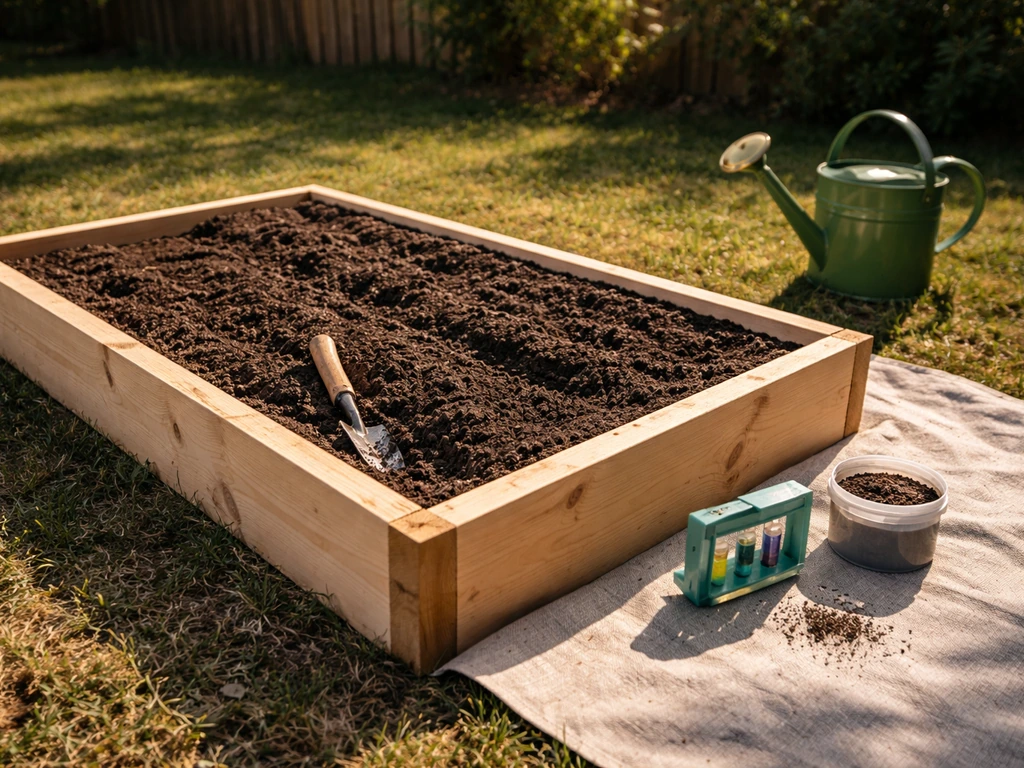
Garlic needs full sun, at least six to eight hours per day. It will tolerate partial shade, but you'll get smaller, less developed bulbs. Pick your sunniest bed. Drainage is the other non-negotiable. Garlic in waterlogged soil rots, plain and simple. If your garden has heavy clay or stays soggy after rain, either raise the bed or work in significant organic matter before planting. Indiana soils vary widely, but the heavier clay soils in the central and northern parts of the state need real amendment work before they're ideal for garlic.
Target a soil pH between 6.0 and 7.0. Most Indiana soils fall somewhere in that range, but it's worth doing a simple soil test (your local Purdue Extension office can help with this) before you invest in a bed. If your soil is too acidic, add lime; if it's too alkaline, sulfur will bring it down. Beyond pH, garlic has moderate to high nitrogen demand. Work compost into the bed before planting, and if you want to add a fertilizer, incorporating a balanced granular or urea into the top several inches of soil at planting gives roots something to feed on through fall and winter.
How to plant: depth, spacing, and mulching
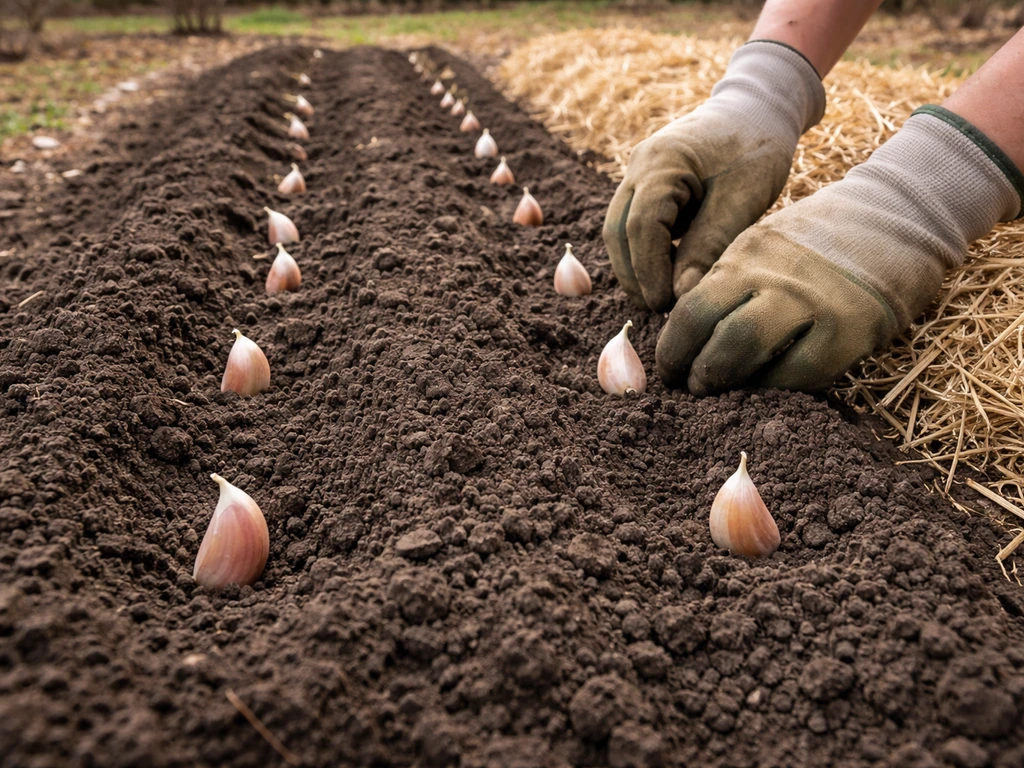
Plant cloves with the pointed end up and the flat base down. The base of the clove should sit about 2 to 3 inches below the soil surface, so you're digging a hole or furrow roughly 3 to 4 inches deep and placing the clove at the bottom. Space cloves about 6 inches apart within rows, and keep rows 12 inches apart. Tighter spacing is possible in raised beds, but garlic bulbs need room to expand.
After planting, mulch immediately. This is not optional in Indiana. Apply 3 to 4 inches of straw or shredded leaves over the entire bed. The mulch does three things: it insulates the soil to protect roots during hard freezes, it prevents the freeze-thaw heaving that can literally push cloves out of the ground over winter, and it suppresses weeds in spring when garlic is actively growing. Penn State and University of Minnesota extension both back this up, it's one of those recommendations that shows up everywhere because it's genuinely important. Don't skip it.
Taking care of your garlic through the season
Early spring
Garlic shoots will emerge through the mulch in early spring, sometimes as early as late February or March in southern Indiana. Don't remove the mulch, let shoots push through it naturally. If you have a thick layer, you can gently part it to help shoots find their way, but the mulch stays on the soil to keep moderating temperature and suppressing weeds. Once you see active green growth, side-dress with a nitrogen fertilizer. A light application of a balanced granular fertilizer or blood meal worked shallowly around the plants gives them a boost heading into their most active growth period.
Late spring fertilizing and scape removal
Give garlic a second side-dressing in May as day length increases and the plant is pushing hard toward bulb development. This is when bulbs are actively sizing up, and adequate nutrition at this stage pays off at harvest. After this second feeding, back off on nitrogen, late-season nitrogen encourages leafy growth rather than bulb development.
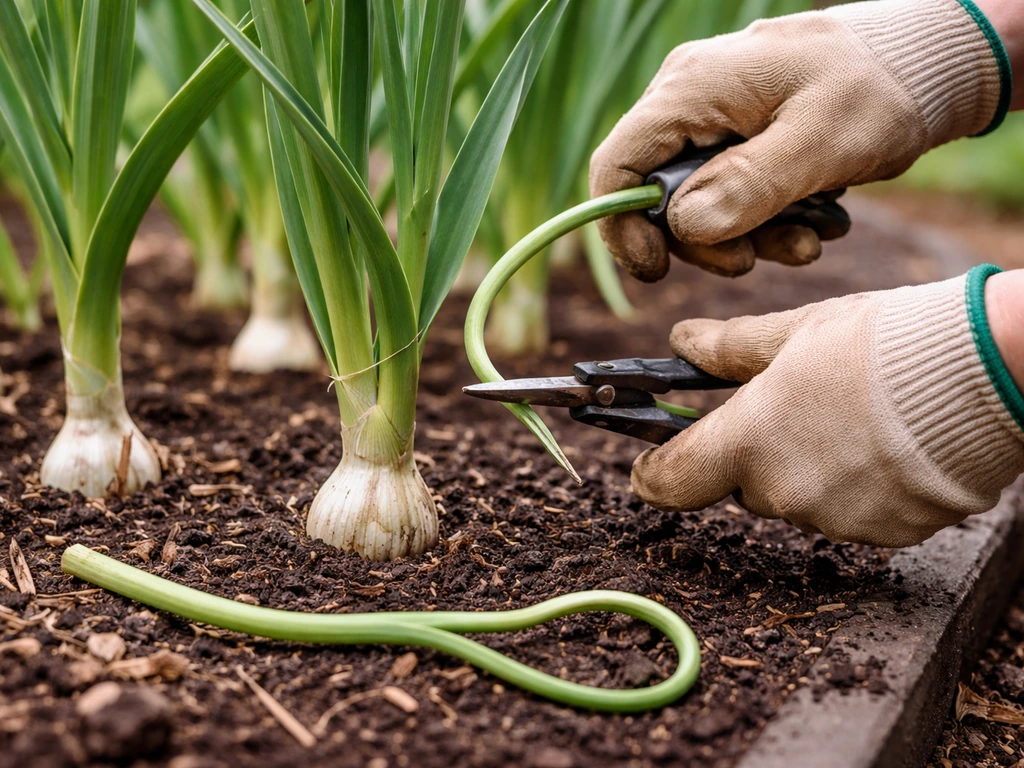
If you're growing hardneck varieties (which you probably are), scapes will appear in late May or early June. These are the curling flower stalks that emerge from the center of the plant. Cut them off when they've made one full curl. Removing scapes redirects the plant's energy from seed production to bulb development, and it makes a real difference in final bulb size. Scapes are fantastic in stir fries, pesto, and roasted dishes, so don't throw them out.
Watering and weed control
Garlic likes consistent moisture, roughly an inch of water per week during active growth. Indiana spring weather usually handles most of this, but pay attention during dry spells in May and June when bulbs are sizing up. Stop watering entirely about two to three weeks before your expected harvest date, dry soil at the end of the season helps with curing and reduces disease pressure on the wrappers. Weed control is also important because garlic doesn't compete well with weeds. The mulch handles most of it, but pull any weeds that come up through it promptly.
Harvest, curing, storage, and what can go wrong
Knowing when to dig
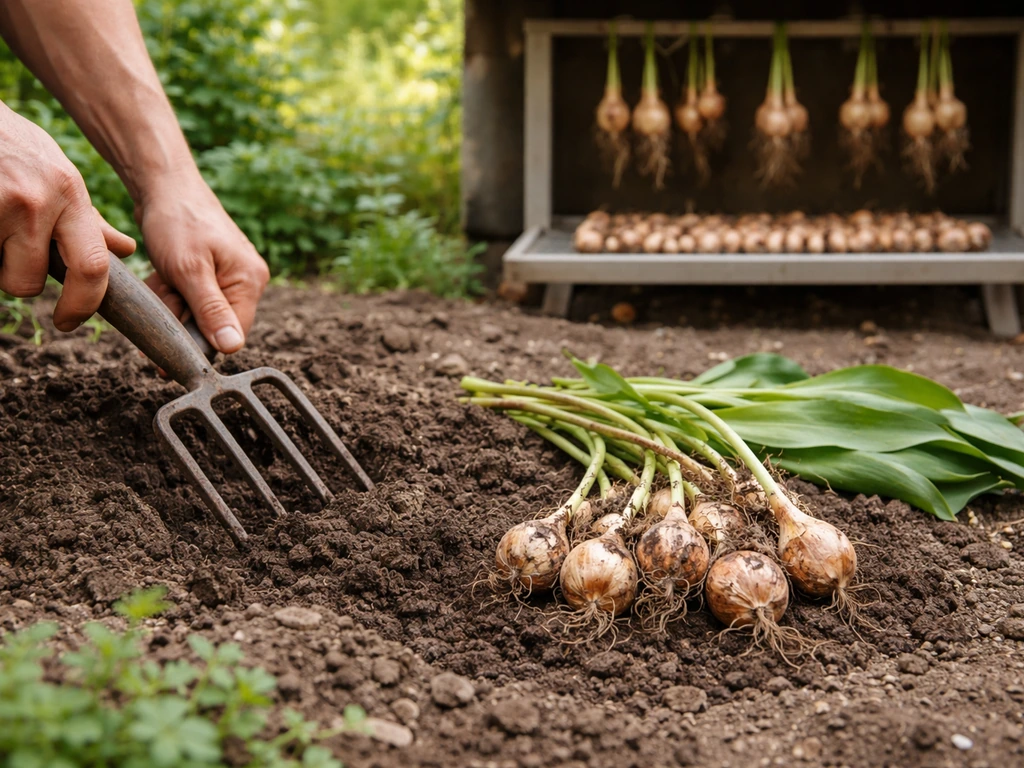
Use a garden fork rather than a spade to loosen soil and lift bulbs, stabbing bulbs with a spade is the most common harvest-day mistake. Once you've loosened the soil around the plant, pull gently from the base of the stem. Brush off loose soil but don't wash the bulbs or remove the wrappers. You want those papery outer layers intact for storage.
Curing properly
Hang or lay bulbs in a single layer in a shaded, well-ventilated space for three to four weeks. A covered porch, a barn, or a garage with good airflow all work well. Avoid direct sun, which bleaches the wrappers and can heat bulbs unevenly. Proper curing is what creates the dry papery skin that protects the bulb in storage. After curing, trim roots close to the base and cut stems down to about an inch above the bulb (or braid softnecks if you're going that route). Hardnecks store well at room temperature for four to six months; softnecks can go much longer.
Common problems in Indiana garlic beds
- Winter heaving: cloves pushed out of the ground by freeze-thaw cycles. Prevented almost entirely by 3 to 4 inches of mulch at planting.
- Fusarium basal rot and white rot: fungal diseases that cause soft, rotting bulbs. Avoid by planting certified disease-free seed garlic and not reusing heavily infected soil.
- Botrytis neck rot: shows up in storage. Prevent it with thorough curing and good airflow.
- Bloat nematode: a real pest issue in some Indiana gardens. Source clean seed garlic, rotate your garlic bed every few years, and don't plant where onions or leeks were recently grown.
- Small bulbs: usually caused by late planting, too much shade, poor drainage, insufficient fertility, or not removing scapes on hardnecks.
- Premature yellowing in spring: often nitrogen deficiency — side-dress early and don't skip the spring fertilizer step.
Your Indiana garlic checklist
- Order certified disease-free seed garlic by late August, focusing on cold-hardy hardneck varieties like Rocambole, Porcelain, or Purple Stripe types.
- Choose a full-sun bed with good drainage; amend heavy clay soil with compost before planting.
- Test soil pH and target 6.0 to 7.0; work in a balanced fertilizer or compost at planting.
- Plant cloves 2 to 3 inches deep, pointed end up, 6 inches apart, in October through early November.
- Mulch immediately with 3 to 4 inches of straw or shredded leaves.
- Side-dress with nitrogen in early spring when shoots emerge, and again in May.
- Cut hardneck scapes when they make one full curl in late May or early June.
- Water consistently (about 1 inch per week) through May and June; stop watering 2 to 3 weeks before harvest.
- Dig when half the leaves have yellowed — typically late June to early July.
- Cure in a shaded, ventilated space for 3 to 4 weeks before storing.
Garlic is genuinely one of the most rewarding crops you can grow in Indiana. If you're also curious about different crops for your region, you can compare garlic season tips here with whether can you grow ginger in ontario. If you're curious about other ginger lily varieties, check whether your local conditions in Canada can support growing them too can you grow shampoo ginger lily in canada.
It goes in the ground in fall when most of the garden is winding down, it overwinters with almost no attention needed, and it comes out in early summer just as you're deep into the growing season. If you start with good seed garlic, get the mulch down, and hit the spring fertilizer window, you'll have a strong harvest.
If you're wondering can you grow ginger in California, you'll want to focus on providing warm conditions and the right container or microclimate. If you are wondering whether ginger can be grown outdoors in Michigan like garlic, the climate and container setup matter a lot grow ginger in Michigan. Yes, you can grow ginger in Michigan, but focus on providing warmth and using a container or a protected microclimate to match ginger’s tropical needs. This is a crop worth trying today, not someday.
FAQ
What happens if I miss the fall planting window and plant garlic in spring?
In Indiana, the safest way to get a usable bulb from spring planting is to treat it as a starter crop, not an identical replacement for fall. Plant as early as soil can be worked (late March to mid-April as a general window), choose hardneck varieties you can source locally, and expect smaller bulbs or a weaker second-season improvement. Without the full cold period, spring-planted garlic is also more sensitive to weeds and uneven watering during May and early June.
When should I separate garlic bulbs into cloves, and does timing matter?
Yes, you should break the garlic bulb into individual cloves right before planting. Breaking too early dries cloves out and reduces vigor, and leaving cloves exposed can also increase the chance of mold in storage. Keep cloves cool and dry until you’re ready to separate them, then plant the largest, healthiest ones pointed up.
My yard has heavy clay and puddles after rain, can I still grow garlic in Indiana?
If your soil stays soggy after rain, mulch alone will not solve the problem. Build a raised bed or improve drainage by mixing in coarse compost or other organic matter, and avoid planting in low spots where water collects. Garlic disease risk rises sharply in wet conditions, and rot can show up even if shoots appear healthy.
Should I keep adding fertilizer after garlic starts growing?
No, skip it. Fertilize based on growth stage, not a blanket feeding schedule. Too much late nitrogen can push larger tops at the expense of bulb development, especially after scapes are removed (hardneck) and bulbs are sizing up in May. If you do add fertilizer, do it as side-dressings timed to active green growth, then back off.
What if my hardneck garlic does not produce scapes?
If you do not see scapes on a hardneck variety, first check whether you planted a hardneck type (some sellers label inconsistently) and confirm you removed scapes if they were present early. Some plants also miss scape formation when stress occurs (winter kill, severe drought, or root disturbance). Even without scapes, cutting flower stalks if they appear later can still help energy shift toward bulbing.
How do I know the right time to harvest garlic in Indiana?
Don’t wait for fully brown leaves. The most reliable timing in Indiana is when about half the lower leaves are yellow and dying back, while a few green leaves remain at the top. If you harvest only when everything is dried down, the bulb wrappers can be compromised, which reduces storage life.
What are common harvest mistakes that ruin garlic storage?
Use the garden fork to loosen soil around the plant, then pull gently from the base. A spade can slice roots and nick bulbs, leading to rot in storage. Also, do not wash bulbs. Remove only excess dirt and keep the papery wrappers intact for proper curing and shelf life.
How should I cure and store garlic so it lasts through winter?
Curing needs airflow and shade. In Indiana, a covered porch, barn, or garage with ventilation works well, but avoid direct sun and avoid sealing bulbs in plastic. Aim for about three to four weeks, dry papery skin, and firm bulbs before trimming roots and cutting stems, because premature curing can cause shrinkage and mildew in storage.
Can I plant garlic from the grocery store to save money?
Avoid using grocery-store garlic because it is often treated to prevent sprouting and may carry diseases selected for transport rather than disease-free seed. Instead, use certified seed garlic from a reputable supplier, local growers, or farmers markets where you can confirm the stock is intended for planting. Source early, because Midwest-adapted varieties can sell out by late August.
How much sun does garlic really need, and what if my garden is only partly sunny?
Garlic needs at least six to eight hours of sun in Indiana. If you grow it in partial shade, you may still harvest, but bulbs often stay smaller and take longer to mature. The best move is to choose the sunniest bed you can and keep weeds controlled so the plants are not competing for light and nutrients.
What should I do if my garlic shoots appear very early under the mulch?
If shoots emerge early (late February or March in southern Indiana), do not pull mulch back or remove it. The shoots are designed to push through mulch, and the blanket layer helps moderate temperature swings. If you have extremely thick or uneven mulch, gently part it so shoots can emerge, but keep the main insulating layer in place.
Next Articles
Can You Grow Black Pepper in the US Where and How
Learn where black pepper can be grown in the US and how to grow it indoors or in warm zones for fruit.

Can You Grow Capers in the US? Regional Guide for Home Gardeners
Regional guide to growing caper plants in the US, choosing cultivars, meeting soil and climate needs, and harvesting bud
Can You Grow Peppercorns in the US? A Zone-by-Zone Guide
Zone-by-zone guide to growing black pepper peppercorns in the US, including heat, humidity, indoor options, and timeline