
Yes, you can grow sandalwood in the USA, but only in specific regions and with realistic expectations. If you're in Hawaii, coastal Southern California, or another frost-free subtropical zone (roughly USDA zones 9b–12), outdoor cultivation of true Santalum species is genuinely feasible. Everywhere else, you're looking at containers, a greenhouse, or a very protected microclimate. For readers in cooler countries, see can you grow sandalwood in canada for country-specific guidance. And no matter where you are, sandalwood is a decades-long commitment: don't expect fragrant heartwood before year 15 at the earliest, and realistically much longer.
Can I Grow Sandalwood in USA? Feasibility & How-to Guide
Marcus Petersen
11 Aug 2026
Which sandalwood species actually matter here
There are three names you'll hear most often, and they describe completely different plants with different cultivation needs. Sorting them out before you buy anything is worth five minutes of your time.
Santalum album: the classic Indian sandalwood
Santalum album is what most people mean when they say 'sandalwood.' It's the source of the premium East Indian sandalwood oil and the heartwood prized in incense and perfumery. It's also a frost-sensitive tropical that thrives in warm, humid, frost-free climates. Commercial and research cultivation has been concentrated in India, Indonesia, and Hawaii for good reason: this tree simply cannot handle freezing temperatures, and it struggles anywhere with prolonged cool, wet winters. For detailed, India-specific guidance, see can i grow sandalwood in india. I'd call it a zone 10+ plant for reliable outdoor growing.
Australian sandalwood: the semi-arid alternative
Santalum spicatum (Australian sandalwood) is the main plantation species in Western Australia and is naturally adapted to semi-arid Mediterranean climates with annual rainfall often as low as 150–500 mm. blank" rel="noopener noreferrer">Essential Oil Crops (chapter on Australian sandalwood / Santalum spicatum) reports that Santalum spicatum is adapted to semi‑arid Mediterranean climates (mean annual rainfall often 150–500 mm) and grows on sandy and calcareous soils, making it a likely Santalum candidate for Mediterranean/semarid U.S. microclimates such as parts of Southern California. It grows on sandy and calcareous soils and can tolerate more drought and slightly cooler winters than S. album. This makes it the most promising Santalum candidate for dry, frost-protected microclimates in the western U.S., especially parts of Southern California and possibly similar pockets in Arizona or Nevada. It is still slow-growing and still needs host plants, but it's a more realistic target than S. album for Mediterranean U.S. gardeners.
Hawaiian sandalwood species
Hawaii is home to several native Santalum species, including S. paniculatum, S. ellipticum, and S. freycinetianum. These are the only Santalum species that are technically native to the U.S. (Hawaii being part of the country). Active cultivation and restoration programs already exist in Hawaii, making it the single best state for outdoor sandalwood growing. If you're in Hawaii, you have both the climate and access to locally adapted material through restoration programs.
Red sandalwood and agarwood: related by name only
Red sandalwood (Pterocarpus santalinus) is a legume tree, not a true sandalwood, and it produces the vivid red heartwood used in dyes and woodworking, not fragrant oil. For specific guidance on cultivating Pterocarpus santalinus, see can i grow red sandalwood. Agarwood comes from Aquilaria and related genera and is also an entirely different plant with its own challenging cultivation requirements and heavy CITES regulatory baggage. Both are worth knowing about if you're exploring fragrant specialty trees, but they are separate topics from Santalum cultivation.
Where outdoor growing is actually feasible in the USA
The honest short list for viable outdoor Santalum cultivation in the continental U.S. and territories is not long. Zone matters a lot here, and even within an eligible zone, your specific site conditions matter as much as your zip code.
| Region | Best Species | Zone Range | Feasibility |
|---|---|---|---|
| Hawaii | S. album, native Hawaiian spp. | Zones 10–12 | Best in the U.S., established programs exist |
| Coastal Southern California | S. spicatum, S. album in warmest spots | Zones 10–11 | Good for S. spicatum; S. album needs frost protection |
| Inland Southern California / Desert SW | S. spicatum | Zones 9b–10b | Possible in frost-protected, well-drained sites |
| Florida (Central/South) | S. album | Zones 9b–11 | Humid; drainage management is critical |
| Gulf Coast (TX, LA, coastal) | S. album (container-assisted) | Zones 9a–9b | Marginal; occasional freezes are a real risk |
| Everywhere else (zones 1–9a) | Any in containers/greenhouse | Not applicable outdoors | Greenhouse or containers only |
If you're in zone 9b or warmer and you've gone several years without a hard freeze, outdoor S. spicatum or S. album is worth experimenting with if you accept the long timeline. If you're in zone 9a or colder, even one frost event at the wrong time can kill a young sandalwood. I'd treat the Gulf Coast as a marginal zone where a container-and-bring-inside strategy is smarter than planting directly in the ground.
Growing sandalwood in containers or a greenhouse
If your climate rules out outdoor planting, containers and greenhouses are a legitimate path, with some honest caveats. Sandalwood can be maintained in large containers and moved under protection during cold months. The catch is that container-grown sandalwood still requires host plants, which means you're managing at least two plants in proximity at all times. A deep (18-inch minimum) container or raised bed gives the root system room to forage laterally for host roots, which is how haustorial connection happens.
In a greenhouse setup, you have the most control: you can regulate temperature (keep nights above 50°F to avoid stress), manage humidity, and ensure host plants are always present. A heated greenhouse in zones 7–9 can realistically support S. album for hobbyist purposes, though the multi-decade wait for heartwood means your greenhouse commitment is genuinely long-term. For most people in cooler zones, the practical yield from a container-grown sandalwood is the experience and the leaves, not commercial quantities of oil.
Climate, soil, and site: what the plant actually needs
Temperature and microclimate
Frost is the primary killer for young Santalum. Even a brief dip to 28°F can damage or kill seedlings in their first few years. On outdoor sites, look for south-facing slopes, walls that absorb daytime heat, or spots sheltered from cold north winds. Urban heat islands in frost-marginal zones (parts of coastal California, for example) can push an otherwise borderline site into viable territory. If you're in a frost-prone area and still want to try, a young tree covered with frost cloth during cold snaps buys you some insurance.
Soil and drainage
All published field research on Santalum is emphatic about one thing: no waterlogging. Root rot from saturated soil is a fast death sentence. Sandalwood tolerates a wide range of textures, from sandy loam to red loam to calcareous soils, but every source emphasizes drainage as non-negotiable. Target a soil pH of 6.0–8.0. Moderate organic matter is fine, but rich, constantly moist garden beds are not what this tree wants. Some of the best heartwood quality on record comes from trees grown on drier, well-drained, even stony soils. If your garden tends to stay wet, raised beds or mounded planting are worth doing.
Light
Full sun is preferred for established trees. Young seedlings tolerate partial shade, and some nursery protocols use light shade cloth in the first few months, but long-term growth and eventual heartwood production benefit from maximum light. Avoid planting where taller host plants will permanently shade the sandalwood canopy as they grow.
The hemiparasite thing: why host plants aren't optional
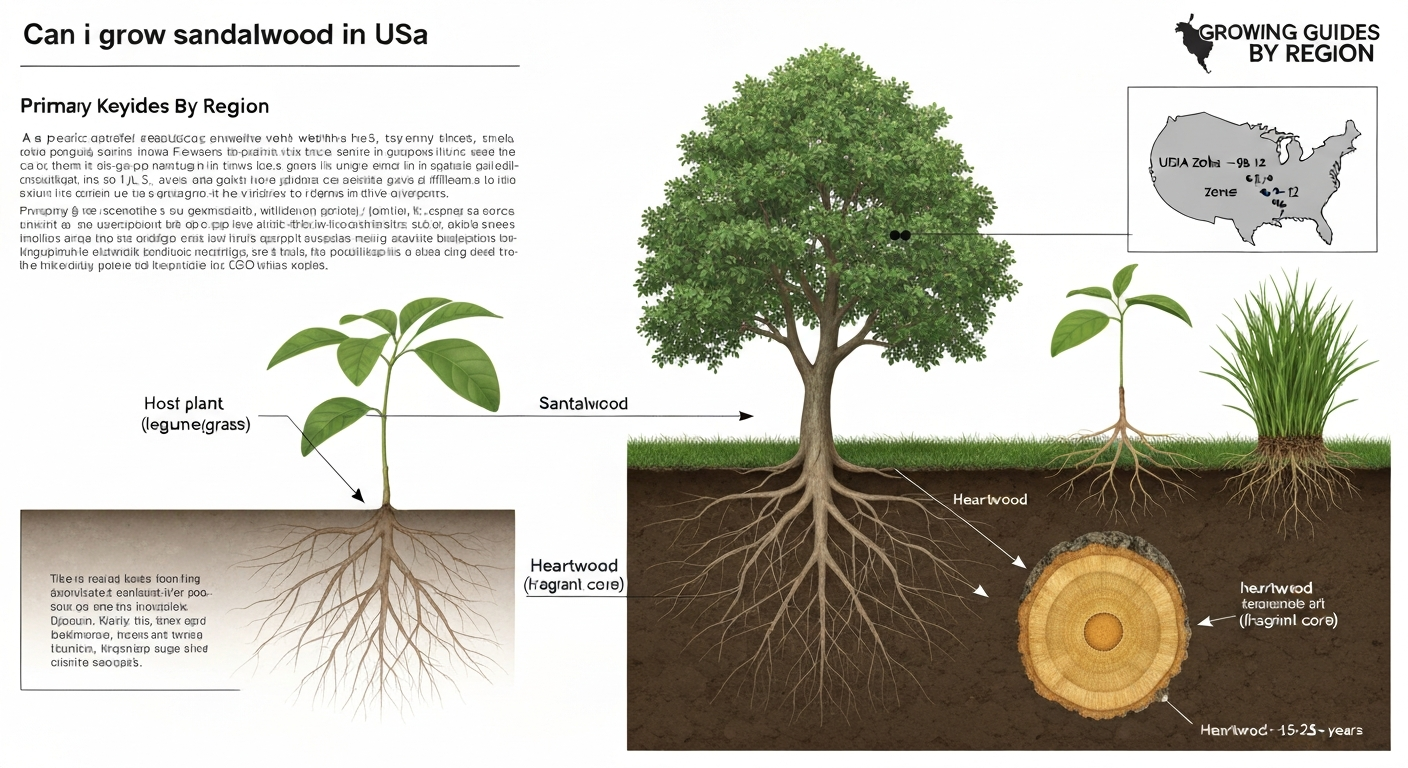
This is the part that surprises most gardeners. Sandalwood is a root hemiparasite, which means it photosynthesizes on its own but also taps into the root systems of neighboring plants to extract water, minerals, and in some cases carbon compounds. It does this through specialized root structures called haustoria, tiny connection organs that mechanically and enzymatically penetrate a host's root and create a vascular link. Studies on the anatomy show the haustorium forms a distinct interface (a peripheral hyaline body and a penetration peg) rather than just fusing roots, giving the sandalwood selective access to the host's xylem.
Haustorial development begins quickly: under nursery conditions, seedlings initiate haustoria within 1–6 weeks of germination, with strong attachment forming around 30–40 days. RNA‑Seq analysis identifies key genes associated with haustorial development in the root hemiparasite Santalum album, PMC (BMC/Frontiers style transcriptome work) documents that haustoria initiate within 1–6 weeks of germination under nursery conditions, with strong attachment by about 30–40 days RNA‑Seq analysis identifies key genes associated with haustorial development in the root hemiparasite Santalum album — PMC (BMC/Frontiers style transcriptome work). A sandalwood seedling without any host plant will technically survive for a while, but it grows slowly, stresses easily, and is far more vulnerable to failure. I've seen hobbyist attempts where the grower skipped hosts because they found the concept inconvenient, and the trees just sulked for years. Providing at least one host from the start isn't optional if you want any reasonable growth rate.
Field-grown sandalwood can extend lateral roots and form haustorial connections up to 1.5–3.0 meters from the trunk, so established trees forage widely. But for young plants, the practical rule is: plant hosts in the same hole or within 20–30 cm to guarantee early attachment.
Choosing the right host plants
Host selection is genuinely important, not just a box-ticking exercise. The research consistently points to nitrogen-fixing legumes as the most effective primary hosts because they supply minerals and promote better early growth and nutrient accumulation in the sandalwood. Fast-establishing species work especially well in the nursery stage because they develop roots quickly for the haustorium to find.
- Cajanus cajan (pigeon pea): one of the most commonly recommended and tested nursery hosts; fast-growing, nitrogen-fixing, easy to establish from seed
- Acacia spp.: multiple species work well as both short- and long-term hosts in field plantings; choose species suited to your climate
- Leucaena leucocephala: a robust legume host used widely in tropical and subtropical sandalwood programs
- Mimosa spp.: effective in nursery trials, though you'll want to consider invasiveness before planting in the ground
- Grasses (e.g., Rhodes grass, native grasses): useful as temporary nurse hosts sown directly around seedlings; they establish fast but don't permanently compete with the tree
The best strategy for a home grower is a two-tier host system: a fast-establishing short-term host (pigeon pea or a suitable grass) planted at the same time as the sandalwood to provide immediate haustorial opportunity, plus a longer-lived tree host (an Acacia appropriate to your region) that will persist as the sandalwood matures. The risk with only short-term hosts is that they die back or get removed before the sandalwood is established, leaving it without support. The risk with only tall tree hosts is that they eventually shade out the sandalwood. A mix avoids both problems. Planting distances for the long-term tree host should keep it within a few meters but far enough that it won't immediately compete for canopy light.
How to propagate sandalwood: seed, seedlings, and beyond
Starting from seed
Seed is the most common starting point and the most accessible option for hobbyists, but there are a few protocol details that make the difference between decent germination and frustration. Collect or source fully ripe fruit (the skin should be reddish and soft). Remove the fleshy pulp immediately after harvest because the pulp contains germination inhibitors. Either sow fresh seed right away or sun-dry briefly and refrigerate for short-term storage. Seed viability declines quickly in storage, so fresh or recently dried seed is always better.
A presoak in gibberellic acid (GA3) at around 250 ppm for three days before sowing is widely reported to markedly improve and accelerate germination. Without the presoak, germination can be patchy and slow. Sow into sterilized nursery media (more on that below) with a host plant seed in the same container. Root trainers in the 270–600 mL range work well for nursery production; a 600 mL root trainer is often cited as the optimum for producing robust six-month seedlings. Avoid large polybags at the early stage because they tend to cause root coiling and poor early root architecture.
Nursery growing media
A common and well-tested nursery mix is roughly six parts decomposed sawdust to four parts sandy loam or forest topsoil to one part river sand, with a small NPK fertilizer supplement. Sterilize the media before use to reduce fungal losses, which are a real problem with sandalwood seedlings. Some programs also inoculate with arbuscular mycorrhizal fungi (VAM), since Santalum naturally associates with VAM and the fungal symbiosis can improve nutrient uptake and establishment.
Buying nursery seedlings
Purchasing nursery-grown seedlings is faster and skips the germination uncertainty, but sourcing is a real challenge in the U.S. Hawaii has the best supply of locally adapted material through restoration and forestry programs. For continental U.S. buyers, specialty tropical plant nurseries occasionally offer S. album seedlings, but availability is inconsistent. When buying, confirm the seedling already has an established host plant in the container, or be ready to introduce one immediately. A sandalwood seedling shipped bare-root or separated from its host for any length of time will need to re-establish haustorial contact quickly.
Cuttings and grafting
Vegetative propagation of sandalwood is technically possible but difficult. Cuttings from mature Santalum are notoriously hard to root, and success rates in most published reports are low without mist systems and rooting hormone. Grafting onto related rootstocks has been explored in research programs, but it's not a standard hobbyist technique and requires both skill and appropriate rootstock material. For most home growers, seed or nursery seedlings are the practical path. Cuttings and grafting are worth knowing about if you eventually want to replicate a particularly good individual tree, but I wouldn't start there.
| Propagation Method | Difficulty | Time to Transplant-Ready Seedling | Key Risk |
|---|---|---|---|
| Fresh seed + GA3 presoak | Moderate | 4–6 months in root trainers | Low viability if seed is old or pulp not removed |
| Nursery seedlings (purchased) | Easy | Ready immediately | Host plant continuity can be disrupted during shipping |
| Stem cuttings | Hard | Unpredictable; often months with low success | Very low rooting rate without mist propagation setup |
| Grafting | Very hard | Requires established rootstock | Limited rootstock availability and technical skill required |
Planting and early care
Plant sandalwood during the warm season when soil temperatures are consistently above 60°F. Dig a generous hole, mix in some coarse sand if drainage is at all suspect, and plant your sandalwood with its host plant in or immediately adjacent to the same hole. Water in well, but do not create a basin that holds standing water. In the first season, consistent moisture without waterlogging is the goal: the root system is establishing both its own structure and its haustorial connections to the host. After the first year, reduce watering frequency and allow the soil to dry somewhat between waterings, which mimics the plant's natural preference and encourages deeper root growth.
Fertilize lightly. Heavy nitrogen applications are counterproductive because they reduce the sandalwood's incentive to form haustorial connections with nitrogen-fixing hosts. Let the host plants do the nutrient heavy lifting. Weed control matters most in the first two years to prevent aggressive ground cover from smothering young trees, but be careful not to disturb the root zone where haustorial connections are forming.
Realistic timelines and what you'll actually get
This is where I want to be completely straight with you, because a lot of online sandalwood content skips the honest timeline conversation. Heartwood, the fragrant, oil-rich core that makes sandalwood valuable, takes decades to form. Plantation estimates for S. album in accelerated programs with improved genetics and hosts put economic heartwood at 15–25 years under good conditions. Wild S. spicatum trees in Western Australia often take 50–100 years to reach harvestable size. For a home hobbyist in the U.S. without access to improved planting stock and with less-than-optimal conditions, expecting anything commercially significant within 20 years is optimistic.
What you can realistically get as a hobbyist: a living, interesting tree with fragrant wood in small amounts over time; leaves and small branches with mild fragrance usable for personal use; and the satisfaction of growing a genuinely unusual hemiparasitic tree. If your goal is commercial oil production, the U.S. is not competitive with established plantation operations in India and Australia, and the economics just don't work for small-scale growers. If your goal is the experience, the plant, and eventually some personal-use heartwood, it's absolutely worth the effort in the right zone.
Pests, diseases, and what goes wrong
Root rot from poor drainage is the number one killer of container and young field sandalwood. I'll repeat the drainage point because I've seen it be the problem more often than anything else. Beyond that, Santalum seedlings are susceptible to damping-off fungal diseases in the nursery, which is why sterilized media is important. In field plantings, spike disease (a phytoplasma transmitted by leafhoppers) has devastated S. album plantings in India and is a serious concern for any serious cultivation attempt in tropical regions. There's no cure for spike disease; prevention relies on monitoring, removing infected material, and controlling the leafhopper vector. In the U.S., spike disease is not currently established on the mainland, but it's a reason to source disease-free certified planting stock whenever possible.
Sandal spike is rare in Hawaii's managed programs due to careful sourcing and monitoring. General wood borers and scale insects can affect established trees but are manageable with standard horticultural practices. The bigger practical failure point for U.S. hobbyists is usually frost damage on marginal sites, followed by root rot, followed by host plant problems (either the host shades out the sandalwood or dies and leaves it without support).
Sourcing plants and seeds: what to know before you buy
Finding legitimate, correctly identified Santalum planting material in the U.S. takes some effort. In Hawaii, contact local forestry programs and restoration nurseries, which are the most reliable source of native Hawaiian species adapted to local conditions. For S. album and S. spicatum on the mainland, specialty tropical plant nurseries and some online retailers carry seedlings or seeds, but quality and identification accuracy vary. Always confirm the species name, not just 'sandalwood,' since the name is used loosely.
Importing sandalwood seeds or live plants from overseas requires a USDA-APHIS import permit and a phytosanitary certificate from the country of origin. This is not a process to skip: APHIS actively intercepts uncertified plant material at ports of entry. For some Santalum species, CITES regulations may also apply, particularly for taxa listed as vulnerable or endangered in their native range. Check the APHIS website and the CITES Appendix listings for the specific species before ordering anything internationally. Domestic purchases from U.S.-based nurseries avoid the import permitting process, which is another reason to source locally when you can.
Fragrant alternatives if your zone doesn't work
If you're in zone 8 or colder and the greenhouse commitment feels like too much, there are genuinely rewarding fragrant plants worth growing instead. For a simple, low‑maintenance aromatic herb suited to warm Indian climates, see growing oregano in India. Patchouli (Pogostemon cablin) is a practical option for warmer zones and works well in containers in cooler ones, delivering a rich, distinctive fragrance from a much more manageable plant. For practical growing advice for that plant, see our guide on can you grow patchouli. For those interested in precious aromatic trees, agarwood (Aquilaria spp. Can agarwood grow in the USA? That’s a separate topic worth exploring if you want details on Aquilaria cultivation and its regulatory status (see internal reference 1457b291-6613-4ab0-991c-22ef36974533). ) is another topic worth exploring, though it comes with its own regulatory complexity given its CITES Appendix II status. Red sandalwood (Pterocarpus santalinus) is a completely different plant from true sandalwood, but it's a striking tree worth knowing about separately. If you're curious about related aromatic trees, see can we grow argan tree in india for guidance on cultivating argan outside its native range.
The honest recommendation: if you're in Hawaii or coastal Southern California, sandalwood is worth trying with appropriate expectations. If you're in zone 9b on a well-drained, frost-protected site in Florida or the Gulf Coast, a protected container-assisted attempt is reasonable. If you're in zone 8 or colder, put your energy into plants that will reward you on a human timescale in your actual climate.
FAQ
Short definitive answer: can I grow sandalwood in the USA as a home gardener or hobbyist?
Yes — but with strong caveats. True Santalum species can be grown in the U.S., but success depends on species and location. Hawaiian Santalum spp. are suitable outdoors in Hawai‘i; tropical Santalum album (Indian sandalwood) needs frost‑free, warm, humid locations (or heated greenhouse/container culture); Australian Santalum spicatum tolerates drier Mediterranean/semi‑arid sites and may be a candidate for frost‑protected Mediterranean microclimates (e.g., some parts of southern California). In most continental temperate zones, growing sandalwood outdoors to harvestable heartwood is impractical — container/greenhouse hobby culture is possible but heartwood/oil production takes decades and is unlikely to be commercially productive.
Which sandalwood species matter for U.S. growers and where each is realistic outdoors?
• Hawaiian Santalum spp. (S. paniculatum, S. ellipticum, S. freycinetianum): native to Hawai‘i — realistic for outdoor cultivation there and subject to local conservation/regulation. • Santalum album (Indian sandalwood): tropical, frost‑sensitive — realistic outdoors only in frost‑free tropical/subtropical pockets (very limited U.S. areas, e.g., parts of southern Florida/Hawaii) or in greenhouses. • Santalum spicatum (Australian sandalwood): adapted to semi‑arid Mediterranean climates — the best candidate for dry, frost‑protected Mediterranean sites (some southern California microclimates). Note: red sandalwood (Pterocarpus/specialty timbers) and agarwood (Aquilaria spp.) are different genera with different climates and regulatory issues; treat separately.
Region‑tailored recommendations (outdoor vs greenhouse/container)
• Hawai‘i: grow Hawaiian Santalum species outdoors using local restoration/extension guidance; check state rules. • Tropical/subtropical frost‑free Florida or microclimates: S. album may survive outdoors but needs careful host and frost protection; expect slow growth. • Mediterranean/drier U.S. (some southern CA, parts of Arizona with winter protection): S. spicatum may be the best outdoor candidate in well‑drained sites with frost protection. • Temperate zones (USDA zones colder than ~10): use greenhouse or large containers with winter heating/insulation; container culture allows hobby growing but heartwood production will be slow. • Anywhere: if you want fragrant leaves/ornamental plants only, container/greenhouse culture is practical; for oil/heartwood expect multi‑decade commitment.
What are the climate, soil and host (hemiparasite) requirements I must meet?
Climate: species dependent — S. album needs warm, humid, frost‑free conditions; S. spicatum tolerates drier, Mediterranean climates. Soil: very well‑drained (no waterlogging), sandy loam to calcareous or red stony soils, pH commonly 6.0–8.0; moderate organic matter. Host requirements: Santalum are root hemiparasites and require nearby host roots to form haustoria within weeks. Use fast‑rooting/leguminous hosts (Cajanus cajan/pigeon pea, Acacia spp., Leucaena, Mimosa) or a mix of temporary nurse plants plus longer‑lived trees; plant hosts in the same hole or within 20–30 cm for reliable early attachment. Also beneficial: healthy nursery substrate and consideration of mycorrhizal/beneficial inocula.
Step‑by‑step propagation and nursery quick protocol for hobbyists
1) Source fresh viable seed or nursery seedlings (see sourcing/permits). 2) If using seed: remove pulp immediately, sow fresh or briefly sun‑dry then refrigerate if short storage; consider GA3 presoaks to improve germination. 3) Use small root‑trainer pots (270–600 mL commonly recommended) with a sterile mix (decomposed sawdust:sandy loam:river sand ~6:4:1 plus balanced fertilizer). 4) Sow or pot seeds/seedlings with a host seedling in the same container or plant host within 20–30 cm. 5) Maintain warm, humid nursery conditions; expect haustoria formation within weeks and strong attachment by 30–40 days. 6) Harden off gradually and plant out to a well‑drained site with host planting plan, or keep in large containers if using greenhouse culture.
Planting and care checklist (what to do at planting time)
Checklist: - Site: well‑drained, sunny to semi‑shaded spot; shelter from severe frost/wind. - Planting hole: good drainage, same soil texture as surrounding ground; avoid waterlogged basins. - Hosts: plant host(s) in same hole or within 20–30 cm; include at least one fast‑rooting legume (e.g., pigeon pea, young Acacia, Leucaena) as nurse. - Mulch lightly but keep mulch away from stem base to avoid rot. - Watering: establish with regular watering but avoid waterlogging; reduce frequency on drought‑tolerant S. spicatum in dry sites. - Fertilizer: light balanced feeding initially; avoid heavy N that favors host over parasite balance. - Monitor haustoria/attachment and root health; treat fungal problems early and maintain good nursery hygiene. - Long term: prune competing hosts if they overtop the sandalwood; plan rotating nurse hosts (short term + longer term mix).
Next Articles
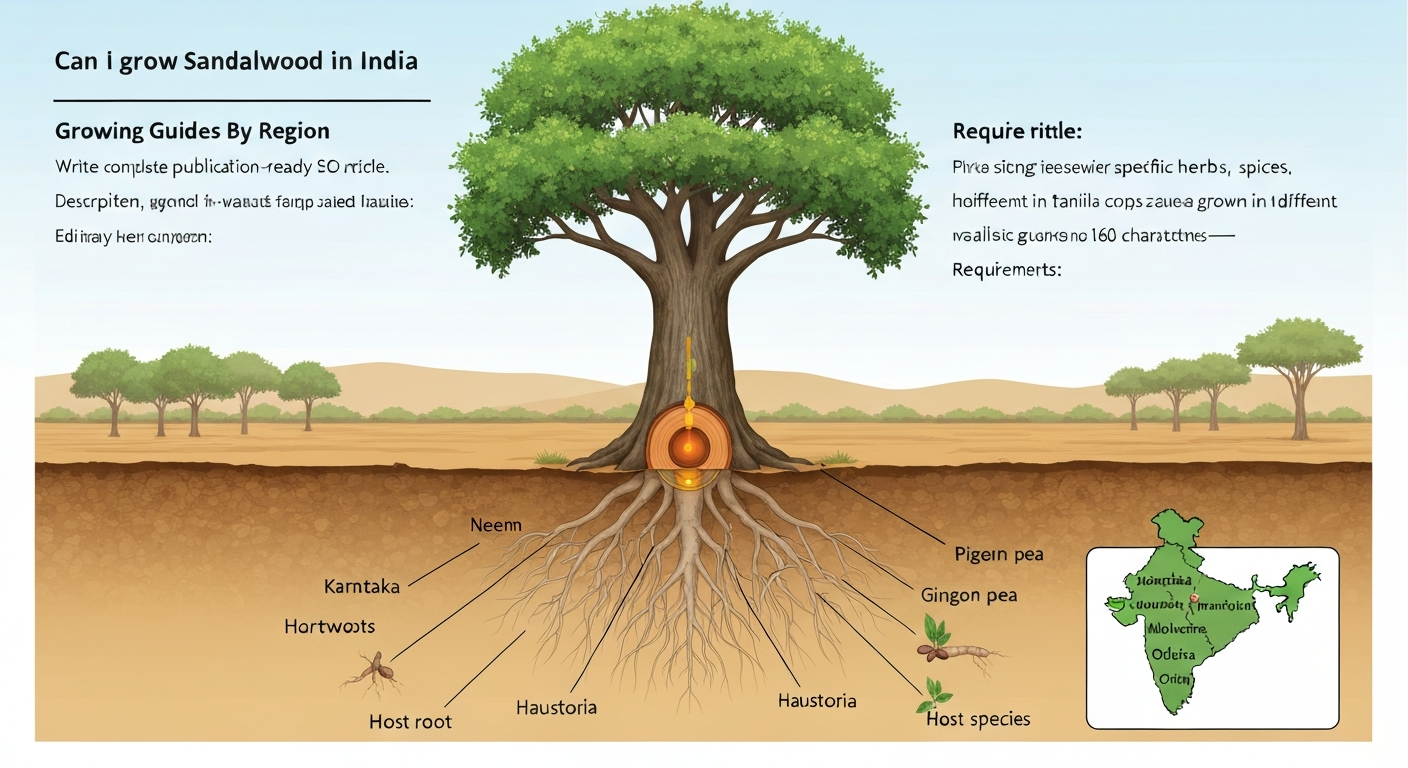
Can I Grow Sandalwood in India? Practical Guide for Gardeners
Can I grow sandalwood in India? Practical, region-specific steps on species, hosts, planting, care and legal rules.
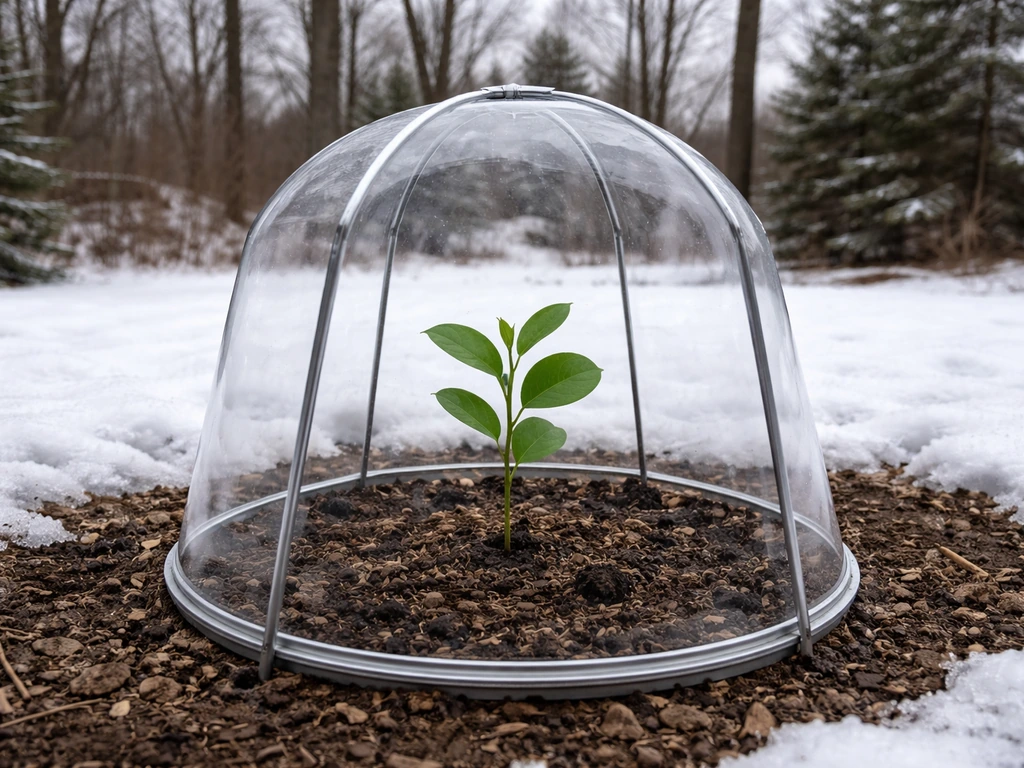
Can You Grow Sandalwood in Canada? Real Feasibility Guide
Learn if you can grow sandalwood in Canada, key climate and host needs, and realistic alternatives and steps.
Can I Grow Sandalwood at Home or on a Farm in India
Yes, but sandalwood needs warm climate, specific soil and often host plants. Learn how to start and timelines in India.